

项目坐落于越南河南省(Ha Nam) 府里市(Phu Ly)的新开发城区中。由于住宅所在场地靠近曾经的墓地,地下深处可能有坟墓存在,因此,在本项目施工前十分有必要对旧土层进行挖掘,以确保排除上述情况的发生。
The house is located in a new developing urban area in Phu Ly city (Ha Nam province). Since this area is supposed to have graves deep underground (due to its proximity to the former cemetery), it is, therefore, necessary to excavate the old soil layer before construction so as to clear the above-mentioned assumption.
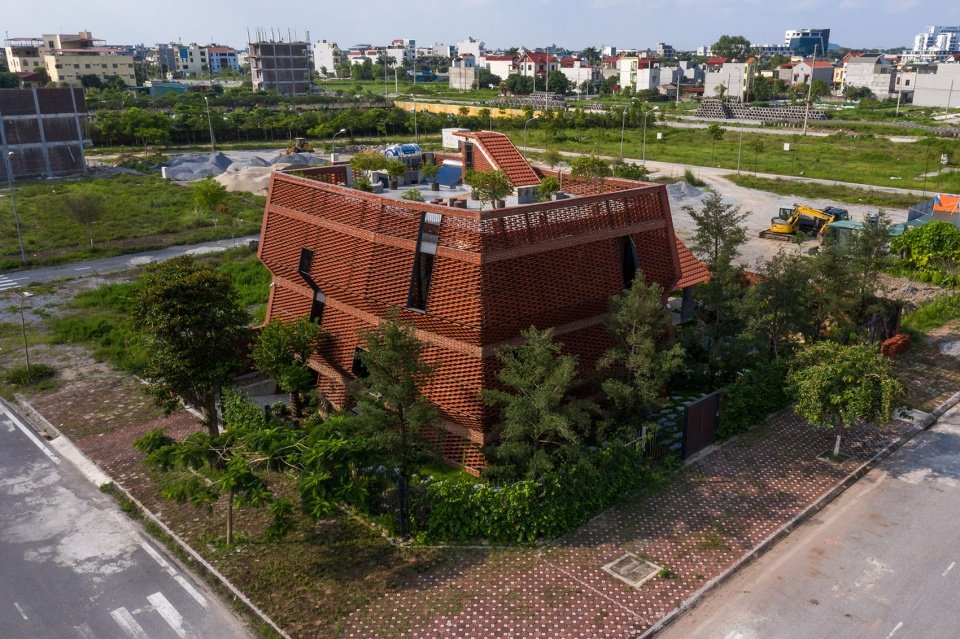
▼场地鸟瞰,aerial view of the site© Le Minh Hoang
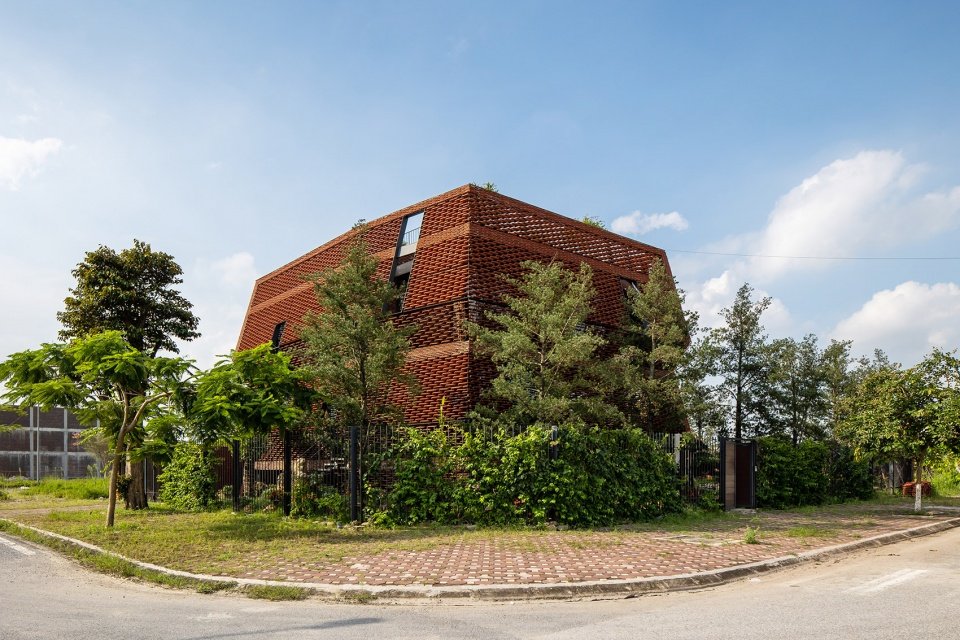
▼街道视角,street view© Le Minh Hoang
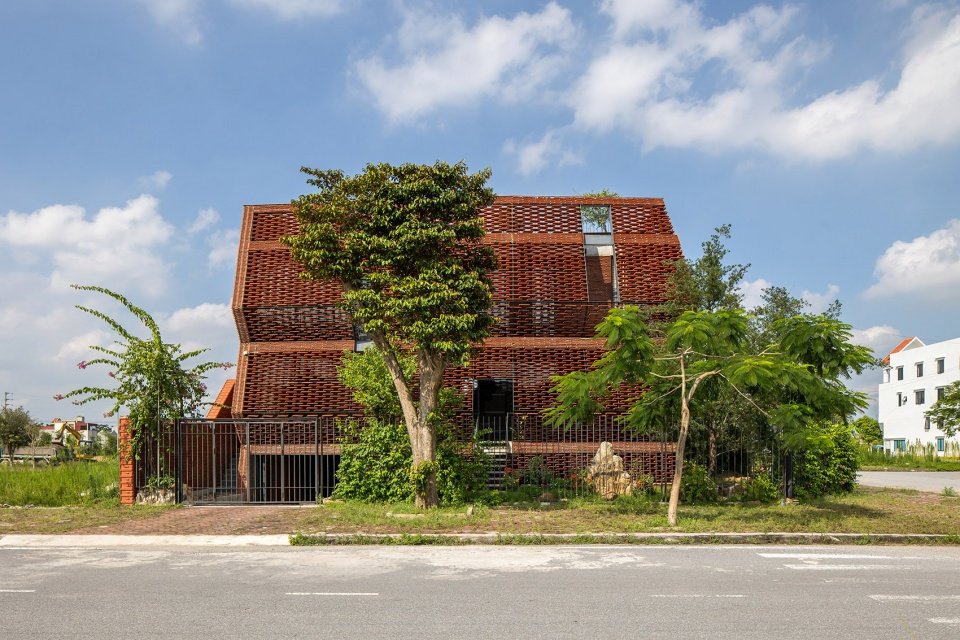
▼主入口一侧立面,facade of the main entrance of the site© Le Minh Hoang
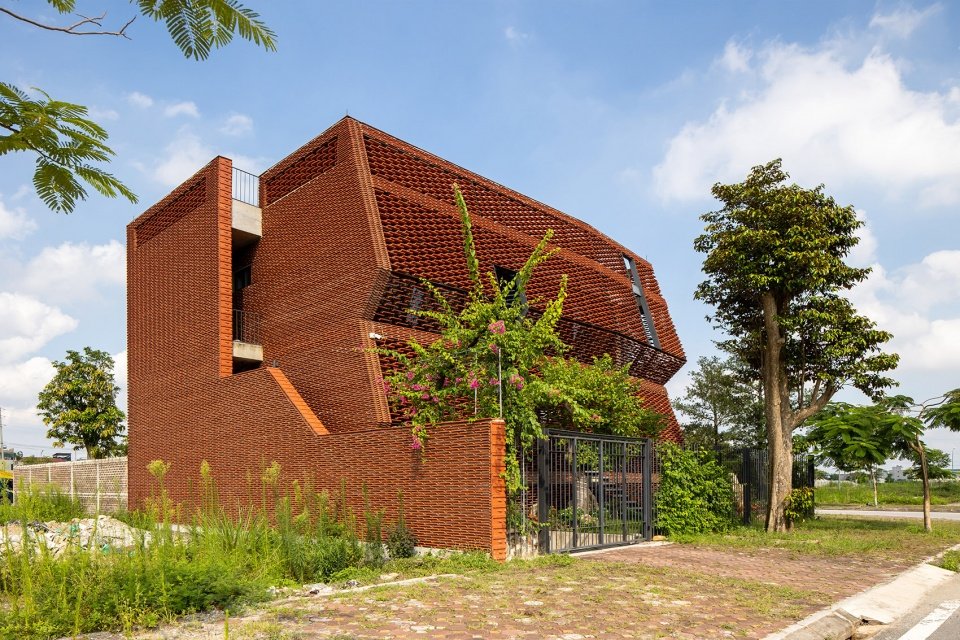
对场地土层的挖掘与清理,在一定程度上促进了设计概念的发展,使场地成为住宅的一部分,在创造出明显的空间特征的同时,开发出利用地热能的可能性。
▼设计概念,design concept© H&P Architects
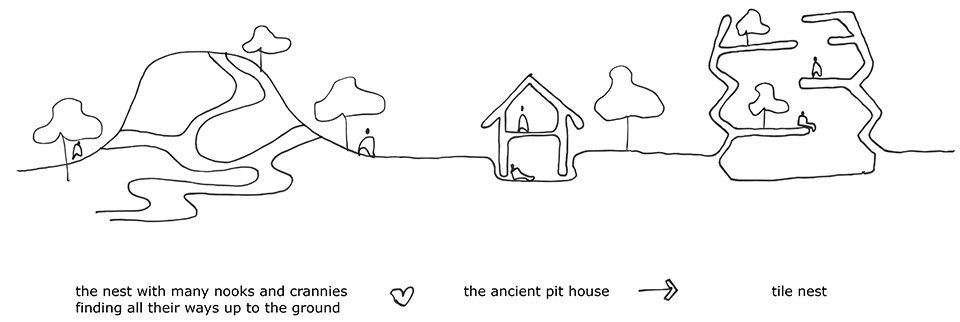
▼形体生成,formation of the volume© H&P Architects

This perspective then helps develop the concept of making use of the excavated site as part of the house (after the old soil layer is removed) so that not only distinguishable spacial features are created but also the possibility to harness geothermal energy is made.
▼多孔的建筑外壳,porous/ perforatedshell of the building© Le Minh Hoang
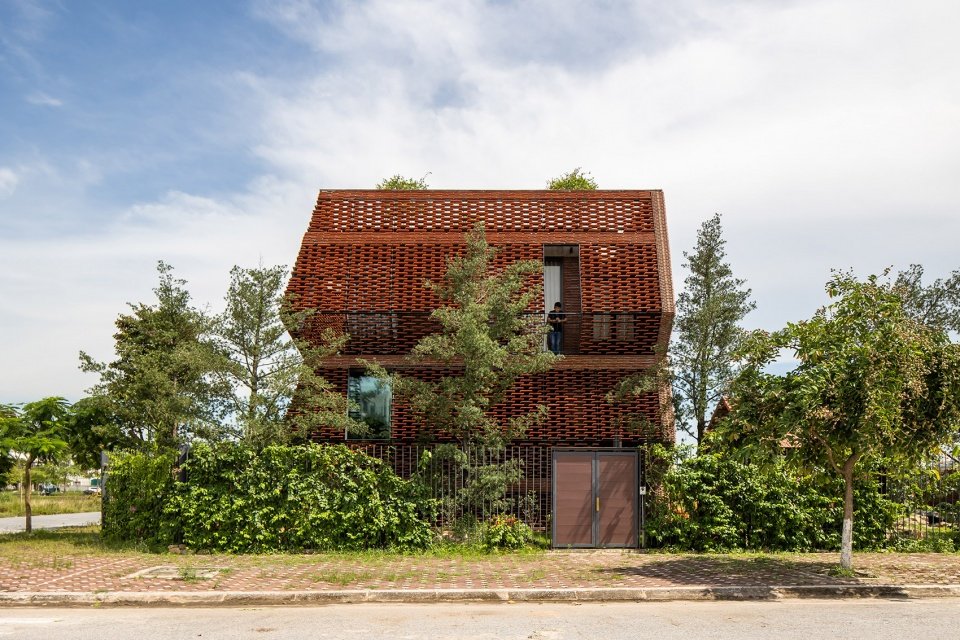
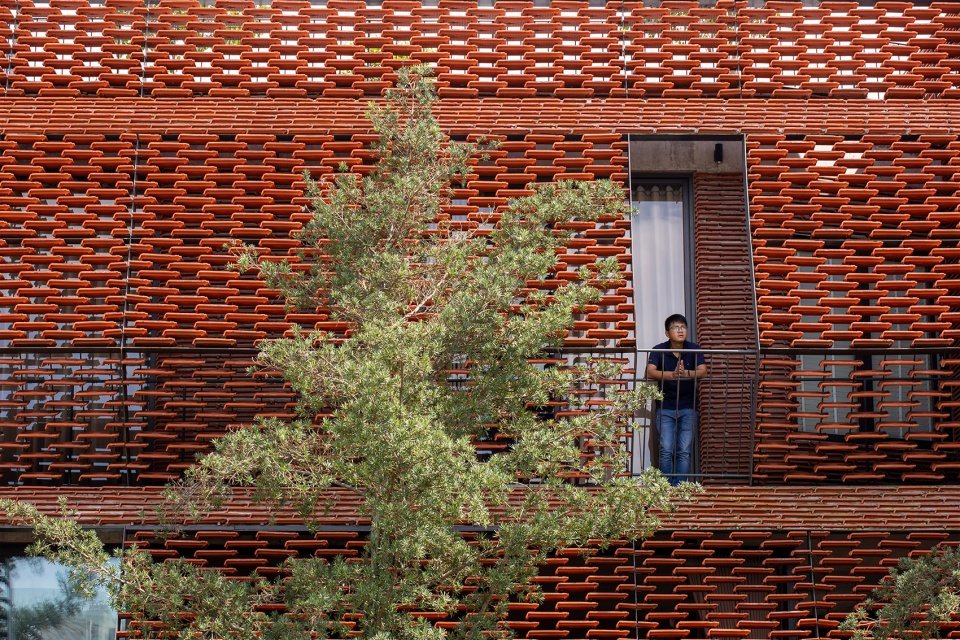
▼建筑外观细部,exterior details© Le Minh Hoang
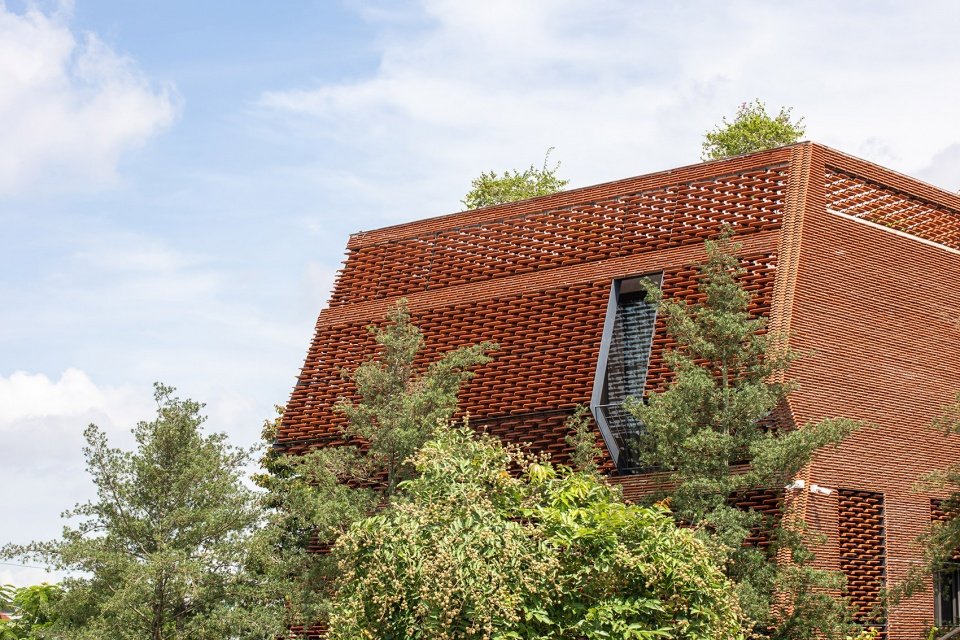
▼波形的立面外观,wave shape of the facade© Le Minh Hoang
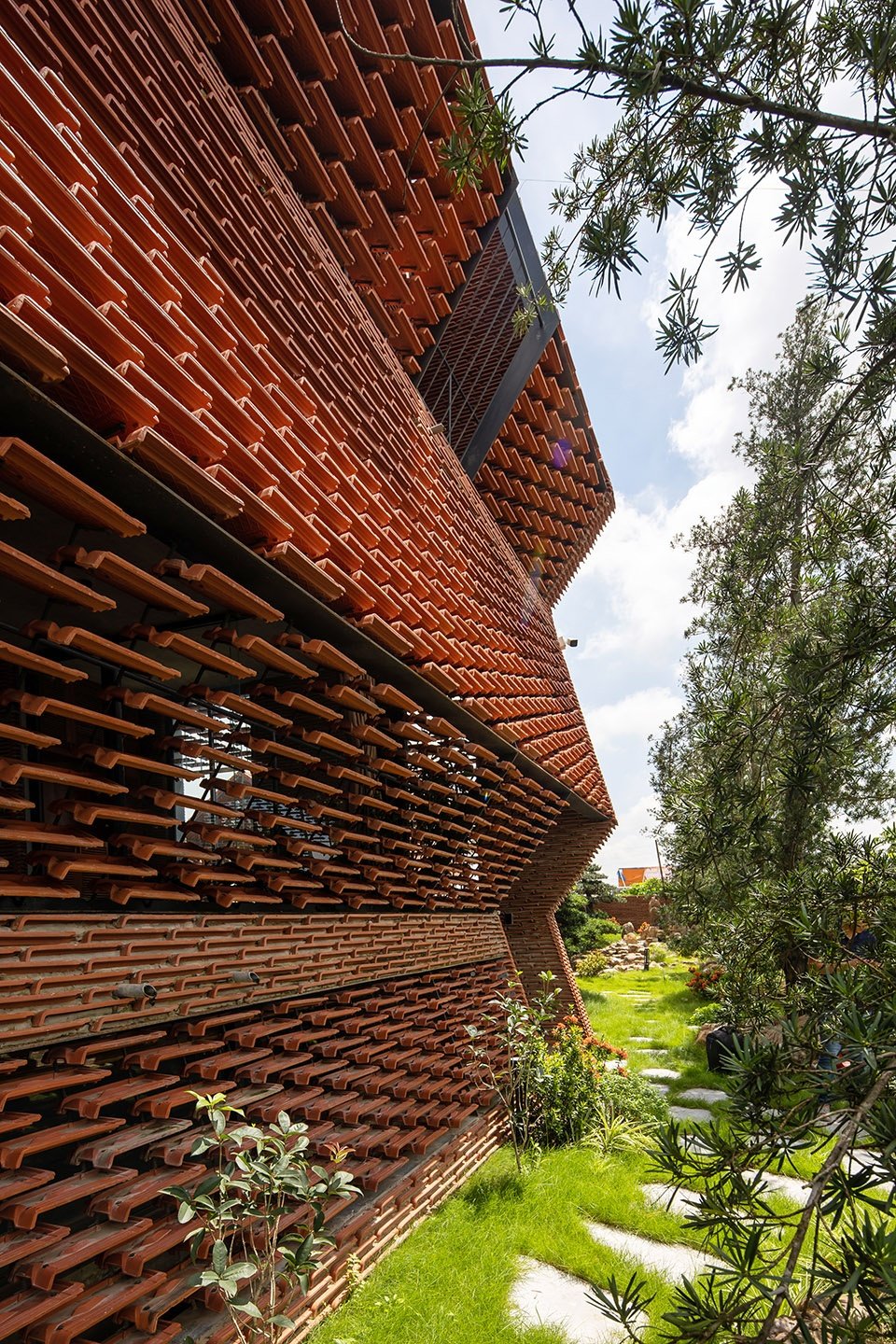
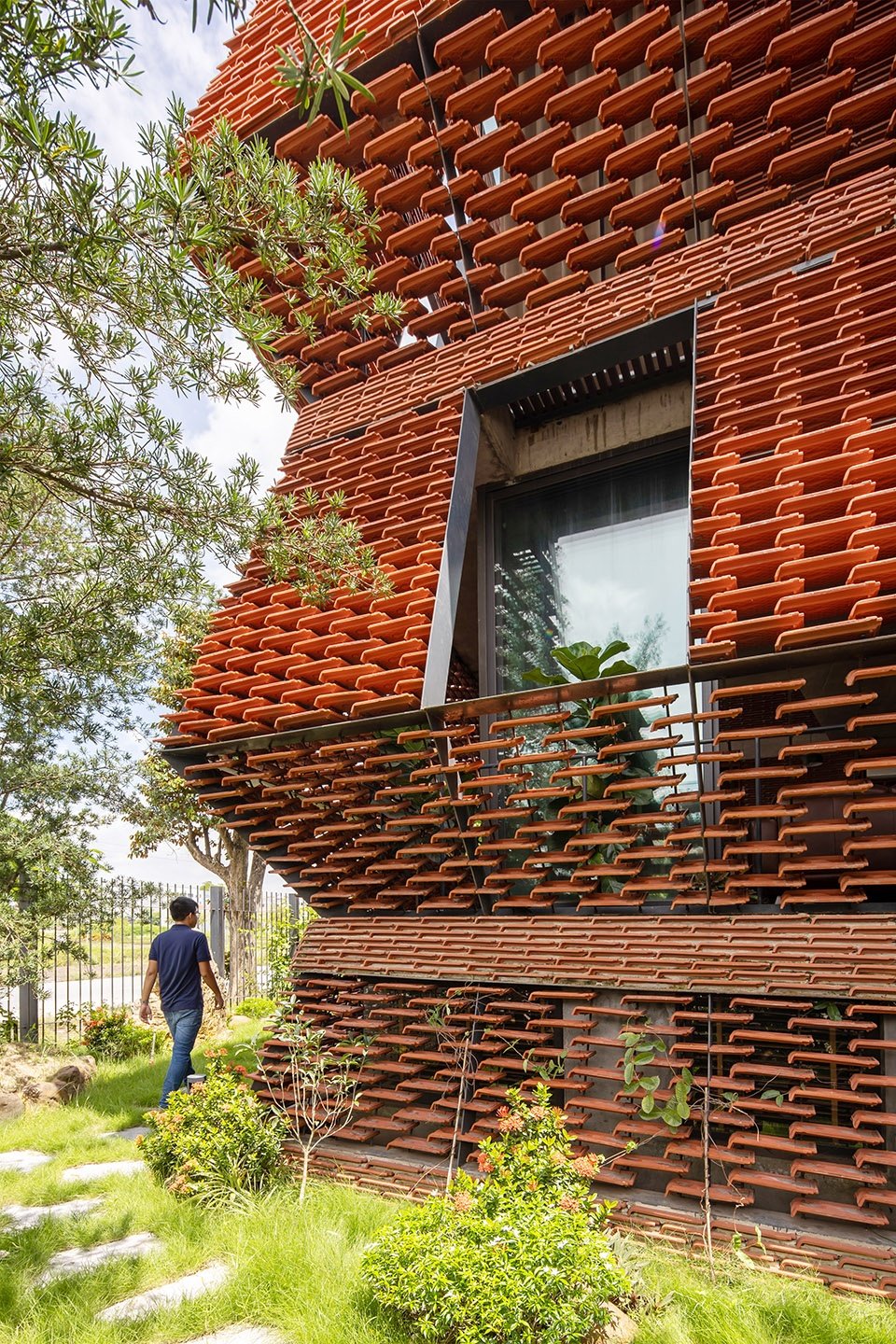
▼住宅入口,entrances of the house© Le Minh Hoang
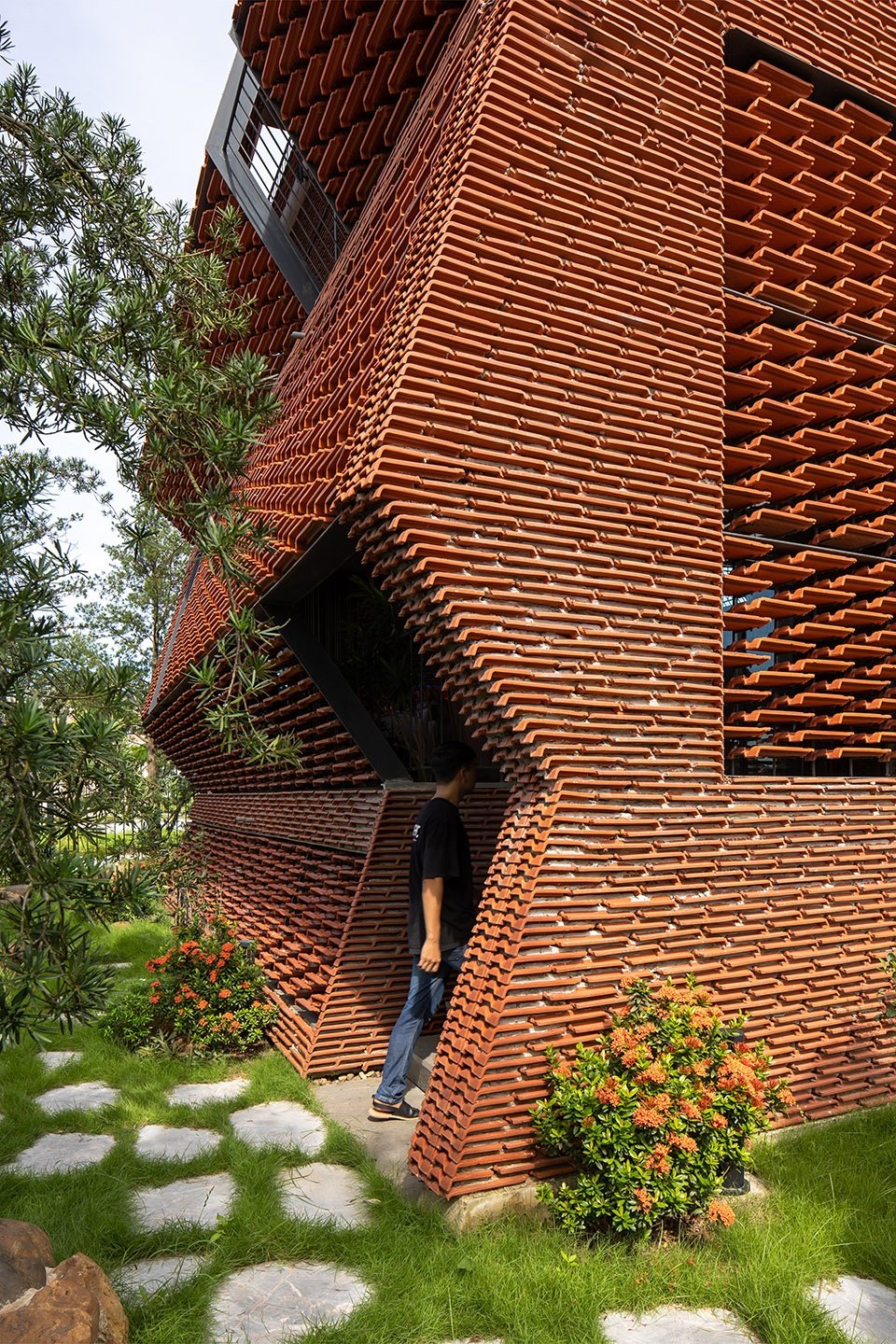
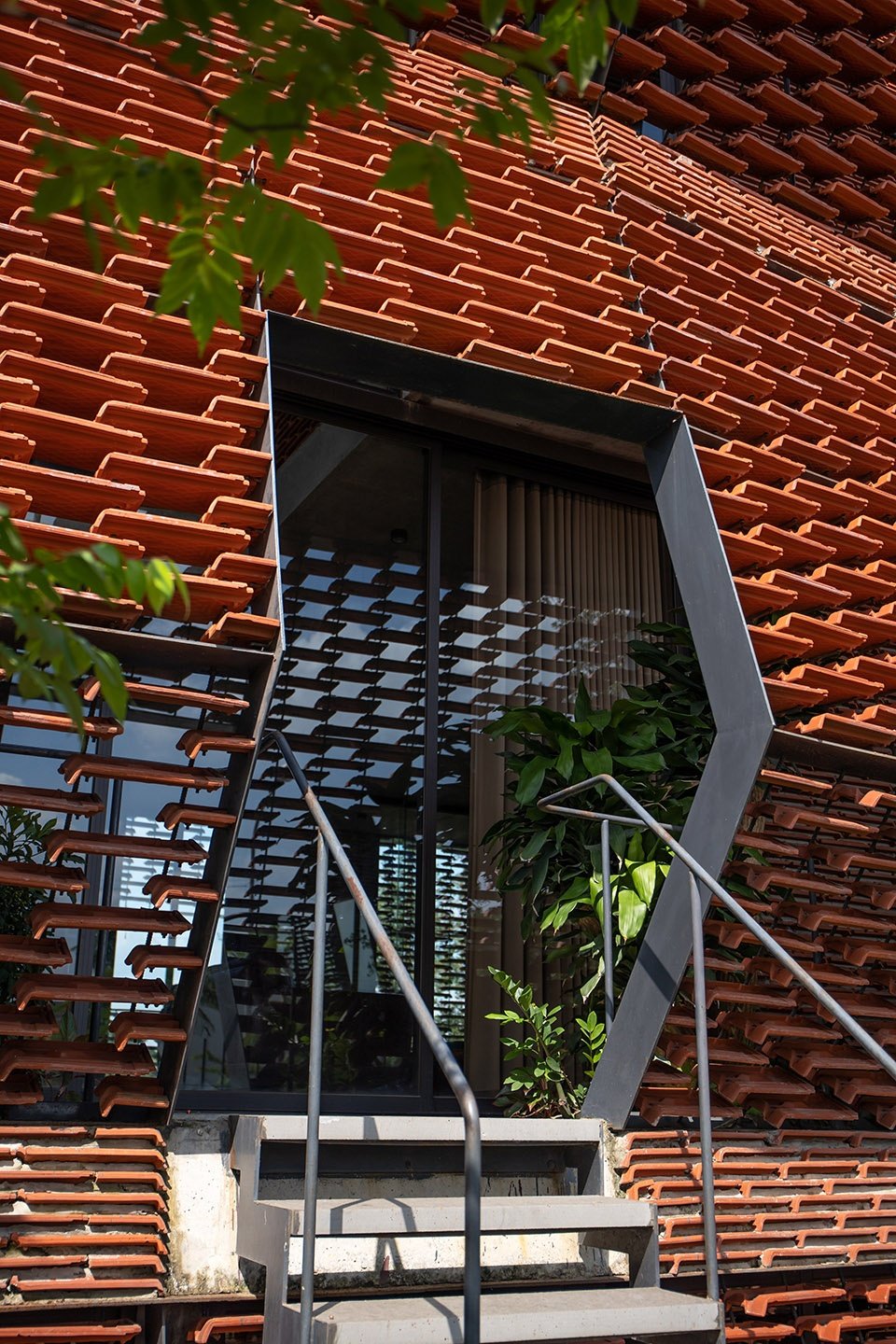
▼室外楼梯与走廊,exterior staircase and corridor© Le Minh Hoang
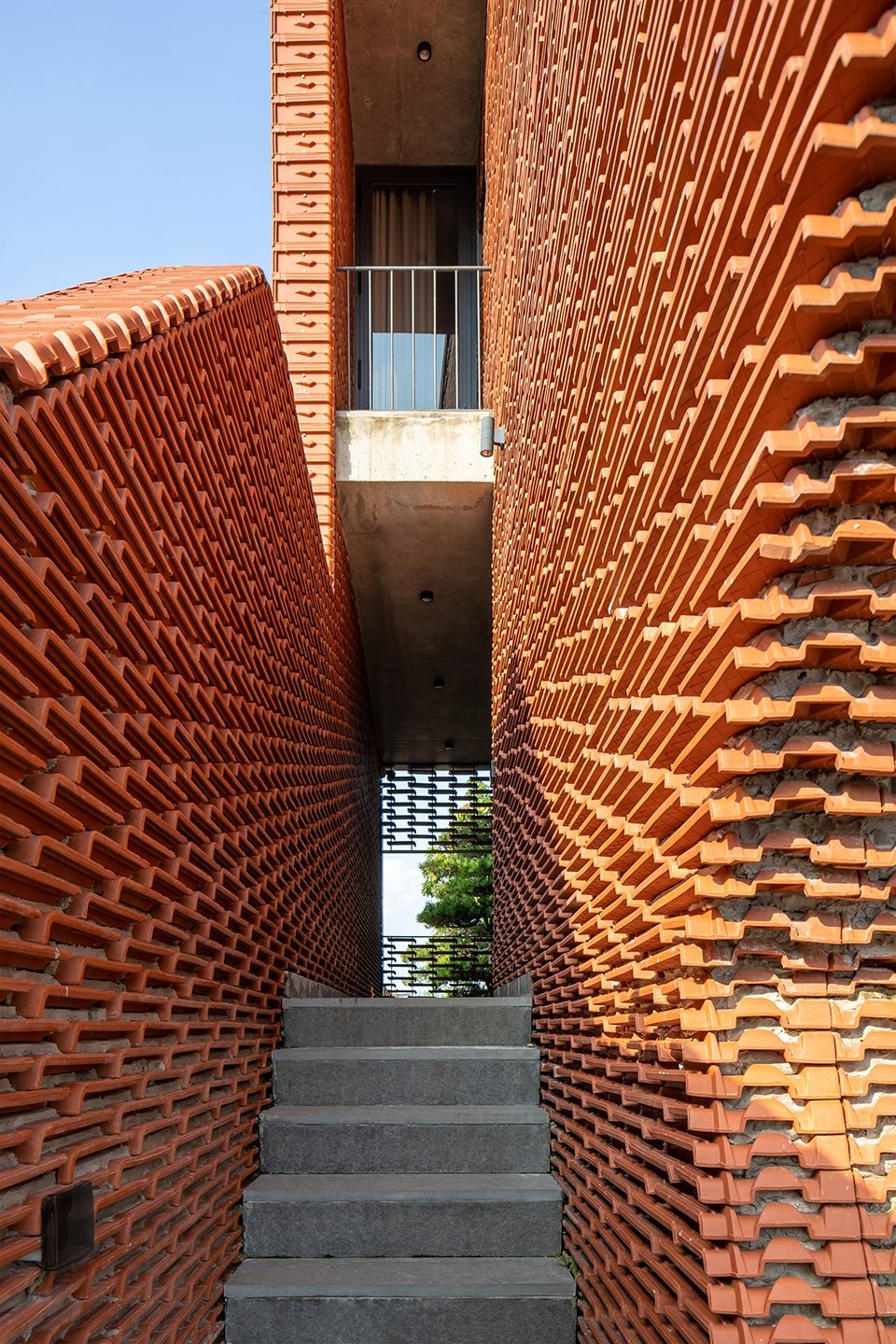
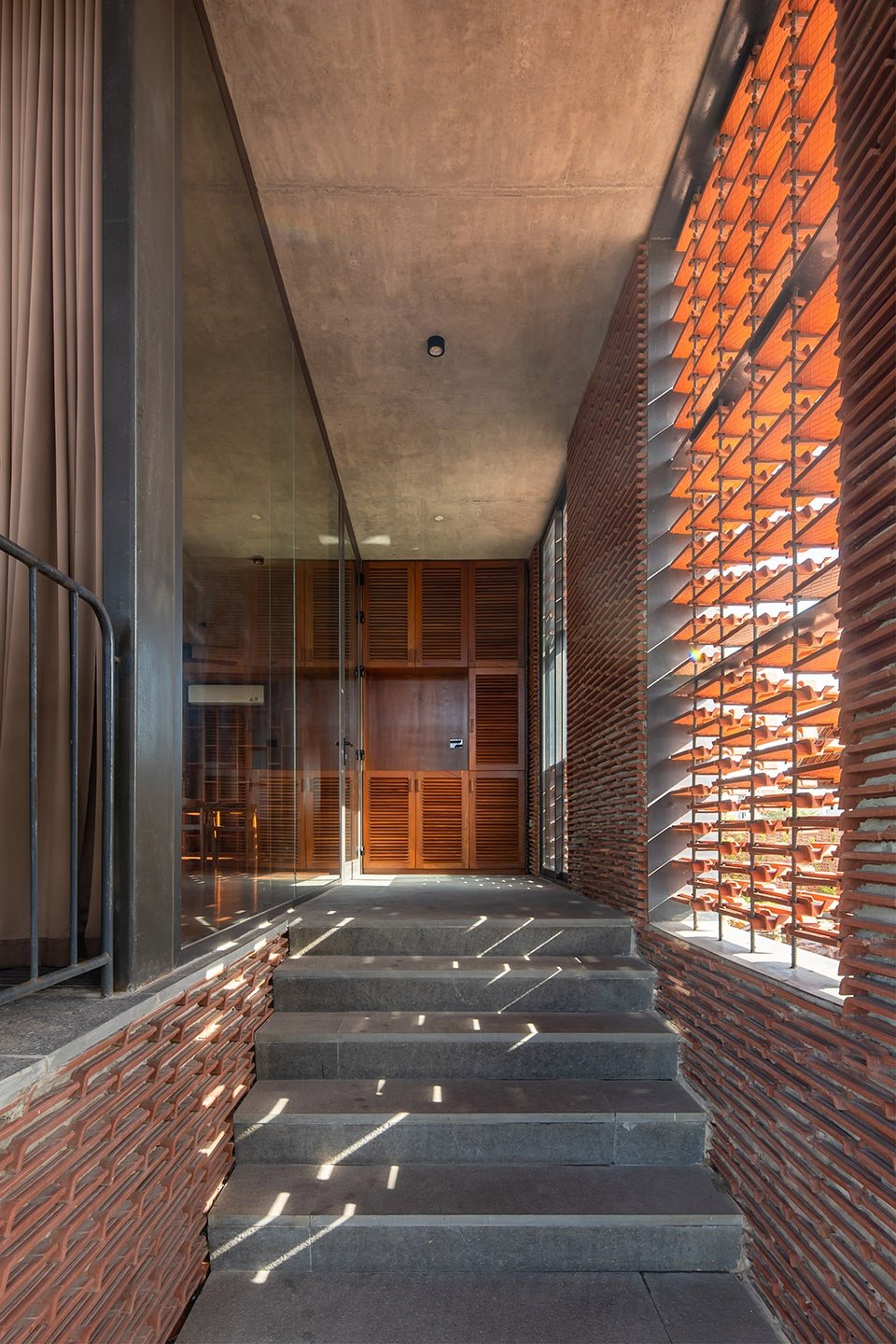
本项目住宅名为“瓦巢”,这个名字传达出建筑师创造”空间”的想法,这个空间融合了许多角落和缝隙空间,并从顶部一直延伸到地面,并渗透到隐藏于地下的古老洞屋(PitHouse)中。缝隙空间的组合为建筑赋予了独特的波型外观,将多孔的建筑外壳与内部的宽敞生活空间有机结合在一起。
▼轴测分析图,axonometric drawing© H&P Architects
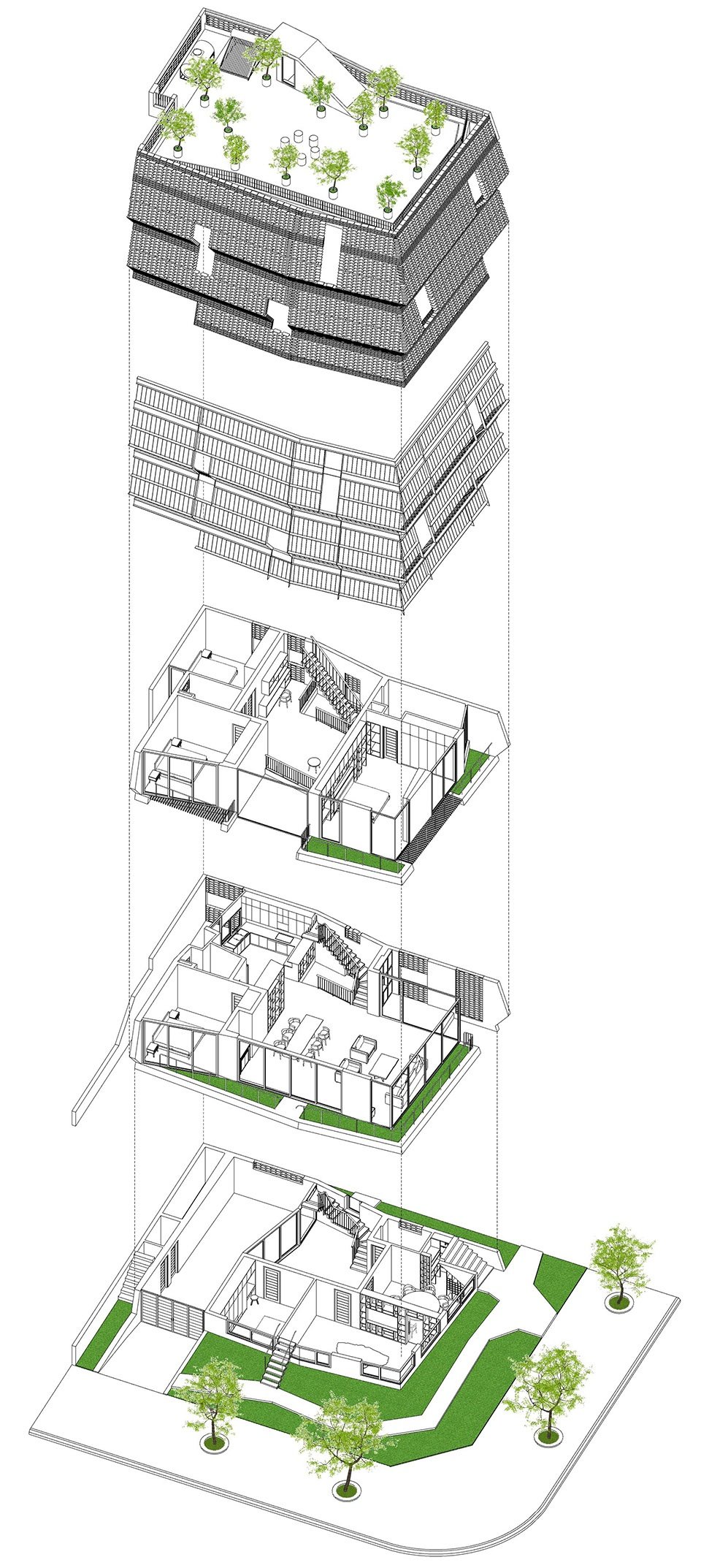
Named as Tile Nest, the house communicates the idea of creating a space, a blend of the Nest with many nooks and crannies finding all their ways up to the ground and the Ancient Pit House partially hidden underground. This combination gives the house’s architecture a distinct corrugated appearance, with the shell feltlikeporous/ perforated on the outside and largespace on the inside.
▼由入口门廊看街道,viewing the street from the entrance porch© Le Minh Hoang
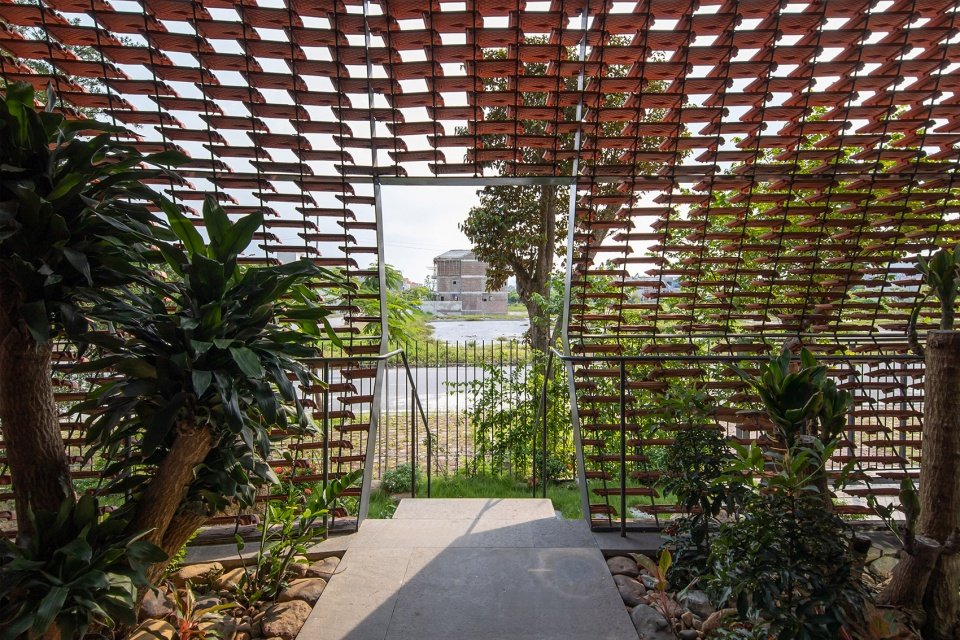
▼缝隙空间中的绿色阳台,greenery balcony between the shell and the house© Le Minh Hoang
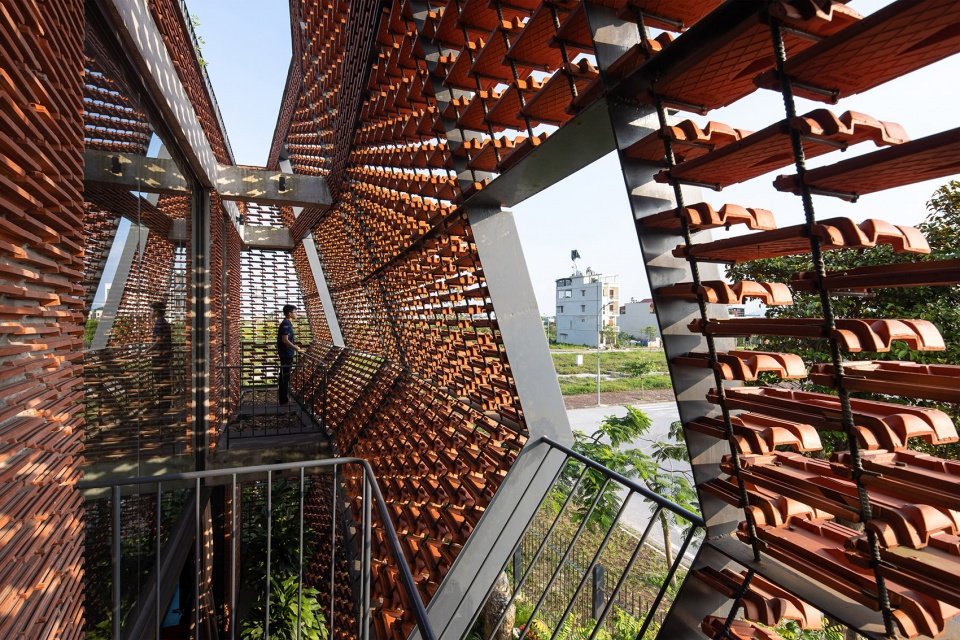
▼缝隙空间细部,details of the gap space© Le Minh Hoang
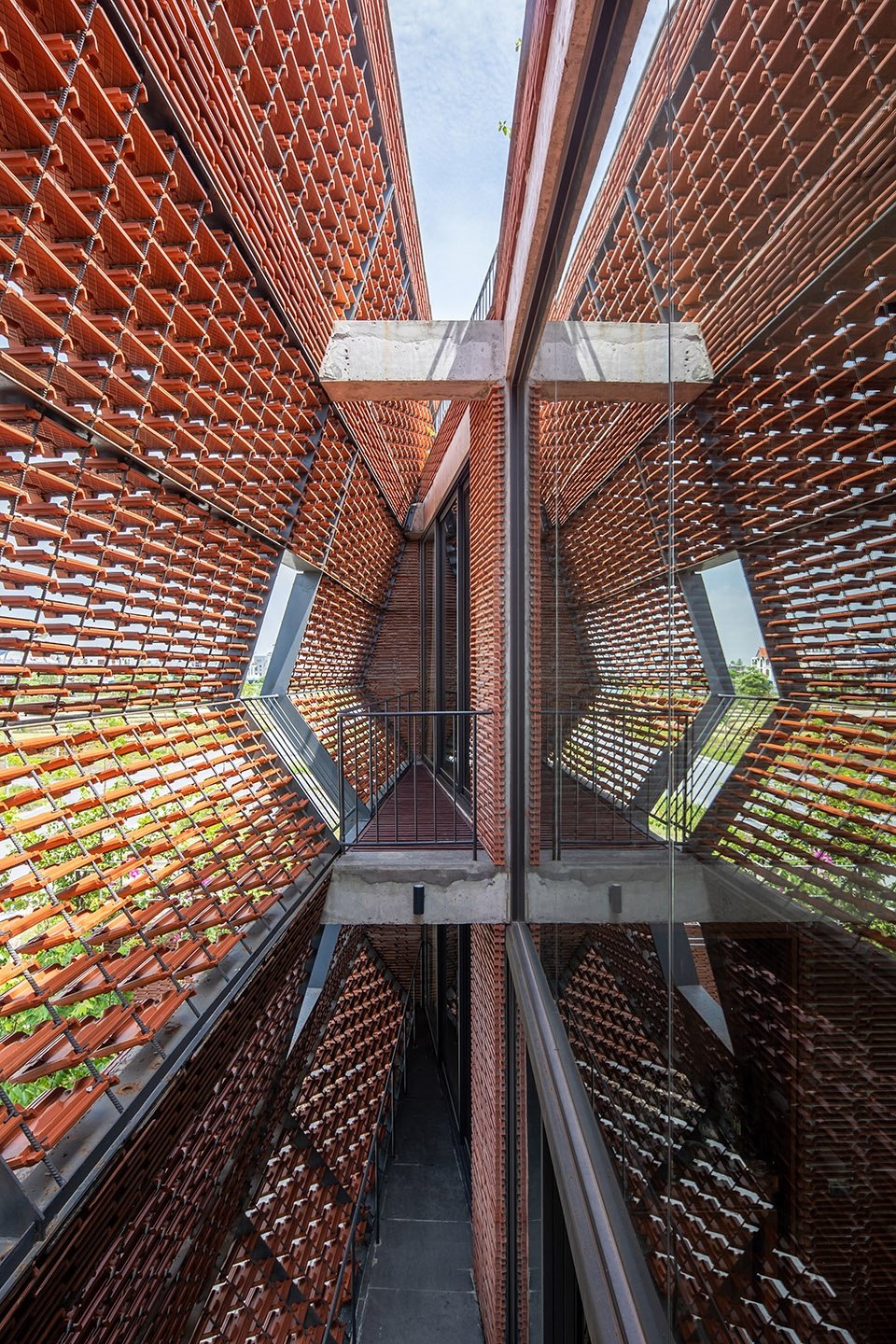
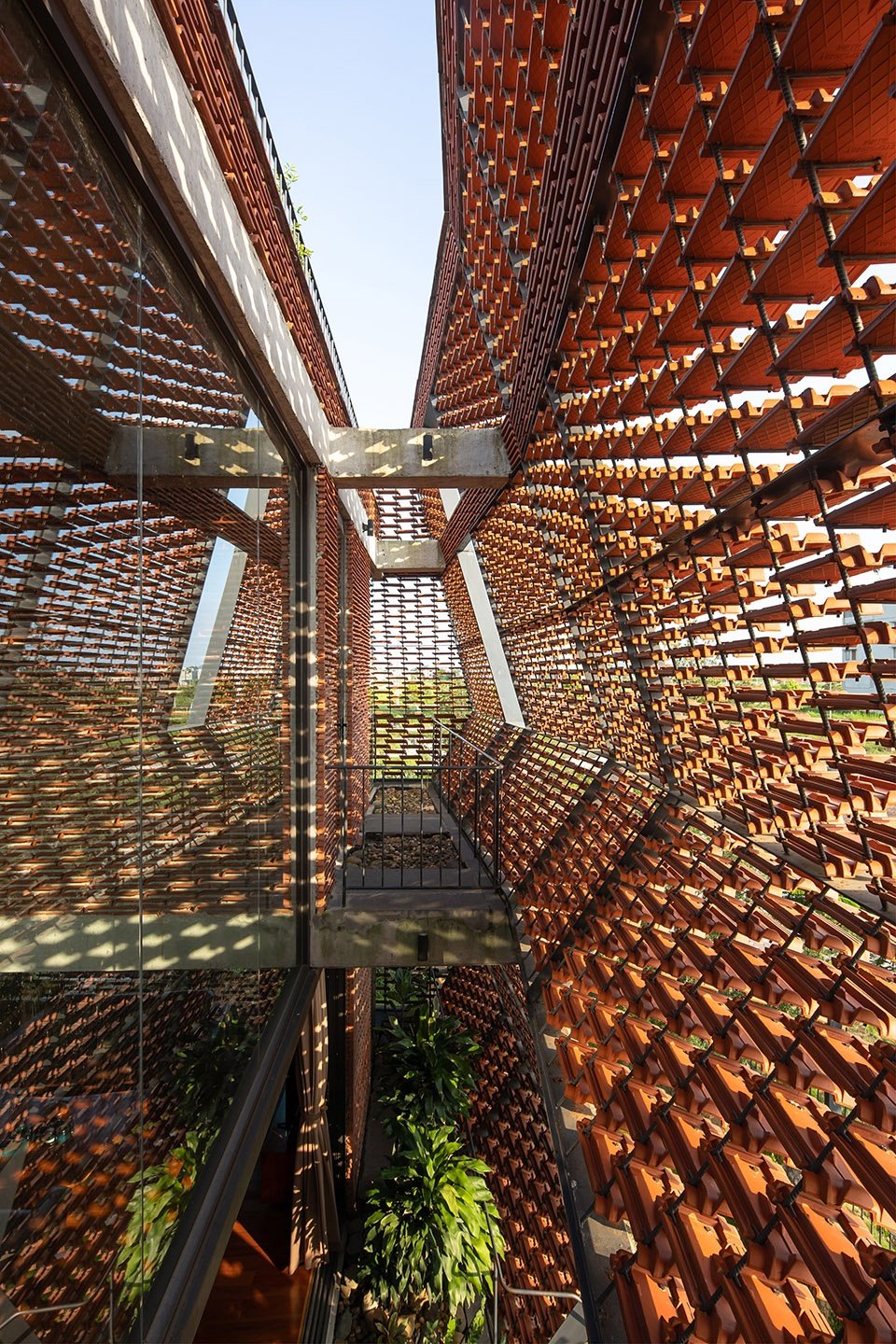
▼俯视缝隙空间,looking down of the gap space© Le Minh Hoang
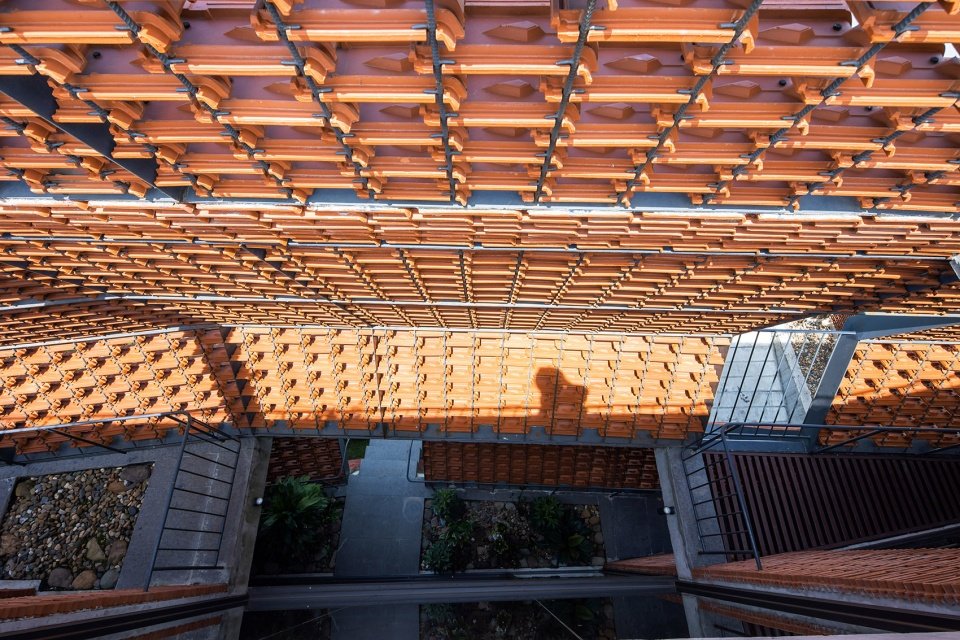
▼仰视缝隙空间,looking up to the gap space© Le Minh Hoang
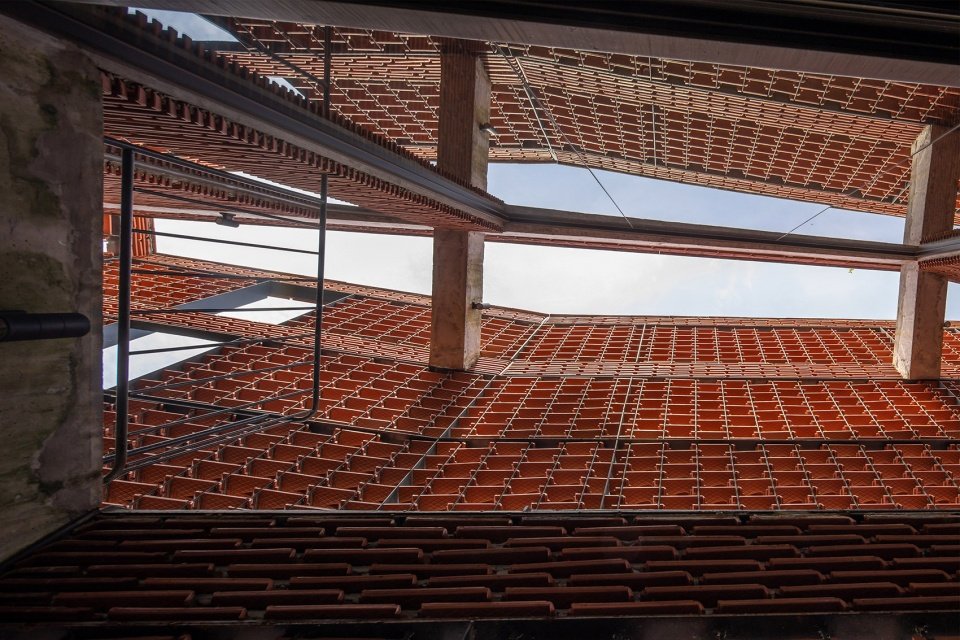
建筑外壳由大量如同飞翔在空中的悬浮瓷砖构成,让人不禁联想到传统民居中堆叠的屋顶和遮阳篷;位于建筑外壳与室内空间之间的不同高度的过渡性绿色阳台堪称本项目最显著的特色,它们不仅为住宅带来了迷人的景色,同时也有助于调节室内空间中的小气候。
▼立面构成分析图,analysis diagram of the facade© H&P Architects
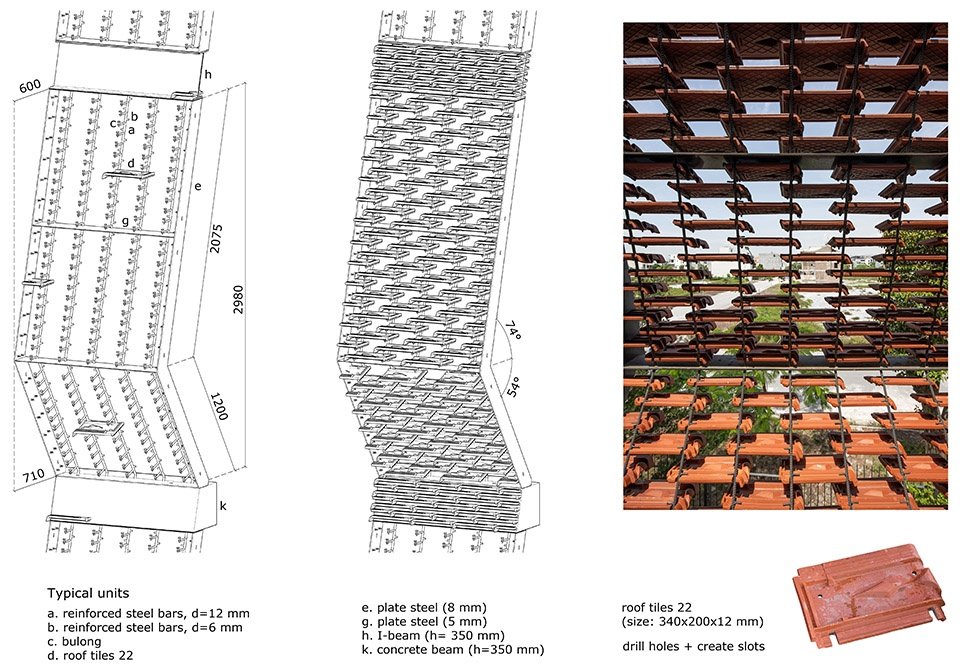
The outer shell is made up of many tiles suspended as if they were flying(provoking a thought of a stacked roof, and a sunshade, as found in a traditional house manner, ..); The middle layer is characterized with transitional green balconies at different heights, which brings about captivating views and helps regulate the microclimate for spaces for use inside.
▼通高的入口空间,double-height entrance area© Le Minh Hoang
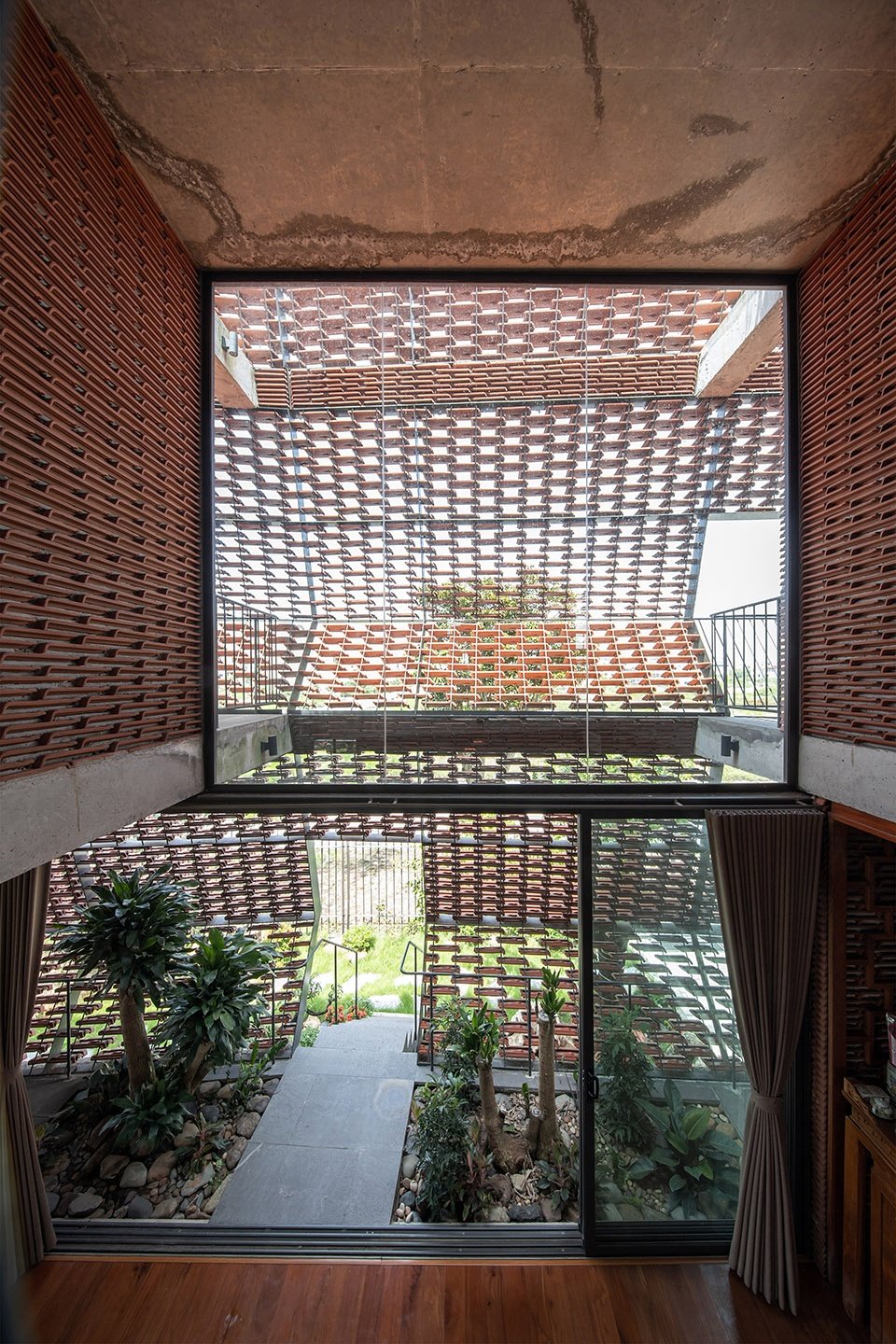
▼入口空间细部,details of the entrance© Le Minh Hoang
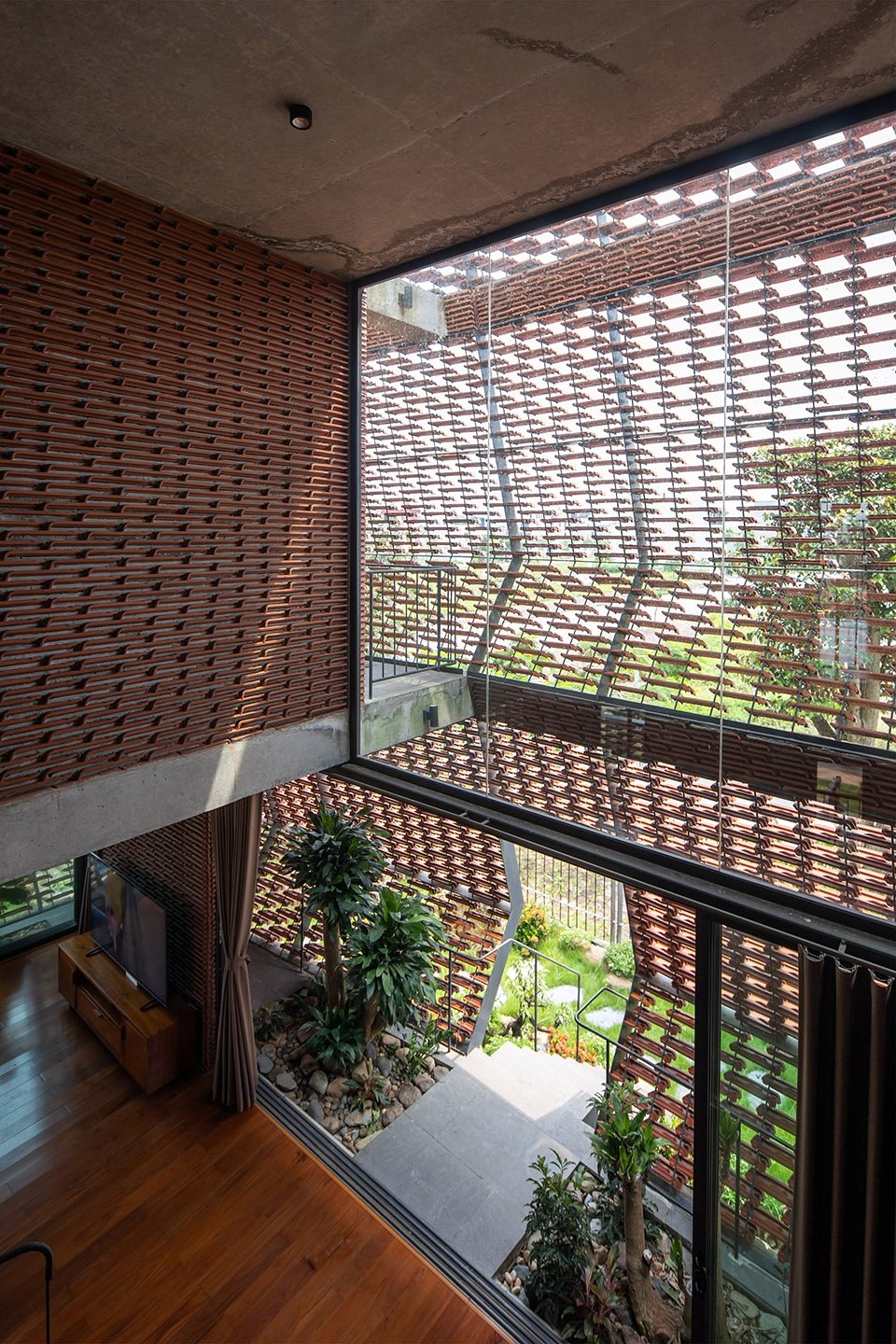
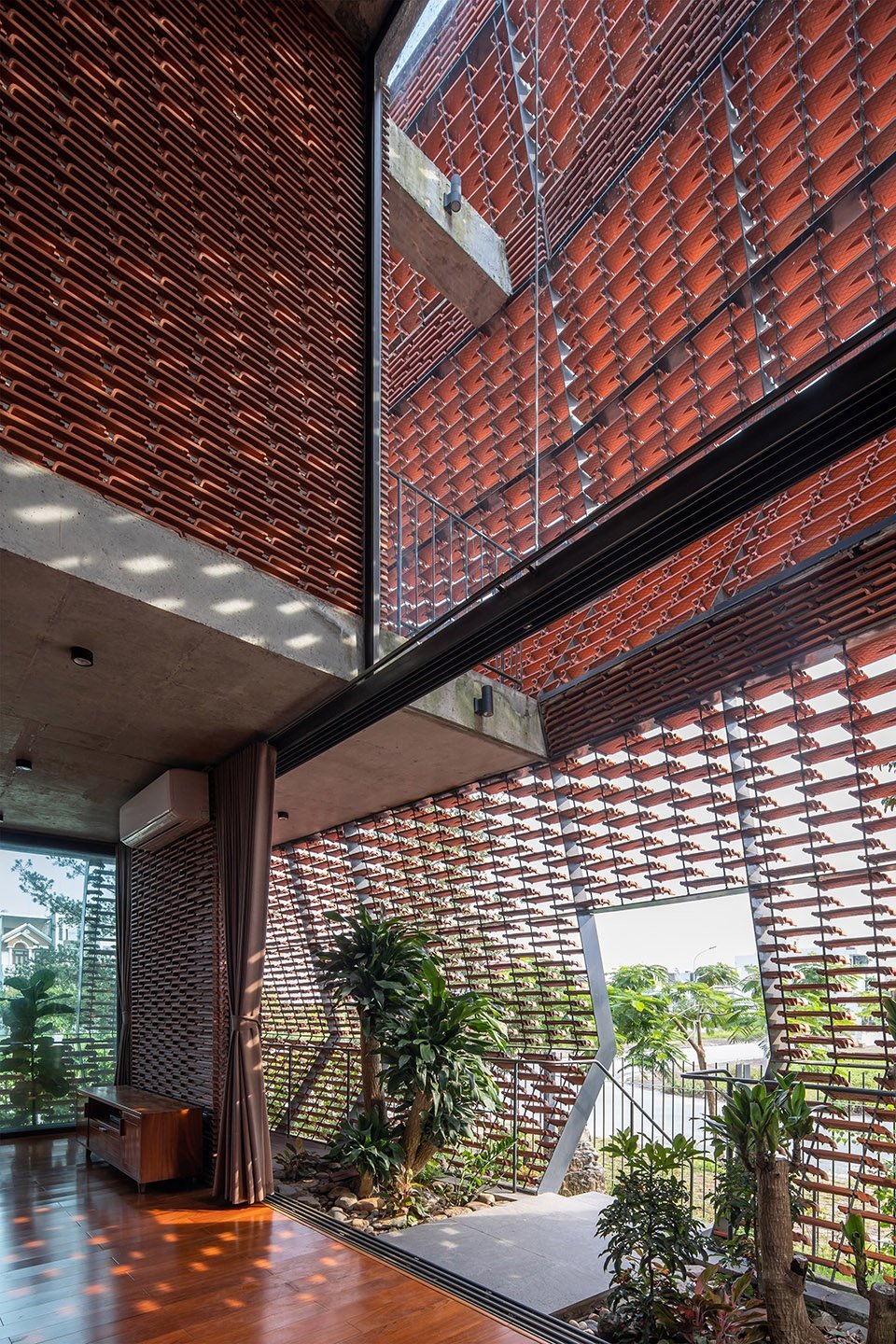
▼模糊的室内外界限,blurred interior and exterior boundary© Le Minh Hoang
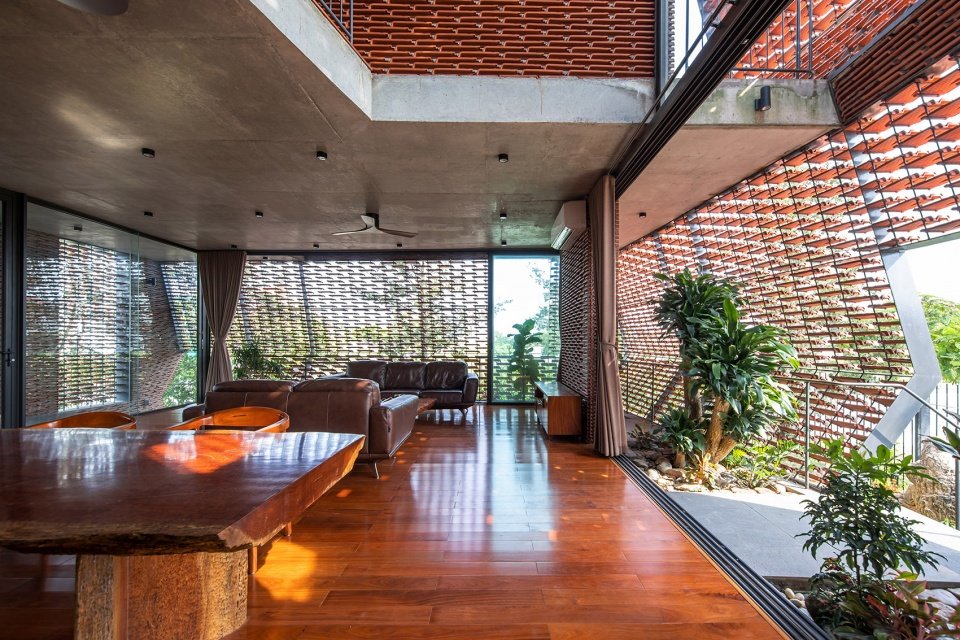
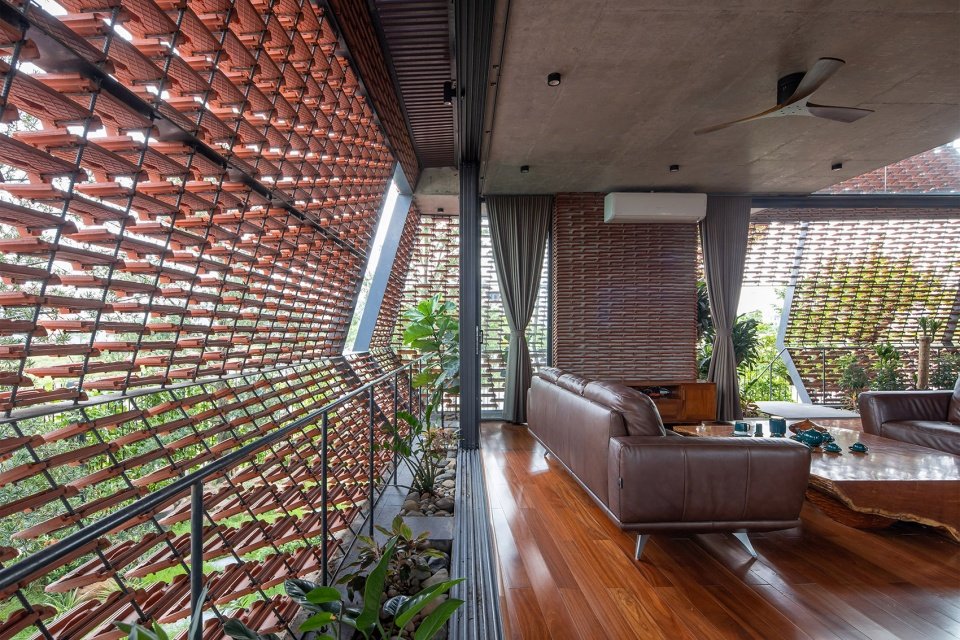
▼二层公共生活空间,main living space on the upper floor© Le Minh Hoang
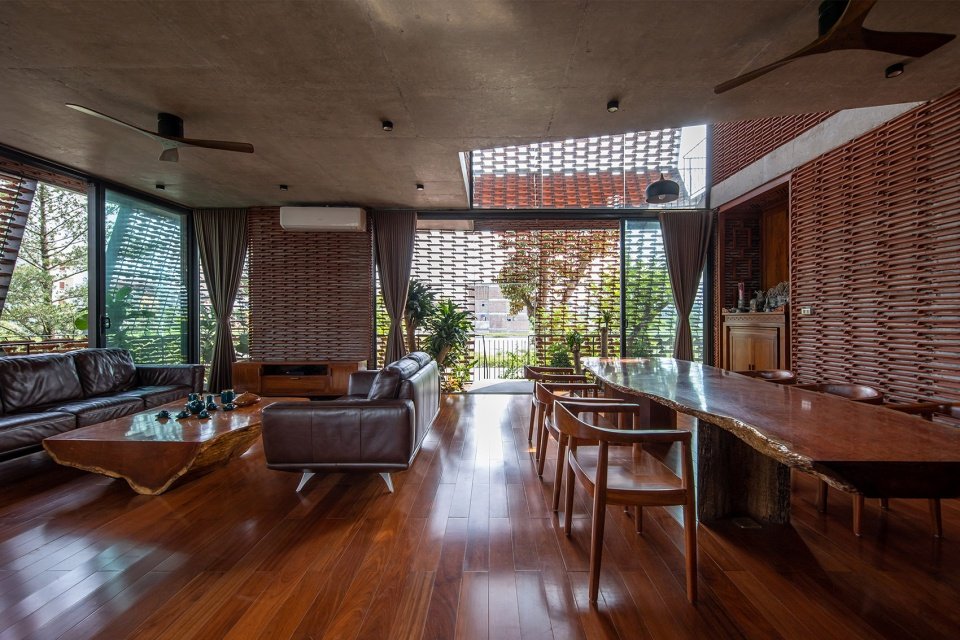
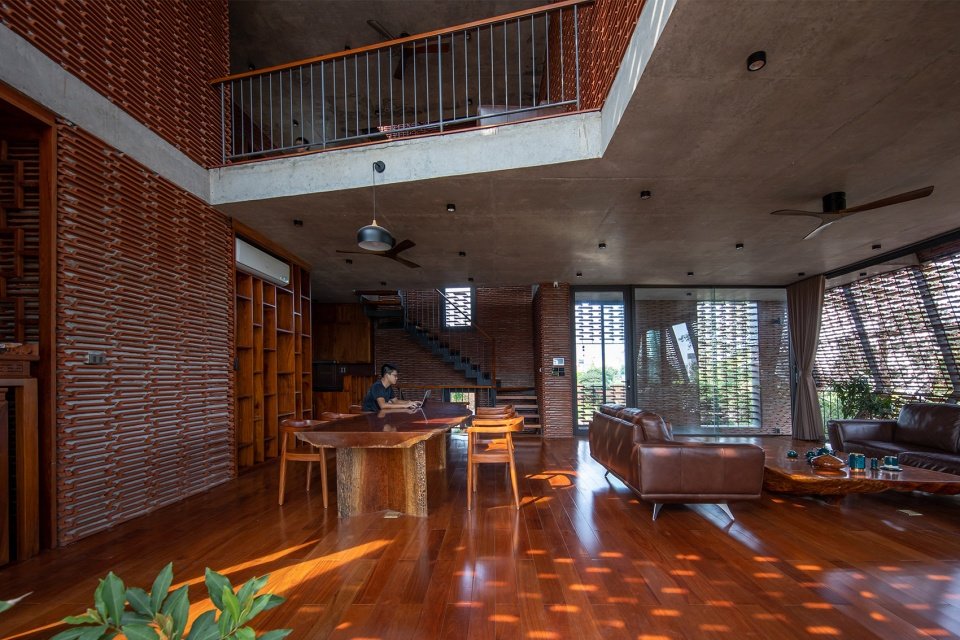
▼夹缝空间中的绿植,plant in the gap space© Le Minh Hoang
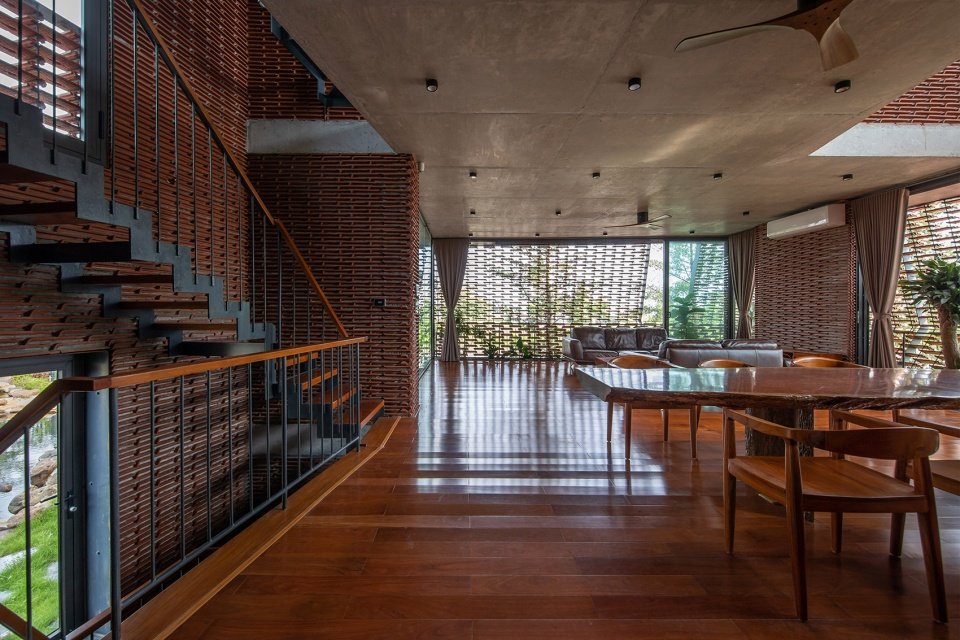
▼室内楼梯,interior staircase© Le Minh Hoang
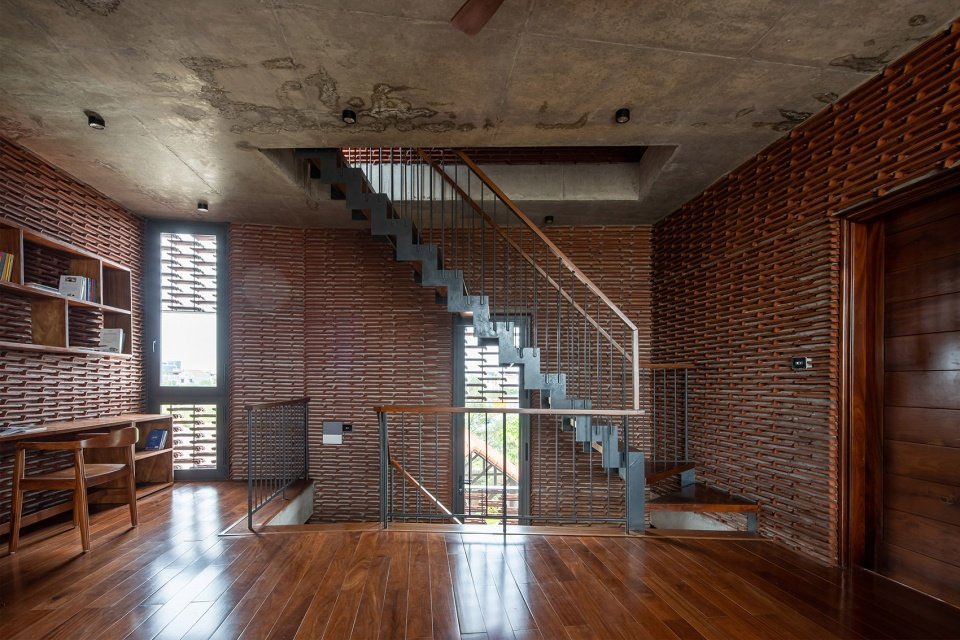
▼三层平台,platform of the second floor© Le Minh Hoang
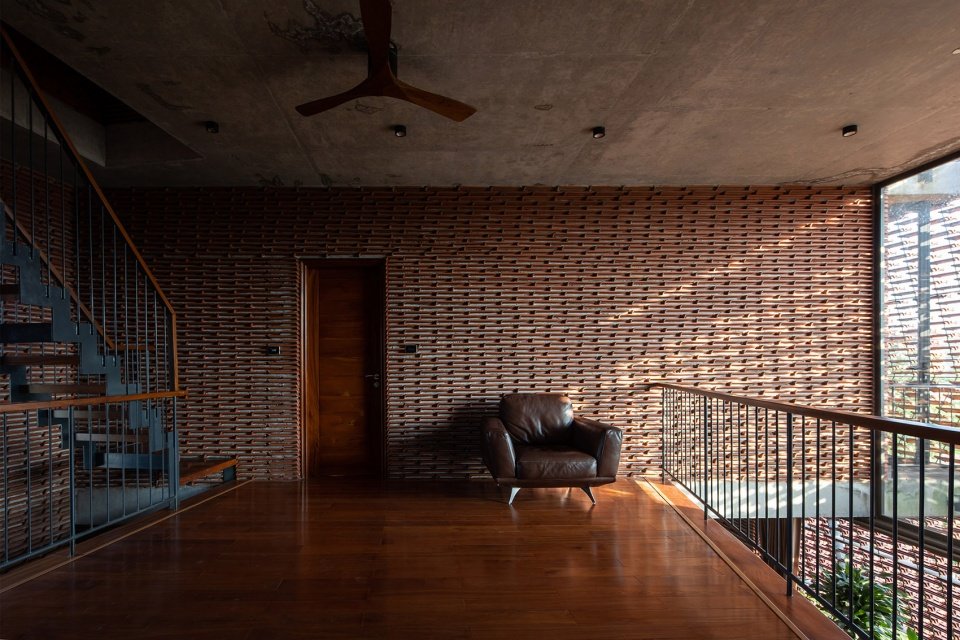
▼卧室,bedroom© Le Minh Hoang
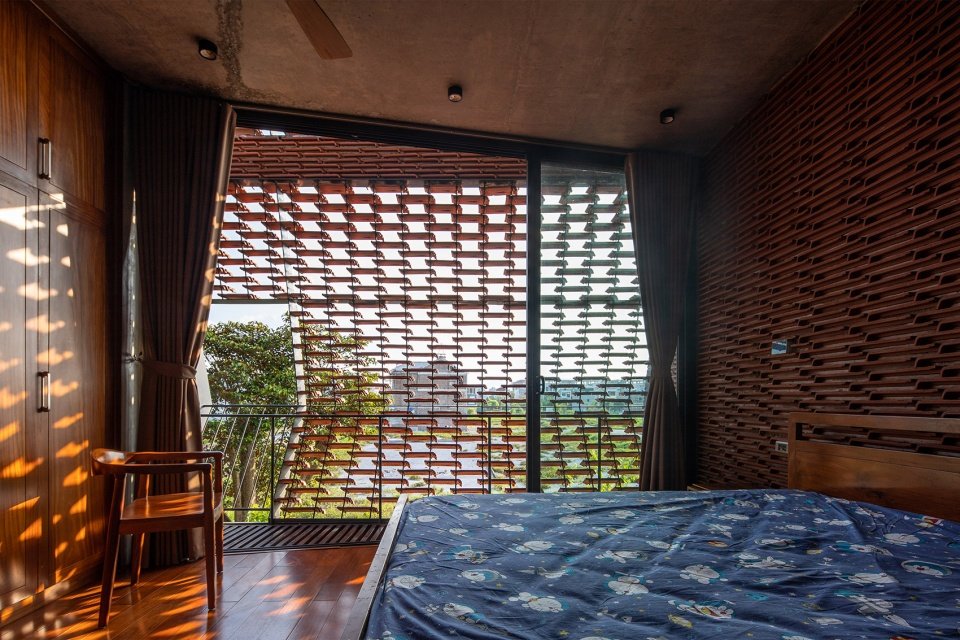
很长一段时间以来,瓷砖已经成为越南人熟悉和流行的材料,而建筑师则以一种不同寻常的方式将它们运用在本项目的设计中,通过视觉、触觉与感知来体现这种材料的独特之处。花朵般的瓷砖形态创造出有趣的光影游戏,加之和煦的微风与植物的气息,进而在空间中创造出不同但又熟悉亲切的体验。可以说,这座沉浸在自然中的建筑,承载了居住者的记忆与自身独特的性格。
For a long time, tile has become a familiar and popular material with Vietnamese people, yet it is applied to this house in an unusual way to make its presence felt by seeing through, touching and sensing properties, thereby creating different but close experiences in the space of flower-like patterns from sunshine reflection,, wind and scent of plants – an Architecture immersed in nature realized by a full-of-memory personality.
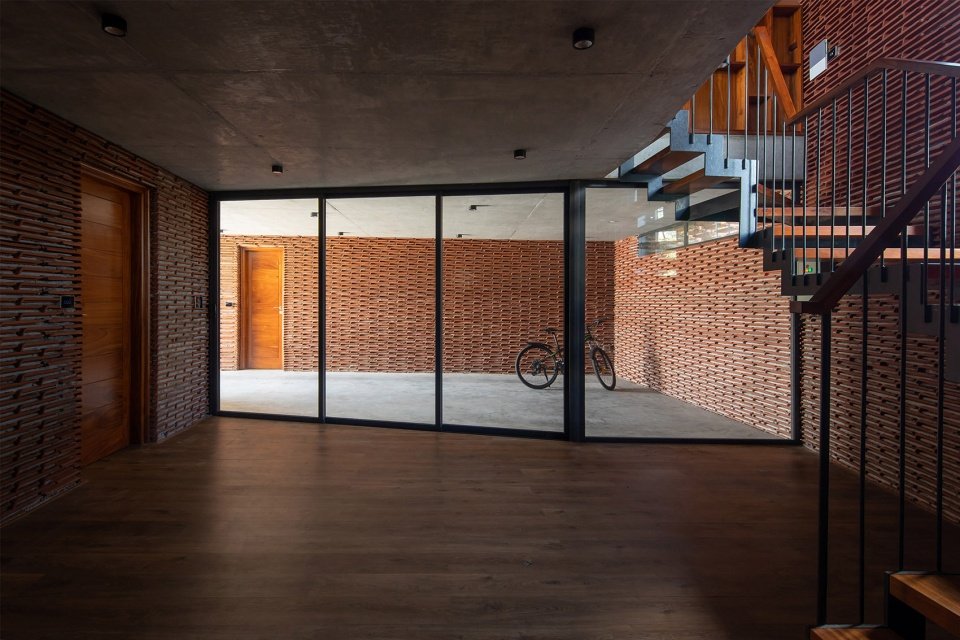
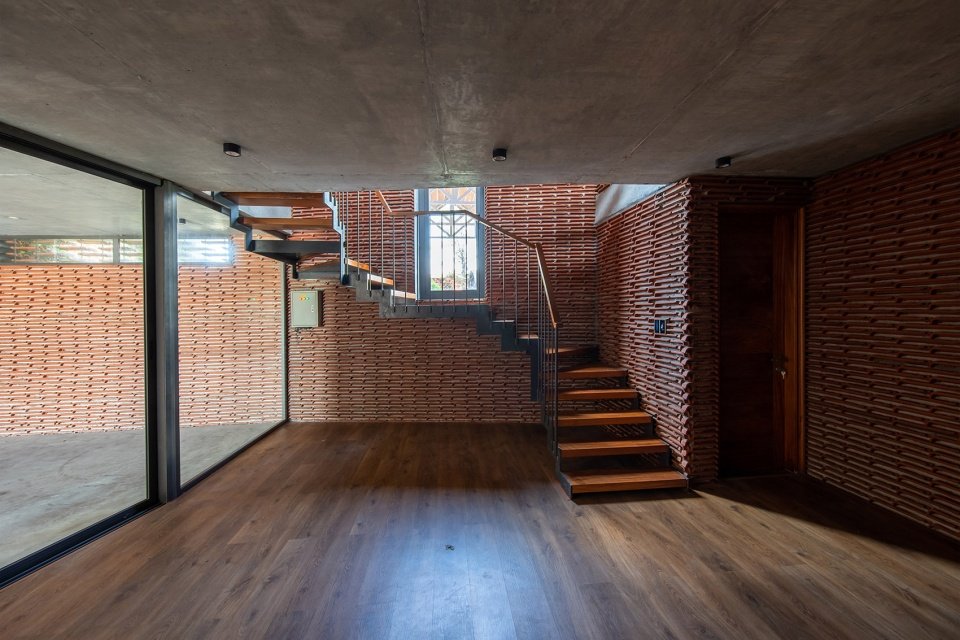
▼底层空间,ground floor space© Le Minh Hoang
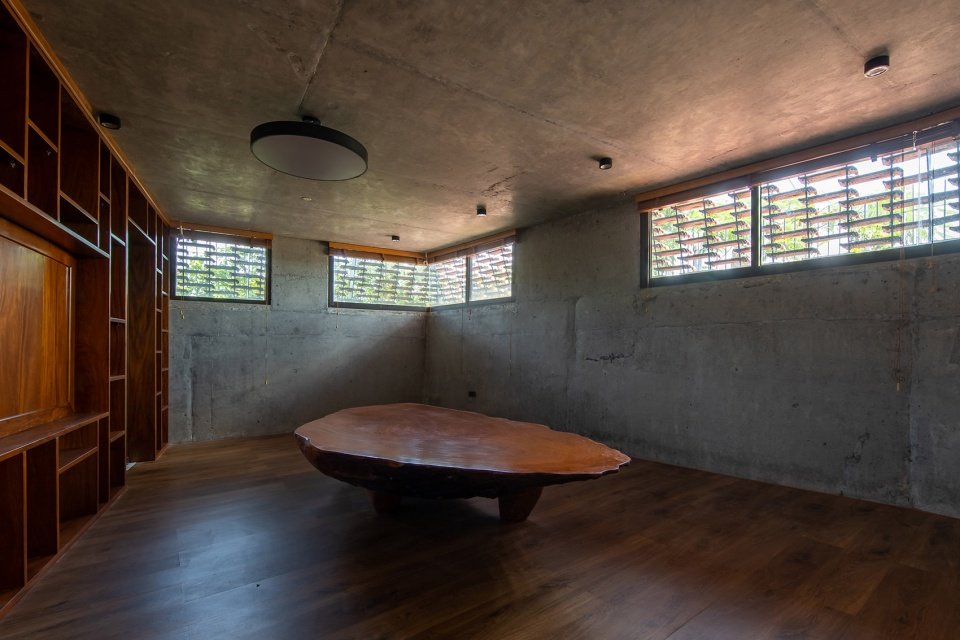
▼多功能房间,multifunction room© Le Minh Hoang
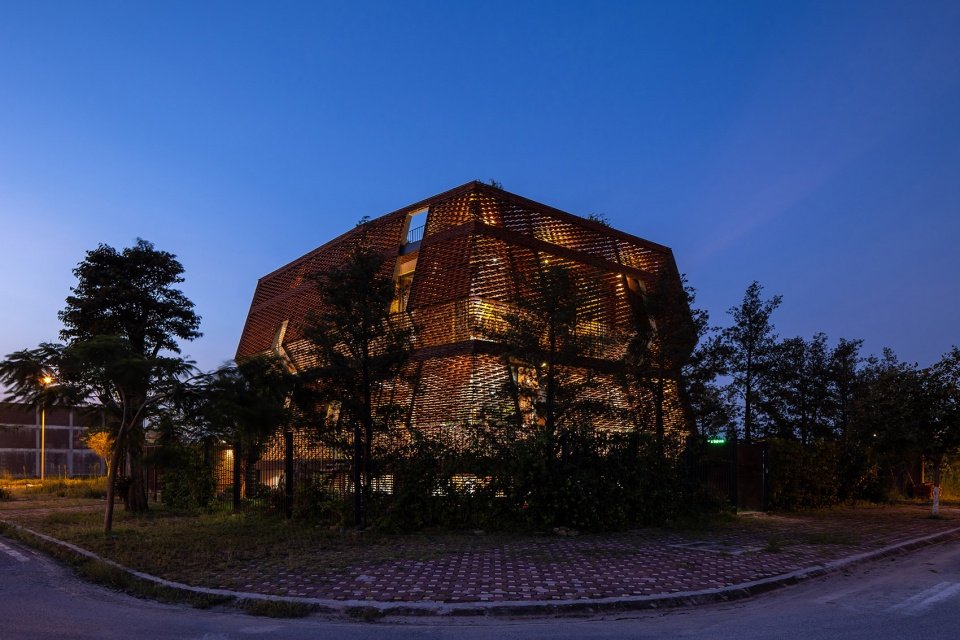
▼外观夜景,night view© Le Minh Hoang
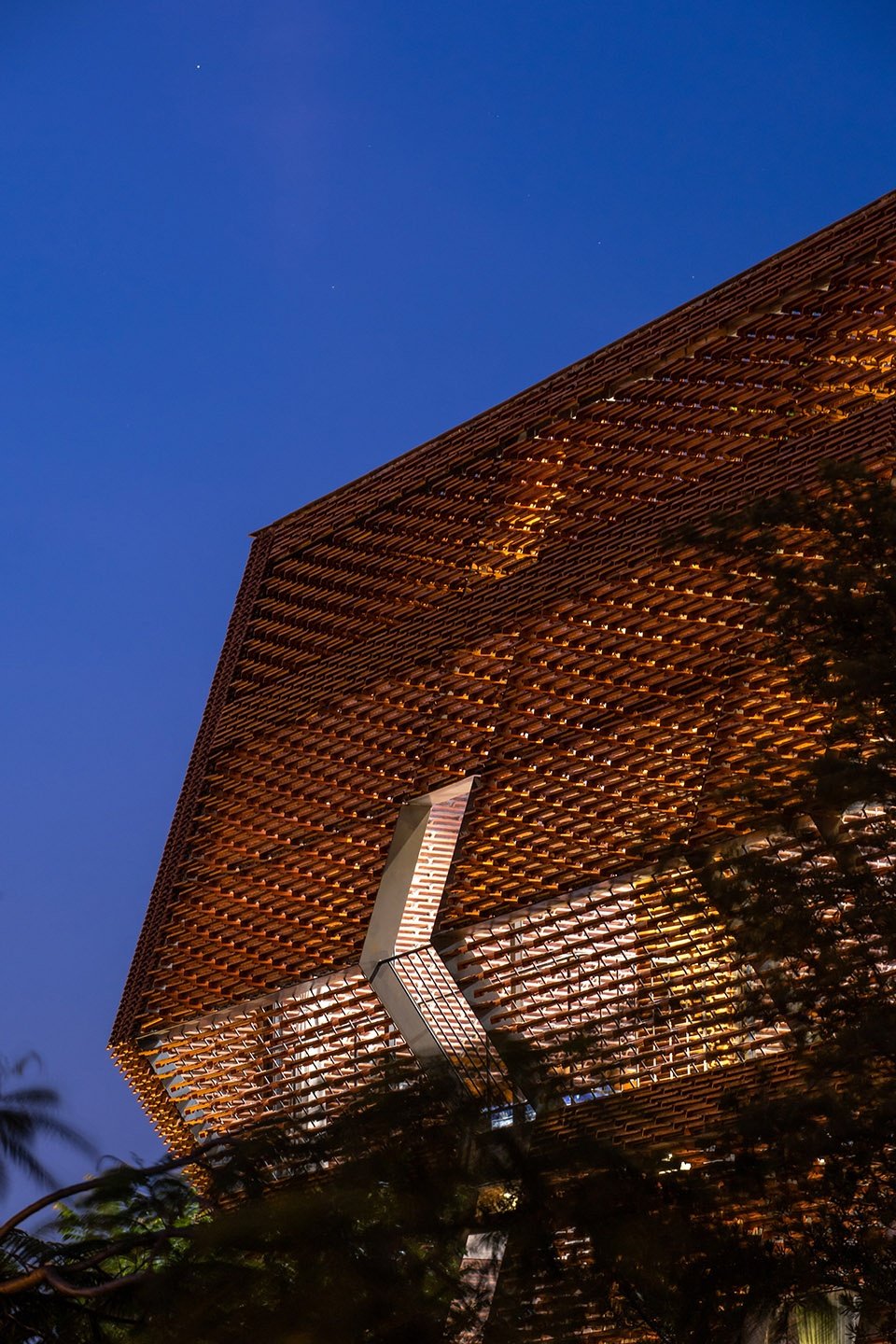
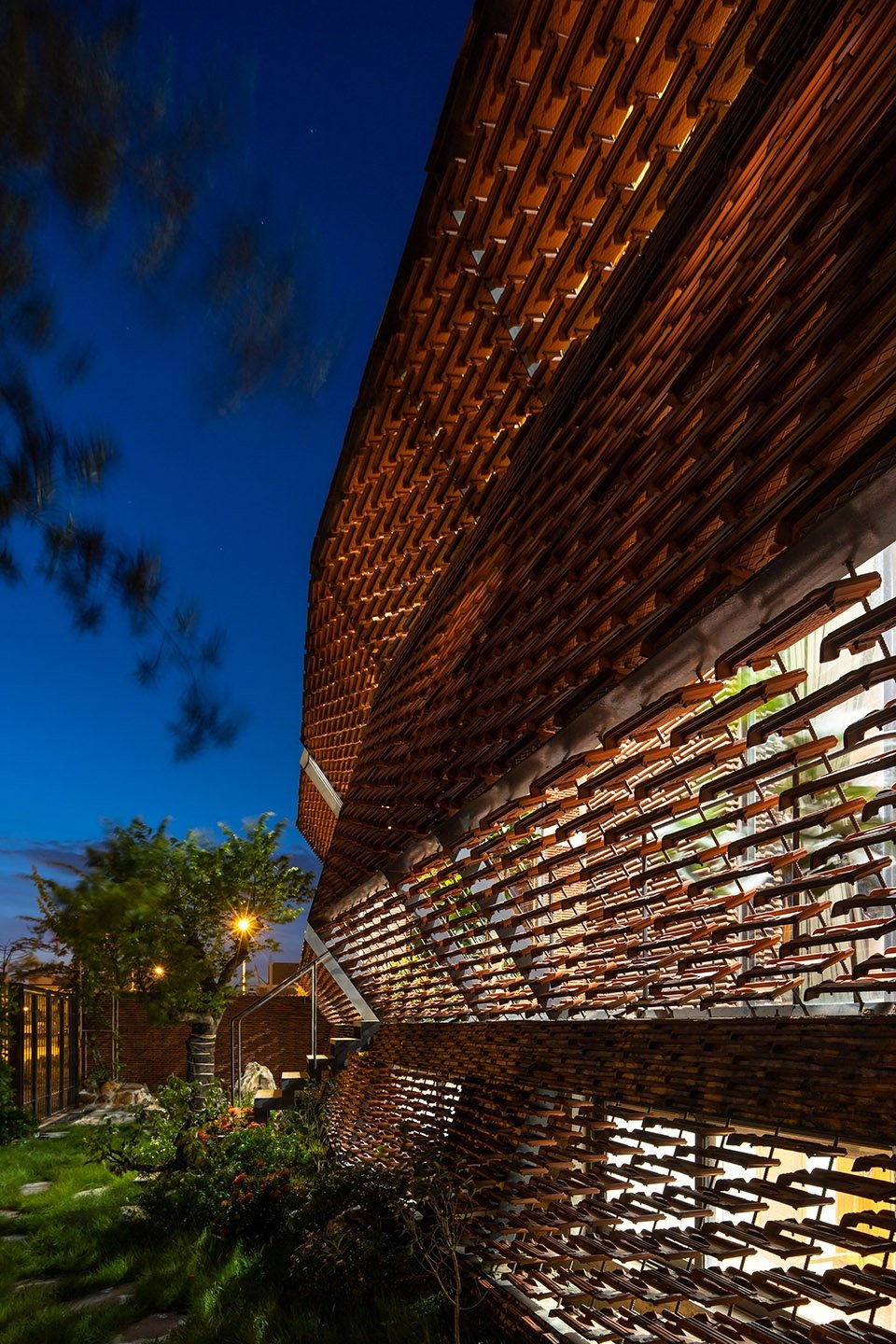
▼立面细胞夜景,night view of the facade details© Le Minh Hoang
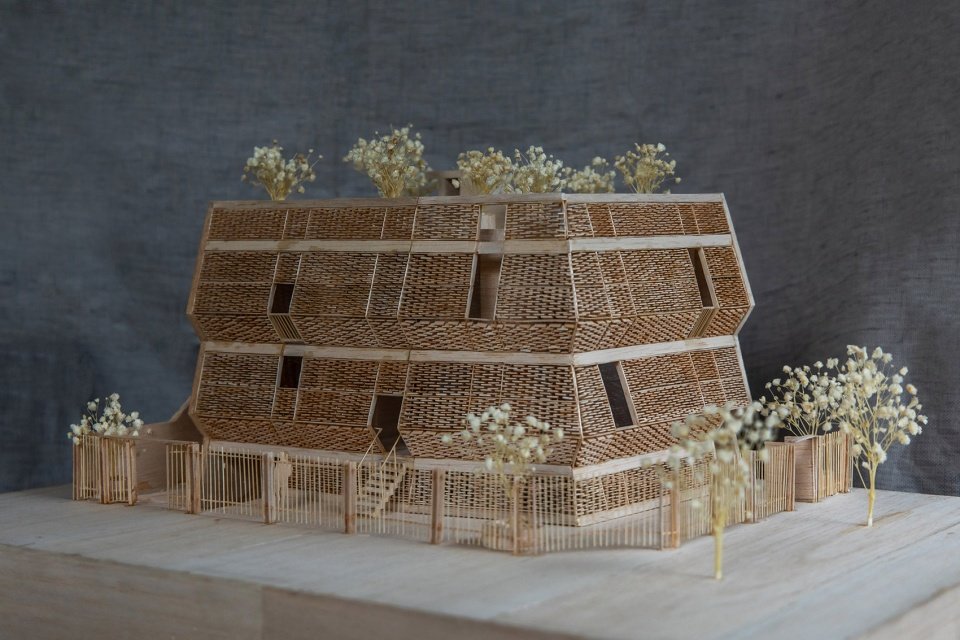
▼模型,model© H&P Architects
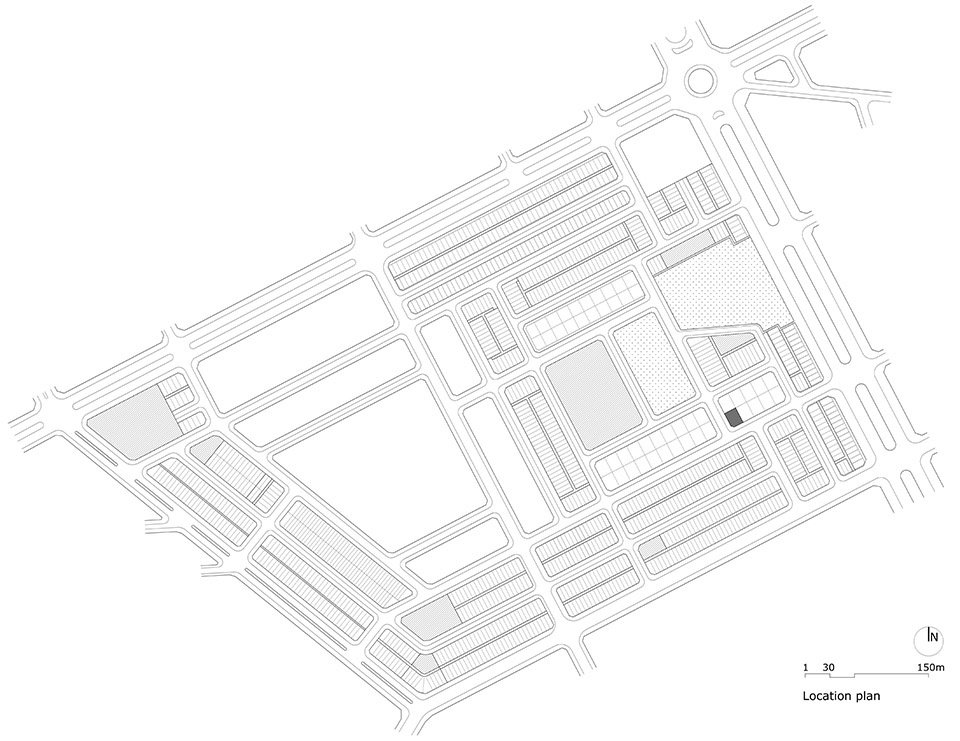
▼总平面图,location plan© H&P Architects
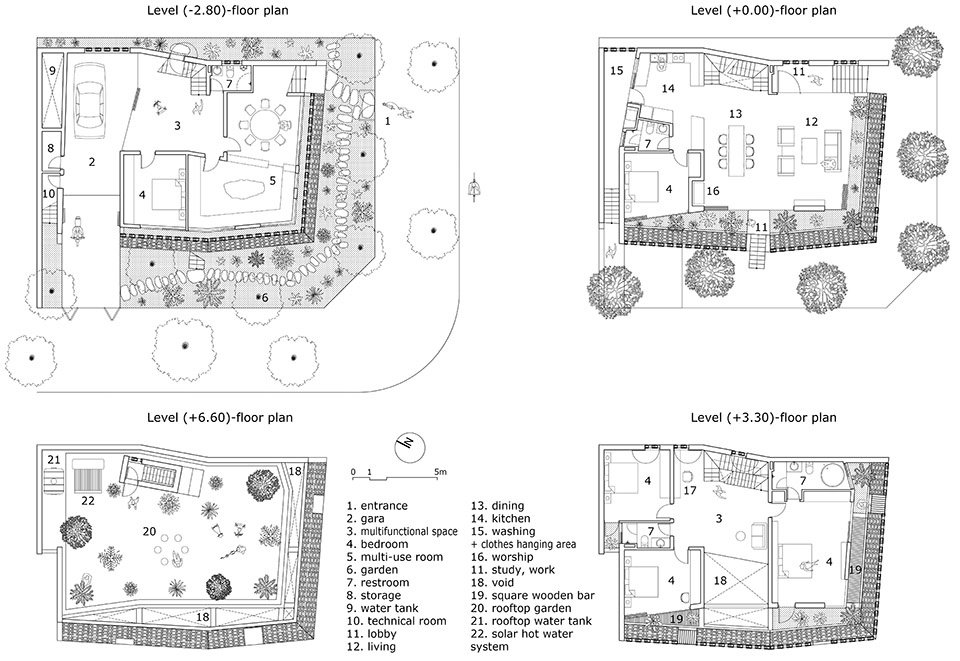
▼平面图,plans© H&P Architects
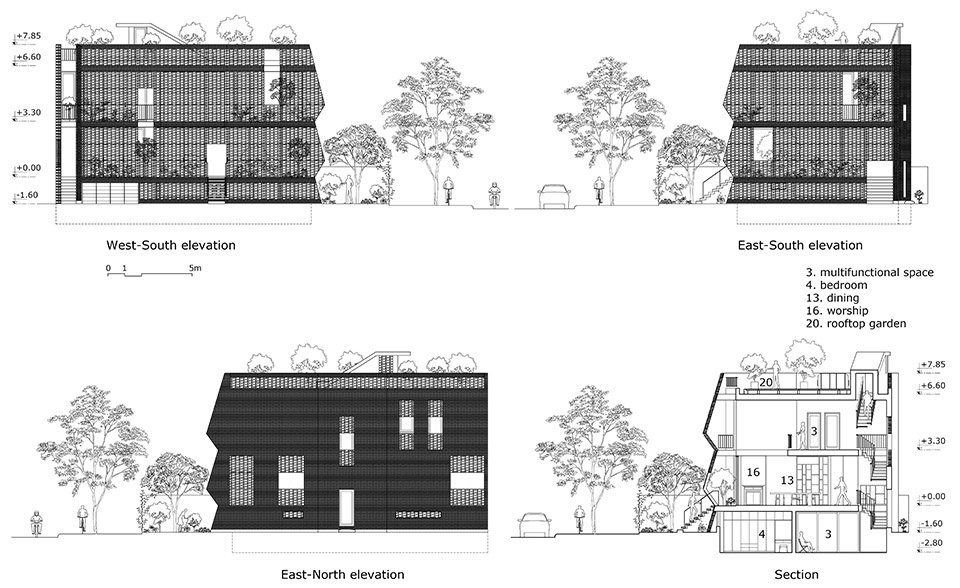
▼立面图与剖面图,elevations and section© H&P Architects
Architect:H&P Architects
Website:www.hpa.vn
Location:Phu Ly city, Ha Nam province, Vietnam
Team: Doan Thanh Ha , Nguyen Hai Hue, Trinh Thanh Huyen, Luong Thi Ngoc Lan, Tran Van Duong, Ho Manh Cuong, Nguyen Van Thinh
Land area: 300 m2
Total floor area: 450 m2
Completion date:July 2021
Main materials:Rooftiles 22(Viglacera), steel, concrete
Photographer:Le Minh Hoang
More:H&P Architects 更多关于他们:H&P Architects on gooood