

Dr Dhaval Rajnikant Mehta小学的增建大楼体现了古老的印度传统,即在村庄中心的树下汲取知识。沙帕尔村是一个工业聚居地,大部分人口都是来自印度不同邦的工厂日薪工人。由于父母的工作性质,孩子们经常被迫放弃受教育,不得不去照顾弟弟妹妹,为他们提供食物。
The extension block at Dr Dhaval Rajnikant Mehta primary school is a depiction of the age-old Indian tradition of gaining knowledge under a tree located at the centre of the village. The village of Shapar is an industrial settlement with most of its population being daily wage factory workers from different Indian states. The children often quit education due to the nature of the parent’s jobs and wind up looking after their younger siblings and providing them meals.
▼项目俯瞰,aeroview of the project© Umang Shah Photography
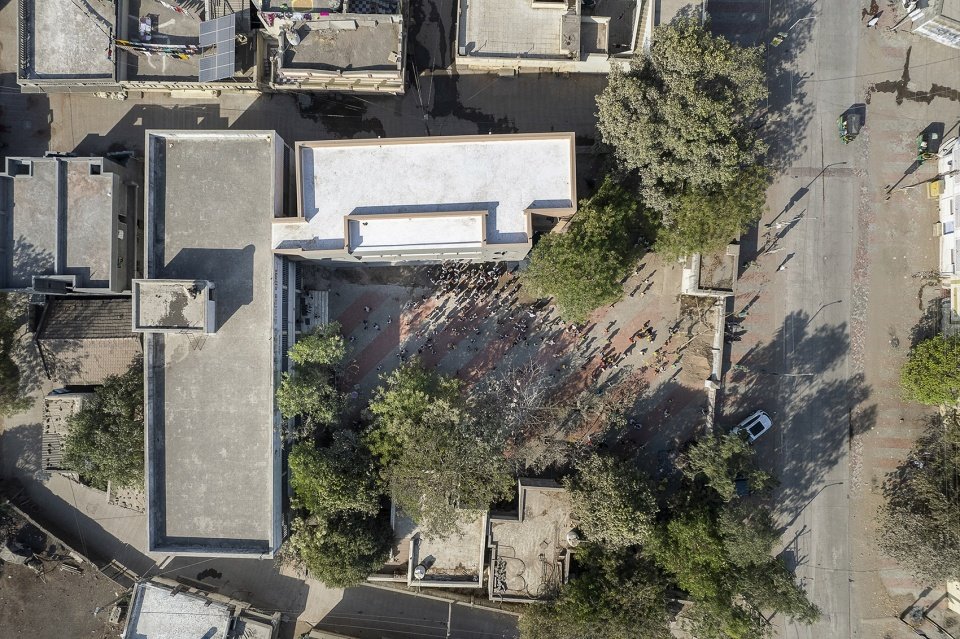
▼增建大楼与周边场地概览, overview of the extension block and surrounding site© Umang Shah Photography
然而,由于这所学校优秀的教育并提供免费午餐,学生人数却已远远超过了其他教育基础设施。这鼓励父母送学生上学,并关心他们的教育状况。
However, this school has students way more than the infrastructure they had because of good education and free midday meals. This encouraged the parents to send students to school and take interest in their educational well-being.
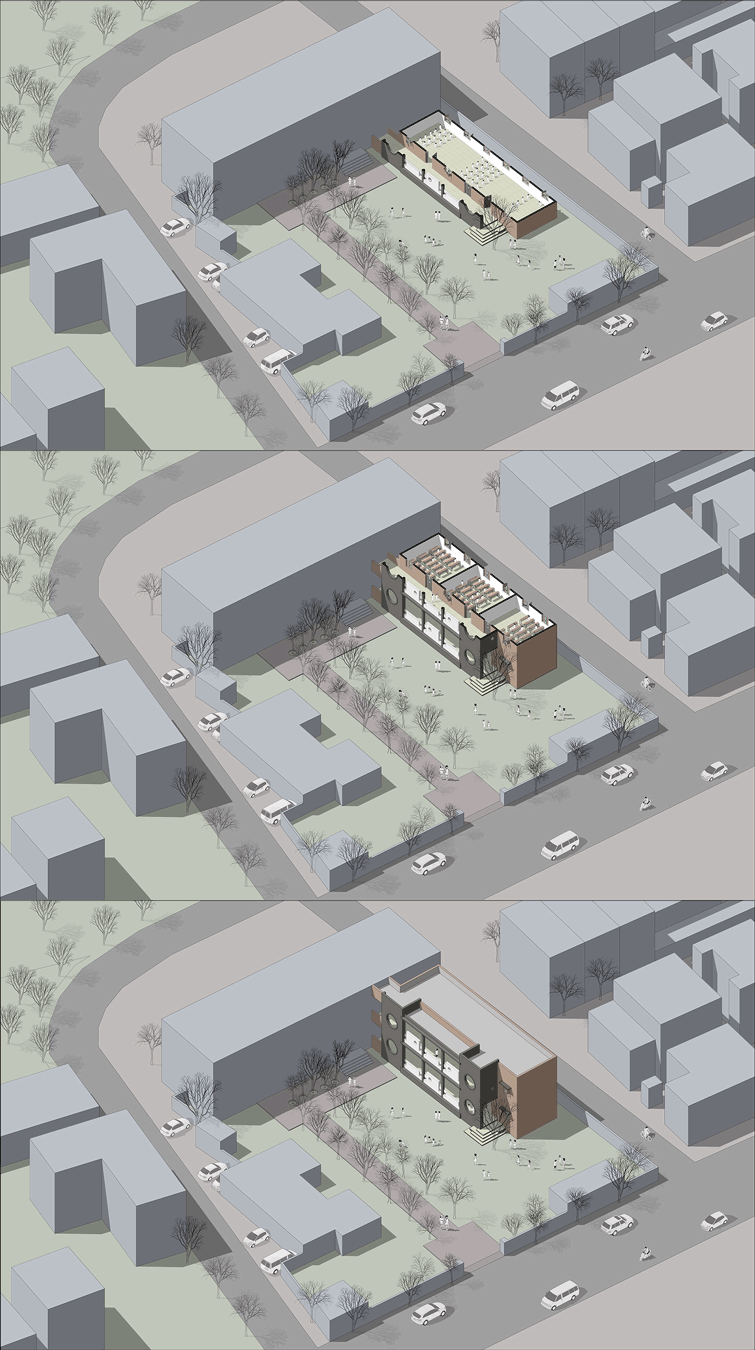
▼项目轴测图,axonometry of the project© Dhulia Architecture Design
校园的主楼坐落在场地尽头,一些未经规划的建筑排列在场地的东侧,一棵美丽的印度楝树似乎成了支撑所有这些建筑的支点。场地的空地作为许多活动的舞台,包括午餐、运动和课外活动。
The campus has the main building sitting at its end. Few unplanned structures line the eastern side and a beautiful neem tree seems to be the fulcrum holding all these buildings at a distance. The foreground acts as a stage for many activities, including midday meals, sports and co-curricular activities.
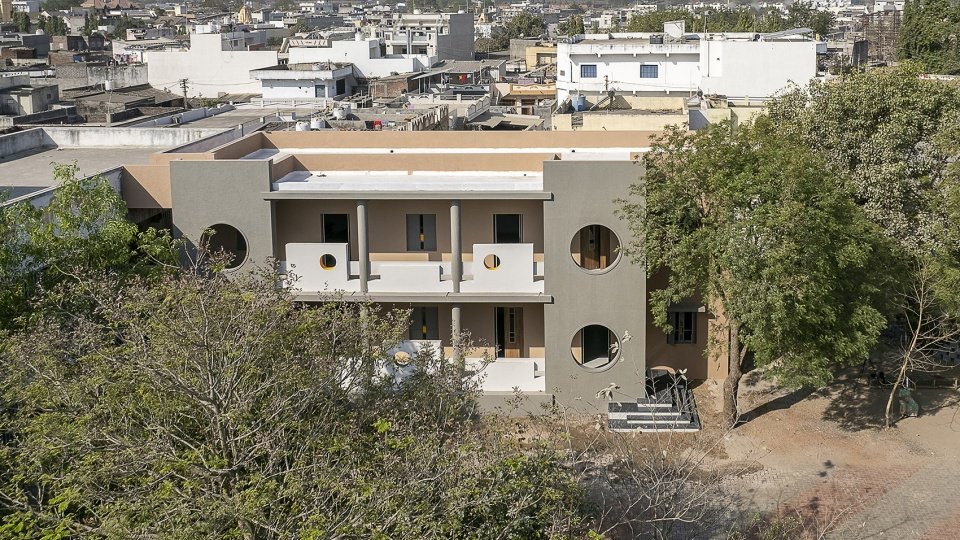
▼建筑立面,facade of the building© Umang Shah Photography
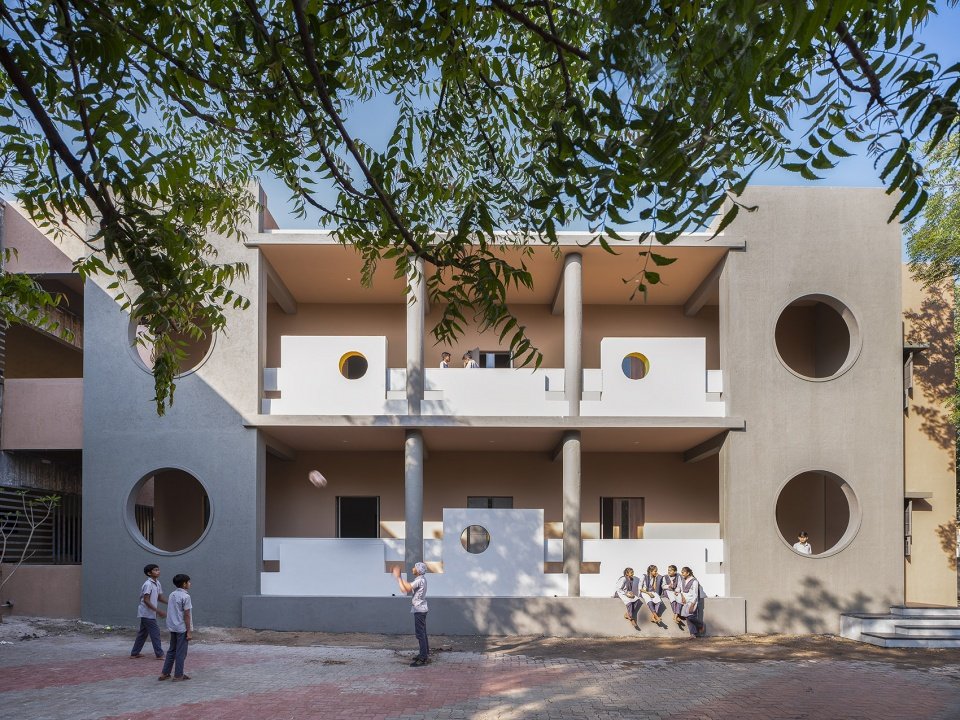
▼建筑外观及其与使用者的互动,building appearance and its interaction with users© Umang Shah Photography
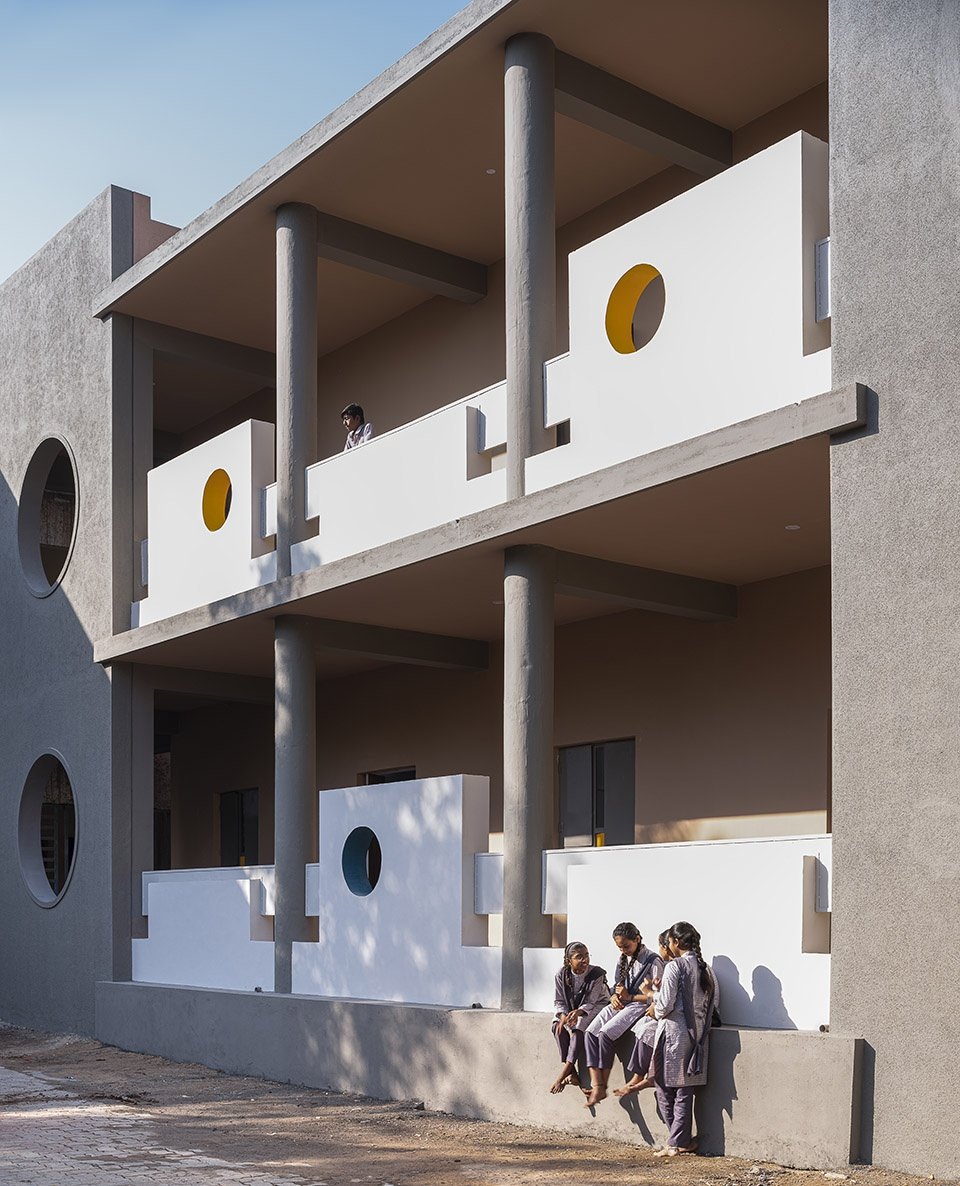
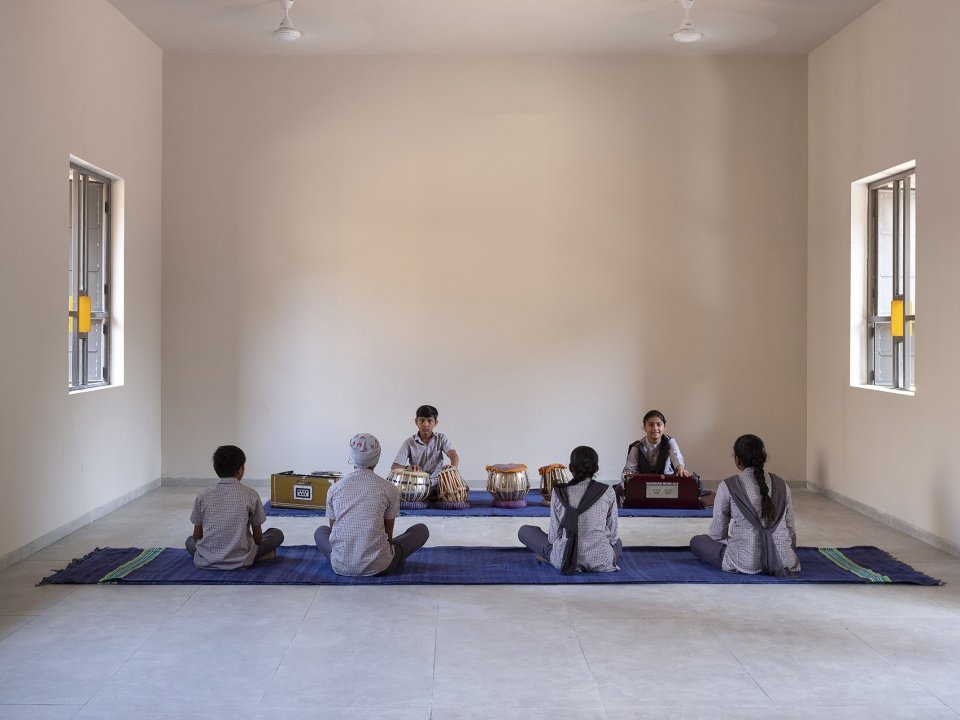
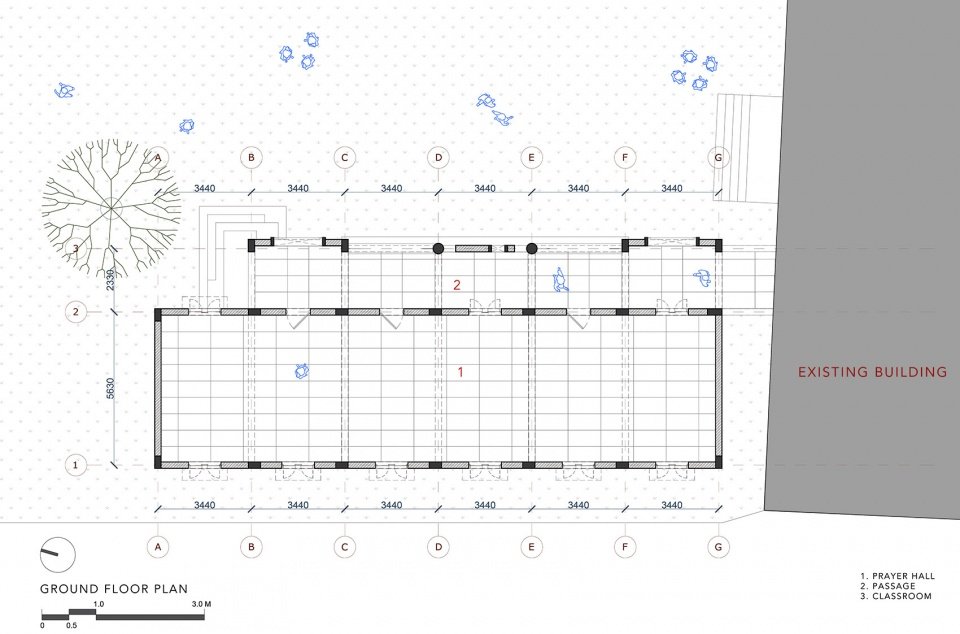
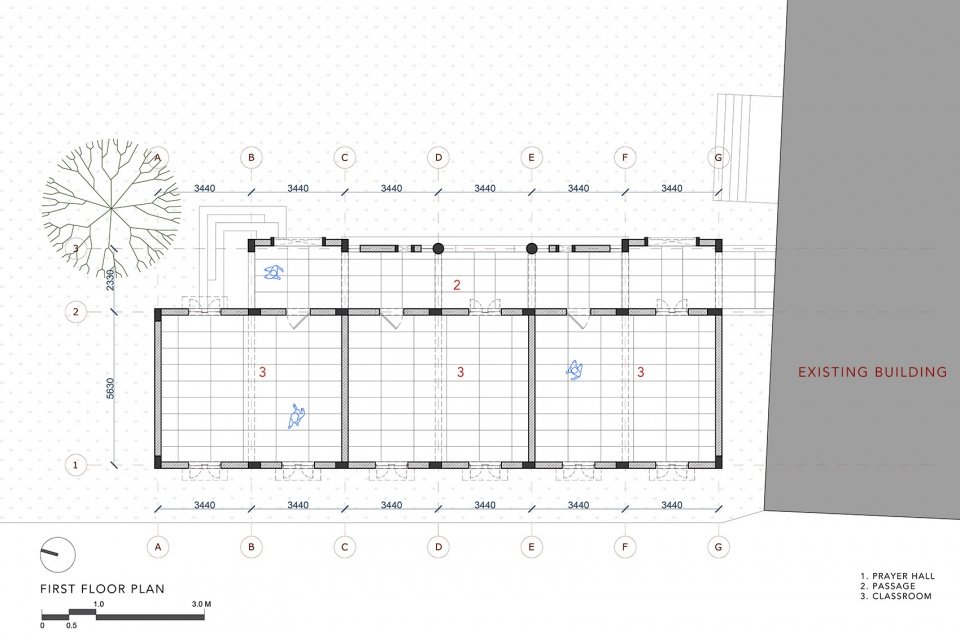
我们把学校安置在楝树下,作为象征悠久历史的礼赞。增建大楼是一个简单的典型平面,上层有三间教室,一层也有三间但没有内部隔断。一层暂时打通增大两倍空间,用作祈祷室,未来增加两个隔断就可以作为三个教室来使用。
We placed the school right under the neem tree as a tribute symbolizing the rich history. The extension block is a simple typical floor plan with three classrooms on the top and three on the bottom except for the interior walls. The ground floor is temporarily left open to double as a prayer hall, adding two partitions can give three more classrooms in the future.
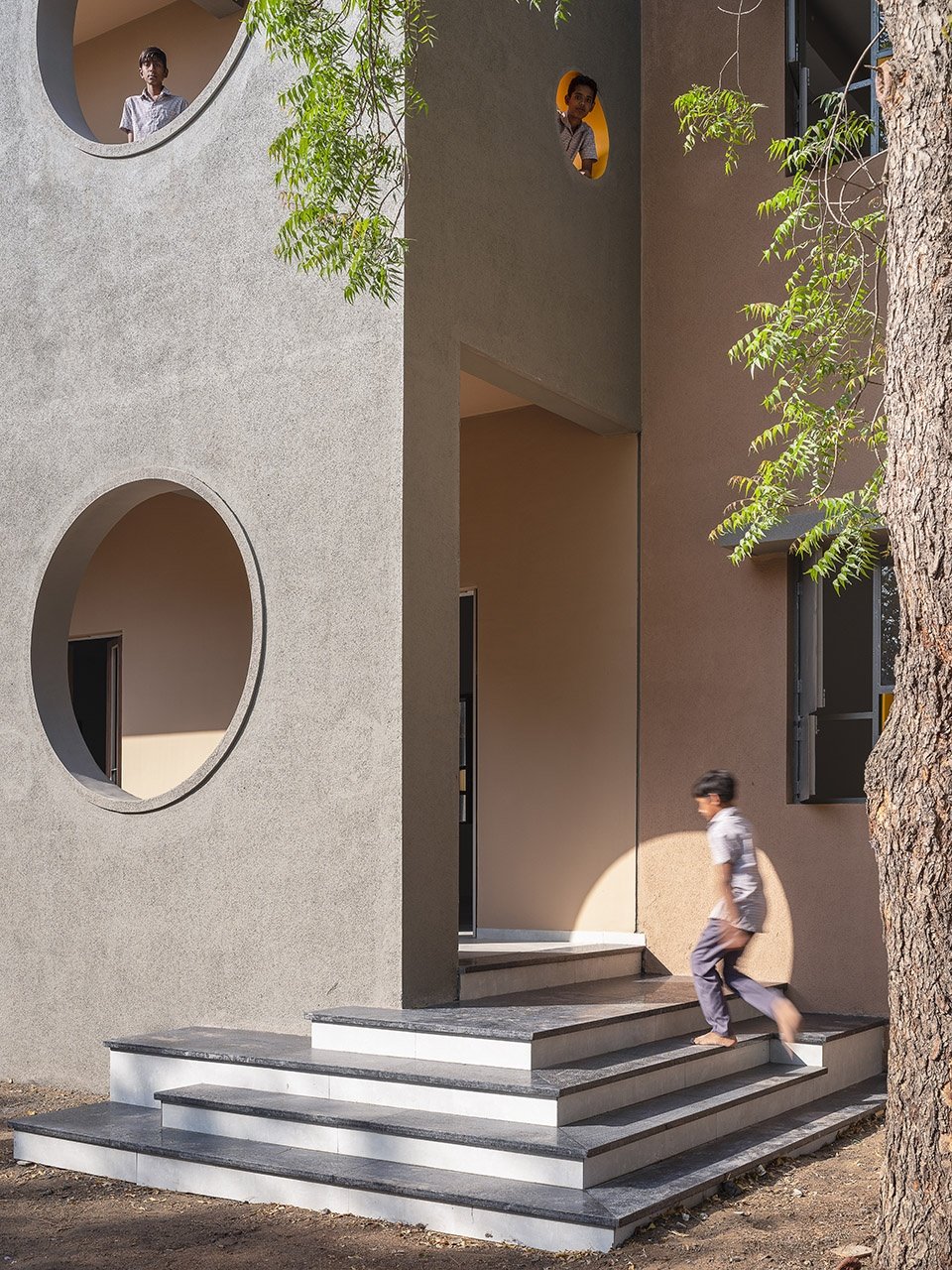
▼建筑入口,entrance of the building© Umang Shah Photography
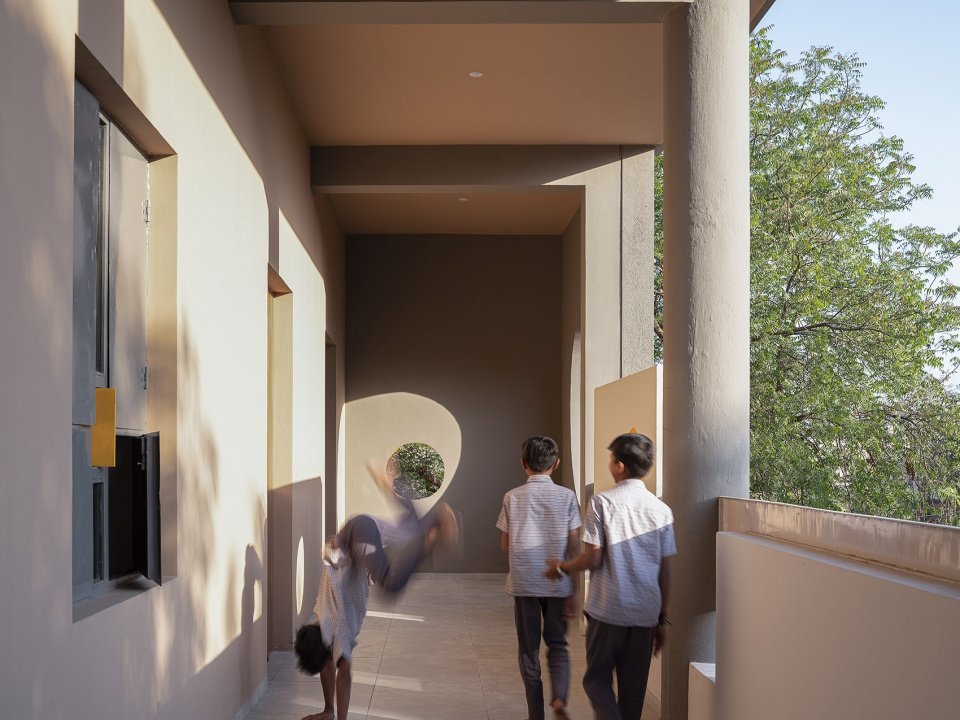
▼二层走廊,second floor corridor© Umang Shah Photography
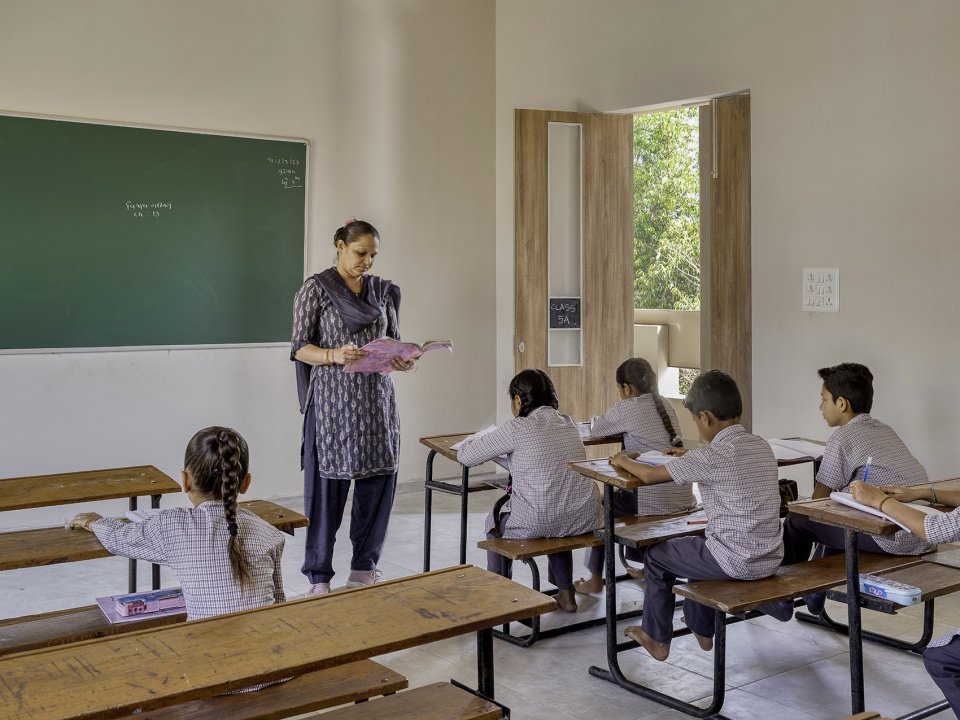
▼教室内部概览,overview of the classroom© Umang Shah Photography
由于空间和预算的限制,我们尝试只用最少的想法来创造有趣的空间。大楼的开口被设计为一个有趣的光线游戏,同时体贴地框住室外空间。通过这些正立面上的开洞,建筑的使用者和校园里的树木被紧密联系起来。
With the space and budget limitations, we tried executing minimal ideas and methods to create playful spaces. The building’s openings are designed to have an interesting play of light while thoughtfully framing the outside. There is a strong connection between the users of the building and the trees on the campus through this collection of openings on the front facade.
▼大楼的开口被设计为一个有趣的光线游戏,the building’s openings are designed to have an interesting play of light © Umang Shah Photography
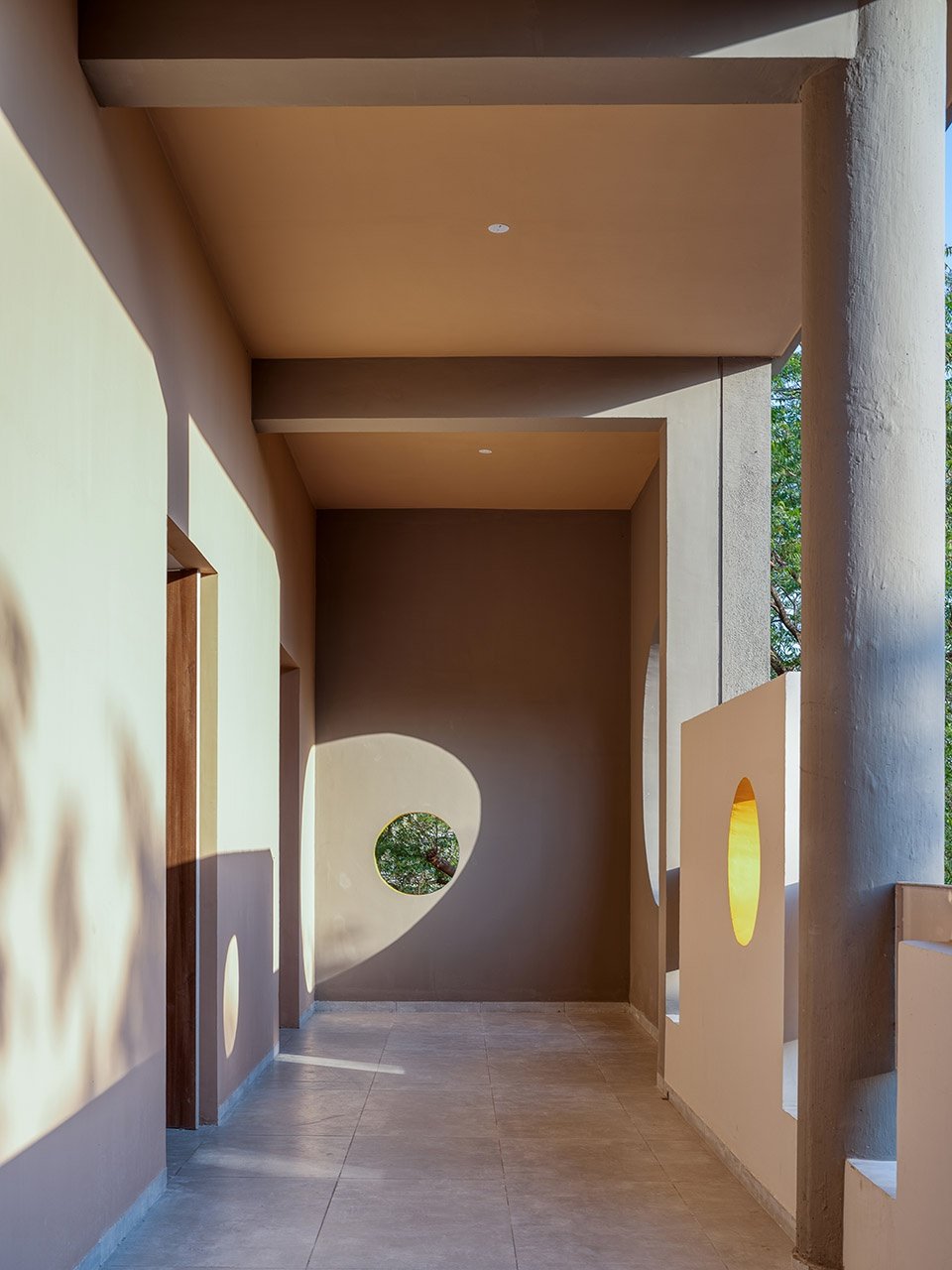
▼走廊墙壁开洞细节,detail of the openings on the wall of corridor© Umang Shah Photography
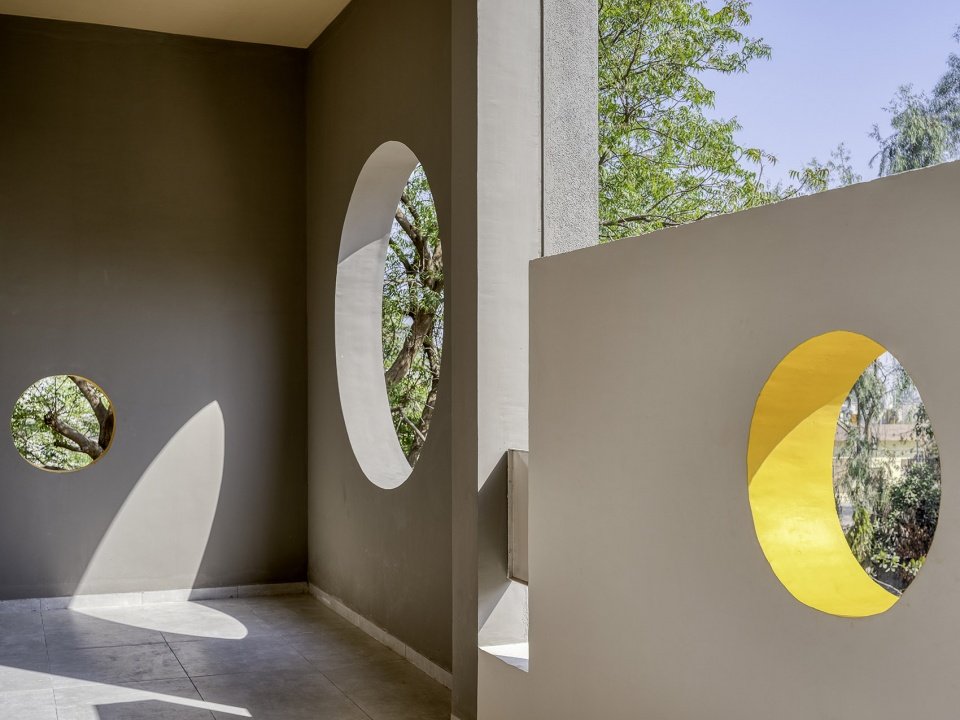
▼建筑立面上的一系列开洞将建筑使用者和校园里的树木紧密联系起来,a strong connection between the users of the building and the trees on the campus through this collection of openings on the front facade© Umang Shah Photography
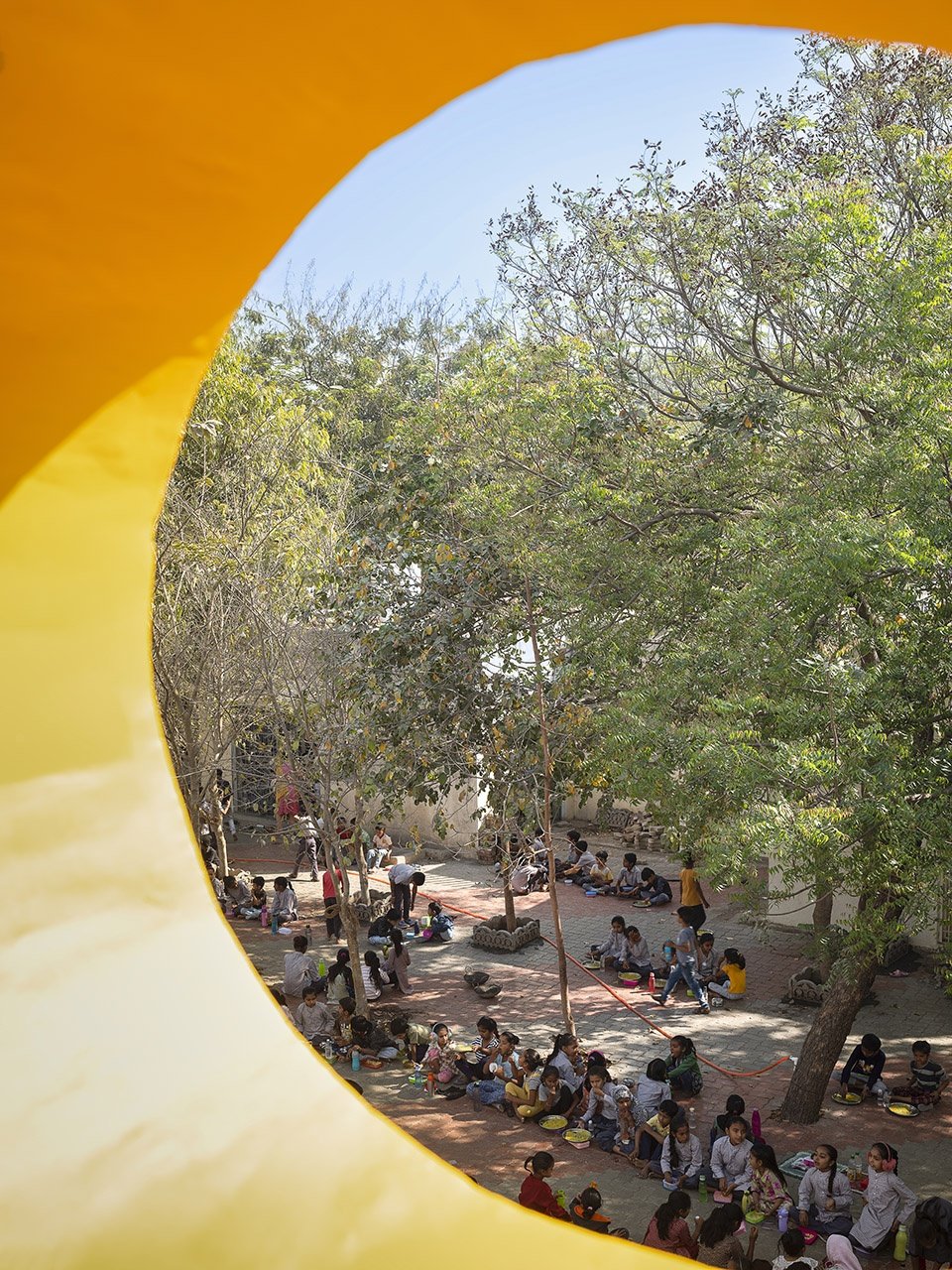
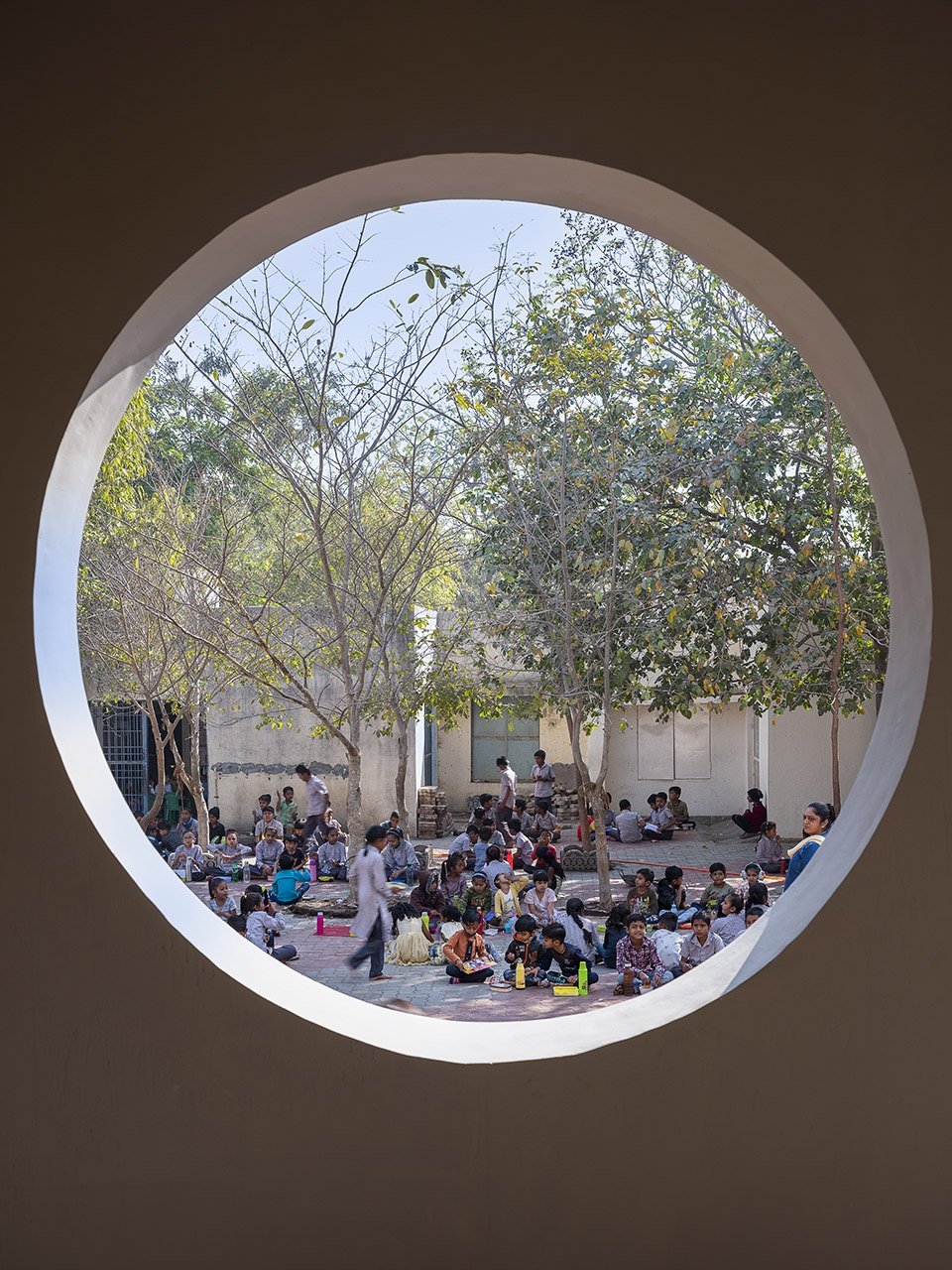
建筑采用了朴实的色调,从而让立面上的白墙脱颖而出,灰色框住了这些白墙,同时柱廊的固有色作为校园的点缀,就像挂在墙上的相框。二楼走廊尽头的圆形开洞框住印度楝树,以黄色的线条了强化了原始思路。
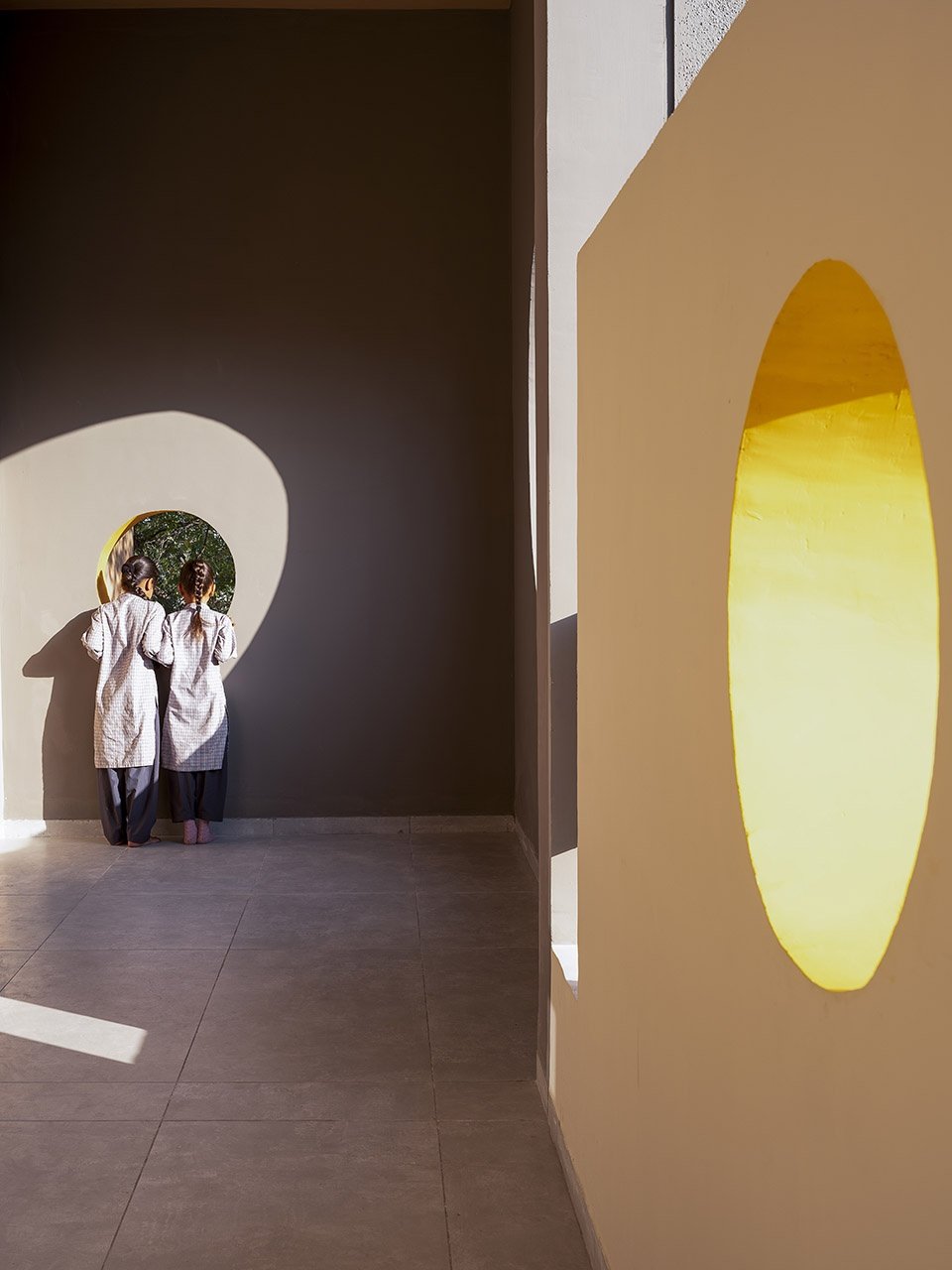
The building wears an earthy tone, which lets the white walls on the facade stand out. The greys frame these white walls while the primary colours on the jamb highlight the campus like a photo frame on a wall. The small circular opening at the end of the corridor on the top floor encircles the neem tree with a yellow line reinforcing the initial thought.
▼墙壁开洞与学生的互动,interaction between the students and the openings on the wall© Umang Shah Photography
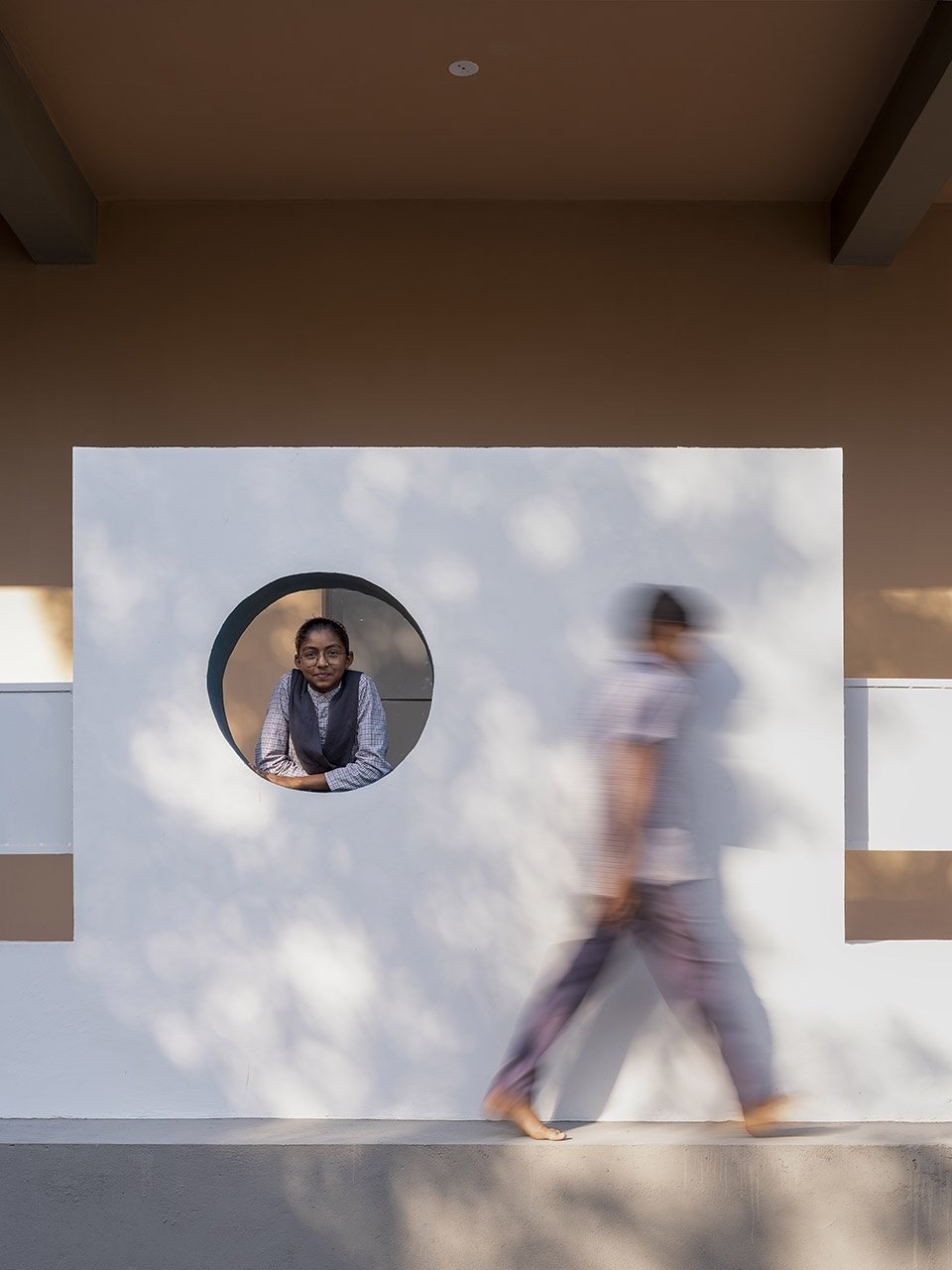
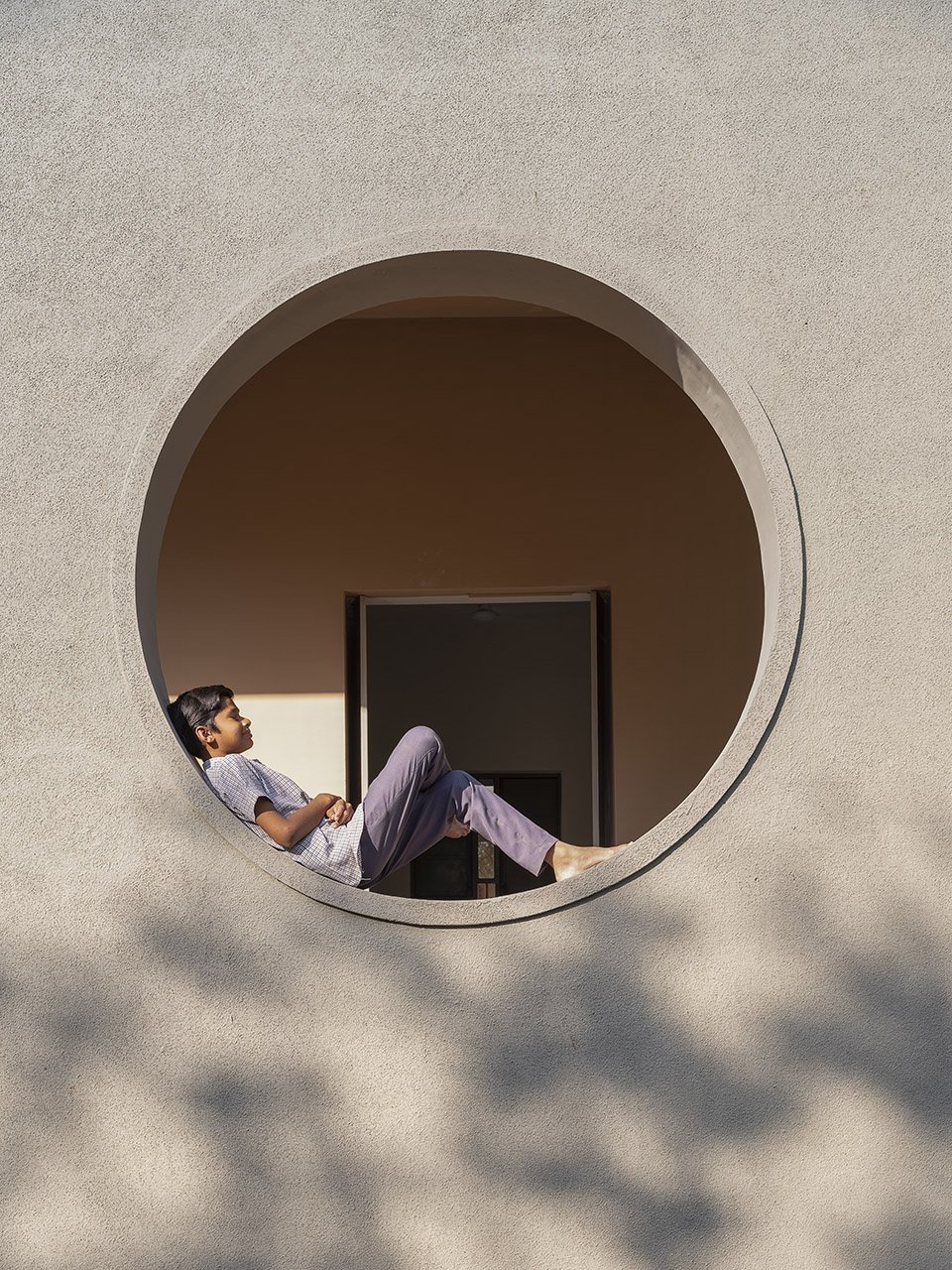
门窗形成了有趣的细节,与孩子们产生互动。门上有一块小黑板,作为画布供孩子们描绘他们的个性,并编号他们的班级。窗户上有一个旋转的黄色矩形以供玩耍。门窗上的玻璃保持室内光线充足。所有这些元素在质朴的走廊墙壁上构成了了微妙的对比。
The door and windows form playful details to interact with the children. The doors have a small blackboard which acts as a canvas for kids to depict their identity and number their classes. The windows have a rotating yellow rectangle for play. The glass in doors and windows keeps the interiors always lit. All these form slightly contrasting elements on the earthy corridor walls.
▼门上的小黑板作为画布供孩子们描绘他们的个性,a small blackboard on the door which acts as a canvas for kids to depict their identity© Umang Shah Photography
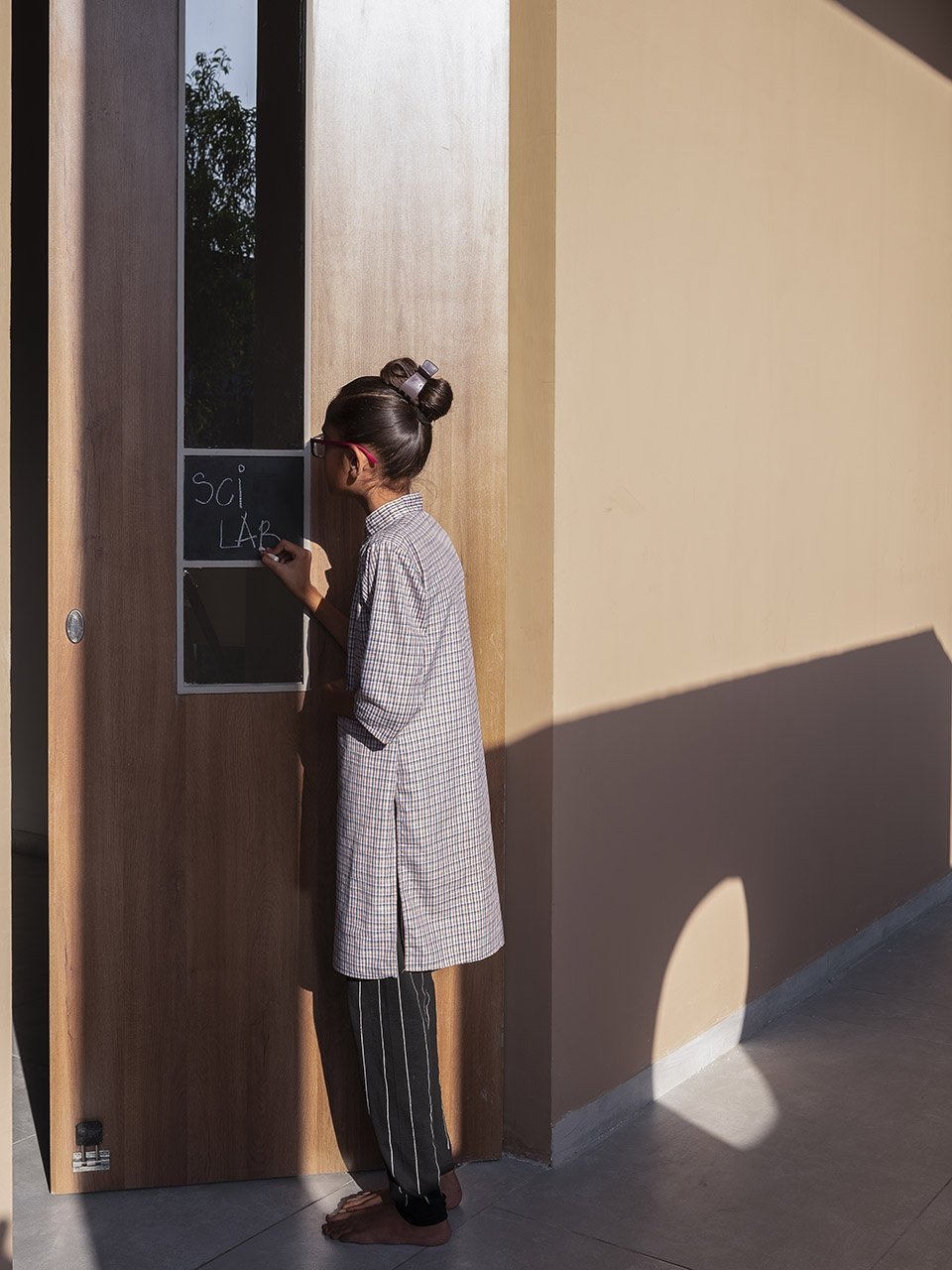
▼学生由开洞望向室外小广场上的印度楝树,students looking at neem trees in the small square from the openings© Umang Shah Photography
▼首层平面图,first floor plan© Dhulia Architecture Design
▼二层平面图,second floor plan© Dhulia Architecture Design
Project Name: School under a Neem
Office Name: Dhulia Architecture Design
Office Website: www.studiodhulia.in
Social Media Accounts: https://www.instagram.com/dhuliaarchitecture.design/?hl=en
Contact email: publications@studiodhulia.in
Firm Location: Rajkot, Gujarat
Project Completion Year: 2023
Gross Built Area (m2/ ft2): 340 m2
Project Location: Shapar, Gujarat
Program / Use / Building Function: Institution
Lead Architects: Komal Dhulia
Lead Architects e-mail: komal@studiodhulia.in
Photo Credits: Umang Shah Photography
Photographer’s e-mail: umangshahphotography@gmail.com
Project Team: Ravi Badrakiya, Savan Kanani
Structural Consultant: Manish Doshi Office
More:Dhulia Architecture Design Studio。更多关于:Dhulia Architecture Design Studio on gooood