

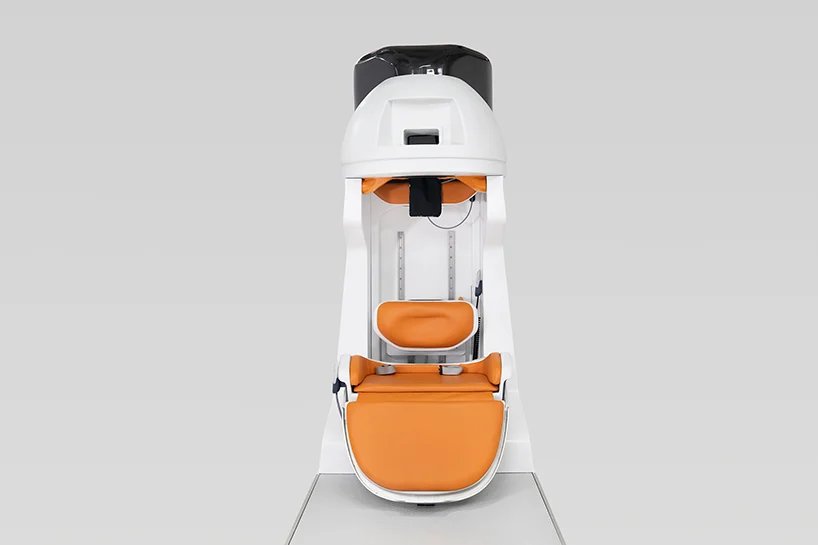
a team of researchers from te herenga waka – victoria university of wellington in new zealand – has developed a new patient handling system to make MRI scanning of the brain more comfortable, accessible, and affordable. the seated solution intends to reduce anxiety thanks to a number of features, including a remote control for the patient and a window to see out of.
all images courtesy of smart interactions
current clinical MRI (magnetic resonance imaging) scanners are expensive to purchase and hard to access for many. moreover, the scanning process, where patients lie down flat inside a tight cylindrical space, can be an overwhelming and claustrophobic experience. this is where the team at smart interactions come in. they have developed an industrial design in parallel with their client – a multinational team (harvard, yale, minnesota, and são paulo universities) investigating the potential of novel technologies to reduce barriers to use of MRI.
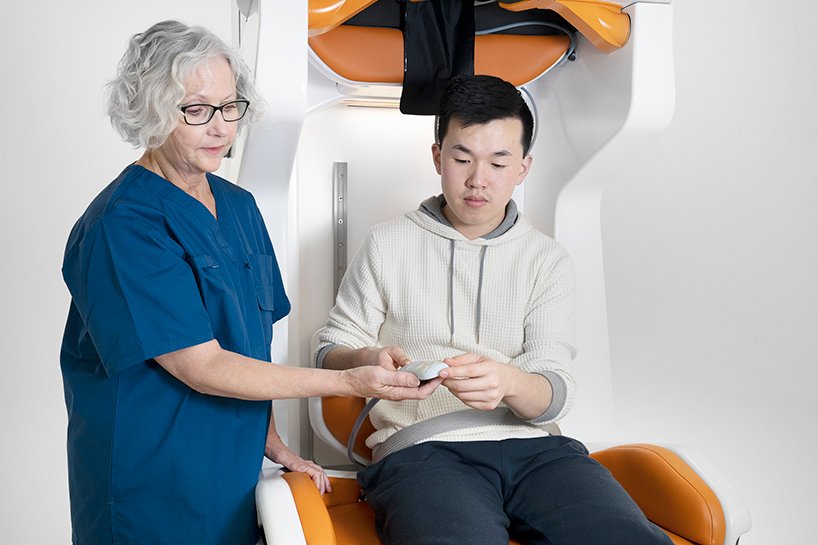
the remote control for the patient offers a simple and intuitive UX to reduce anxiety by offering a sense of control
smart interactions’industrial design begins with a familiar object – an easily accessible seat. once seated in this adjustable and ergonomically designed chair, they can elevate themselves into the scanner using their own control device. they may then inflate their own head-support system (patent pending) to ensure head comfort and stability. during the scan, patients even have a window to see out of, therefore reducing claustrophobia.
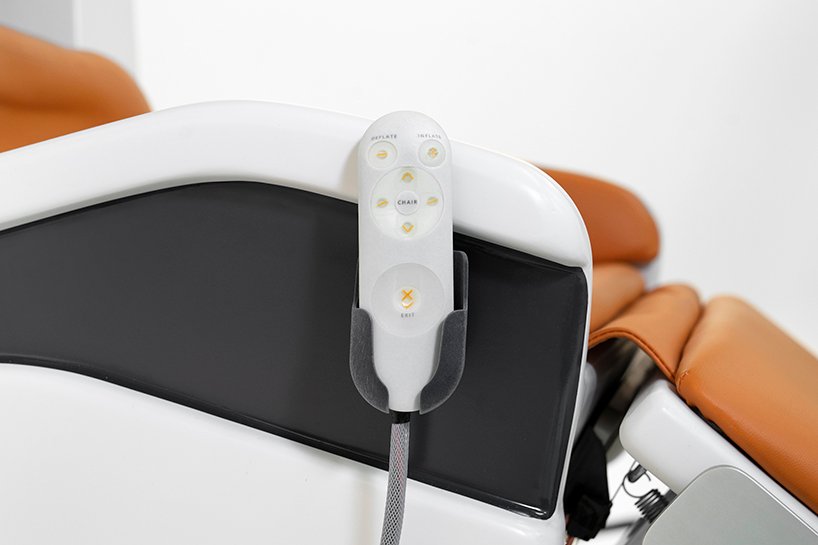
the remote control’s tactile qualities guide the user thanks to being 3D printed in only two multi-material parts
either the user or the MRI technician can control the chair and inflatable head-support with independent remote controls. a user’s remote control is new and unique in the context of MRI-UX. the remote controls offer touch-feedback as they are 3D printed using a range of multi-material hardnesses. for instance, the buttons to inflate and deflate the head-support are made from soft rubber and mimic the shape and feel of an inflated and deflated object respectively. the user’s control allows adjustment of essential features yielding a simple and intuitive UX, while the technician’s device allows full control.
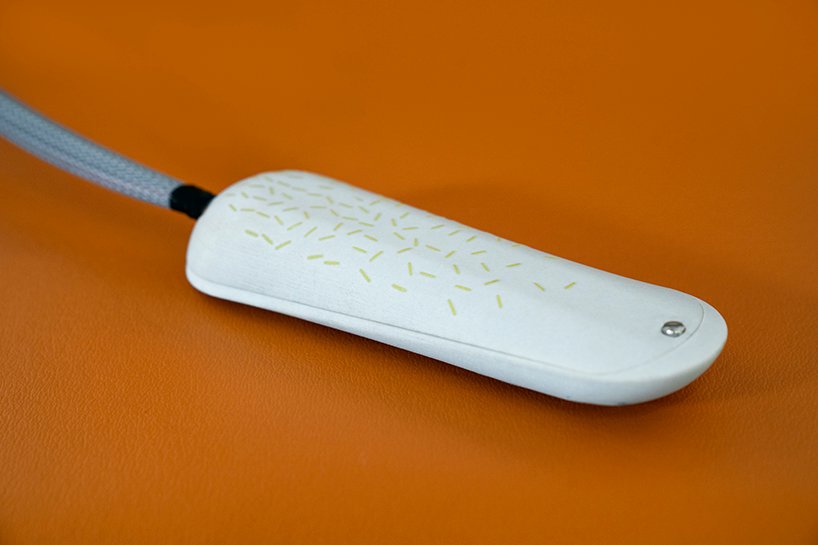
the back of the remote is printed with soft rubber grip patterns
the inflatable head-support system was a major design focus, with the solution expanding around the neck, forehead and sides of the head to comfortably reduce head movement. the goal for this device was to achieve excellent usability while reducing head motion to less than 1 mm in any direction. the team tested the head-support system using qualitative and quantitative methods including a motion head tracking system and succeeded in comfortably and securely reducing head motion.
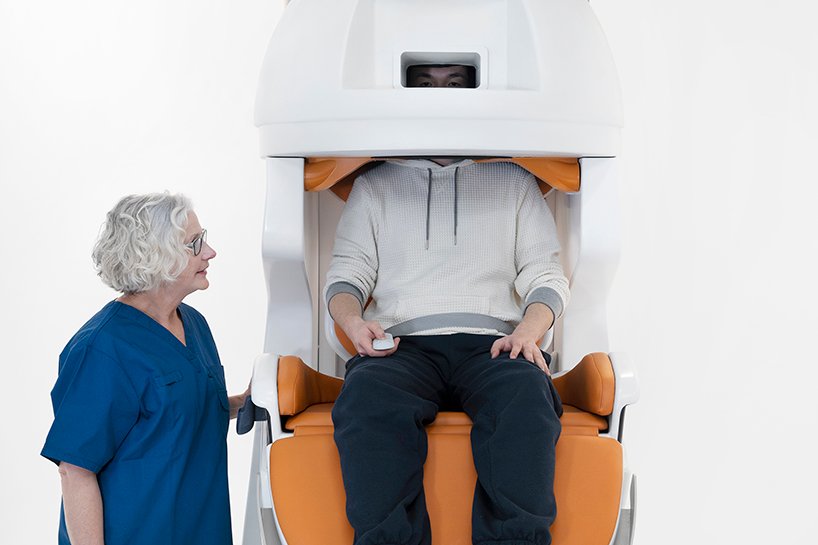
the patient can see outside through a window that required highly sophisticated engineering solutions to facilitate this UX and reduce anxiety
the work is fully functional, and will undergo clinical trials along with the client’s technology in the next two years. together, smart interactions and their client believe they will make MRI accessible to a wider population, enabling the scans to be used for early detection of dementia and stroke prevention.
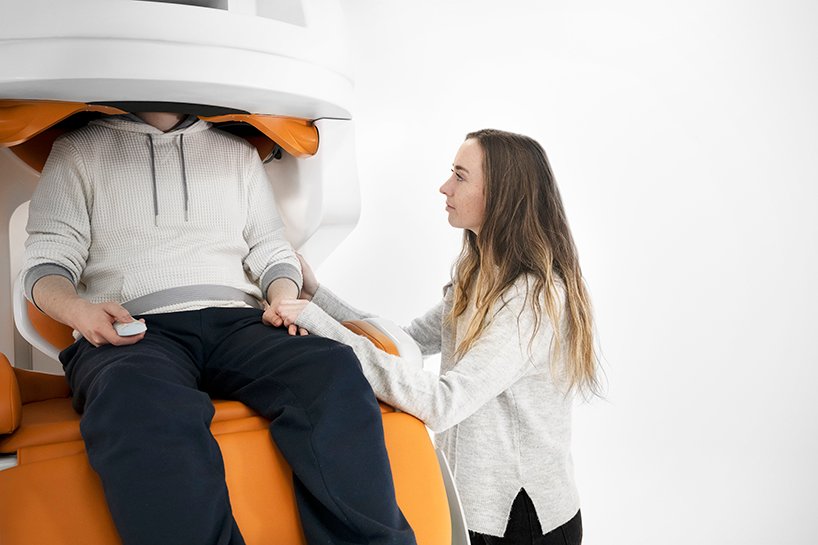
the design is the first to allow for a support person to be with the patient
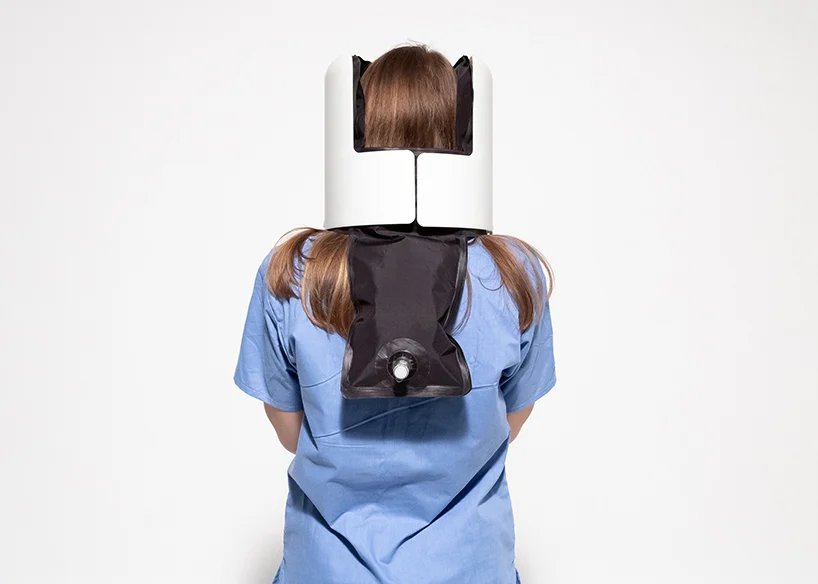
the head support system fits inside the magnet. it is shown here outside the magnet to illustrate its configuration. the valve connects to a pump system that can be controlled by the user.
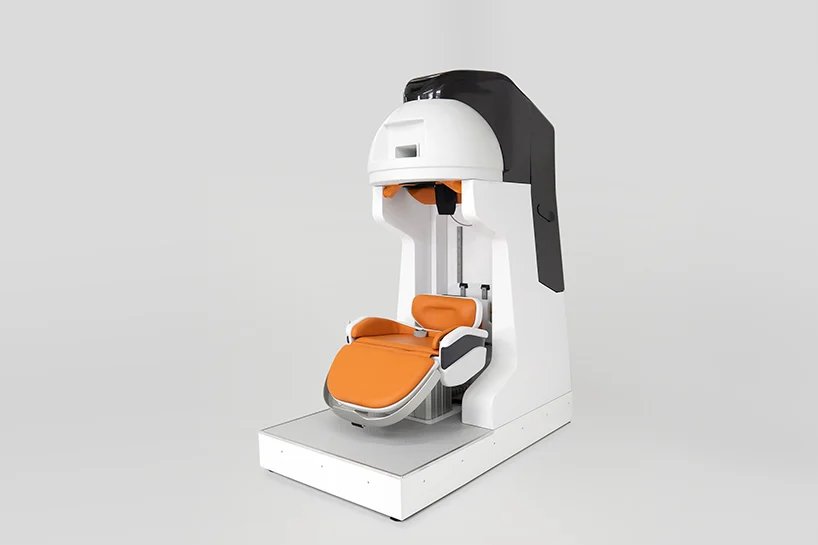
the design begins with a familiar object – an easily accessible seat
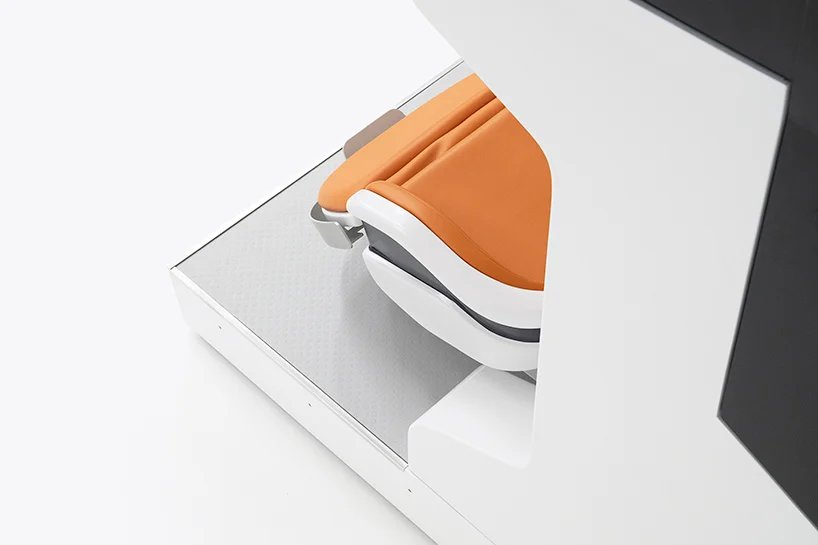
close-up view of the adjustable and ergonomically designed chair
project info:
project type: head-only MRI system
design: smart interactions
team: edgar rodríguez ramírez, ben parkinson, mailin lemke, christy wells, jacob marsh, mathieu szmigiel, joseph bailey, sam bryan, isabella molloy, maryam namini mianji, tiger guo
designboom has received this project from our‘DIY submissions‘feature, where we welcome our readers to submit their own work for publication. see more project submissions from our readers here.
edited by: lynne myers | designboom