

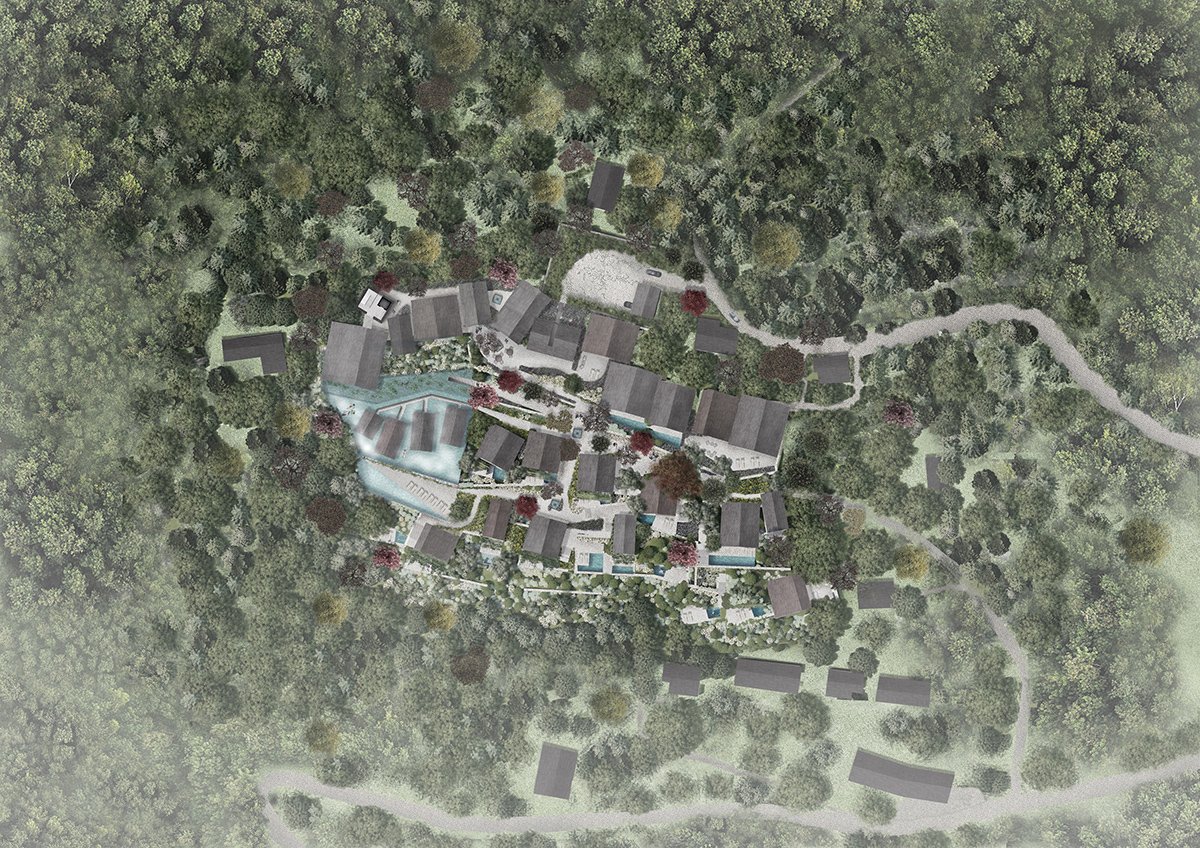
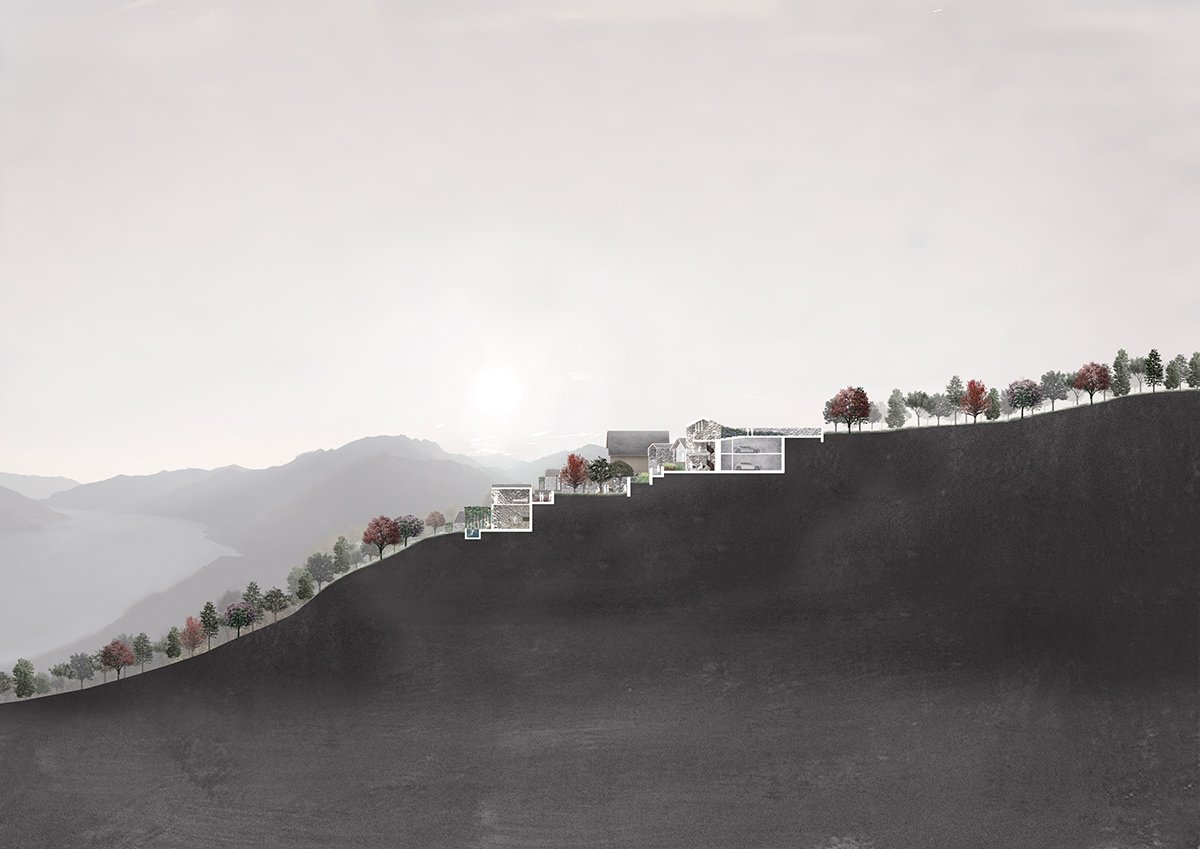
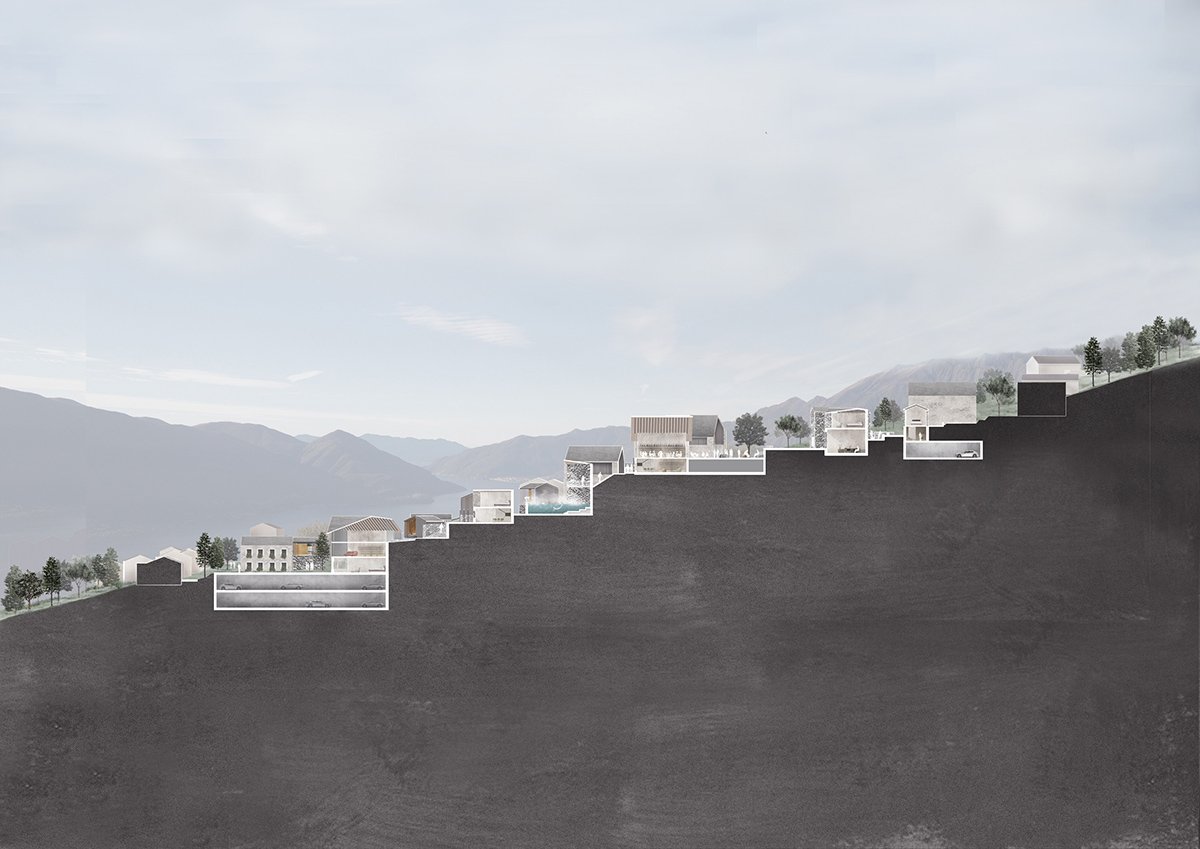
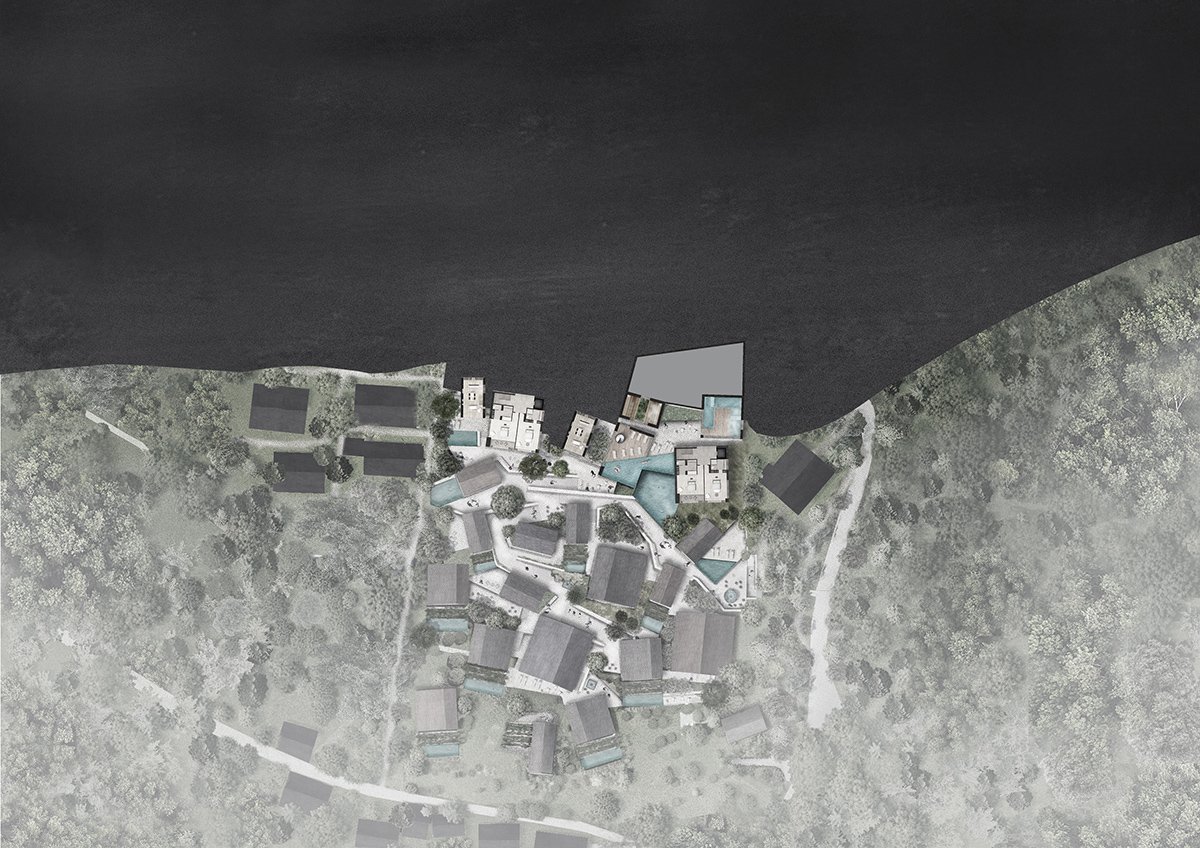
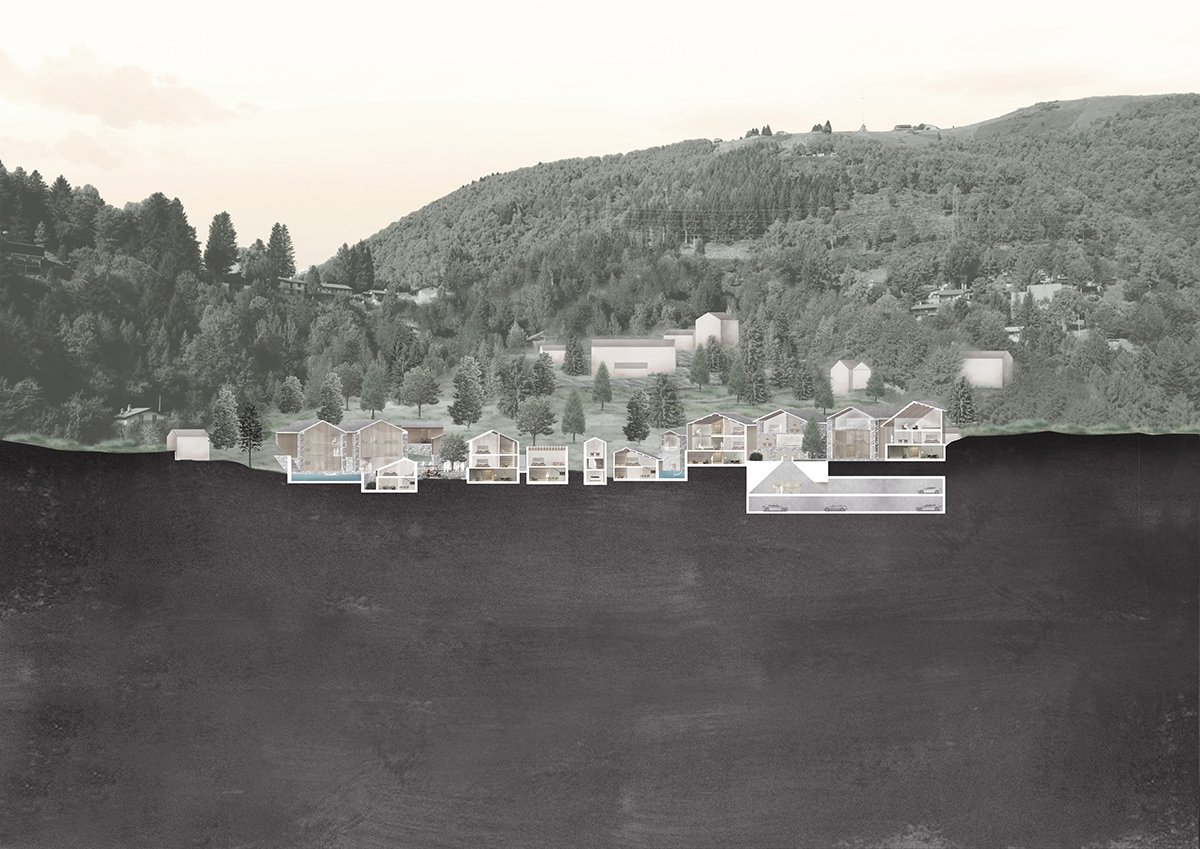
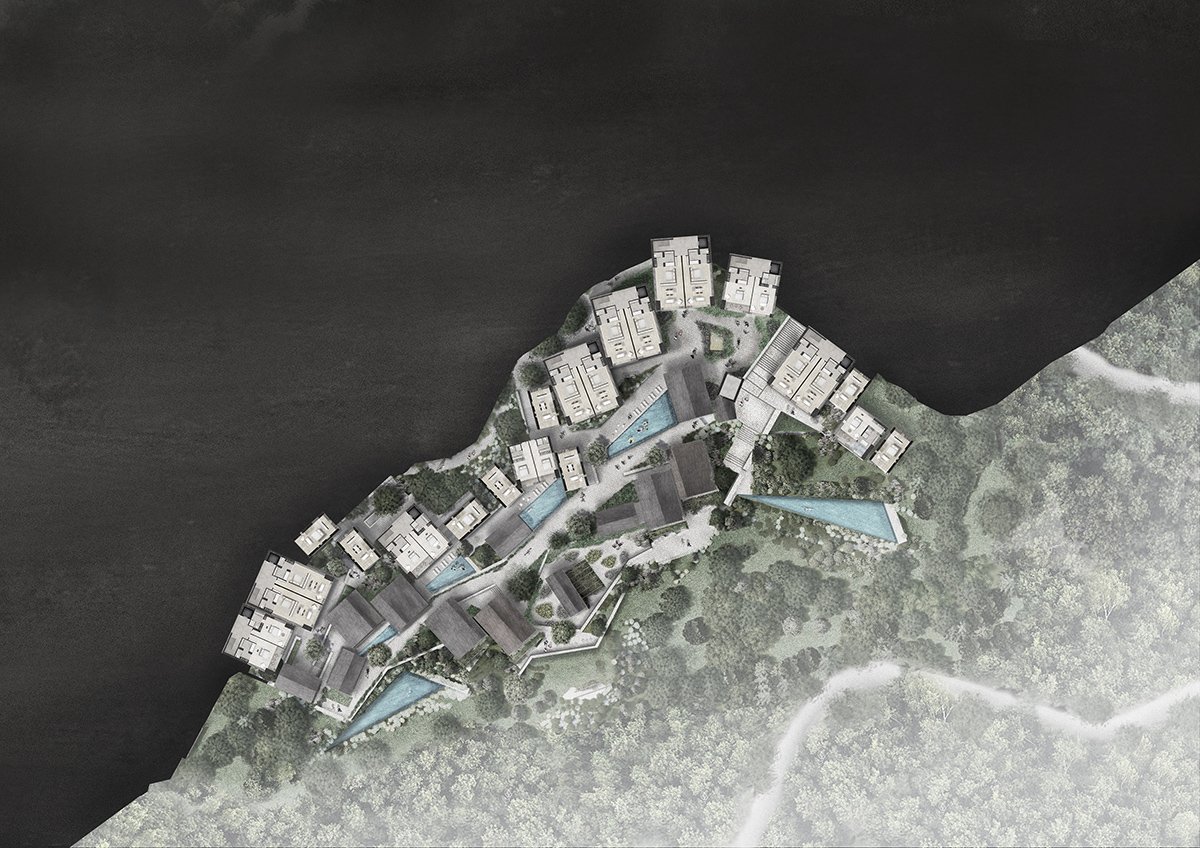
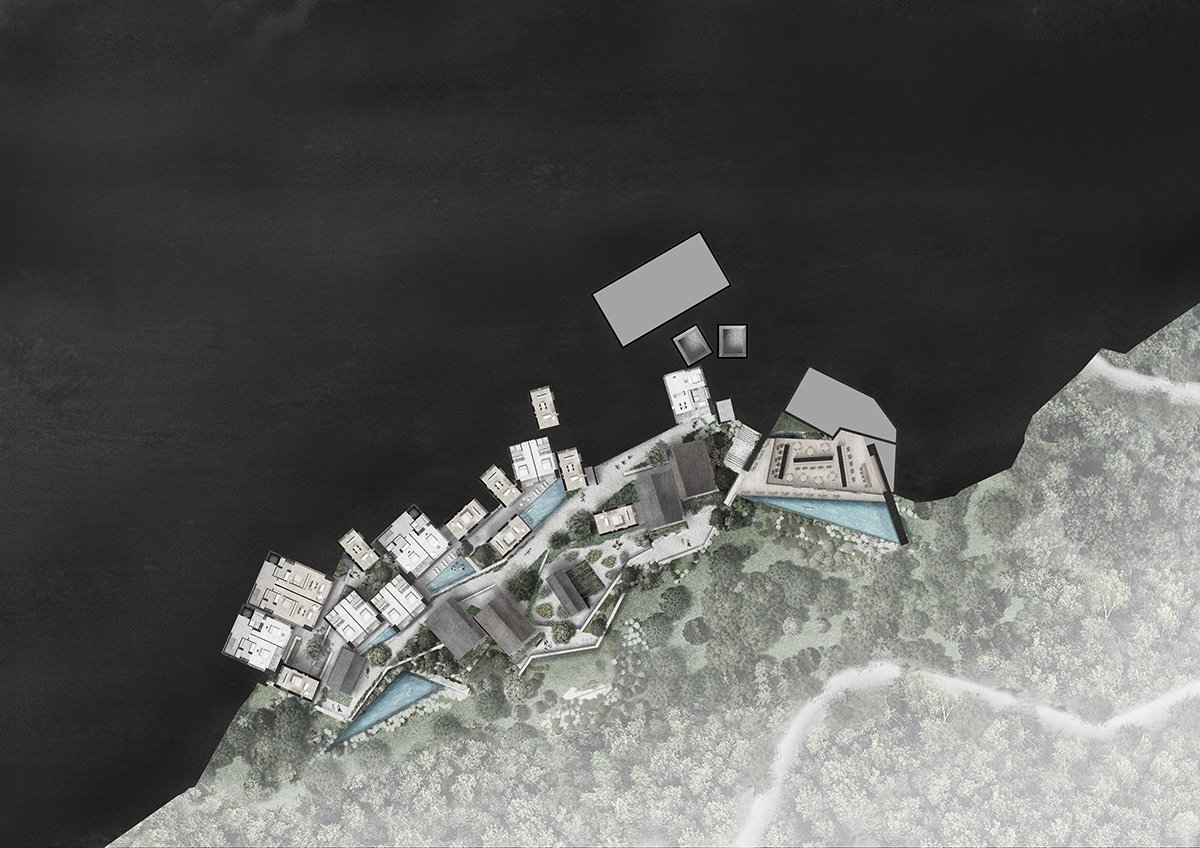
embedded into the hills, oppenheim architecture’s‘lago maggiore retreat’is envisioned to arise from switzerland’s italian-speaking region of ticino. the unique and varied region sees alpine peaks and dense forests which slope down to meet a mediterranean climate of palm-lined lakes, and italian-influenced cultural and architectural traditions. the proposed retreat is programmed with 108 private residences, a boutique hotel, and spa and wellness areas — all together spanning three sites along a hillside that rises above the lake. the design embraces the unique landscapes and ecologies of each site to ground the retreat in the spirit of its place.
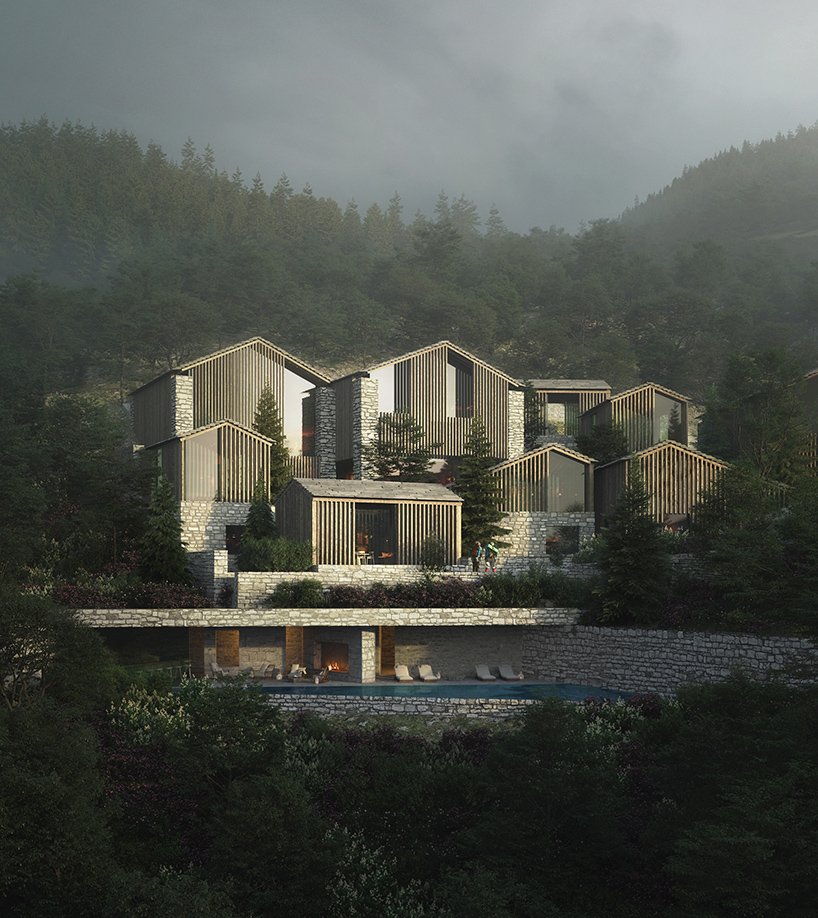
image by mir
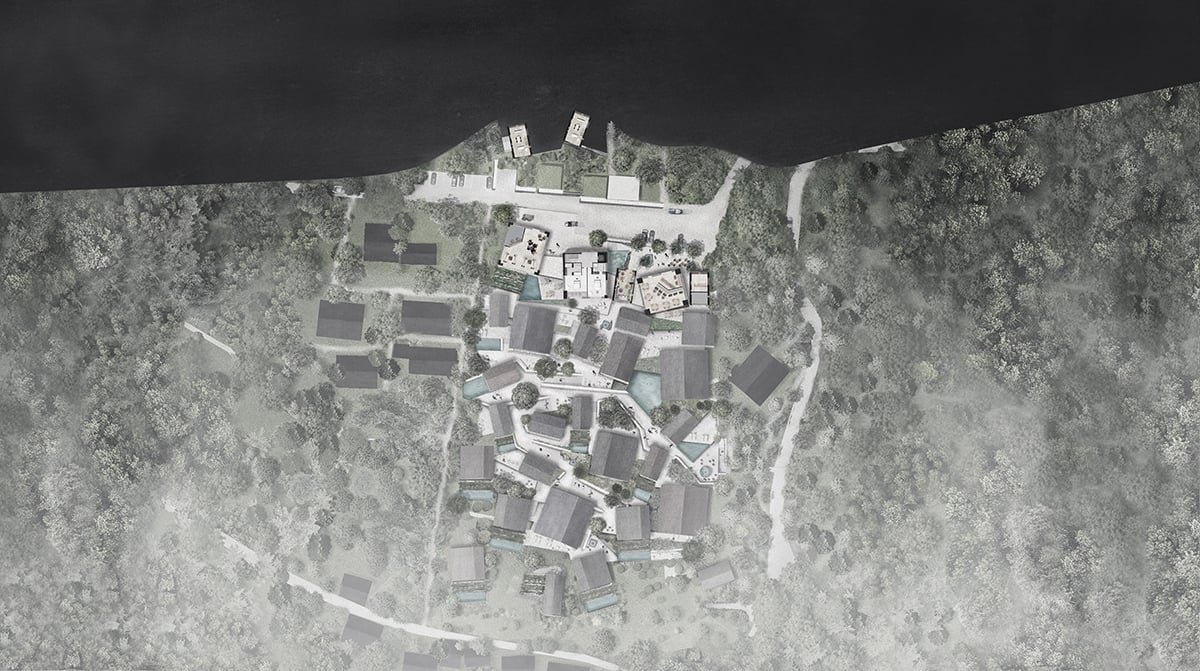
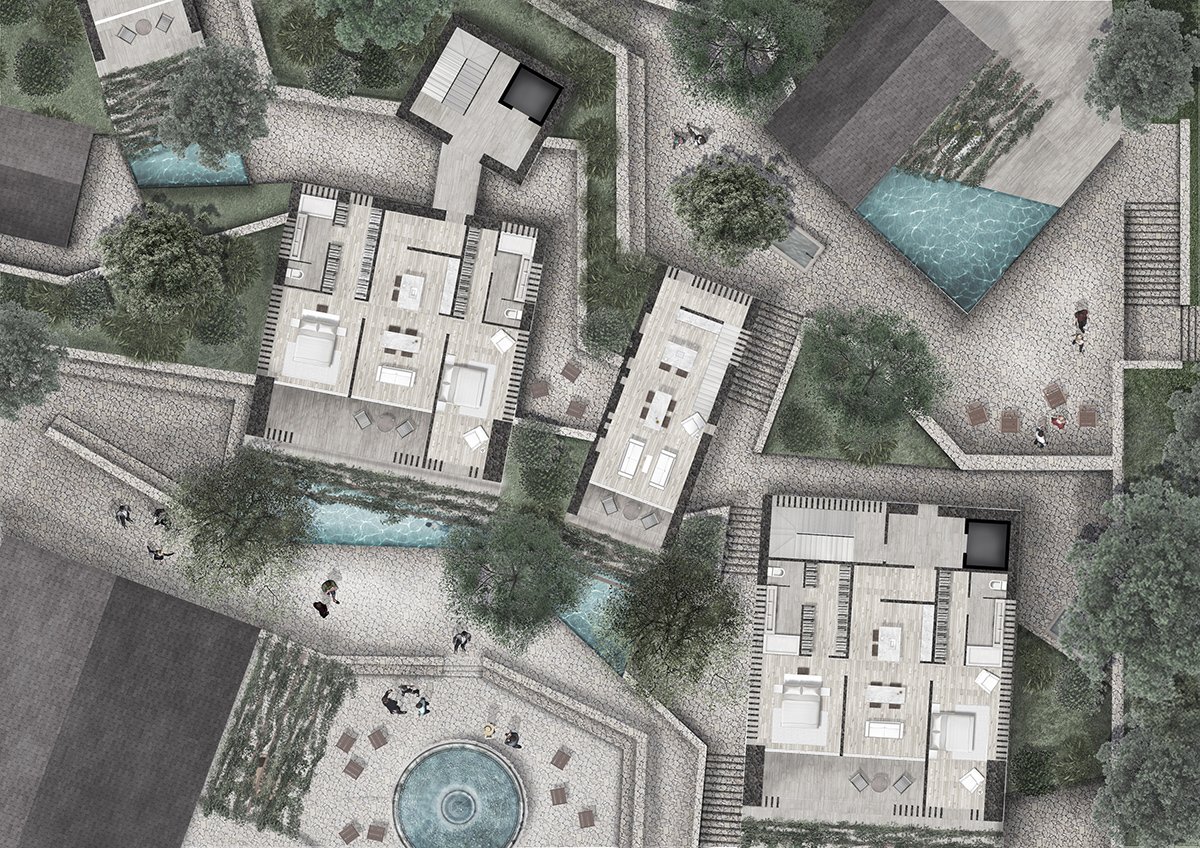
oppenheim architecture designs its proposed‘lago maggiore’as a residential, hotel, and spa retreat which spans three sites. the first site augments an existing urban context. working in collaboration with the local community, the project brings a new heart to the existing village, framed by revitalized local artisan shops. residents and visitors will be invited to explore and inhabit the forested, terraced landscape of gardens, squares, and piazzettas of the town.
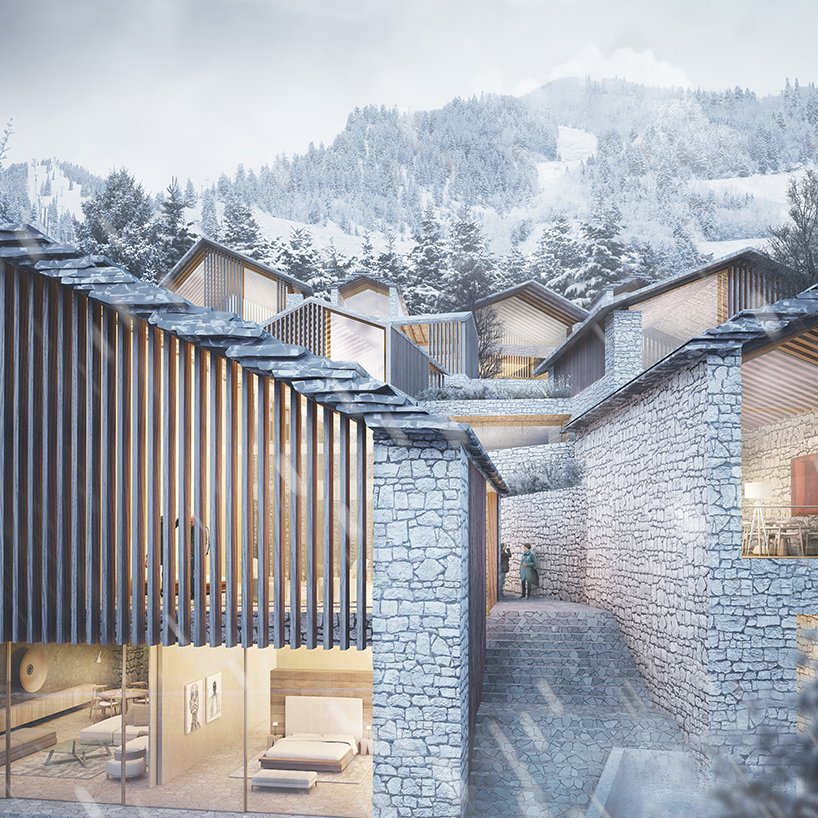
image by oppenheim architecture
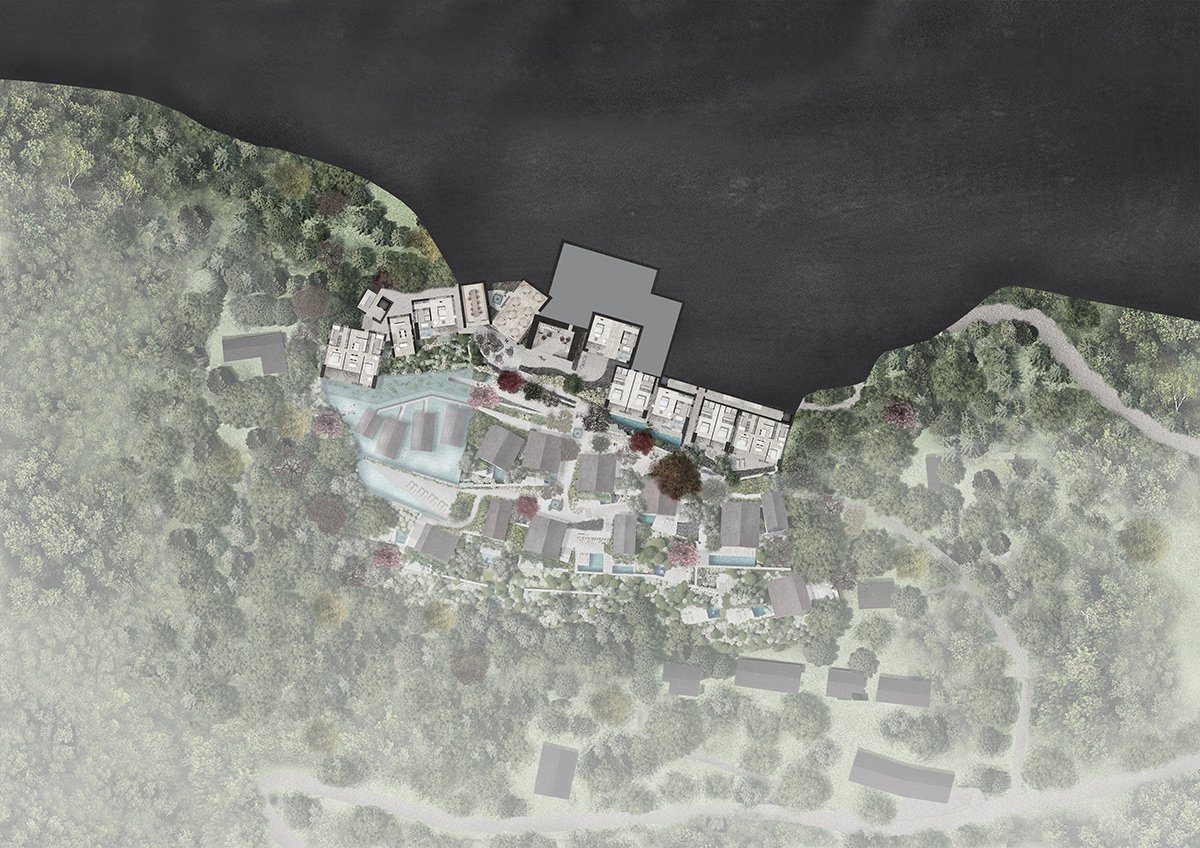
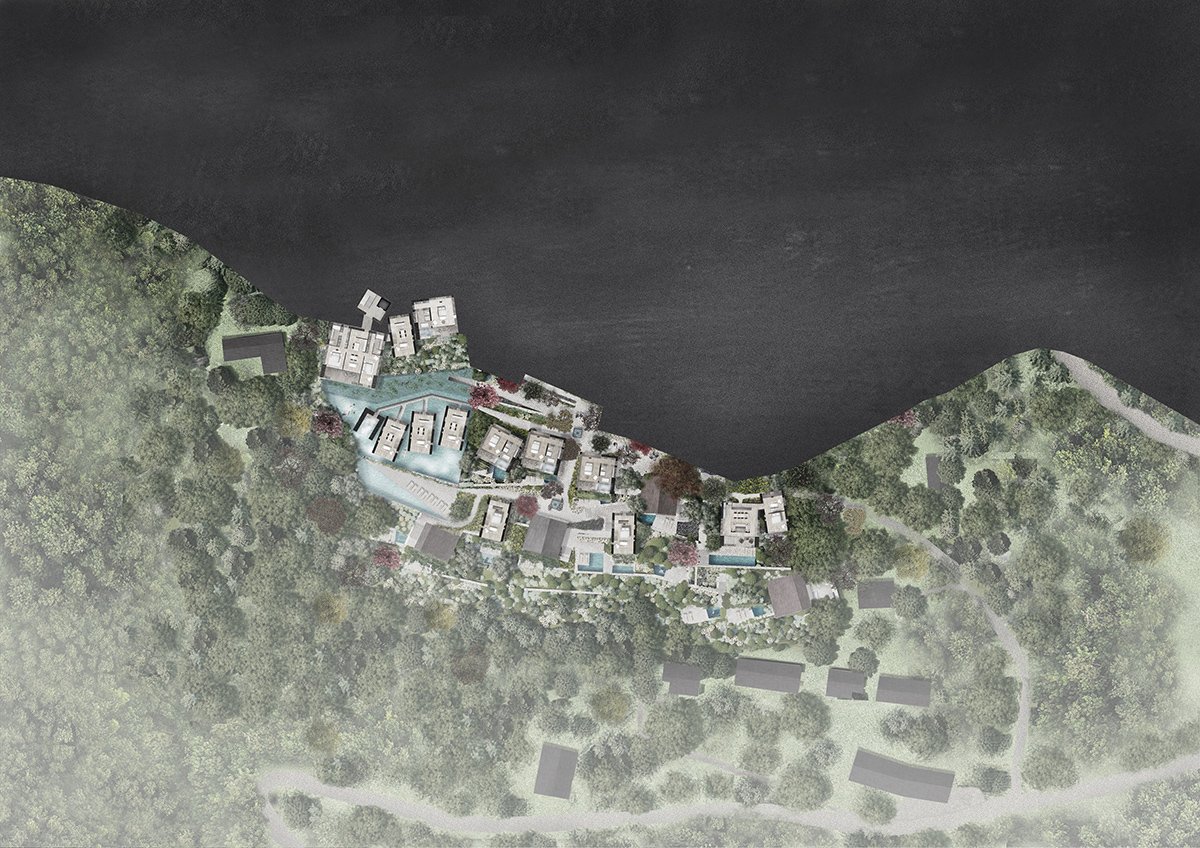
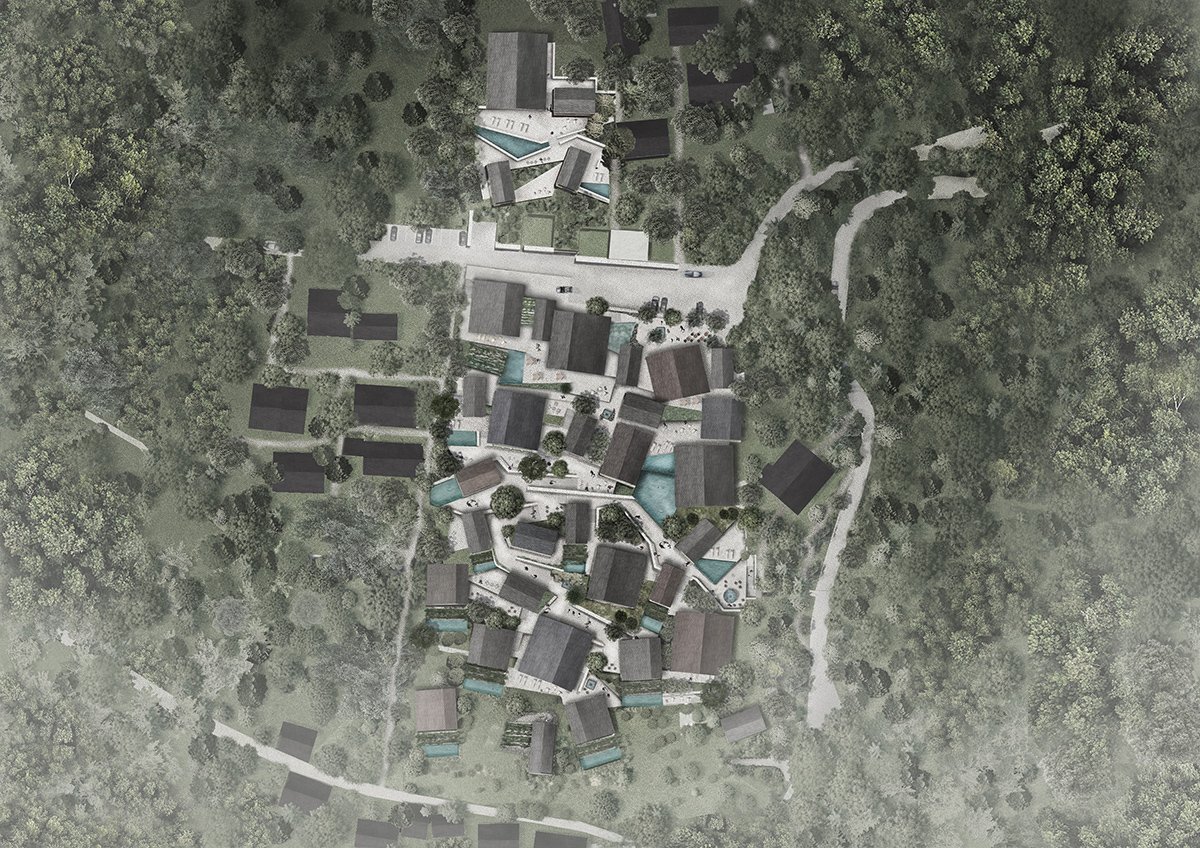
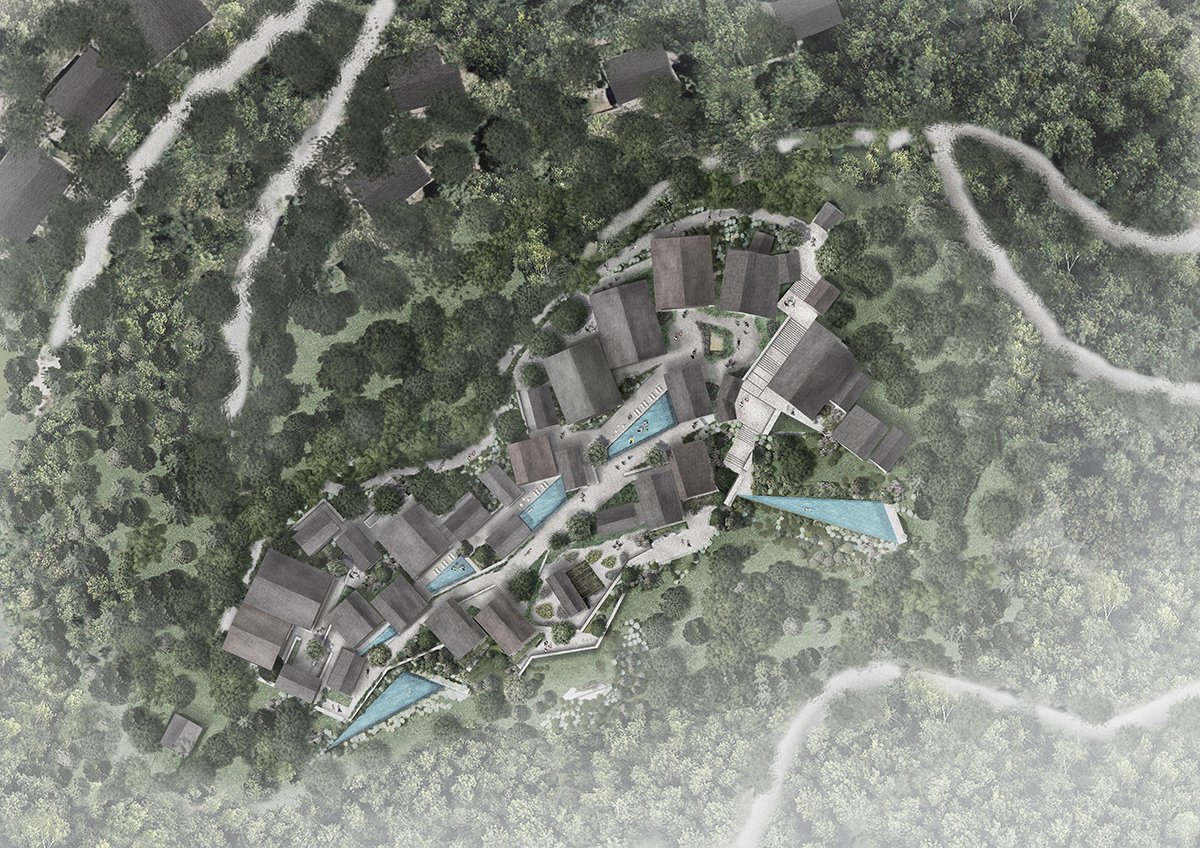
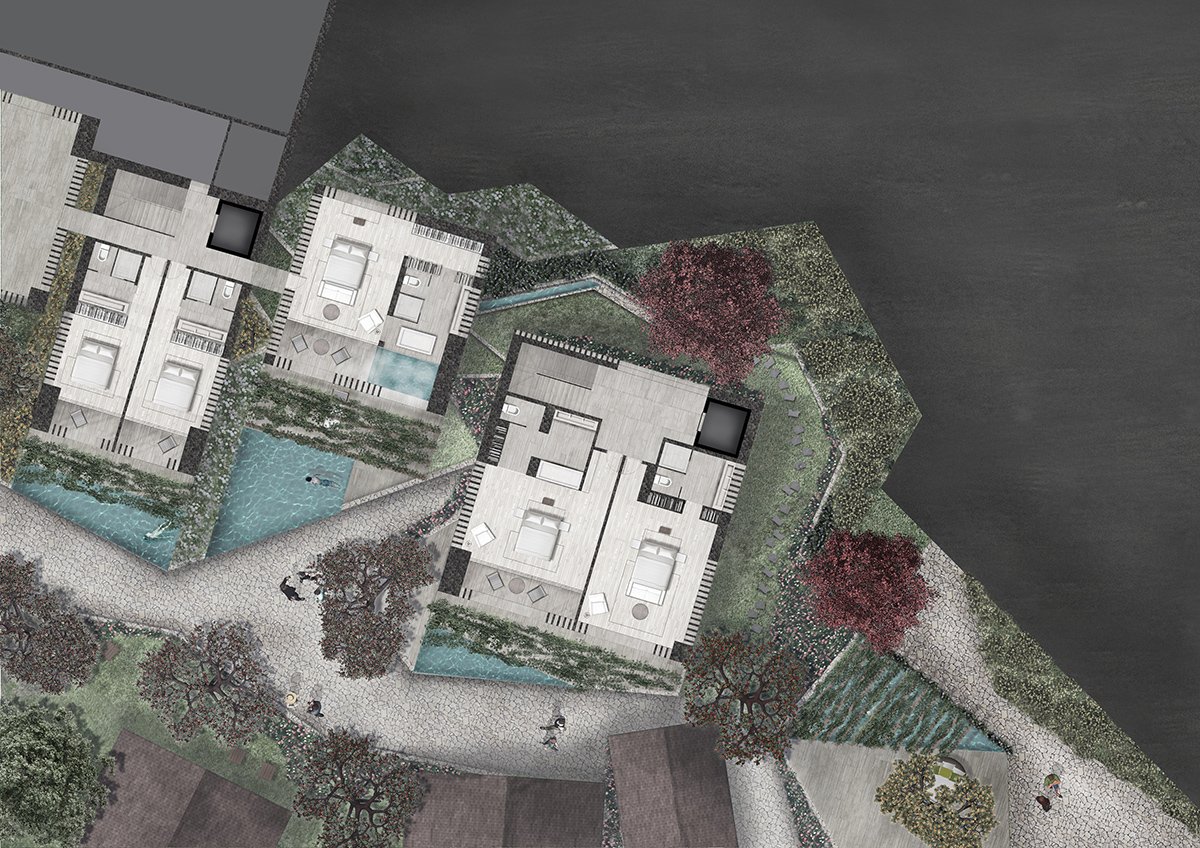
the team at oppenheim architecture imagines the second site of its lago maggiore retreat as a botanical garden site that provides a lush and edible landscape. pergolas, orchards, and cascading pools embrace the mediterranean microclimate, providing season-long comfort under the summer sun. rising nearly 4,000 feet above the lake, a hamlet of secluded‘rustico’buildings are tucked into a chestnut forest. a sensitive reinterpretation of a ticinese hill-town, this artful choreography of tightly clustered buildings and forest clearings is braced to bear the snows of winter and the days of summer. local craft will be combined with state-of-the-art techniques in the realization of the project. locally quarried granite, reclaimed chestnut from retired barns and fallen trees, and stucco made with regional aggregates form the basis of the project’s material palette.
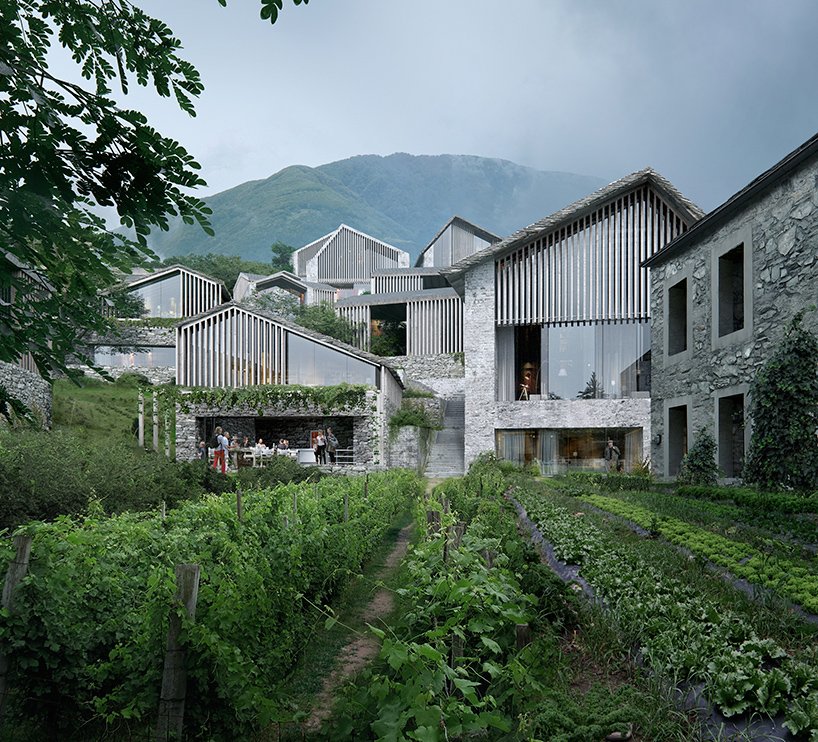
image by mir
the material palette of the retreat is informed by its unique climatic requirements, creating distinct visual identities that respond to the characteristics of each place. the primary material used across the hillside town is stucco. the botanical garden site uses granite, while the forest site uses reclaimed chestnut. unique to their settings but unified by their simple geometries and restrained palettes, the architecture of three sites form a harmonious composition across the landscape. each of the structures is designed with a sensitivity to the exposure to sunlight while framing picturesque views over the valley, lake, and mountains.
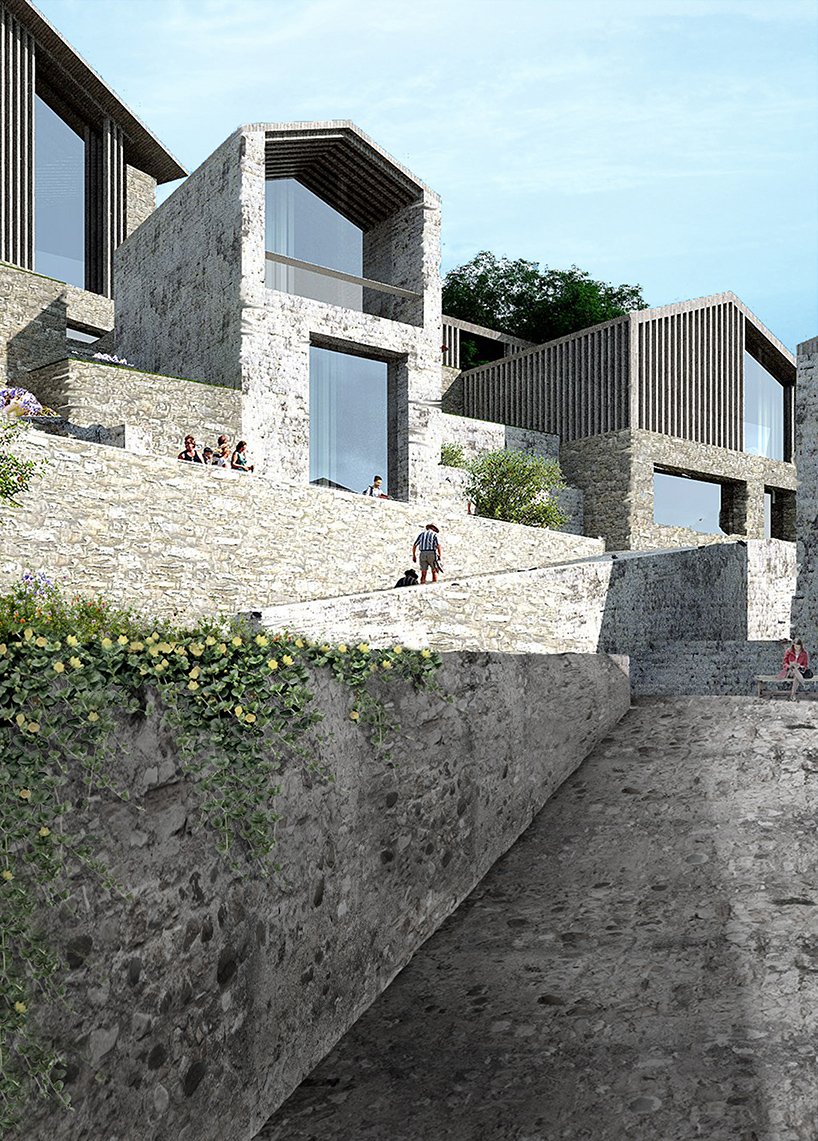
image by mir
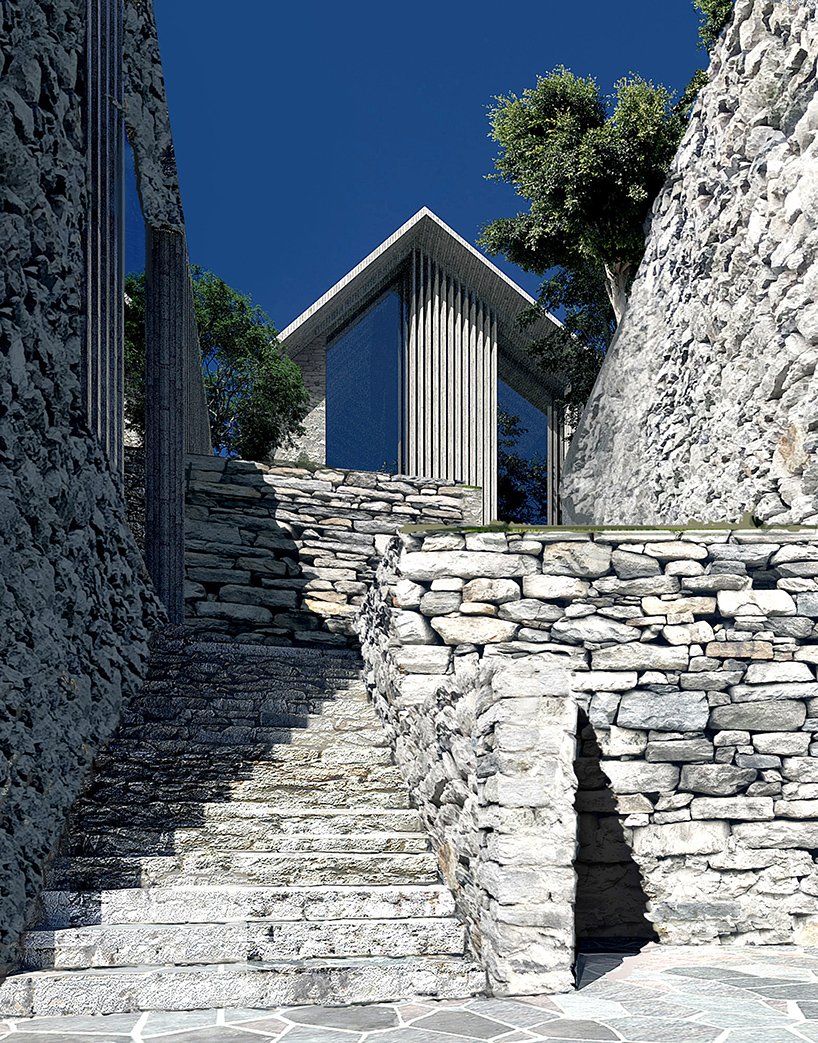
image by mir
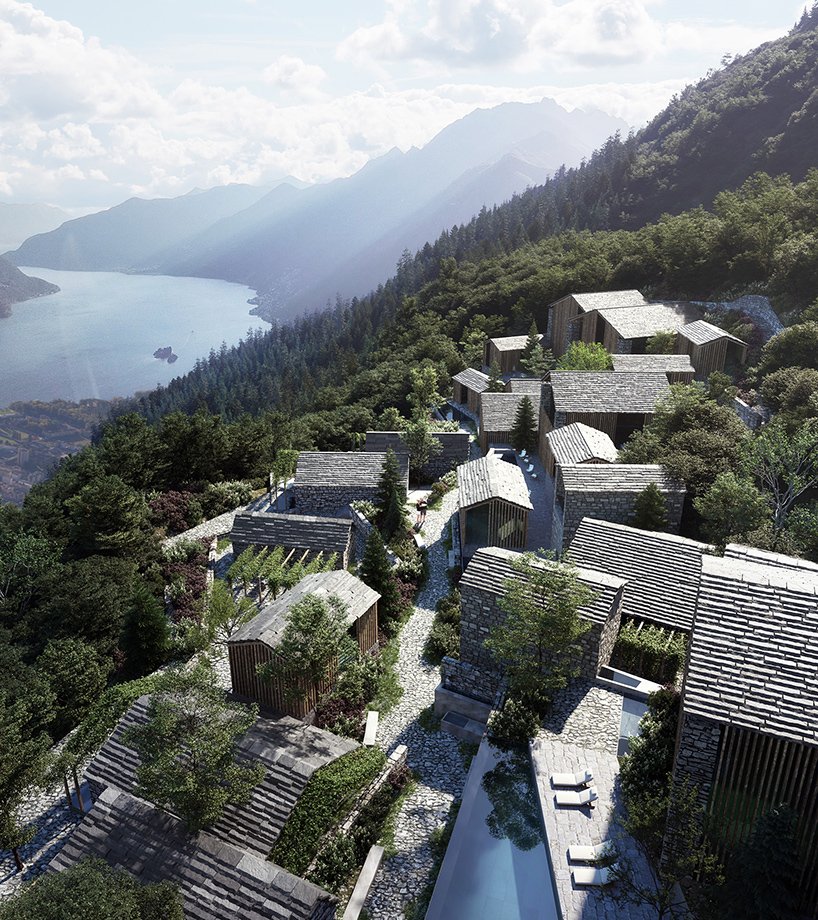
image by mir
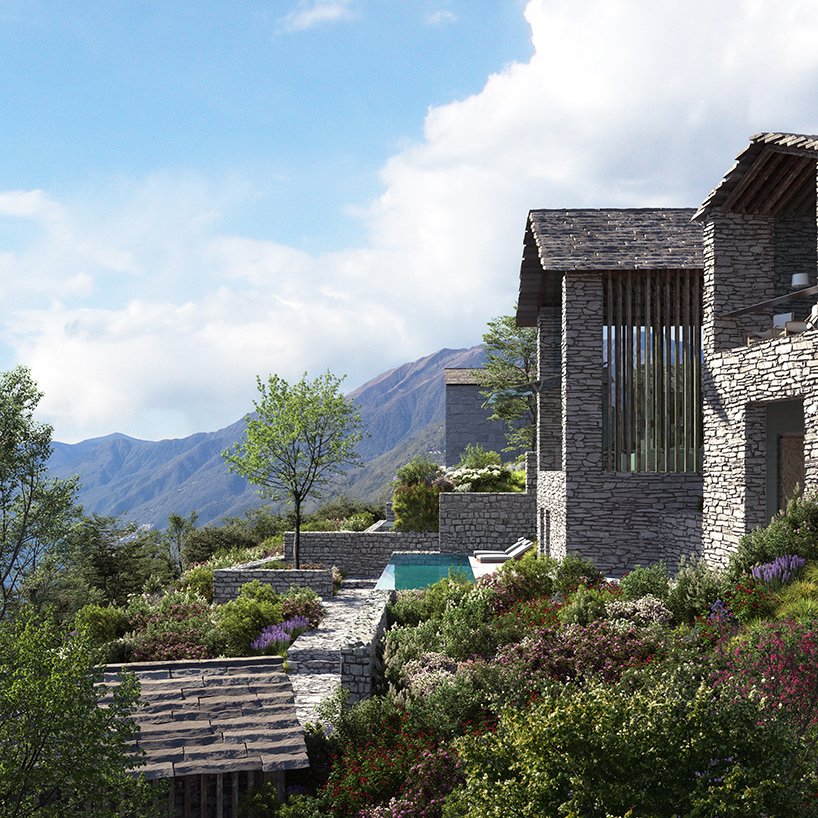
image by mir
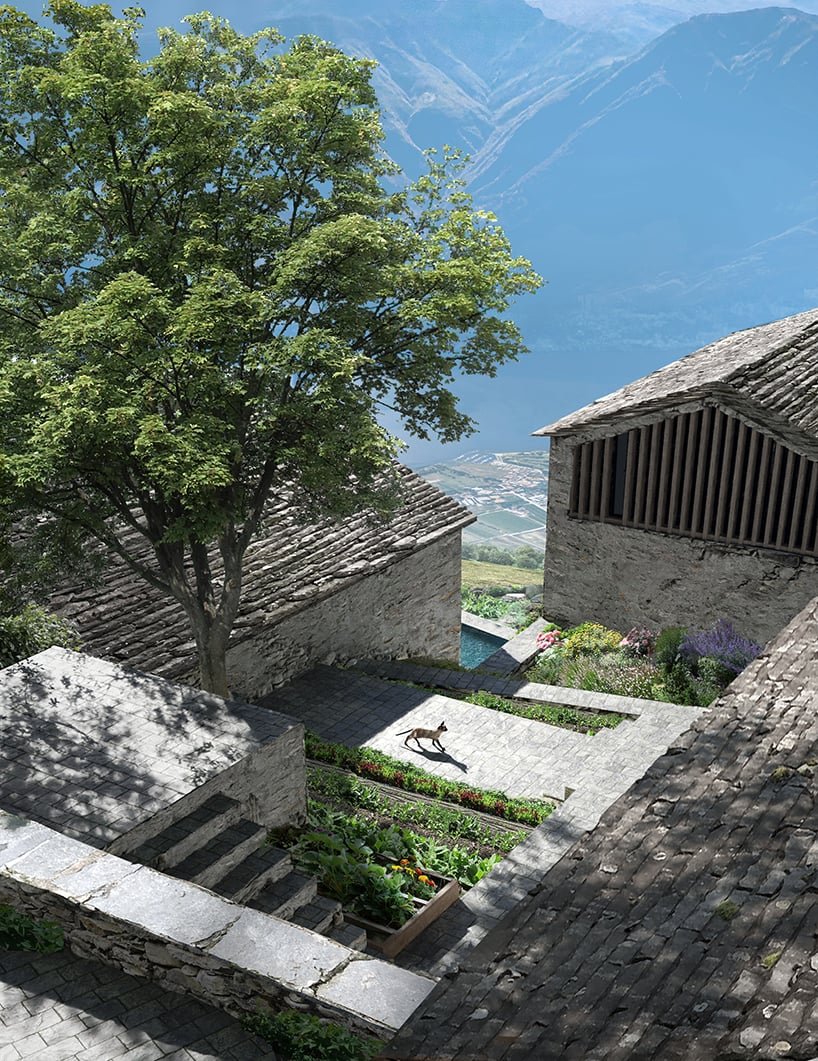
image by mir
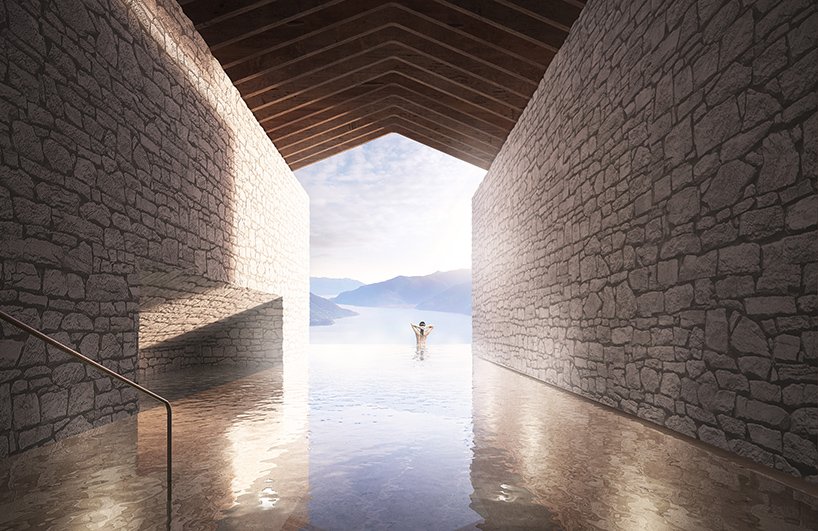
image by oppenheim architecture
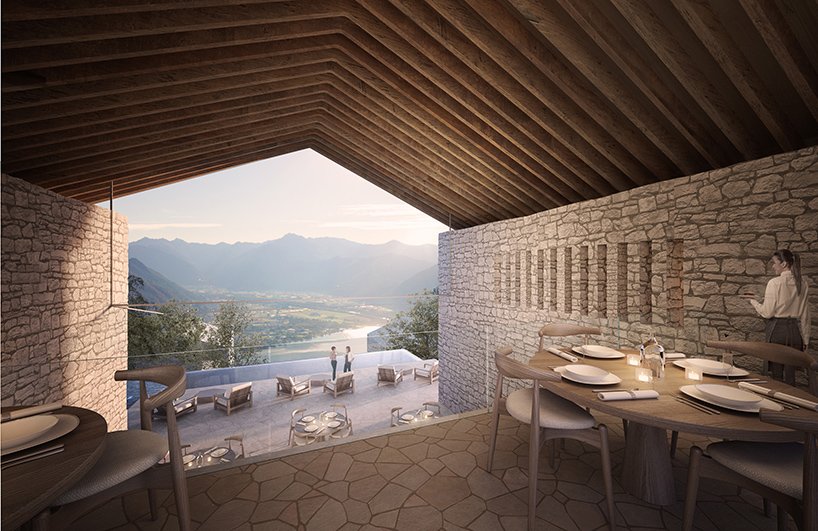
image by oppenheim architecture
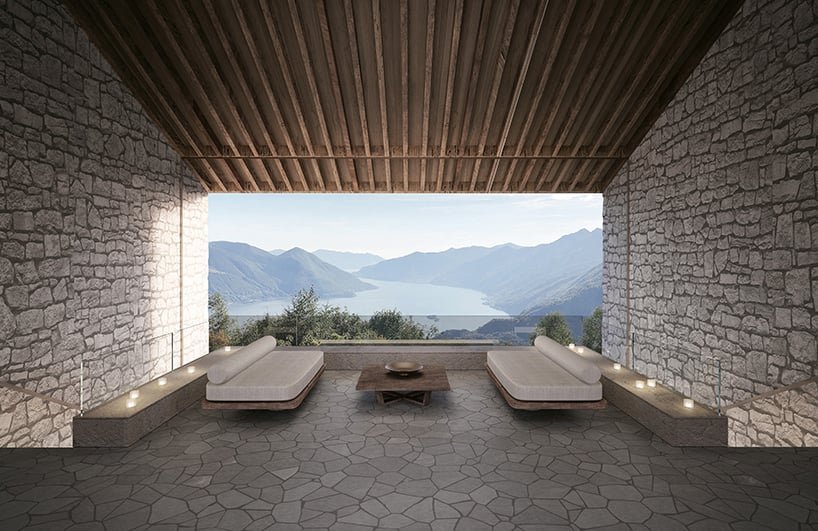
image by oppenheim architecture
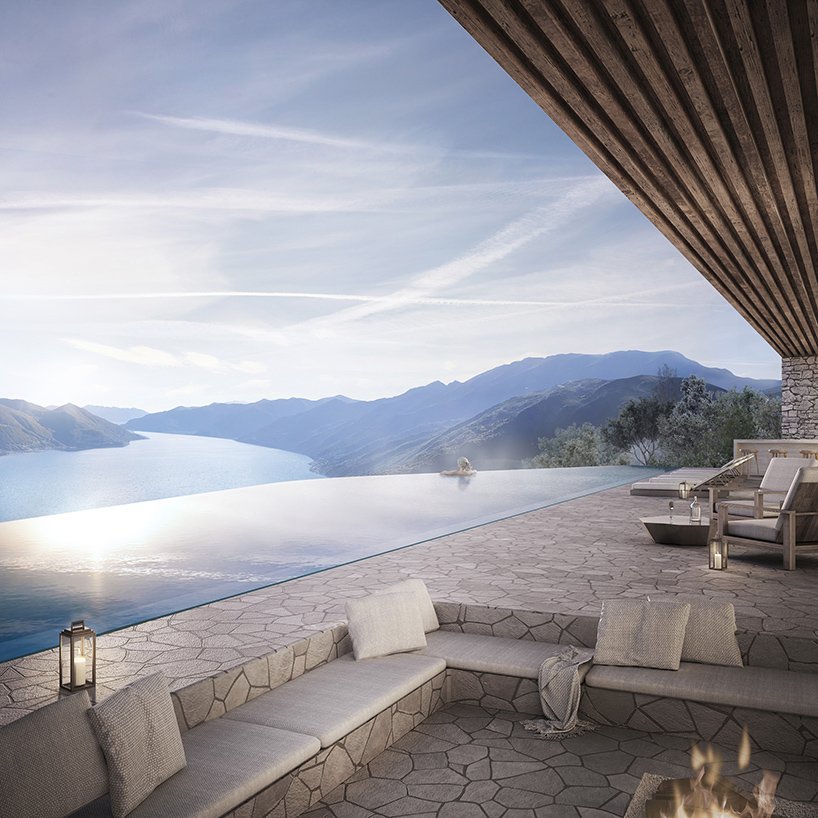
image by oppenheim architecture
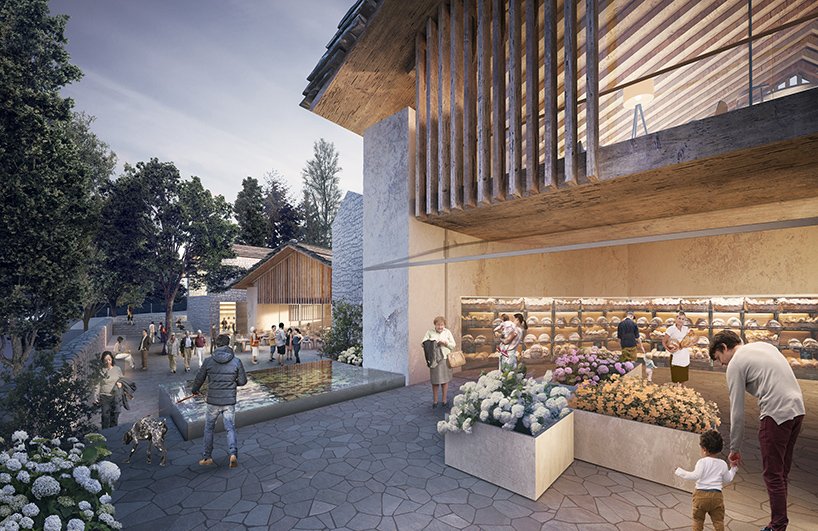
image by oppenheim architecture
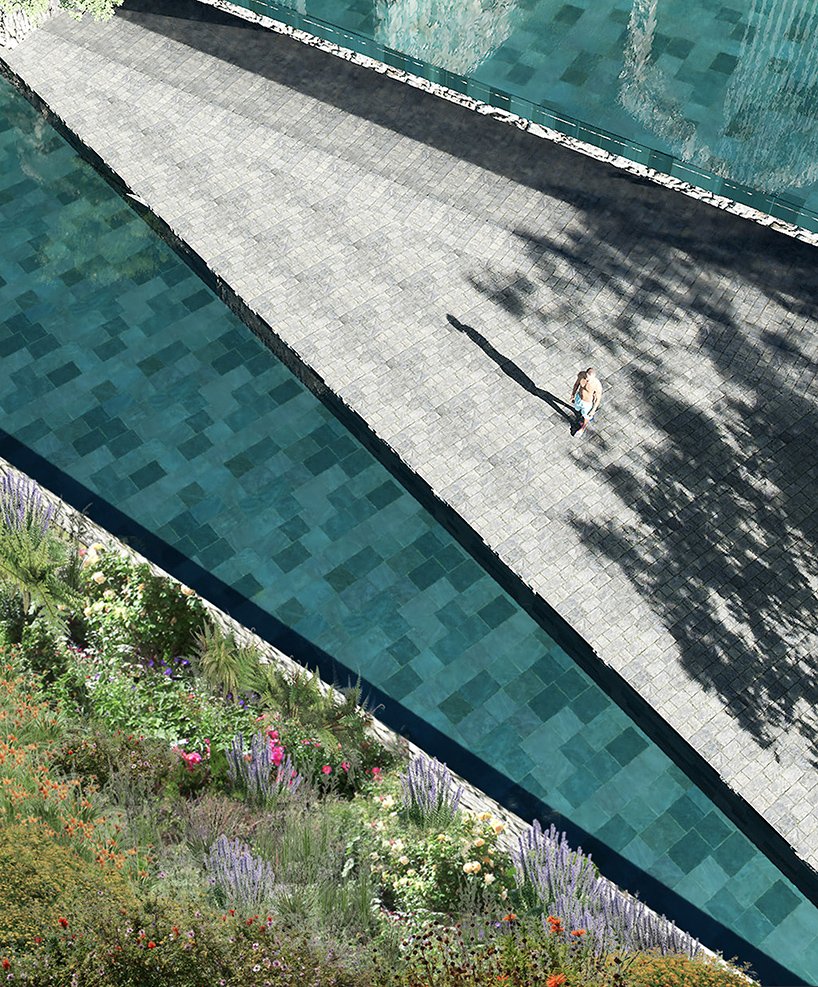
image by mir
project info:
project title: lago maggiore retreat
architecture: oppenheim architecture | @oppenheimarchitecture
local architect: aldo cacchioli architetto
location: locarno, switzerland
principals in charge: chad oppenheim, beat huesler
project contributors: tom mckeogh, rasem kamal, esther alcalde, giulliana giorgi, jourdan mckee
land area: 42 square kilometers
built area: 12,154 square meters
project year: 2019
status: concept design
visualizations: oppenheim architecture, mir