

settling within the junxiang village, 70 km from beijing, chaoffice has renovated an old building with a yard to create a family home that encourages social interaction, through a series of passages. although the original site and the building condition were far from what could be described as a comfortable living space, both the architects and the clients found themselves attracted to the low structures, the lush vegetation, and the intimate yard.
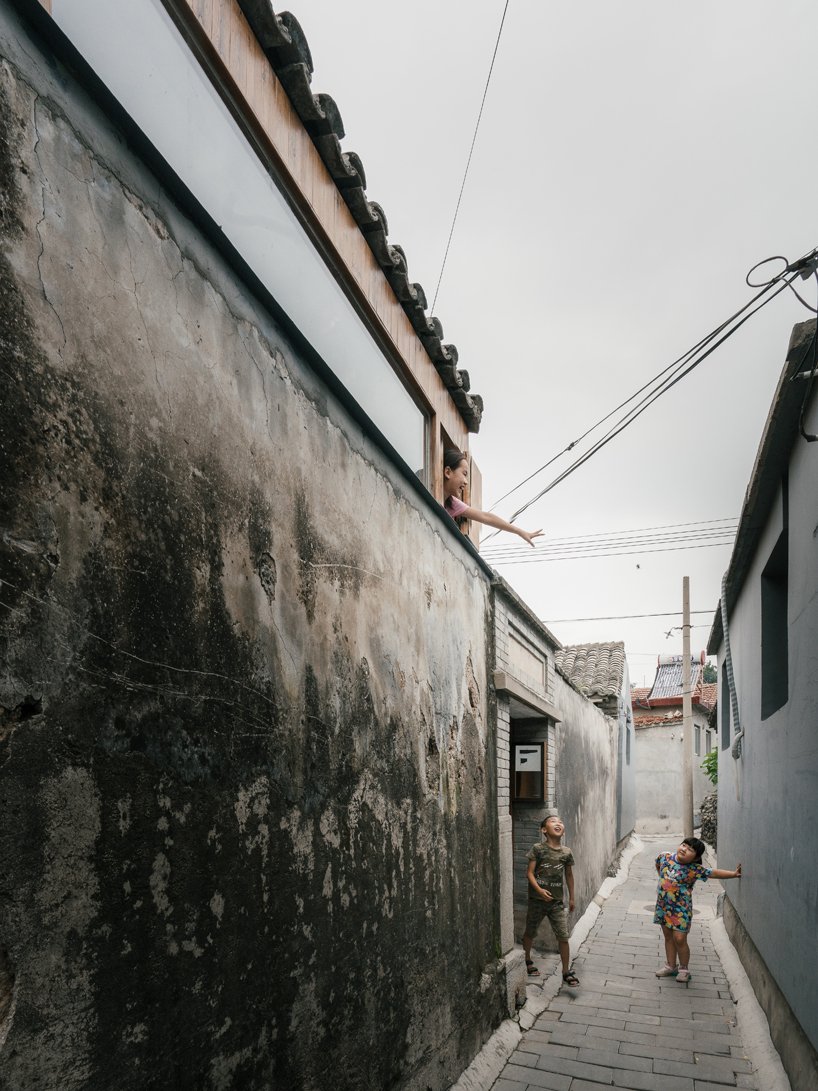
the site is nestled within a narrow hutong no more than 2 meters in width
all images by zhu, yumeng & cheng, zhi
the original structure is made up of three buildings and a cellar. although not good examples of traditional architecture, those buildings keep treasured memories for the client, who used to live in the site with her grandparents when she was younger. taking this into account, chaoffice carried out the renovation, keeping the existing forms, colors, and materials in order to preserve past experiences within a modern context.
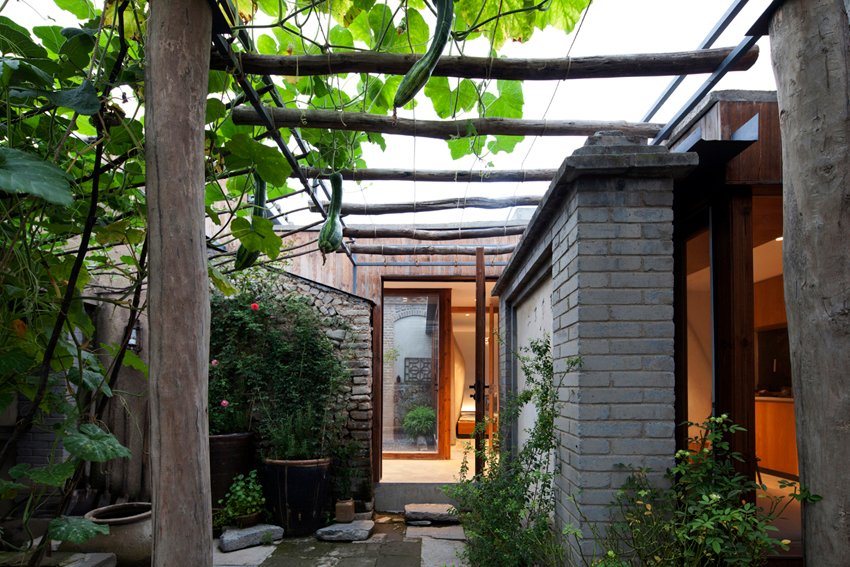
plants everywhere create different scenes – the little ecosystem evokes unique feelings through watching, smelling, hearing, touching
with all the three pre-existing buildings retained, the new structures were constructed in between, to serve as‘connectors’, in addition to providing additional rooms and space. the original isolated nature of the existing premises faded away, as they were transformed into a connected‘belt’type space. bedrooms are located at the ends of the yard, while the‘passage’between them, next to the garden was formed as a public space. a new passage was also created in the old cellar, by utilizing a hidden door accessed underneath a cushioned sitting area in the kitchen.
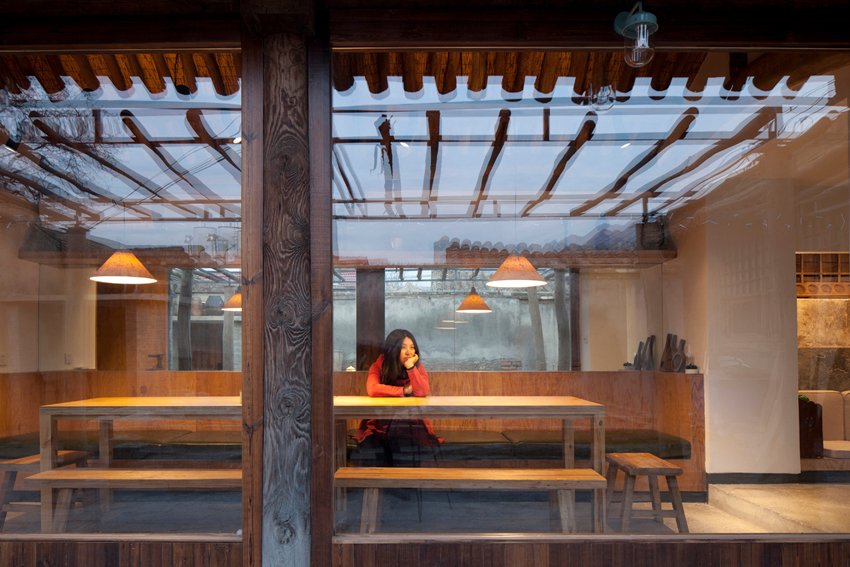
the dinning room inhabited the old west building, still keeping a width of only 2.4 meters
the dining room is housed within the old west building, still keeping a width of only 2.4 meters. here, the chaoffice team has installed a fixed cushioned seating area along the western wall, while a full-sized mirror was placed between the seating area and the shelves on top of the wall. the eastern facade was transformed into a large glass wall, making the inside and outside become one. because of the glass wall and the mirror, an illusion is created where the 2.4 meters appear like 18 meters.
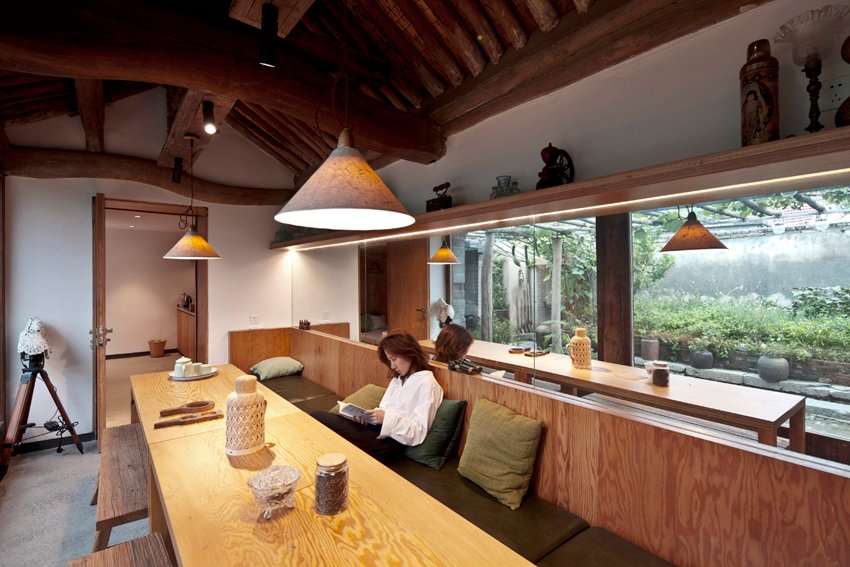
because of the glass wall and mirror, there 2.4 meters appear like 18 meters
according to the section, if one ignores the boundary created by the glass wall, the landscape looks like a valley. both ends are higher, and the central area is lower. old elements were harvested from the original structures to create pillars, while a truss was constructed out of small 3cm x 3cm steel tubes and was placed on top of these pillars. because the steel tubes are small, when vines grow in-between leaves envelope and cover the structure. the plants cause the boundary to blur, and the yard becomes an enveloped space.
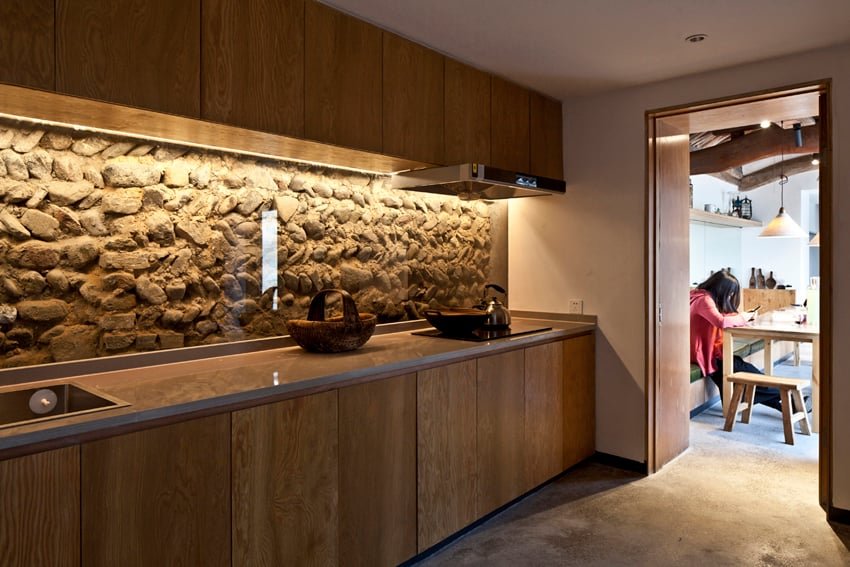
new‘passages’are placed by the entrance, the kitchen, the dining room, and the small living room
the 3 bedrooms inhabiting the corners of the yard, each provide their own unique experience while expressing the character of the original space. the north building originally functioned as the grandparents’bedroom, as well as the main room for the yard. the space was left mostly untouched in terms of appearance, and instead, the architects focused on integrating various new systems within it: two-layer doors and windows, a curtain system, and a lighting system. the old doors, which were abundant in the yard, were transformed into the structural elements for all the ceiling lighting fixtures.
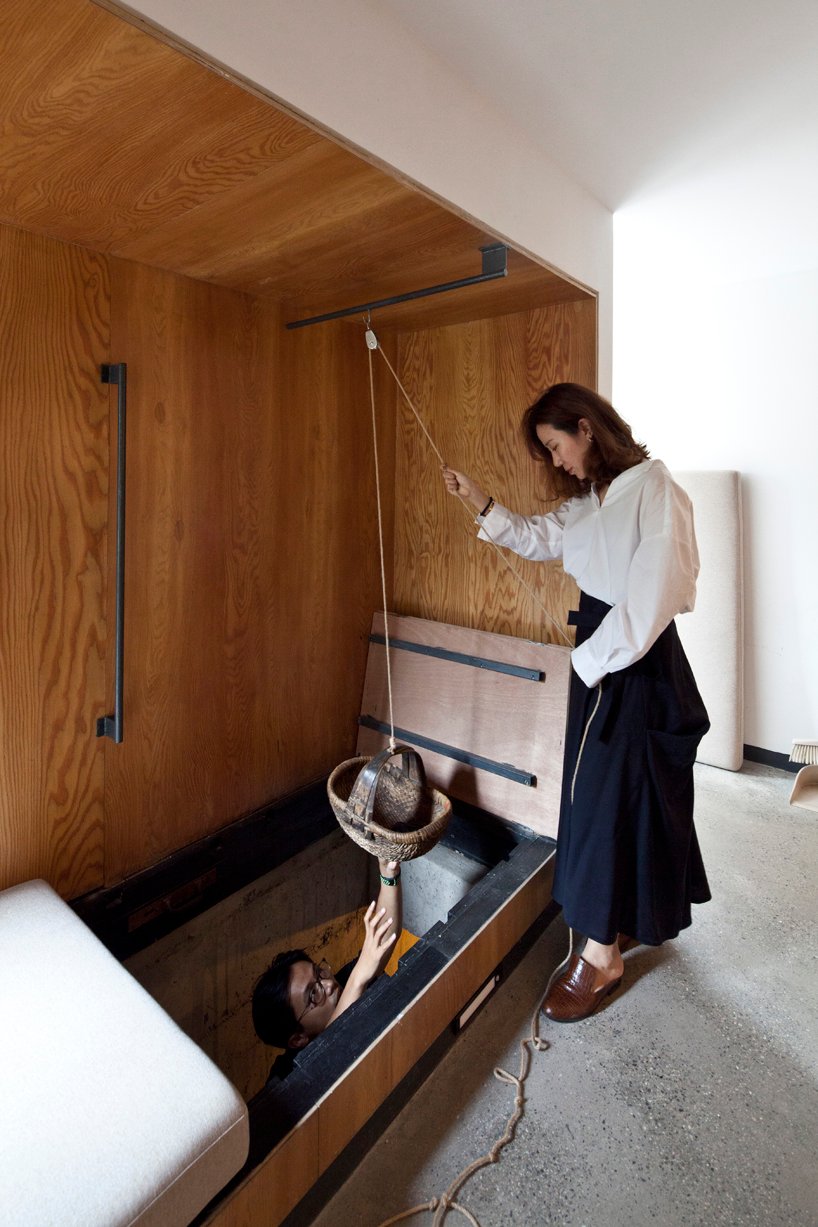
a new passage was also created for the ancient cellar, by using a hidden door underneath the cushioned sitting area in the kitchen
the eastern building takes up a very small area, which was formerly used as a storage room. the new steel structure lifts up the roof creating a new attic, which serves as a third bedroom. since the building is higher than the outside wall of the yard post-renovation, the attic space represents an additional volume on top of the old wall, and becomes a unique characteristic easily noticed by passersby in the small hutong. at night, the lights emanating from the attic act as an additional source of light for the hutong below.
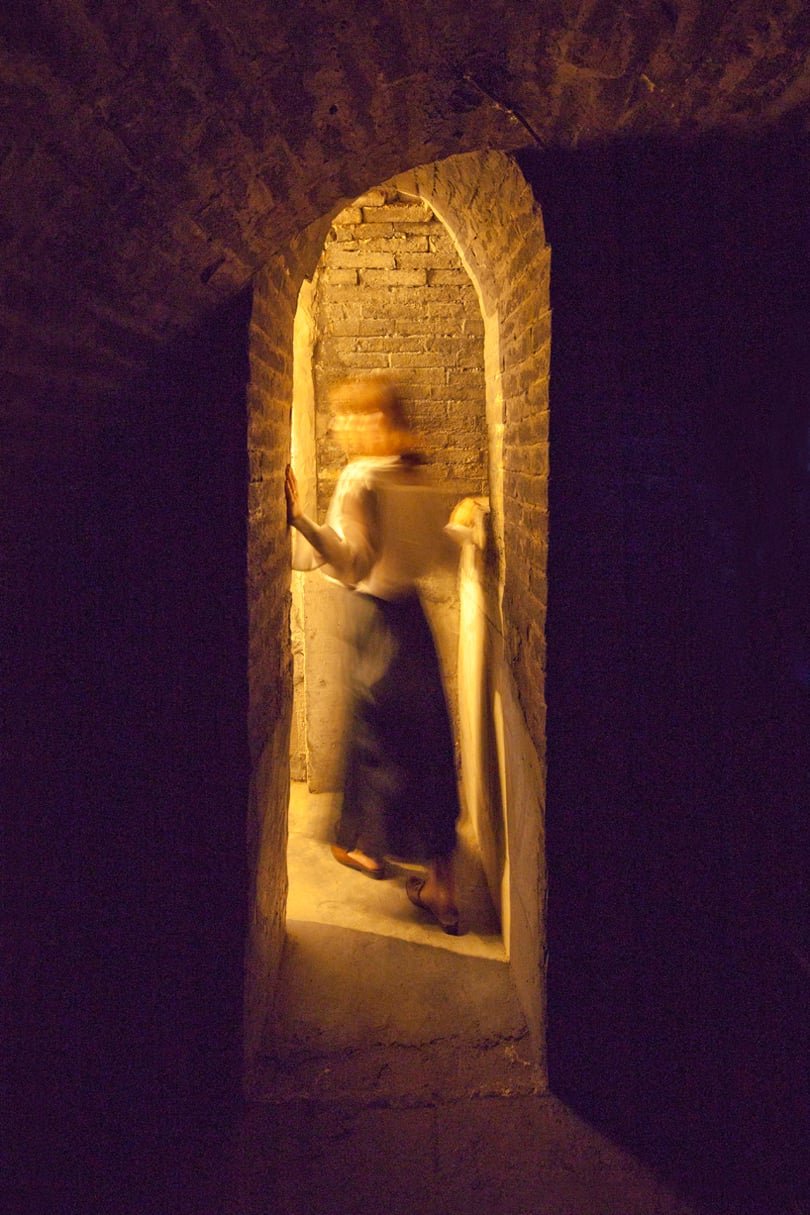
after 30 years, the cellar can still be used, as a food & wine storage, or a secret children’s hideout
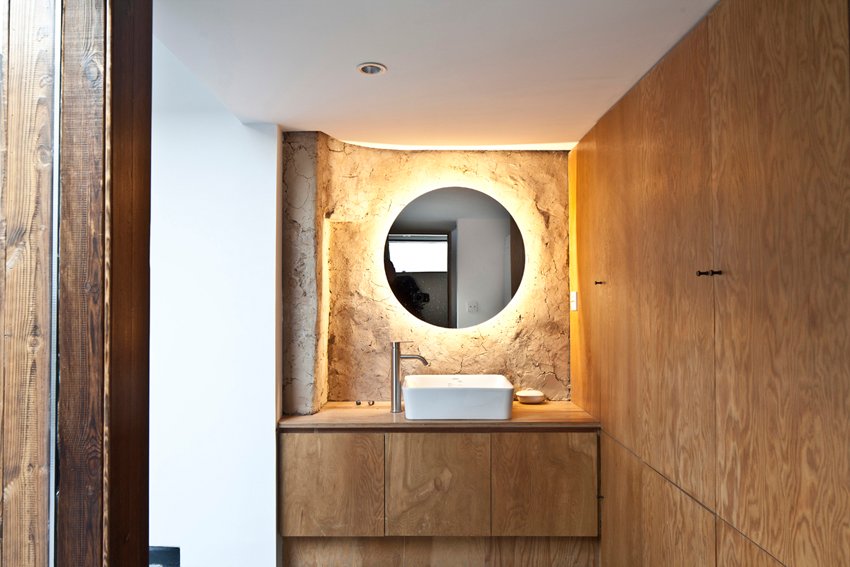
the wall and ceiling have been cut in several places, causing the ancient structures and materials to be exposed
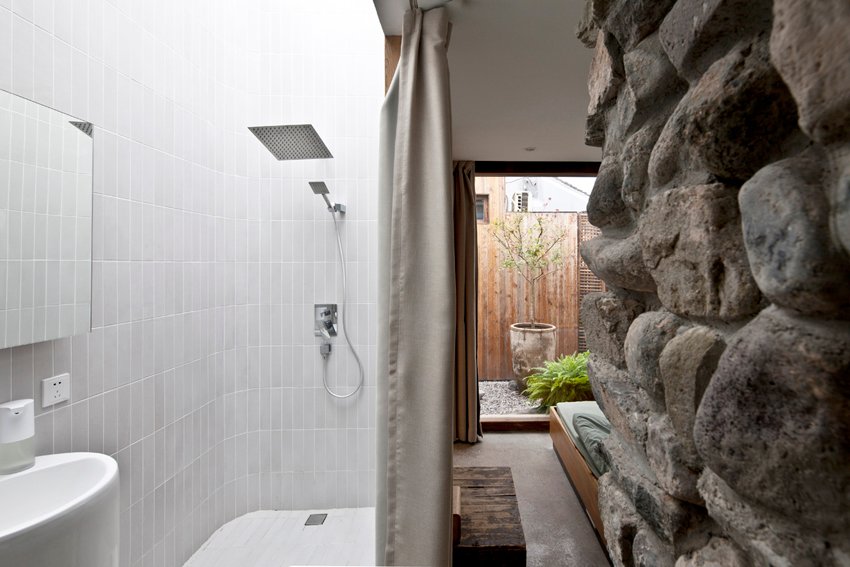
the room on the southern end is placed between two smaller yards – the two sides of the room, as well as the ceiling of the shower, are all covered by glass
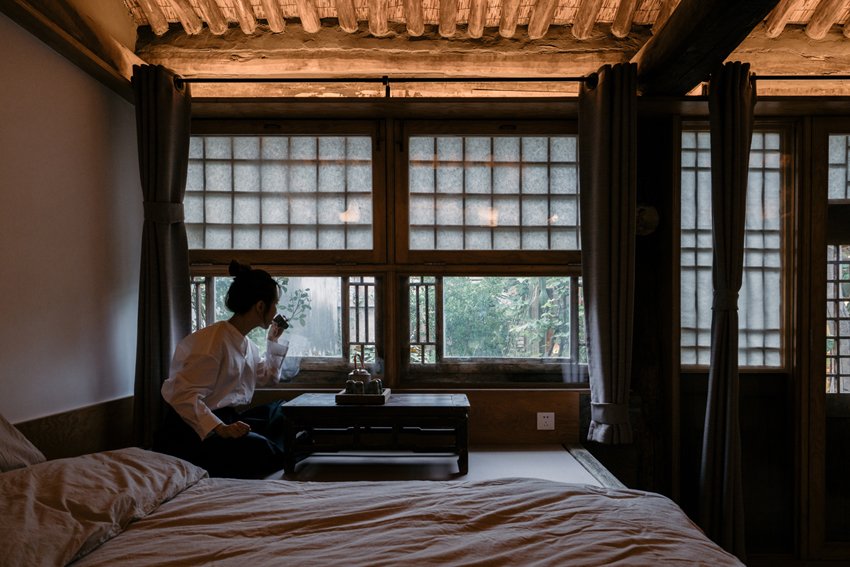
the north building originally functioned as the grandparents bedroom, as well as the main room for the yard – the space was mostly left untouched
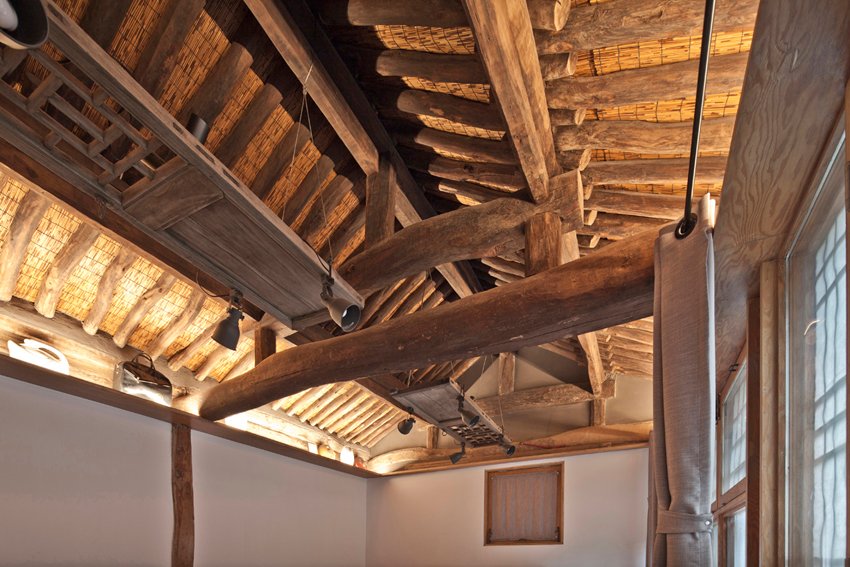
the old doors were transformed into structural elements to support the lighting fixtures on the ceiling
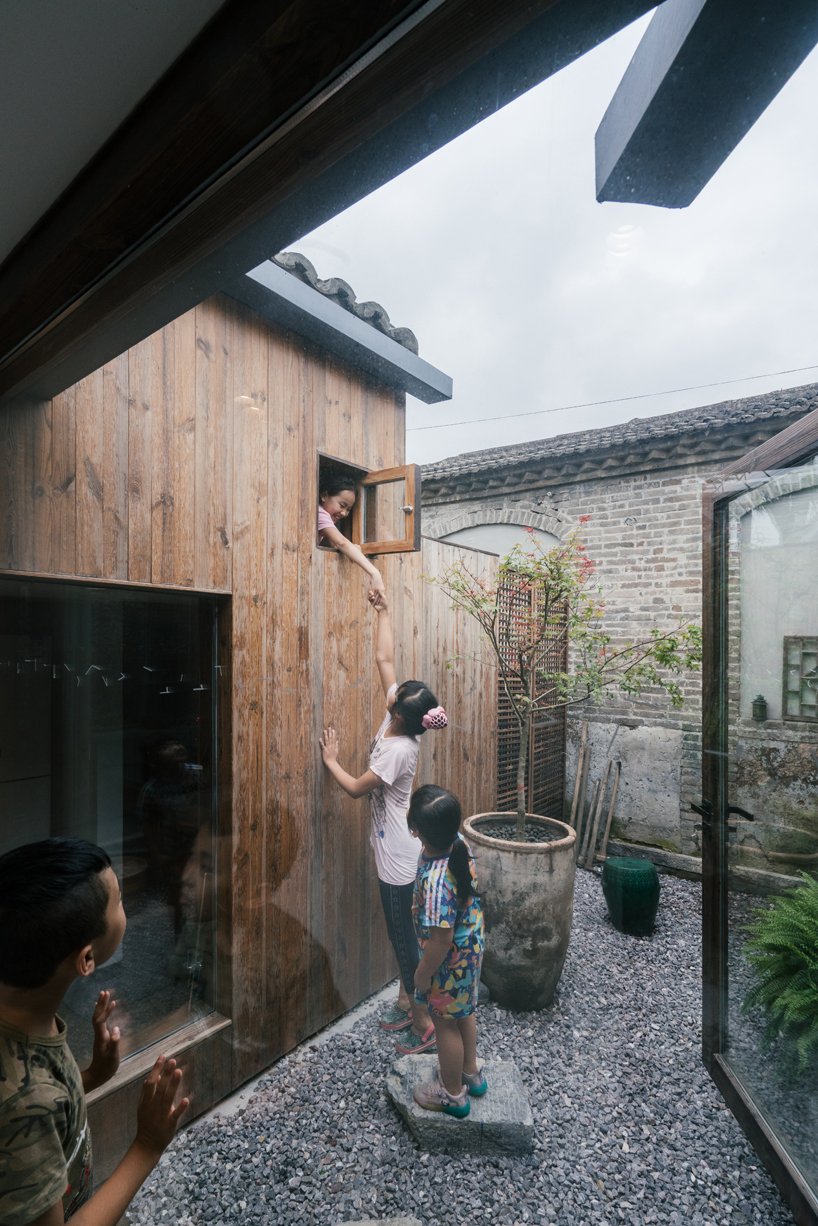
the‘house of passages’establishes a deep sense of connection
project info:
name: house of passages
architects: chaoffice
lead architect: cheng, zhi
engineer: gao, xuemei
contractor: zhang, youjiang
designboom has received this project from our‘DIY submissions‘feature, where we welcome our readers to submit their own work for publication. see more project submissions from our readers here.
edited by: myrto katsikopoulou | designboom