
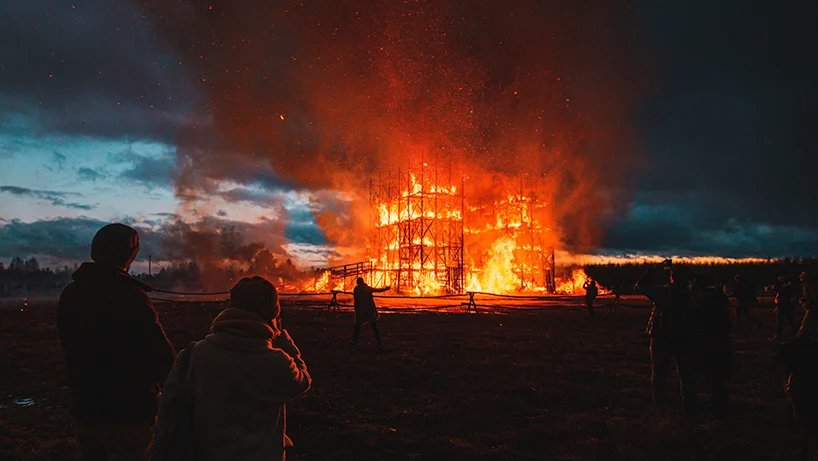
KATARSIS has built and burned a bridge made from wood, debris, and hay as part of a traditional celebration in russia. the event took place before the onset of the pandemic in nikola-lenivets, a small village in the country’s kaluga region where artist nikolay polissky founded one of the largest art parks in europe. the park regularly hosts large-scale festivals such as‘archstoyanie’— a land art festival that has been compared to burning man.
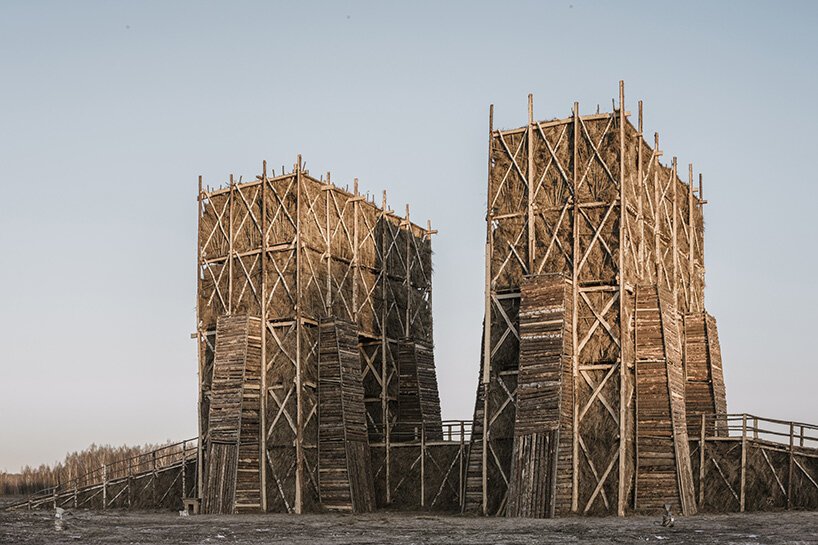
image © grigoriy sokolinsky | main image © alexey trakhanov
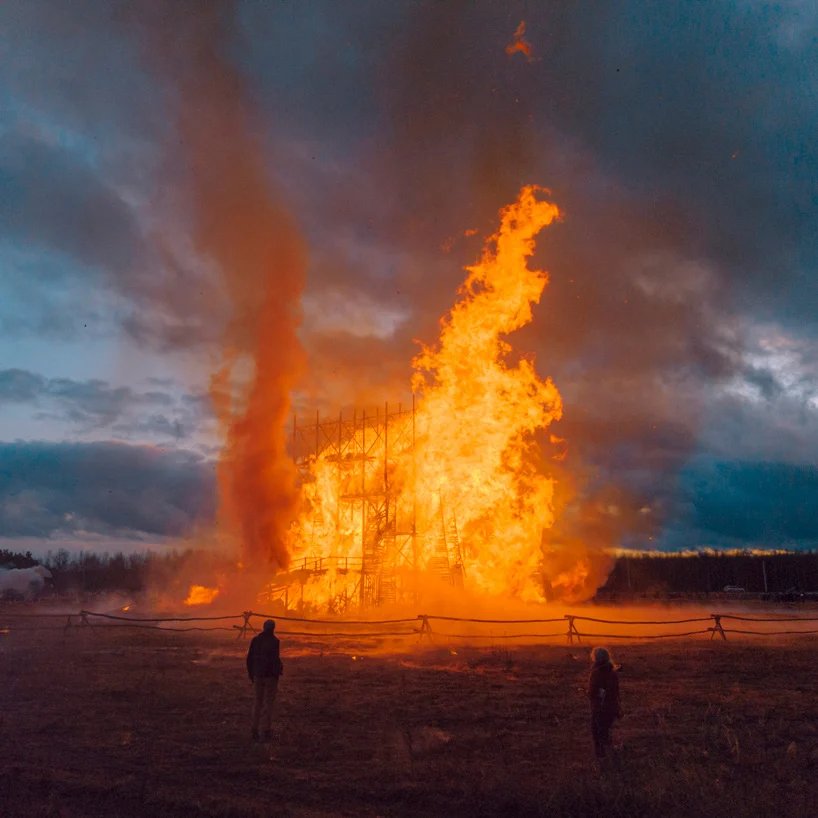
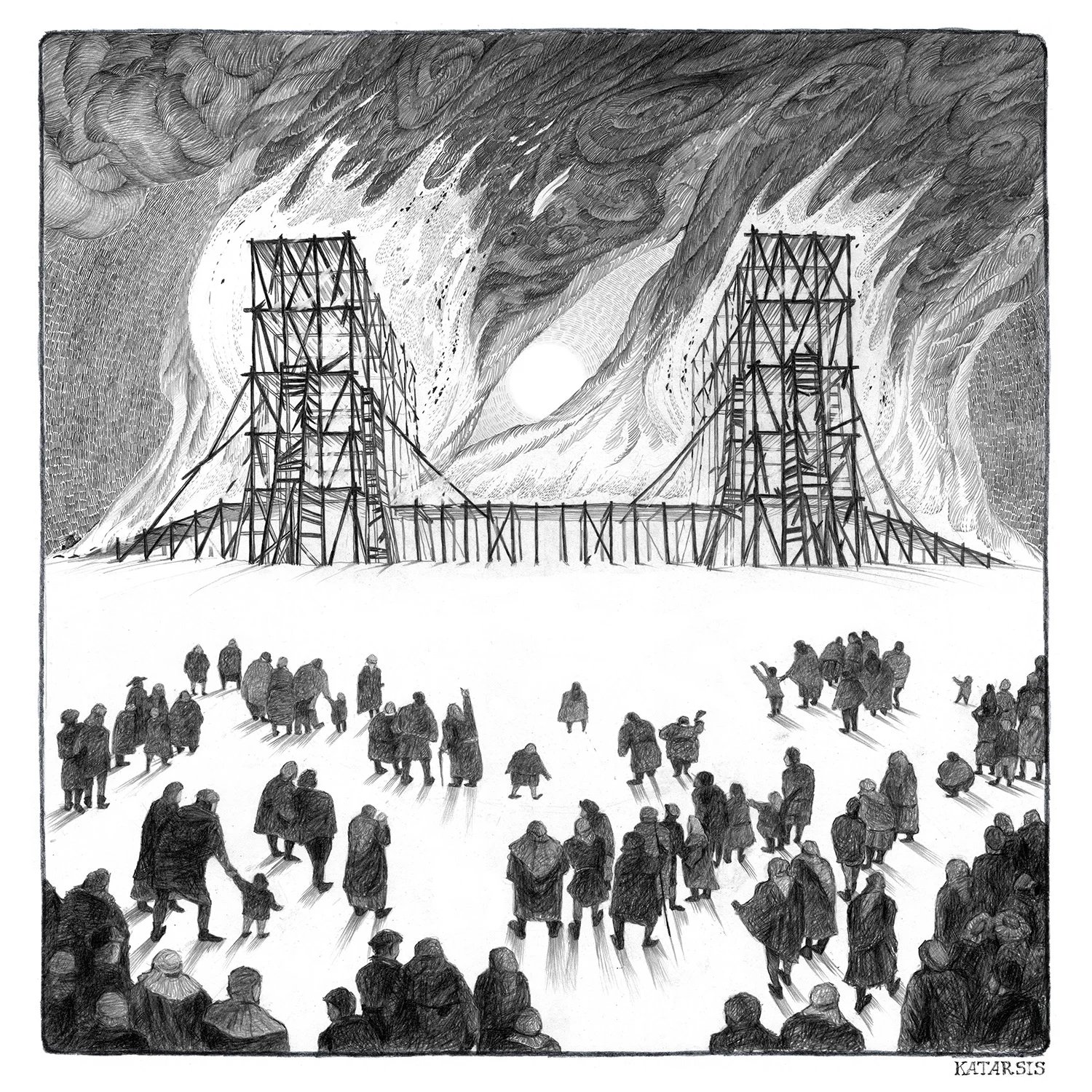
one of the main events in the life of nikola-lenivets is‘maslenitsa’, a spring time holiday rooted in slavic mythology. KATARSIS, a st. petersburg-based architectural practice, explains that maslenitsa is the time to have fun, enjoy good company, and eat pancakes. the climax of the holiday is the burning of a winter effigy to say goodbye to the cold season and welcome the new spring. in nikola-lenivets, it is traditional to set fire to an enormous art object — often a reflection of relevant societal issues — rather than an effigy.
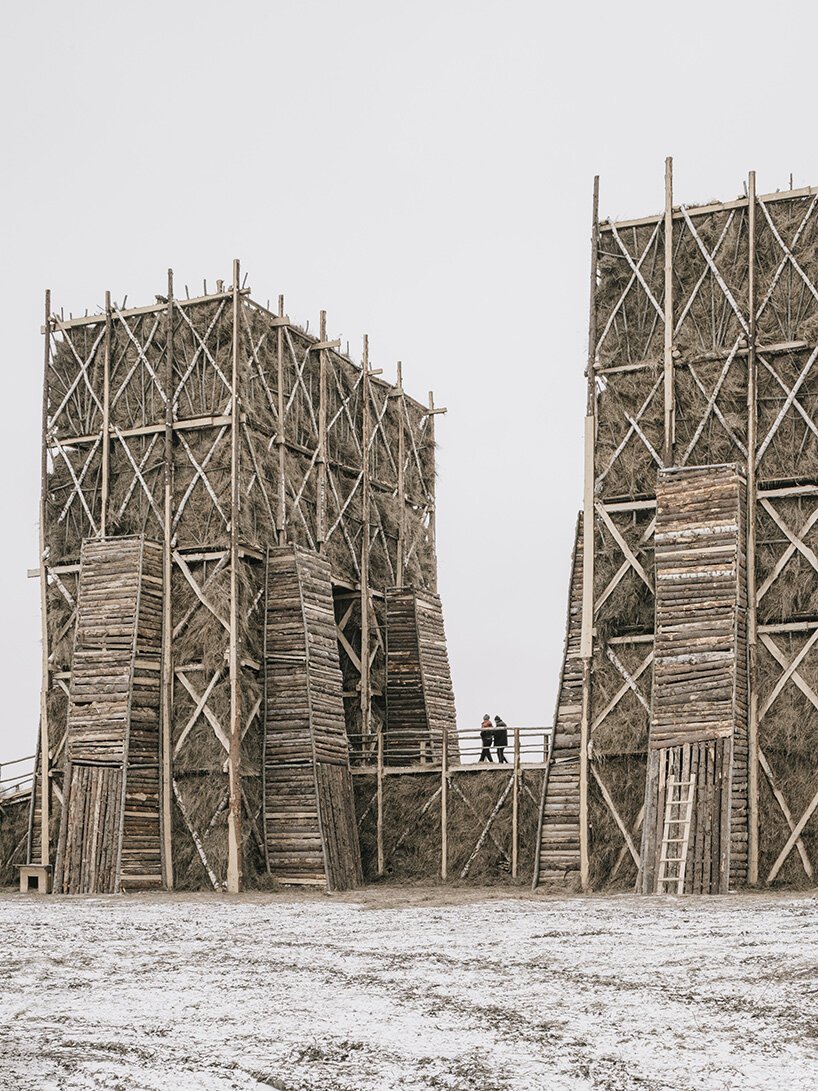
image © grigoriy sokolinsky
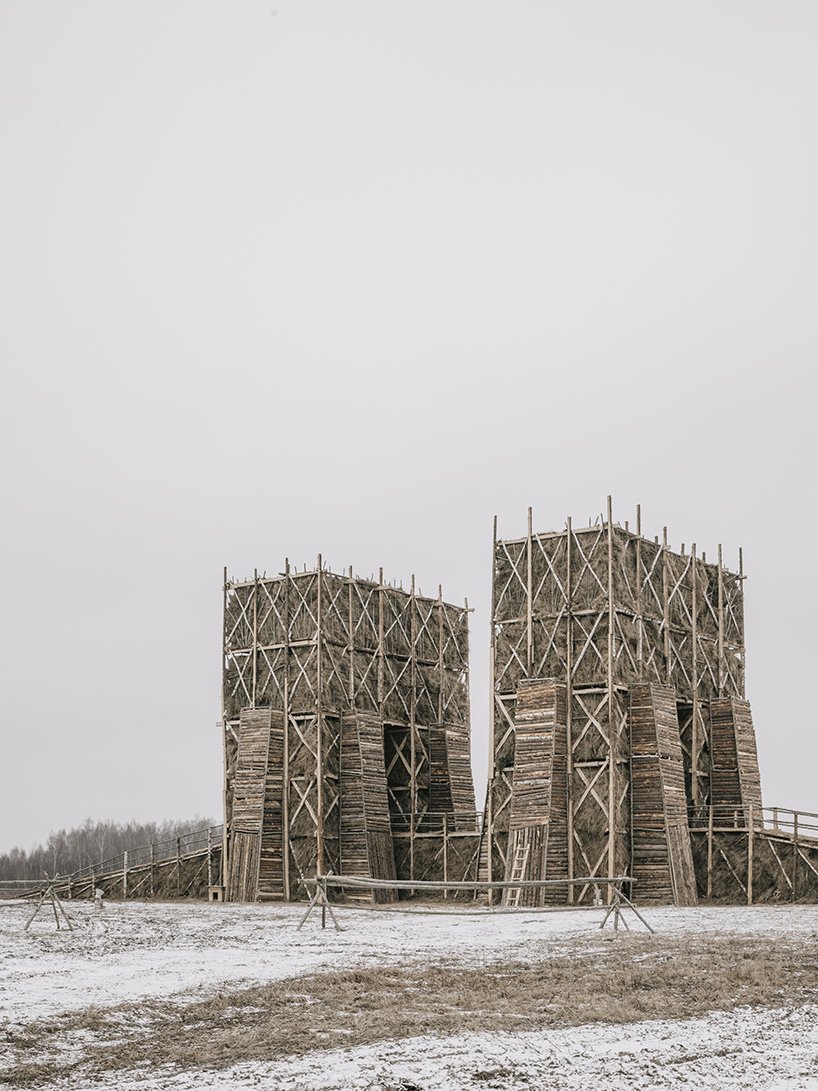
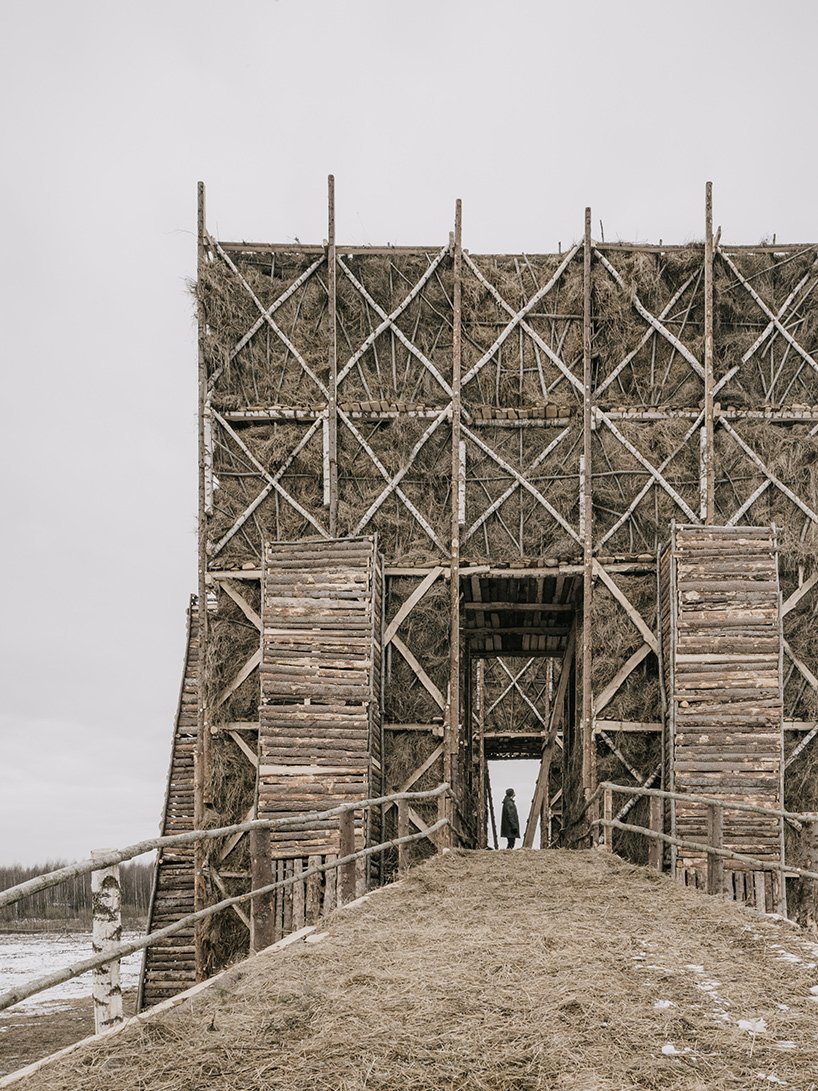
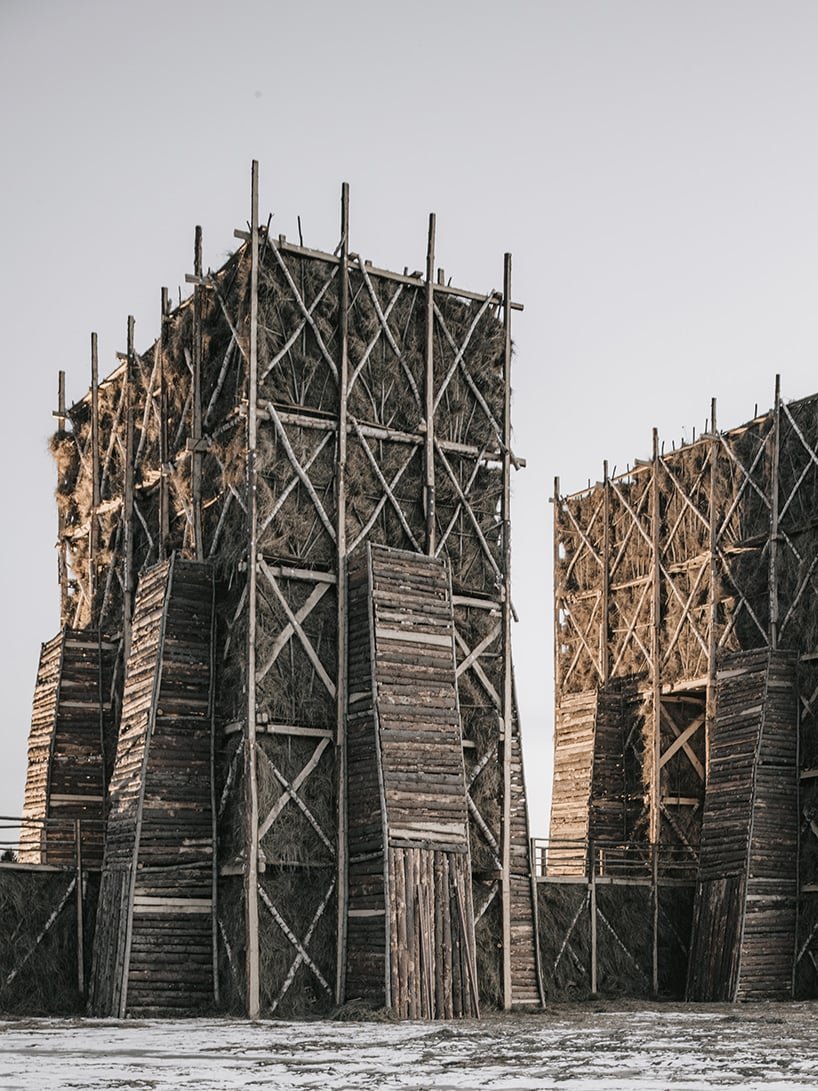
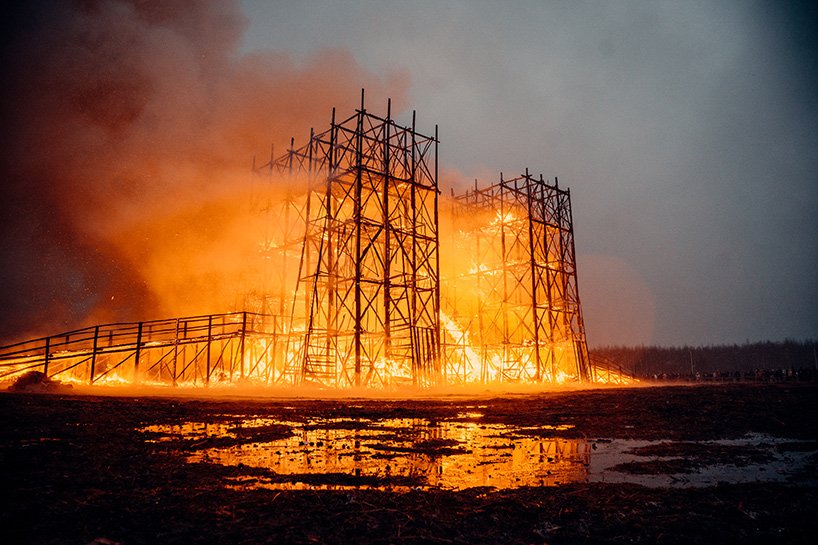
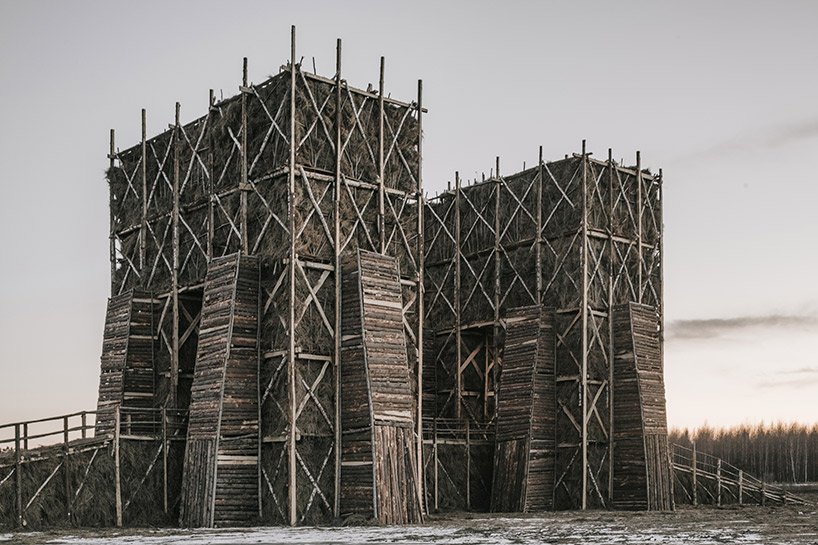
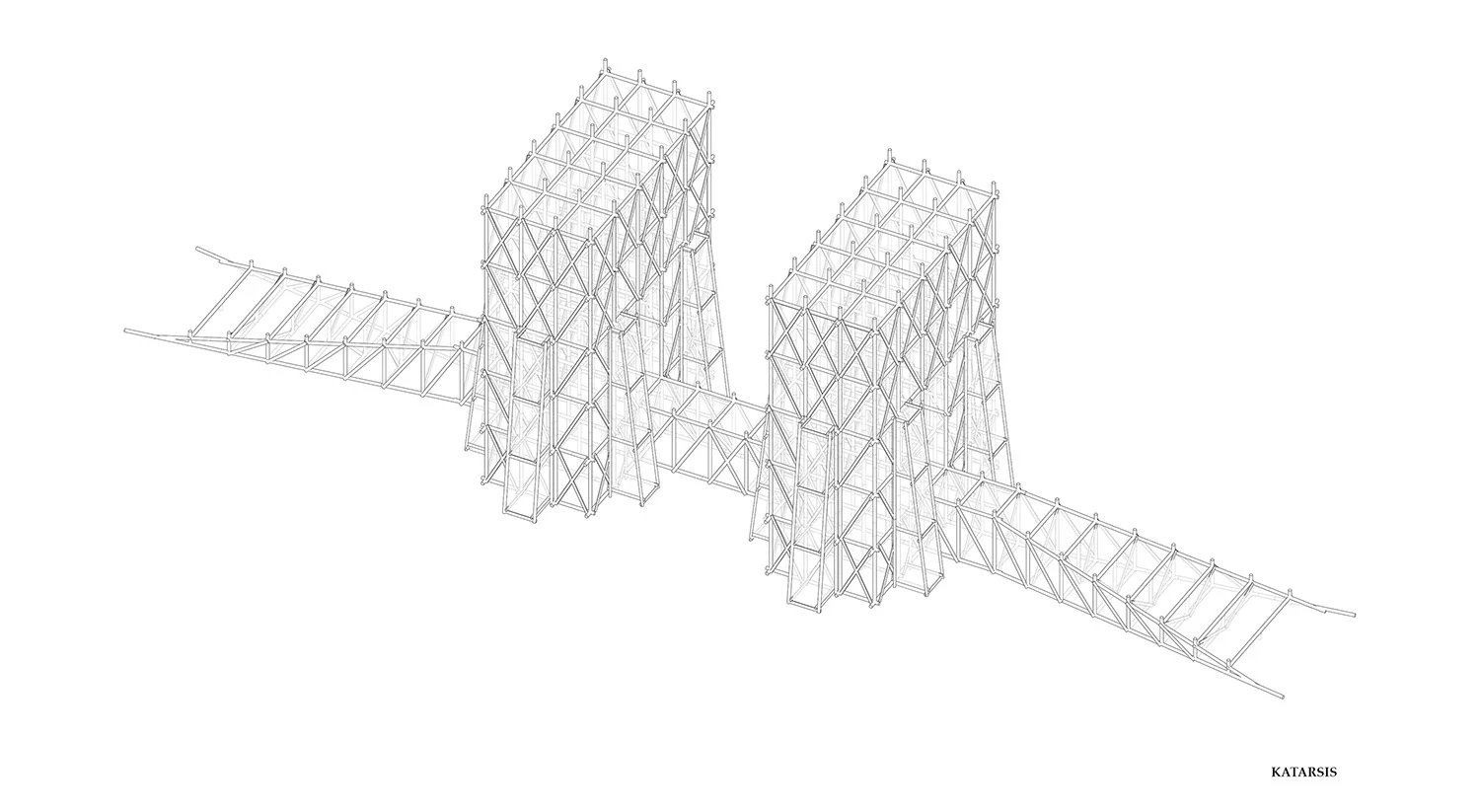
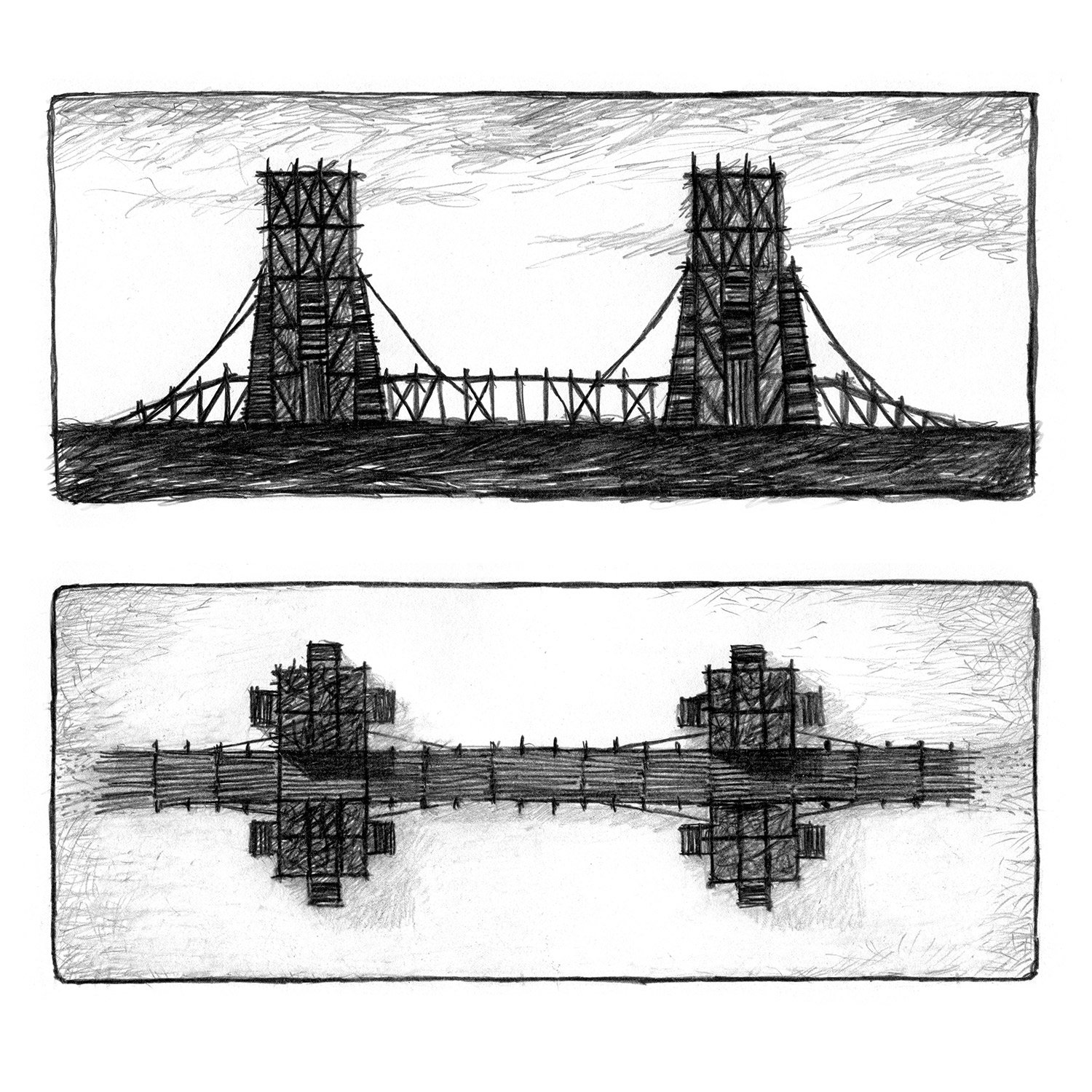
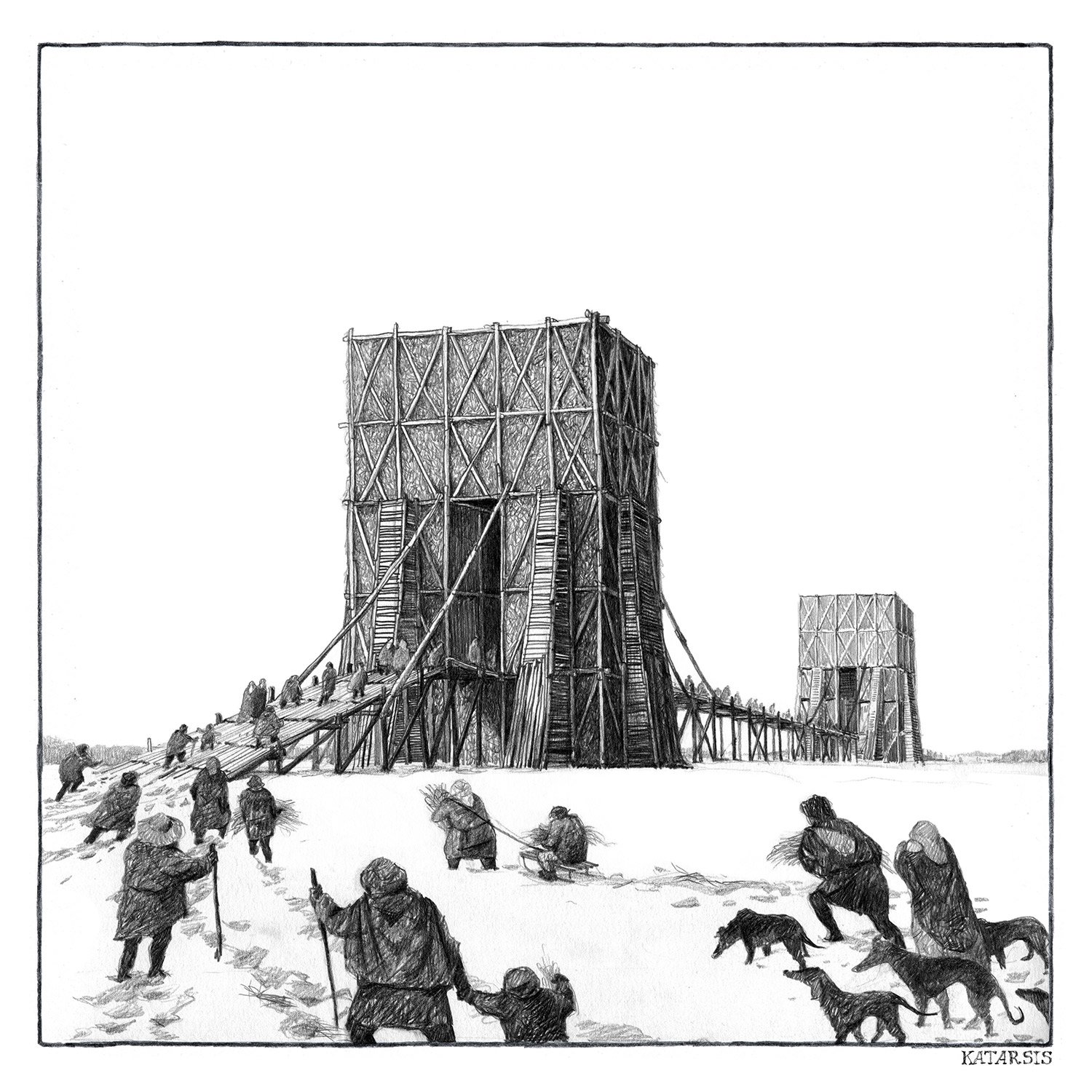
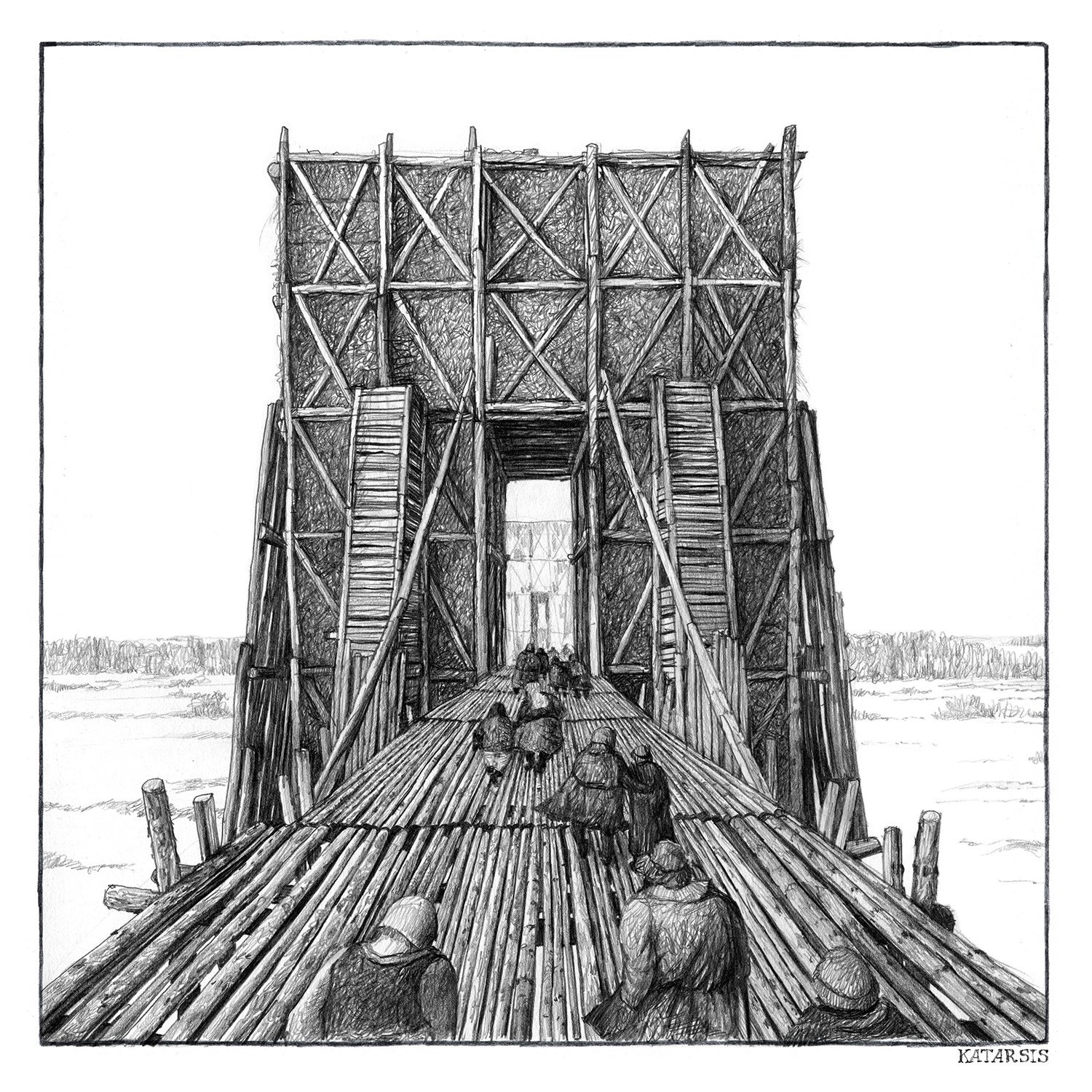
for the 2020 edition, a design by KATARSIS was selected to be set fire to. appropriately titled‘burning bridges’, the project embodies irreversible change — both global and personal.‘we wanted to create a long object that would not inspire any clear-cut associations,’ explains peter sovetnikov, co-founder and partner, KATARSIS. ‘it had to have an otherworldly quality and reflect the feeling aroused by the surrounding endless fields of the kaluga region. the bridge grows right out of the field and spans the invisible river: it is a poetic symbol of space — and of time.’
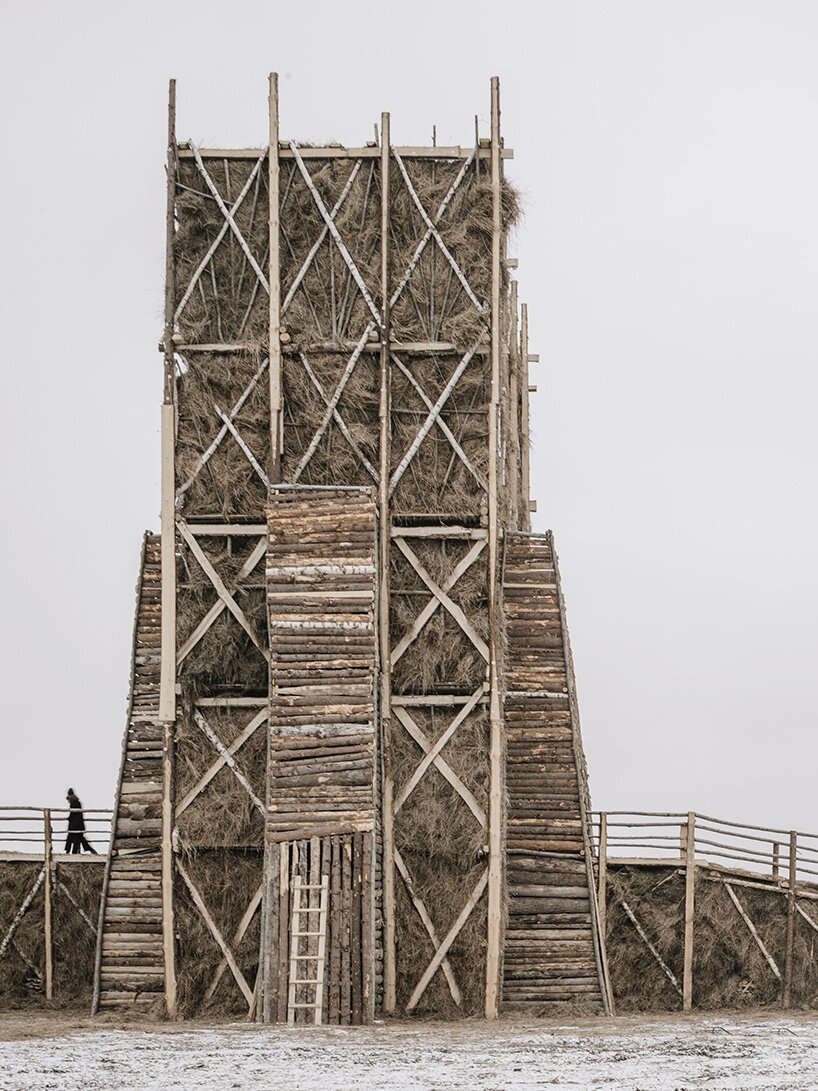
image © grigoriy sokolinsky
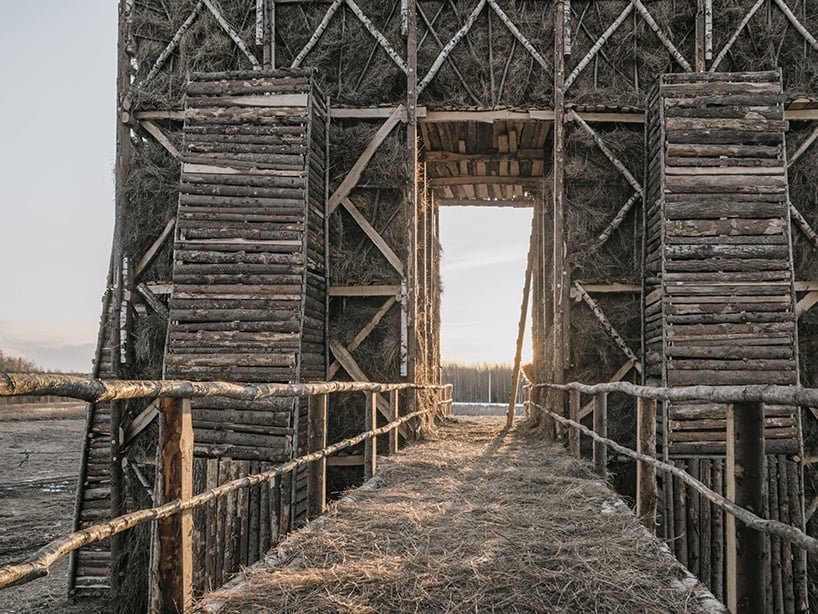
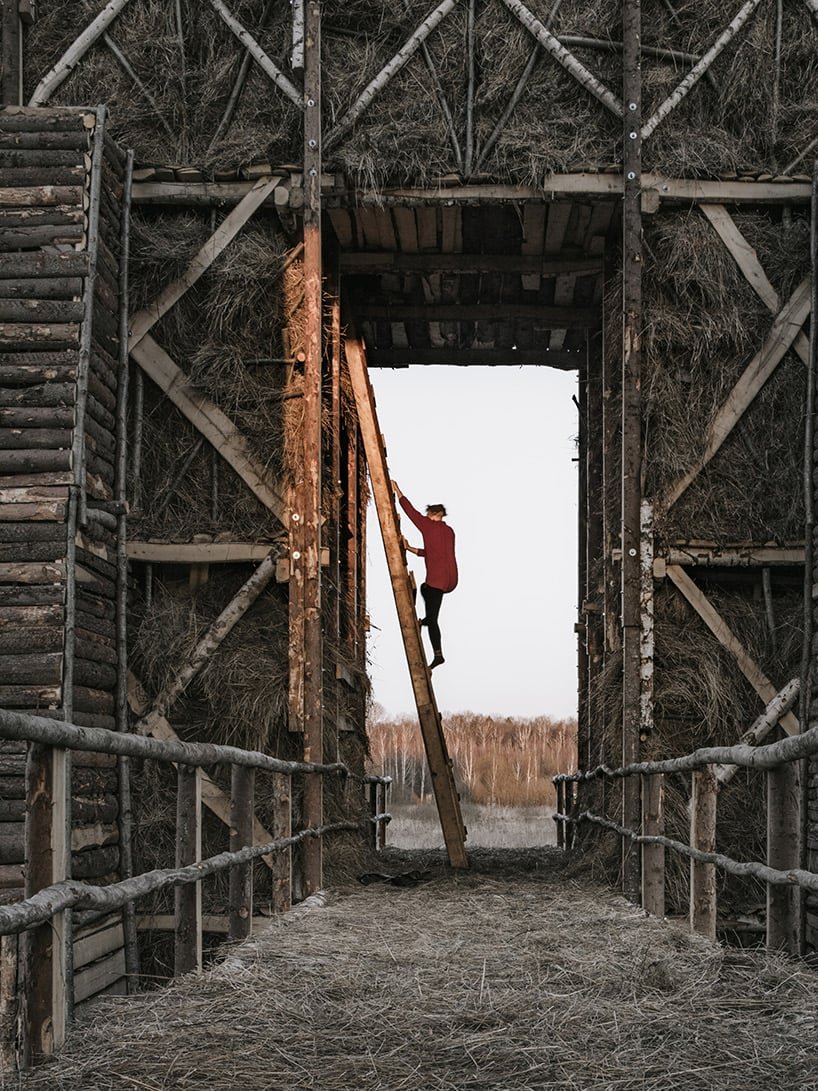
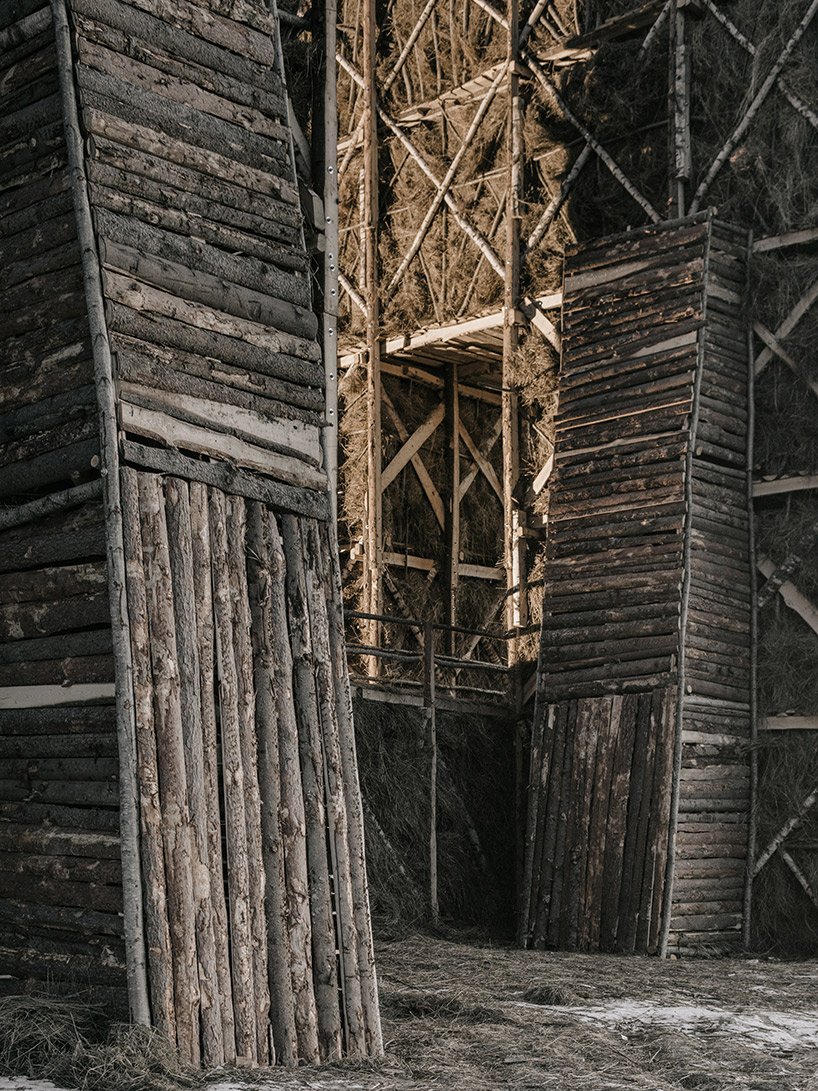
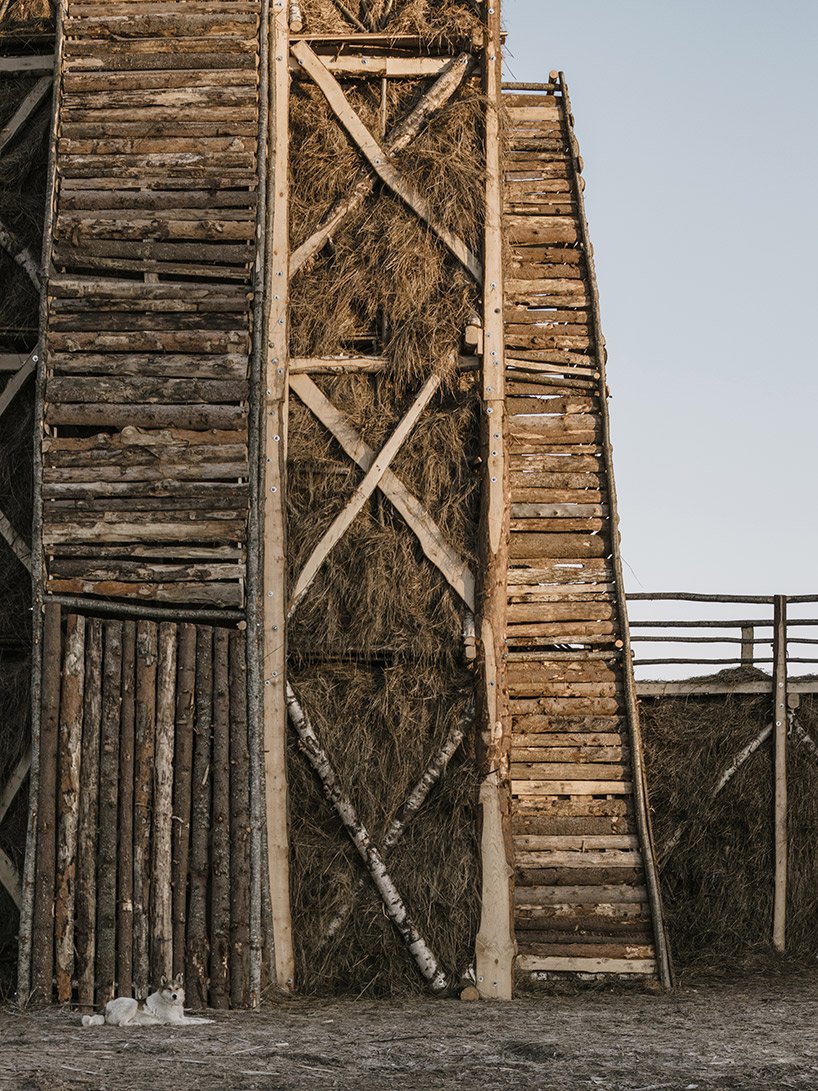
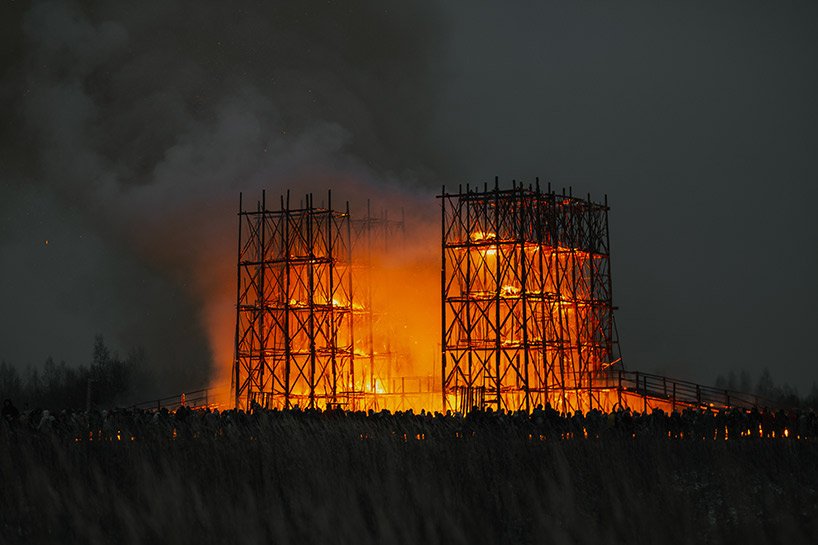
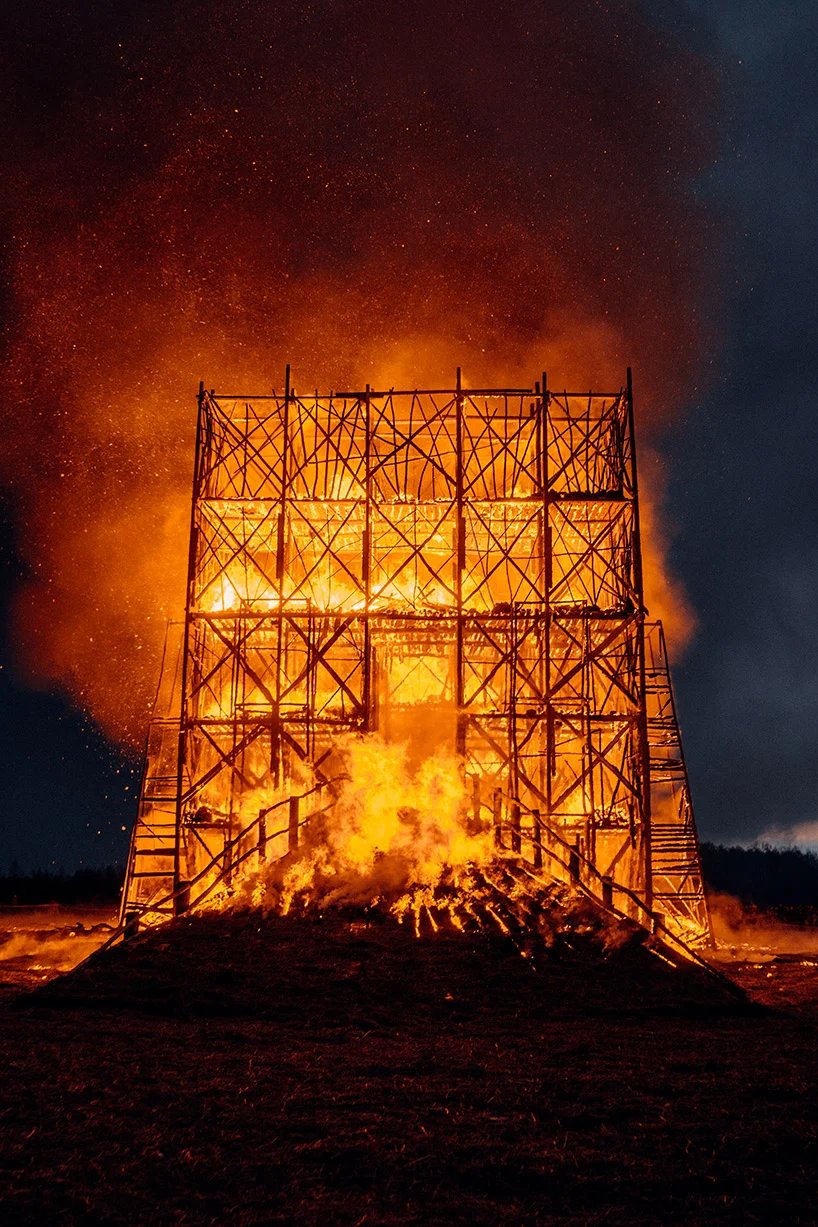
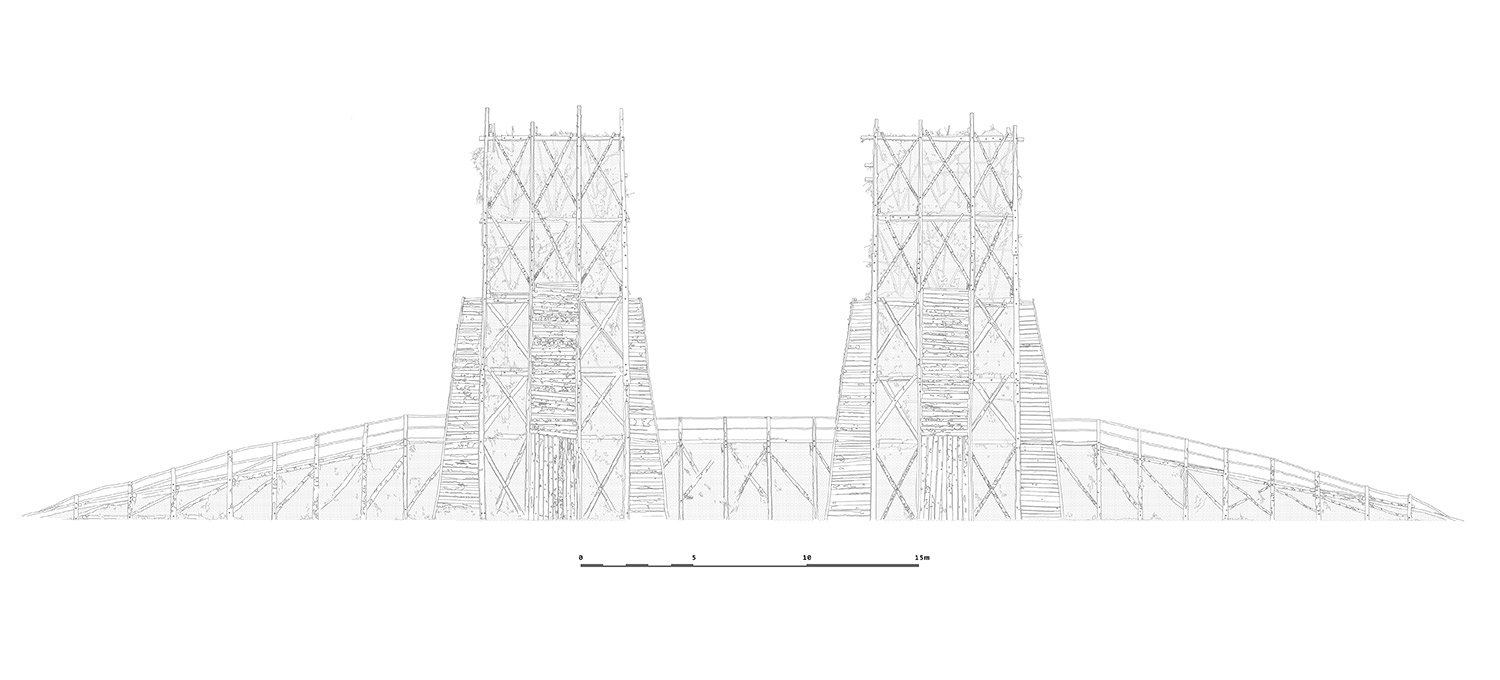
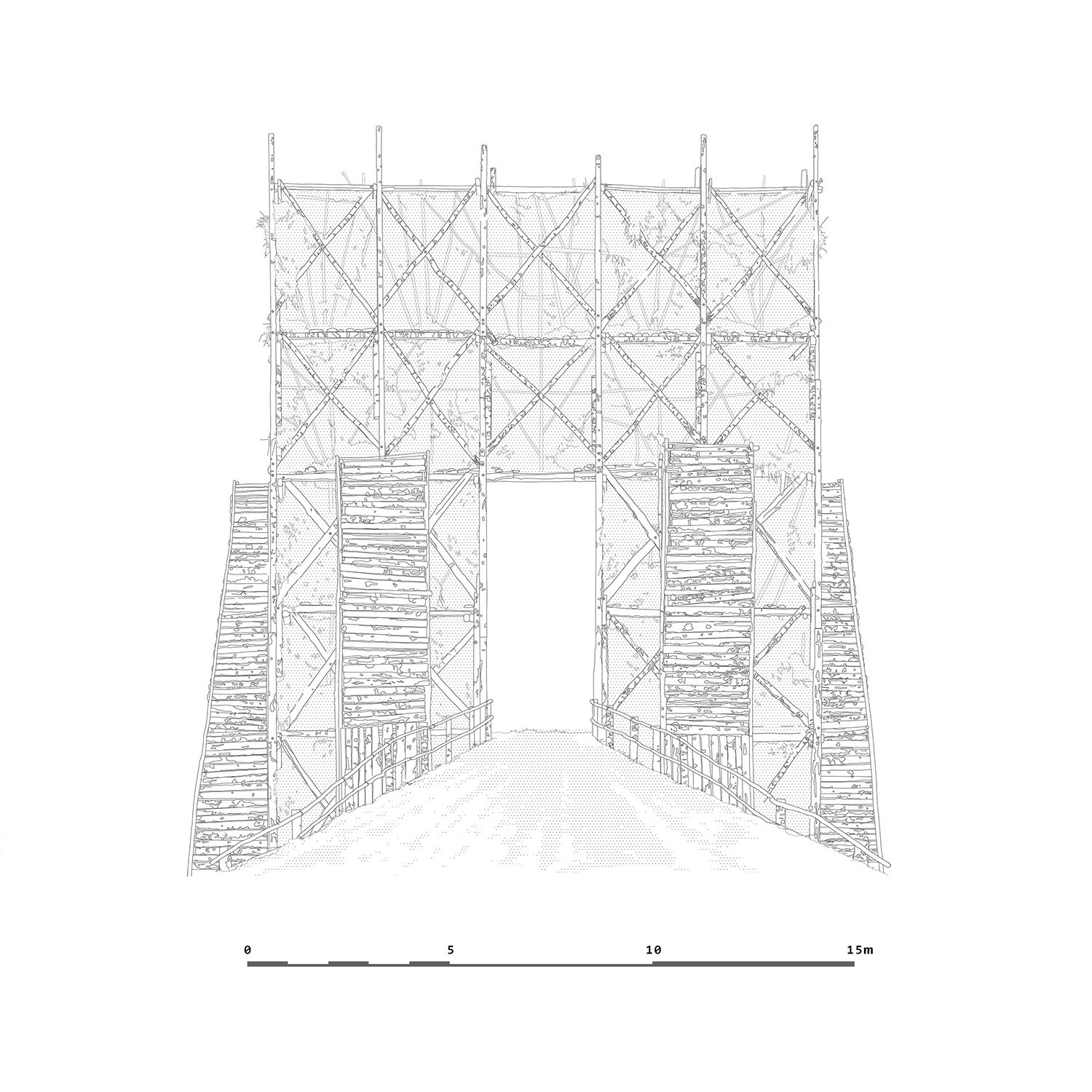
built by a team from the local community, the bridge measured 70 meters (230 feet) in length with the two 20-meter-high (66 ft) towers linked by a passageway platform. the architects explain that the materials were selected in terms of their sustainability and eco-friendliness. for example, the main wooden frame was built from wood infested with bark beetles, ridding the local woods of the harmful insect.
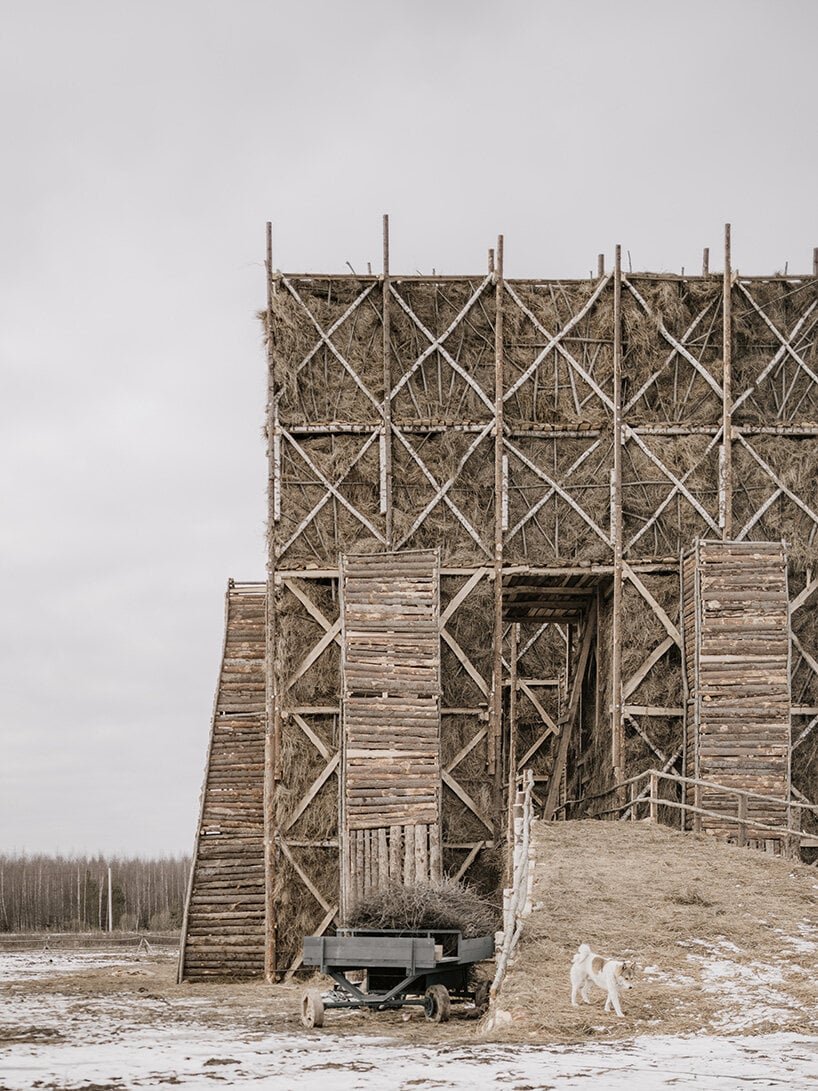
image © grigoriy sokolinsky
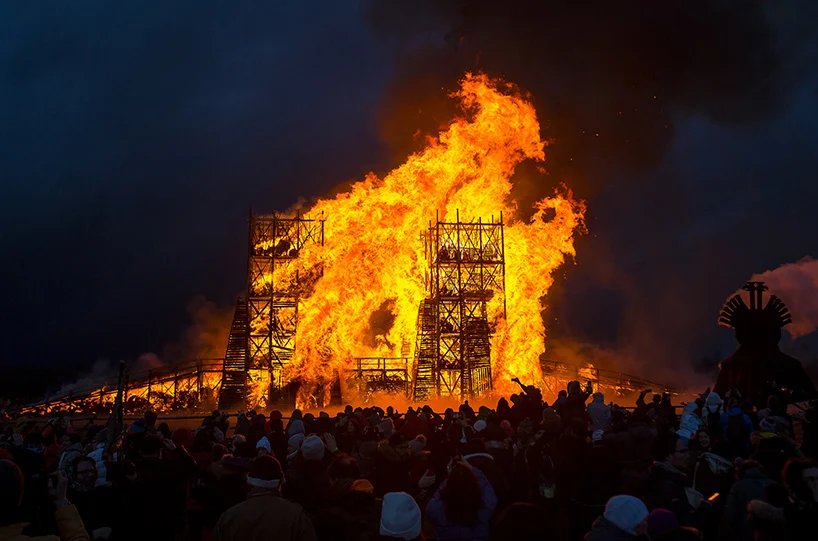
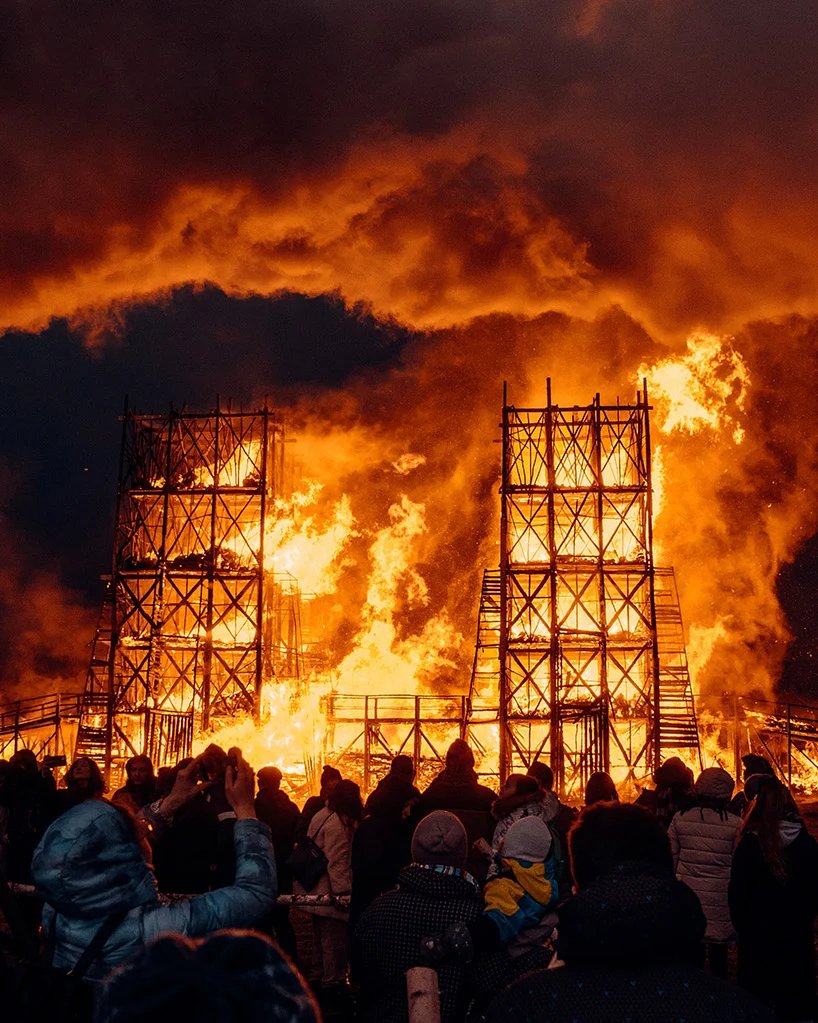
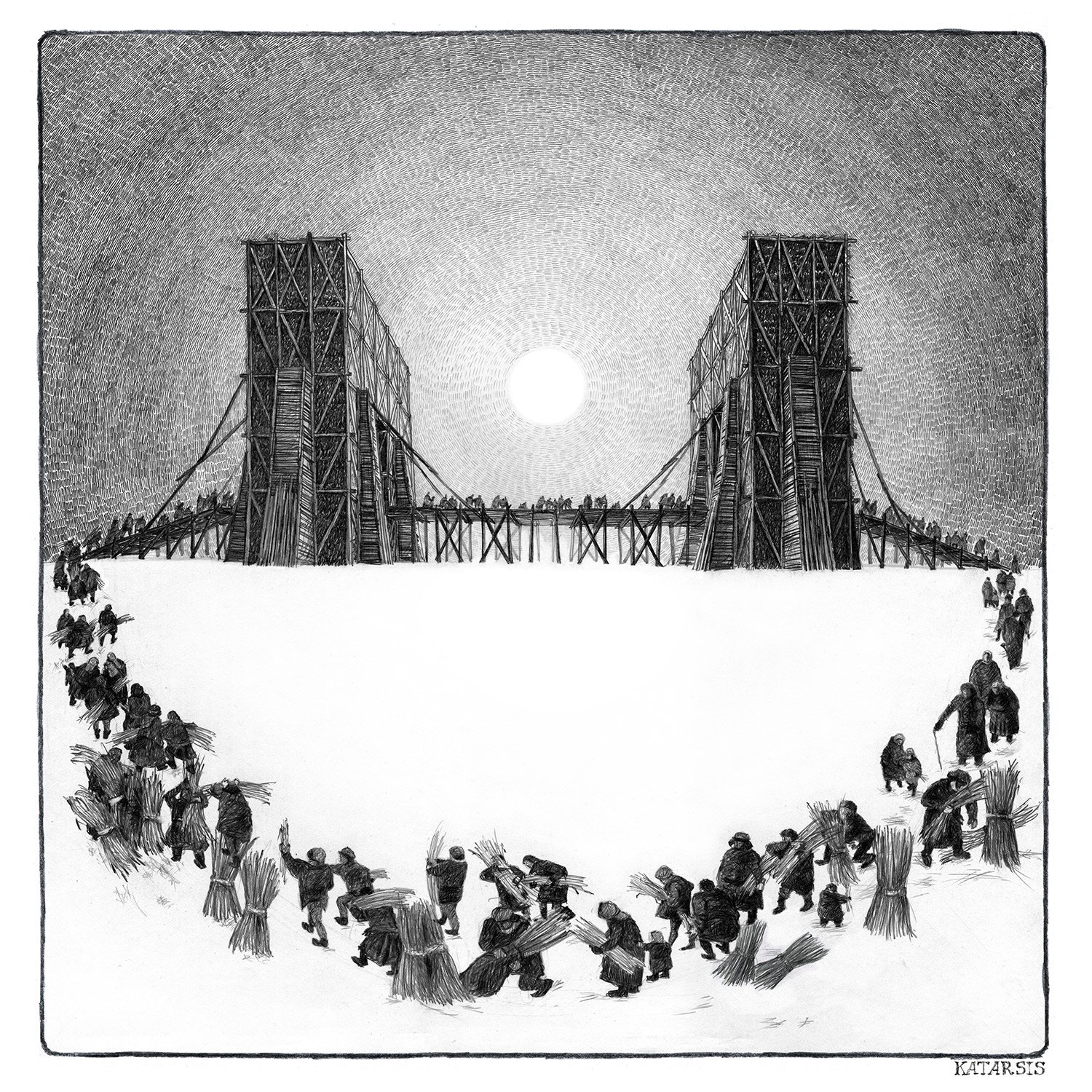
before the burning ceremony, spectators were invited to walk along or across the bridge to feel that they were playing a part in the event. ‘before the burning, we held a performance that we developed together with la pushkin theatre from st. petersburg,’ sovetnikov continues.‘our goal was to bring people together around the burning process: they all played a part in it. the spectators formed a large circle. each person picked up some firewood and placed it on the bridge, thus, contributing to the bonfire. the burning ceremony was no longer a show, but a collective action and a deep personal experience.’
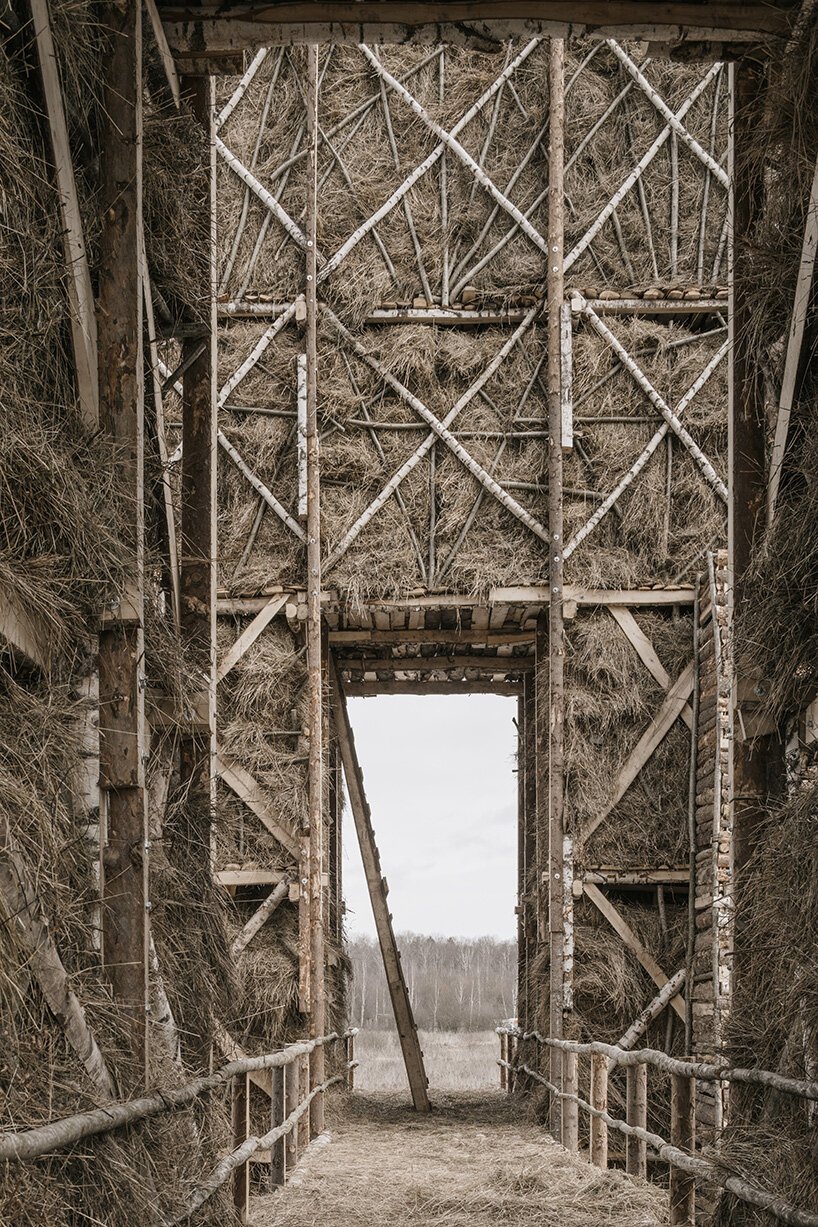
image © grigoriy sokolinsky
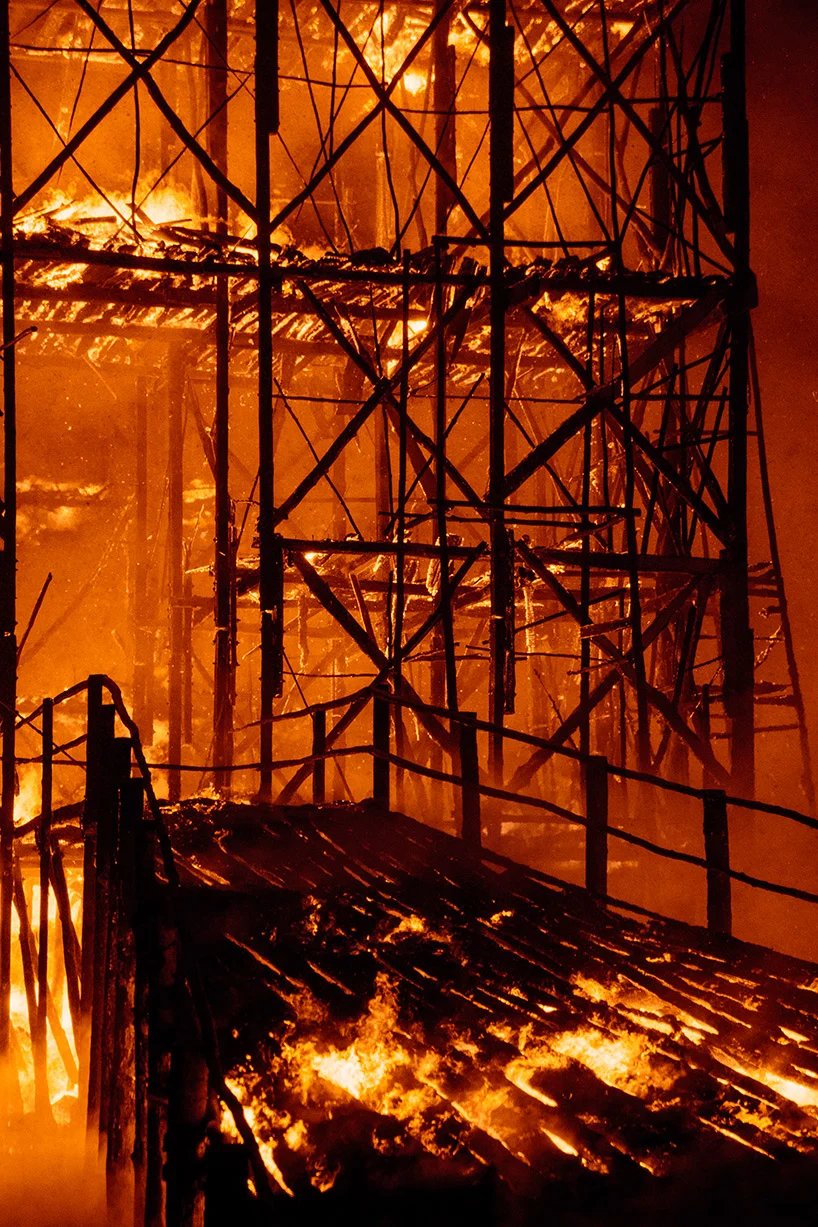
as the fire burned, it became a symbol for the ever-more rapid change. ‘as you stand only dozens of meters away from an 80-meter-high bonfire and feel the almost unbearable heat on your skin, you realize how deadly wildfires are and how much of a problem they present,’ says peter sovetnikov. ‘it was important for us that this train of thought was not superimposed on the viewers, but rather emerged as a natural outcome of personal experience. probably, this type of event can turn the public attention to the real problems of today.’
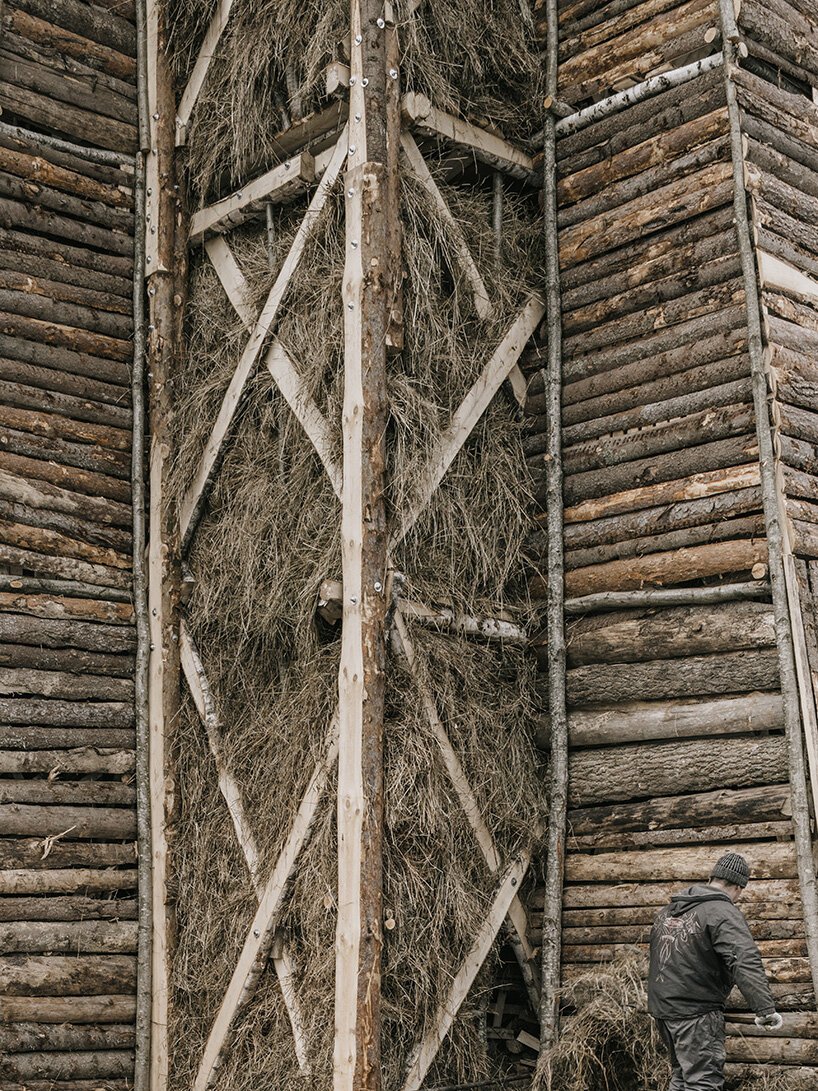
image © grigoriy sokolinsky
as the architects note, the burning of the bridge in the spring of 2020 turned out to be prophetic.‘the world was yet unaware that it was about to be shaken to its very core,’ concludes the architect, in light of the ongoing pandemic.‘in a mystic way, the art object became a powerful symbol of the upheaval to come. today, we know that humanity did cross the bridge and found itself in a new era. and there is no way back.’
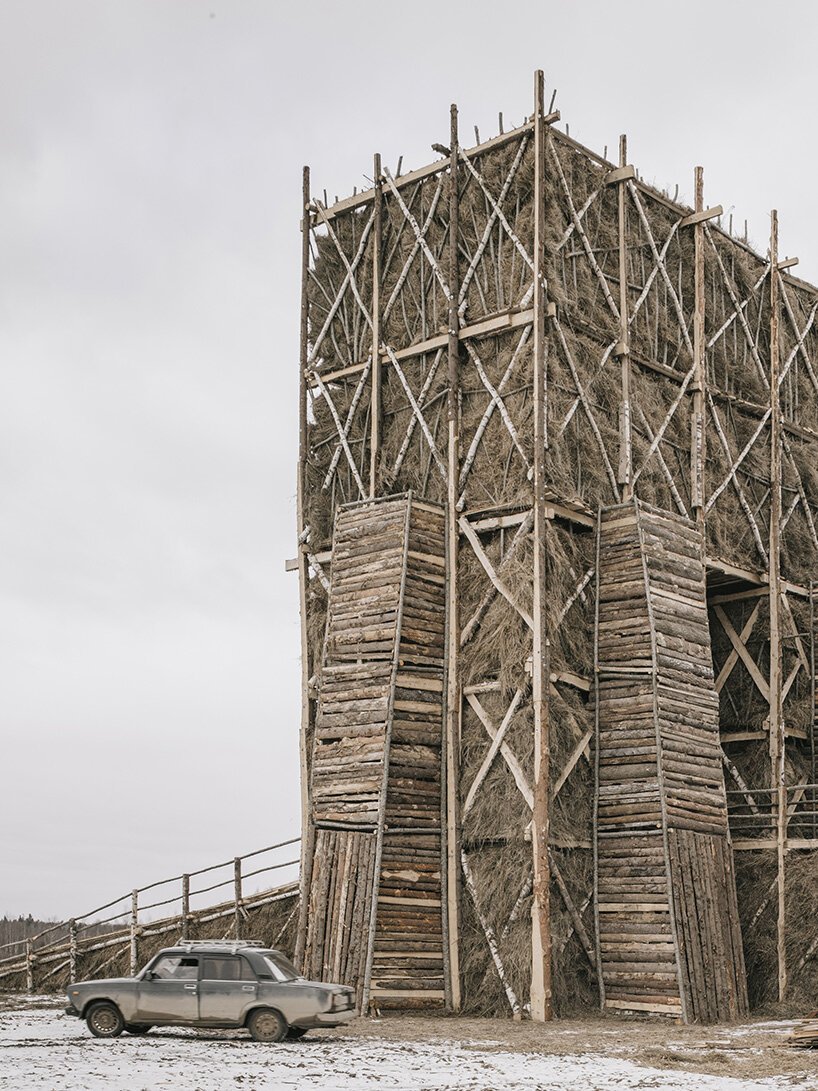
image © grigoriy sokolinsky
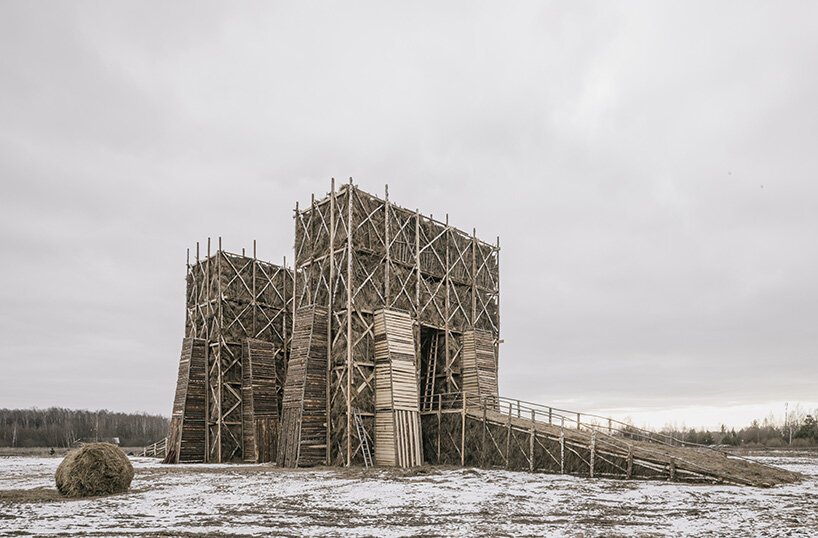
image © grigoriy sokolinsky
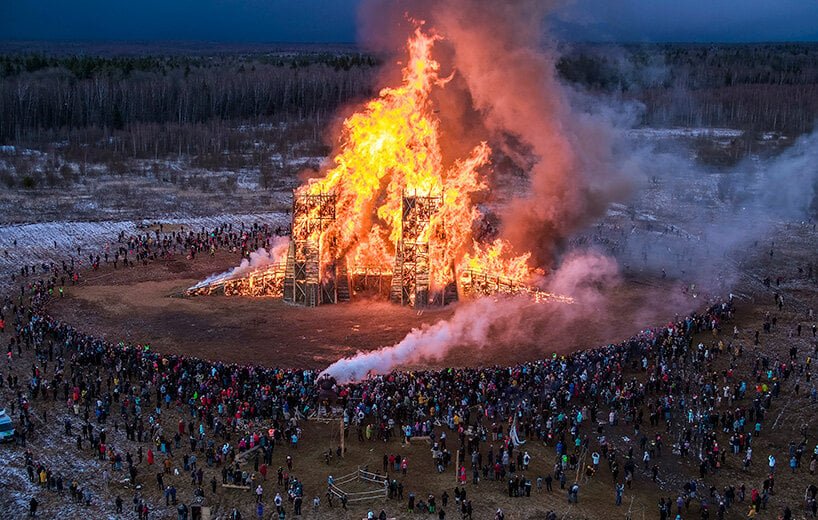
image © dmitrij serebryakov
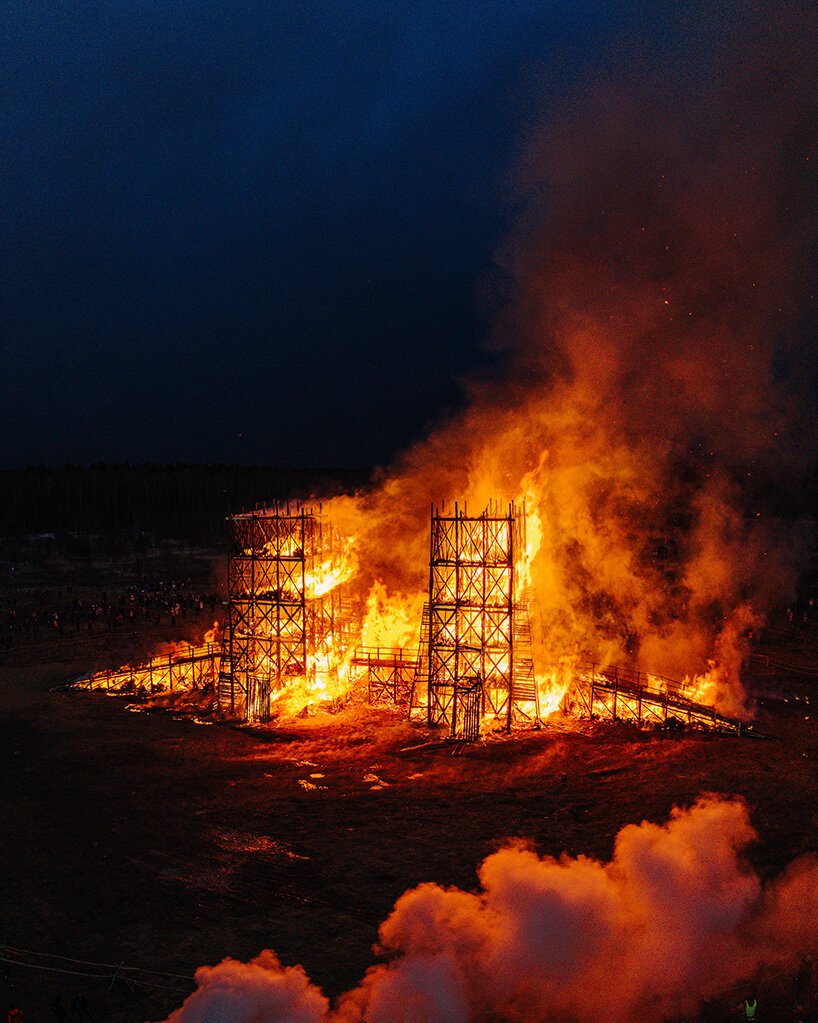
image © max bezygly
project info:
name: burning bridges
location: nikola-lenivets, kaluga oblast, russia
year: 2020
buro: KATARSIS ab — website | instagram | facebook
architects: peter sovetnikov, vera stepanskaya
typology: art and architecture
type of project: built and burned
photography: © KATARSIS ab | photo by grigoriy sokolinsky, © alexey trakhanov, © lev zvezdnyi, © rustam shagimordanov, © eugenij nemec, © dmitriy serebryakov, © max bezyglyj