
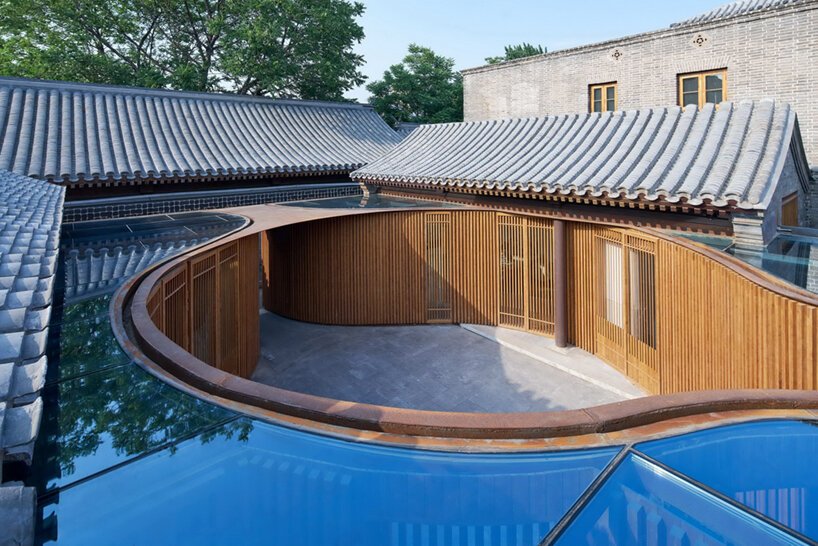
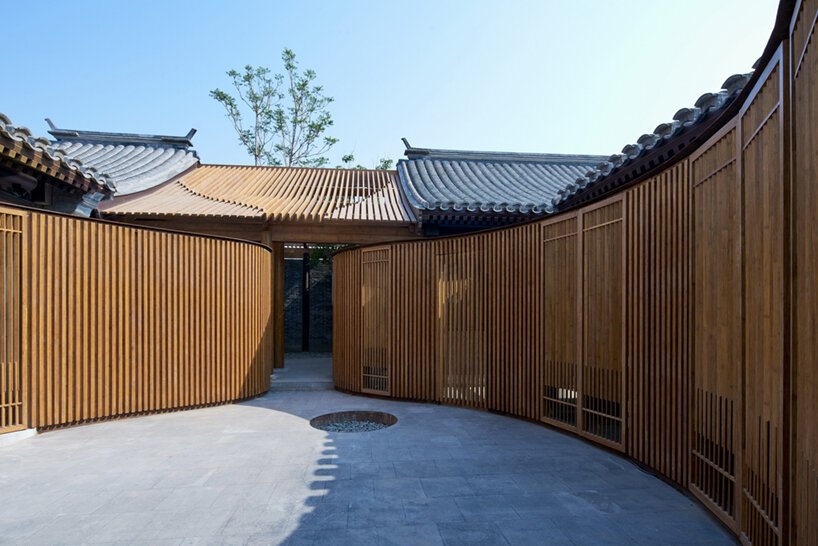
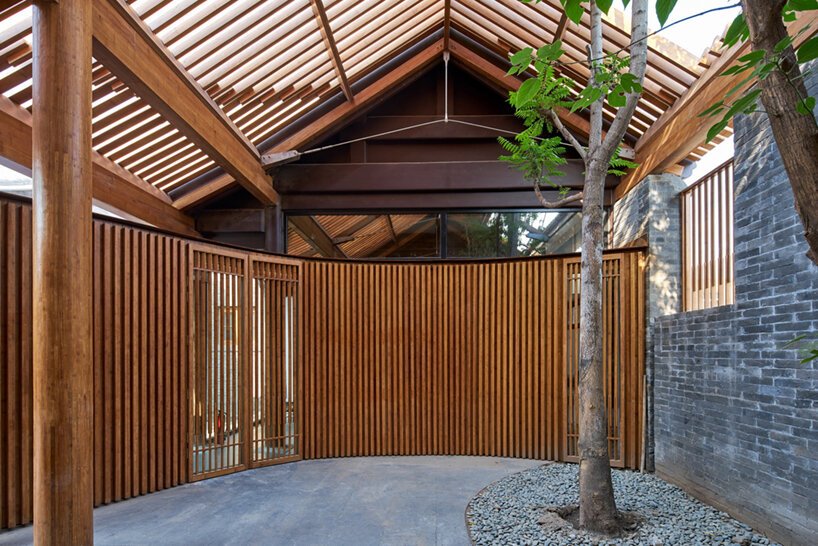
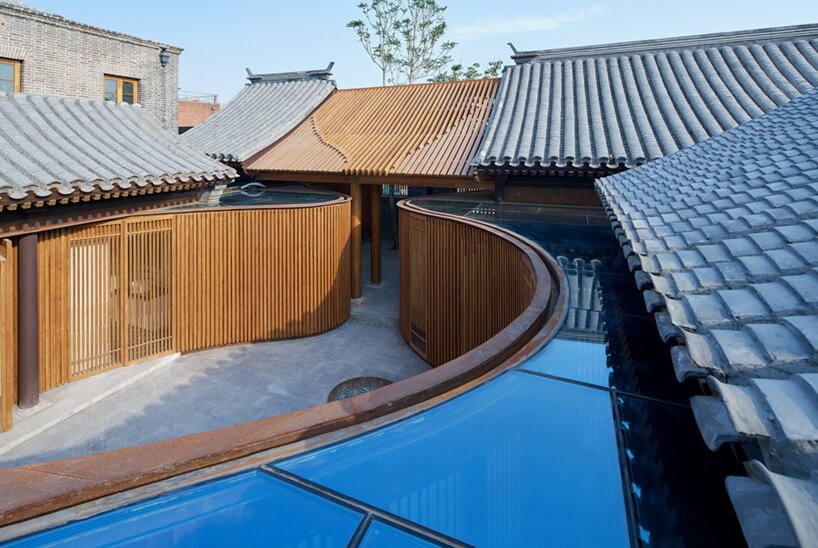
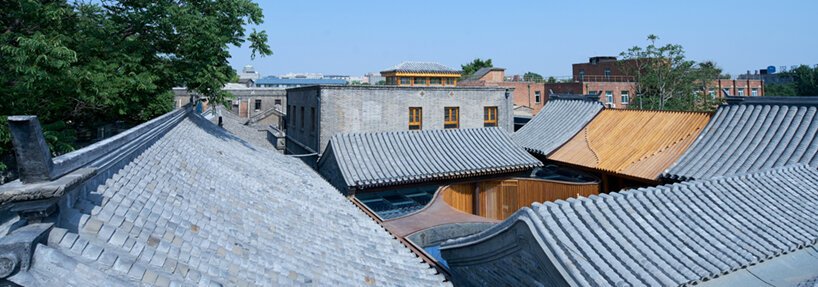
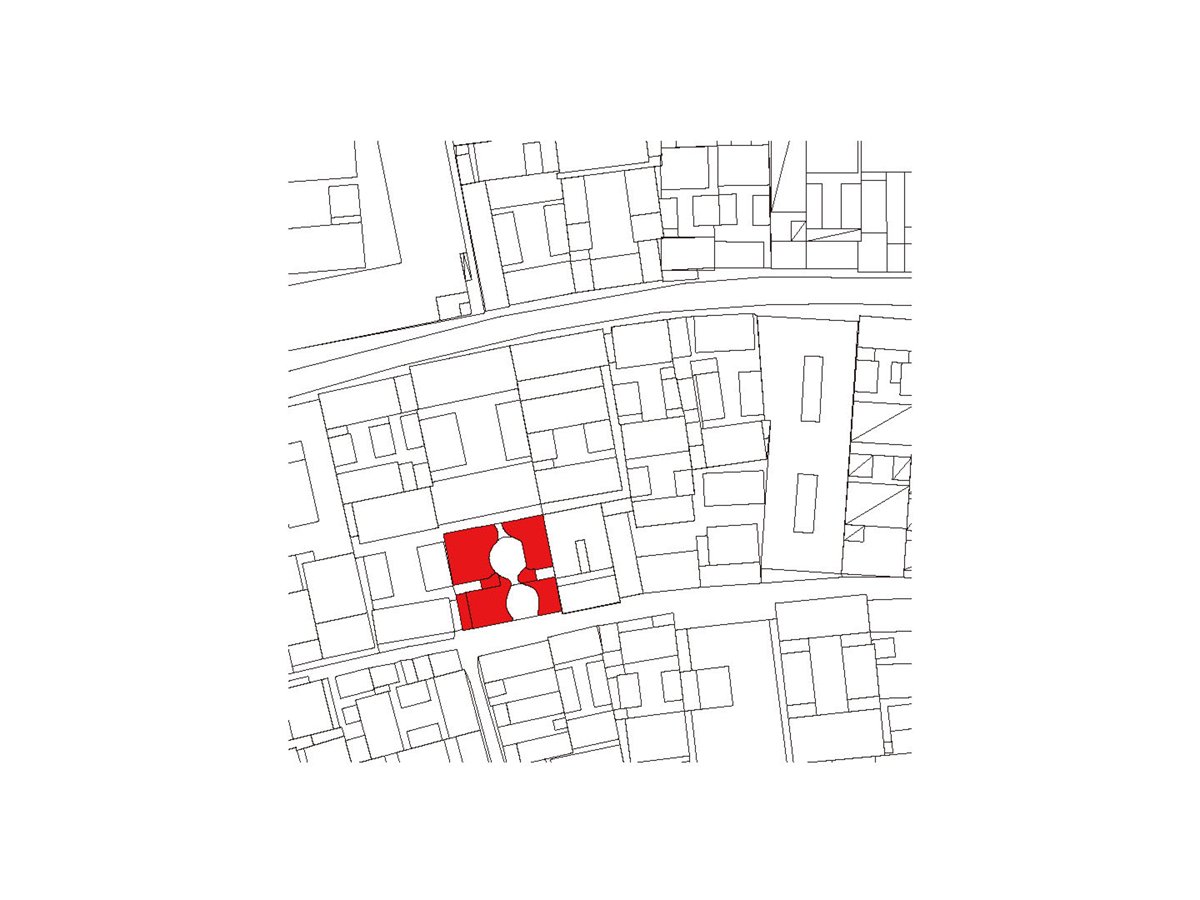
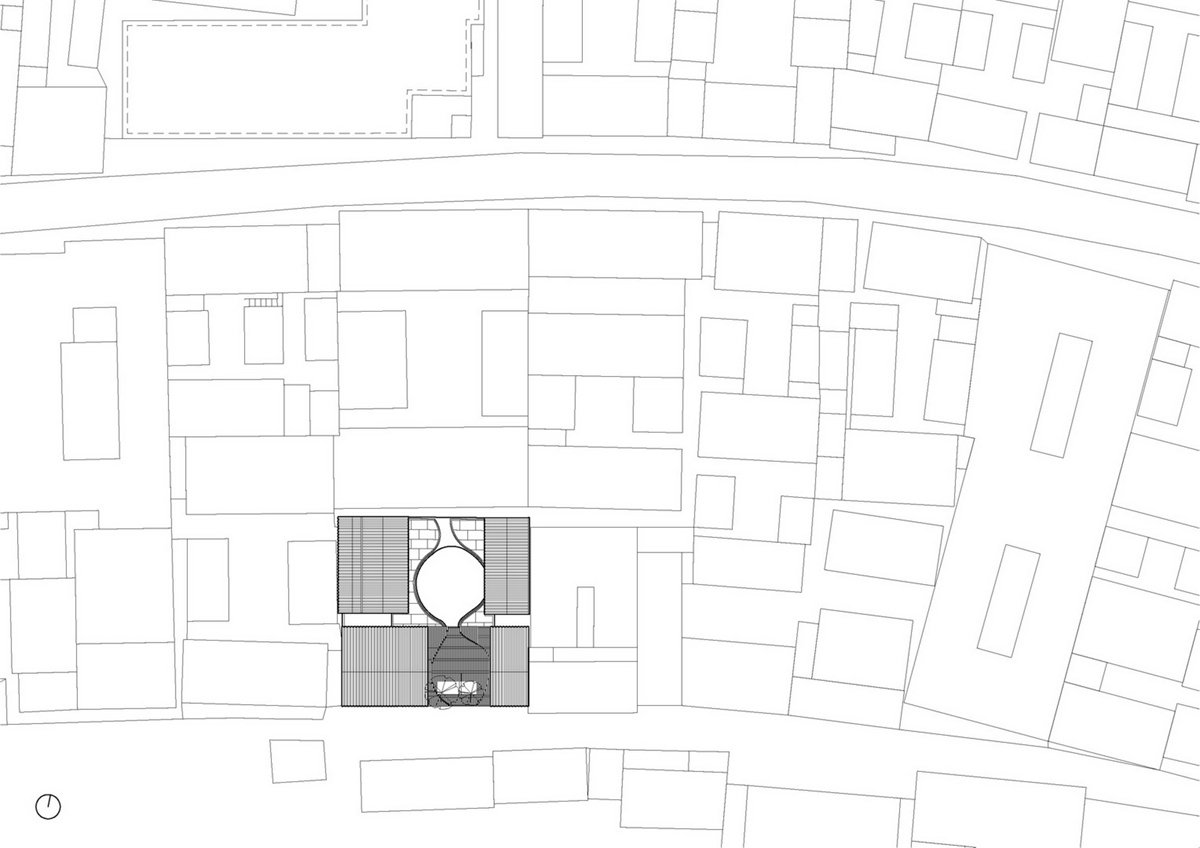
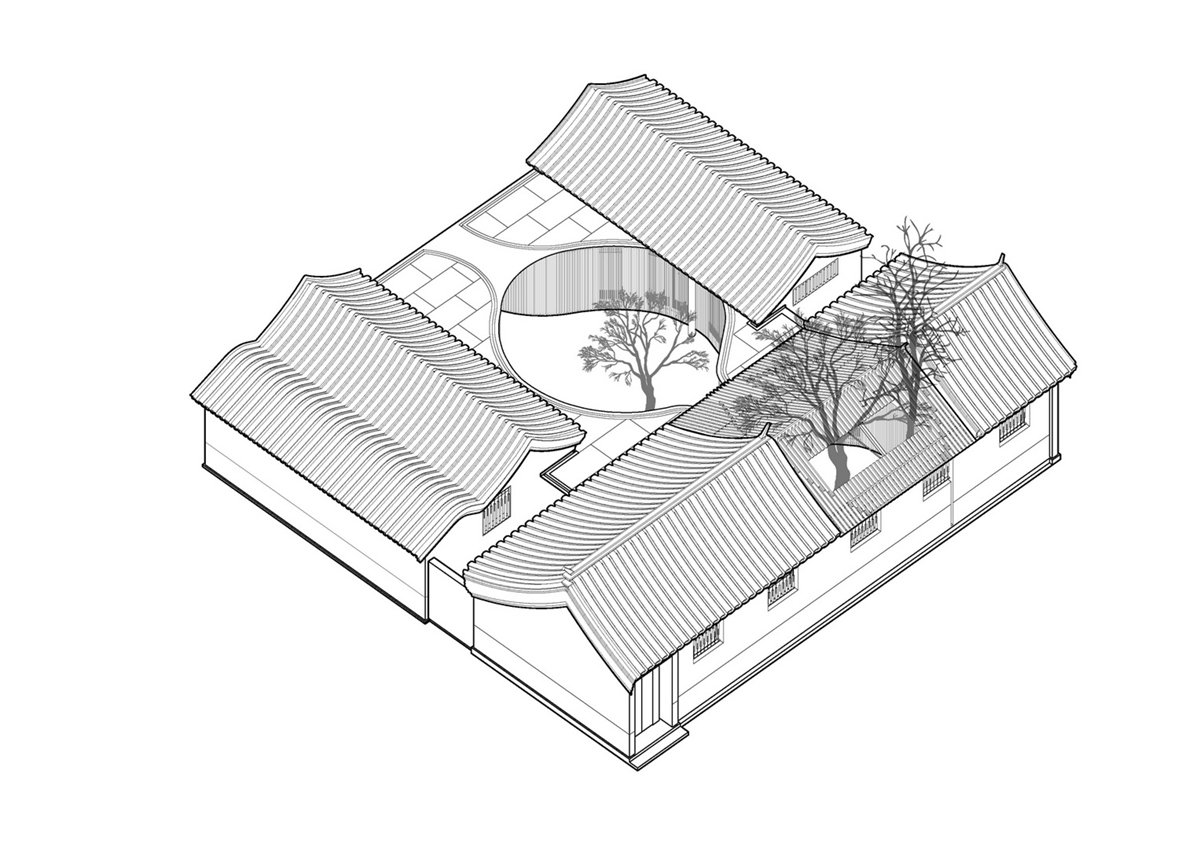
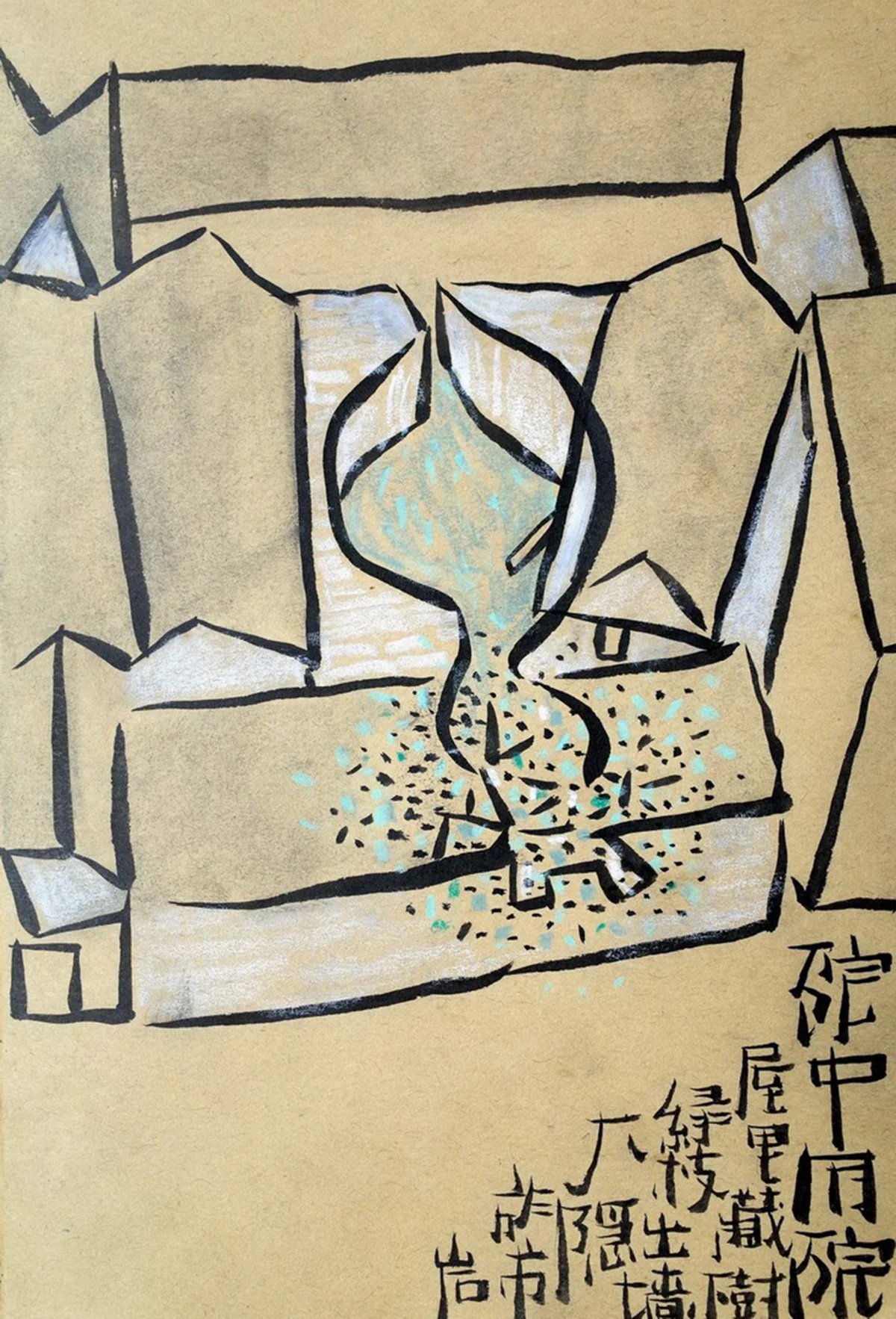
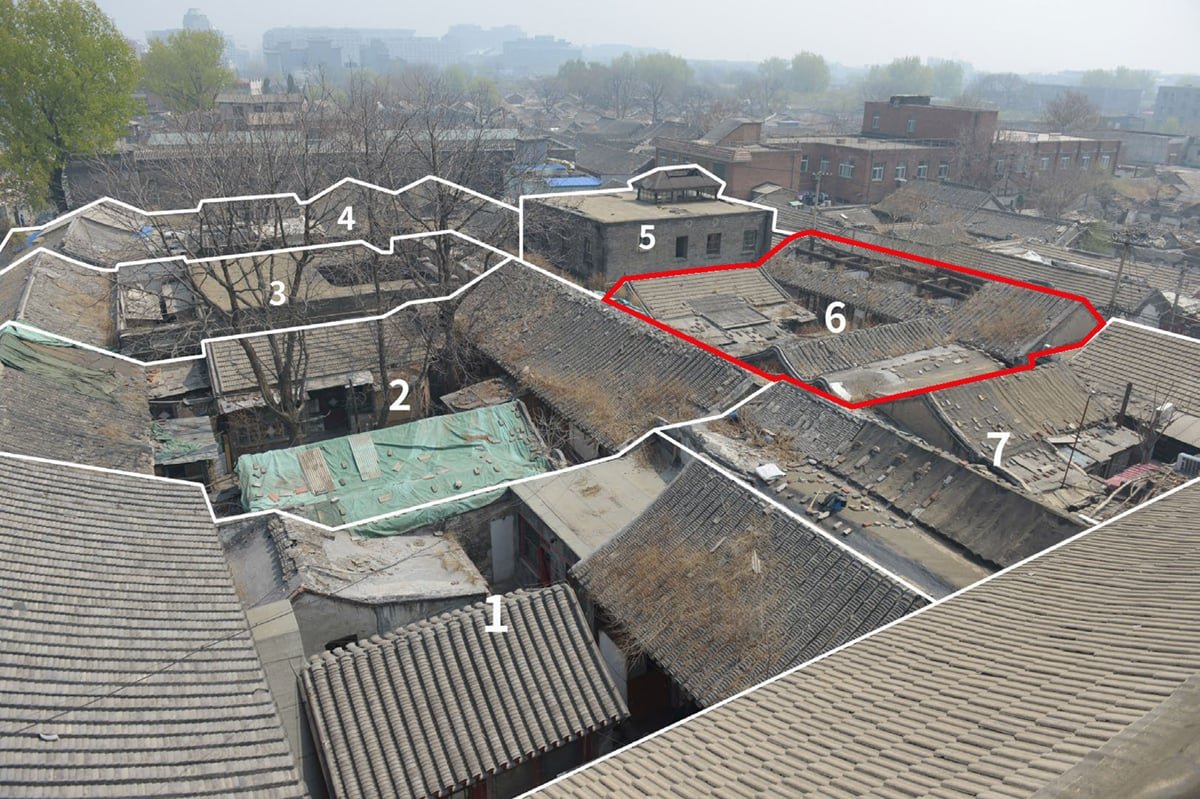
URBANUS presents its sinuous transformation and renovation of a ruinous hutong courtyard in beijing. the hutong is surrounded by a traditional chinese sanheyuan residence that had been vacant for more than ten years, and is accessed by narrow alleyways that had been marked by derelict, peeling walls. nature had overgrown the interior of the dwelling, with two small trees emerging through the broken flooring. the design team chose to celebrate this condition, preserving the trees with the interior renovation. the project is defined by its timber‘gourd-shaped’central courtyard which redefines the profile of the surrounding traditional dwelling space.
images by yang chaoying
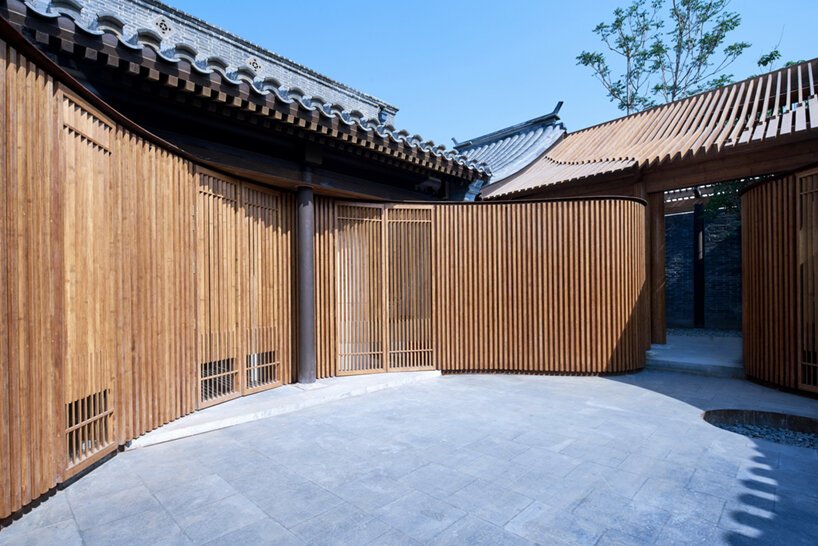
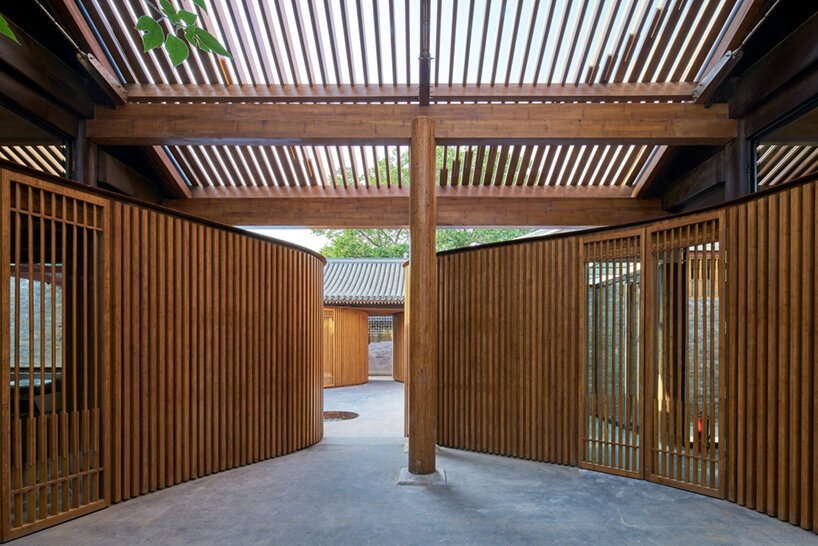
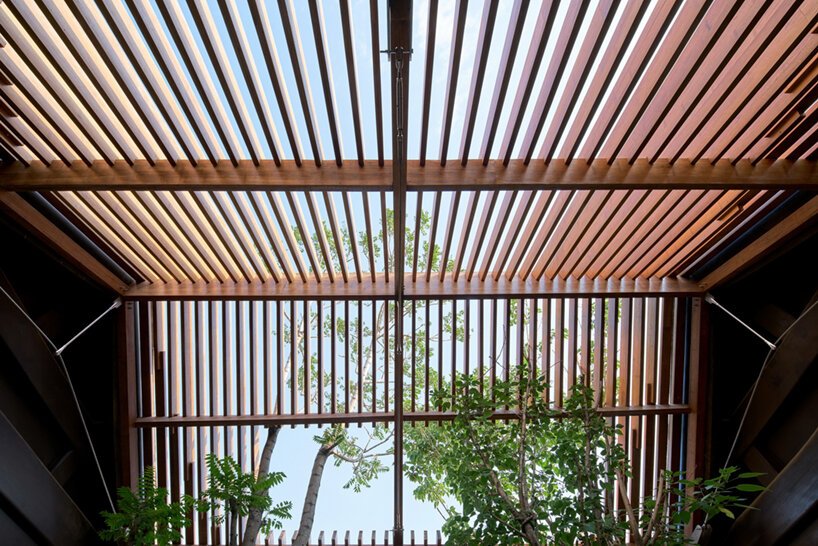
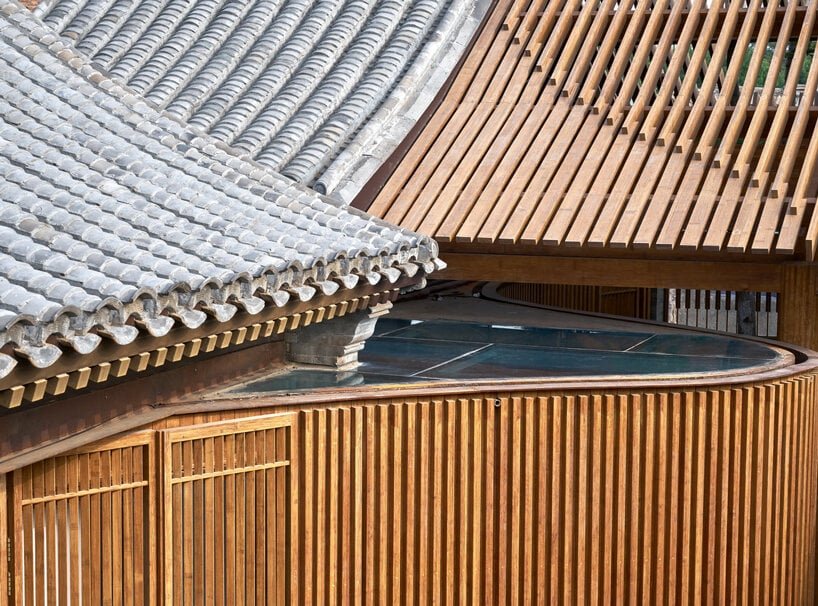
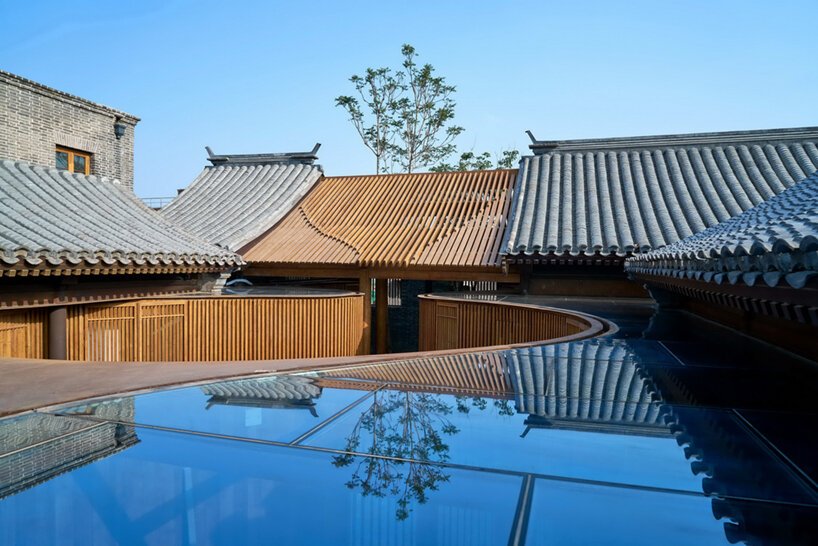
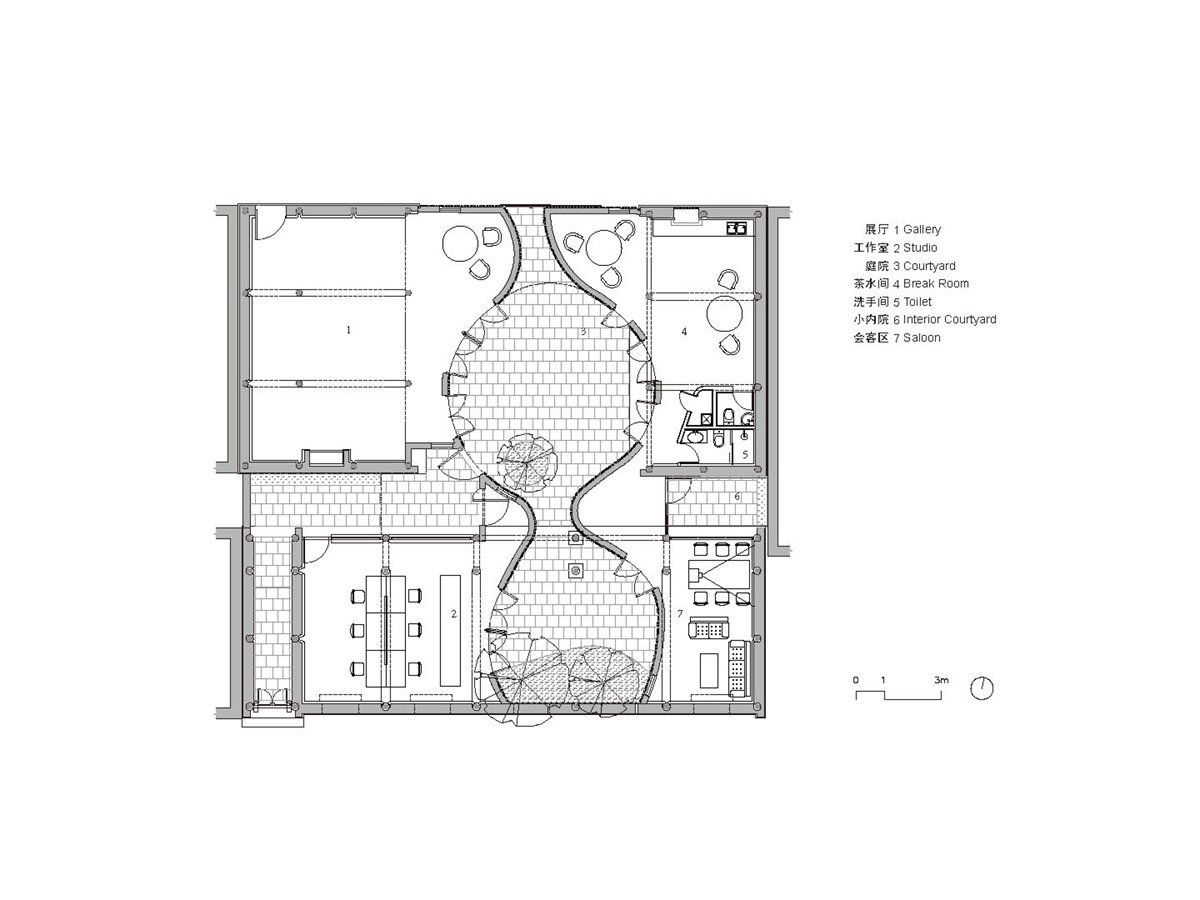
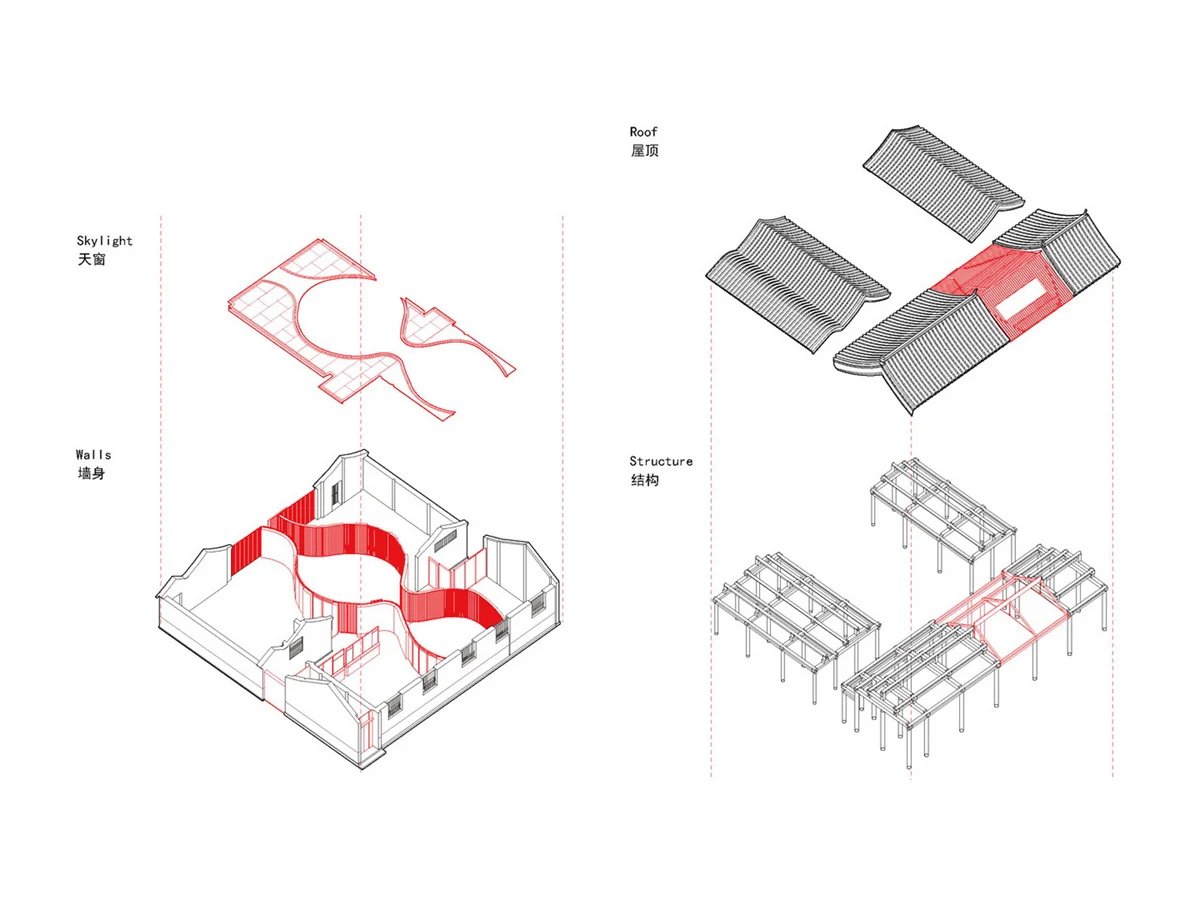
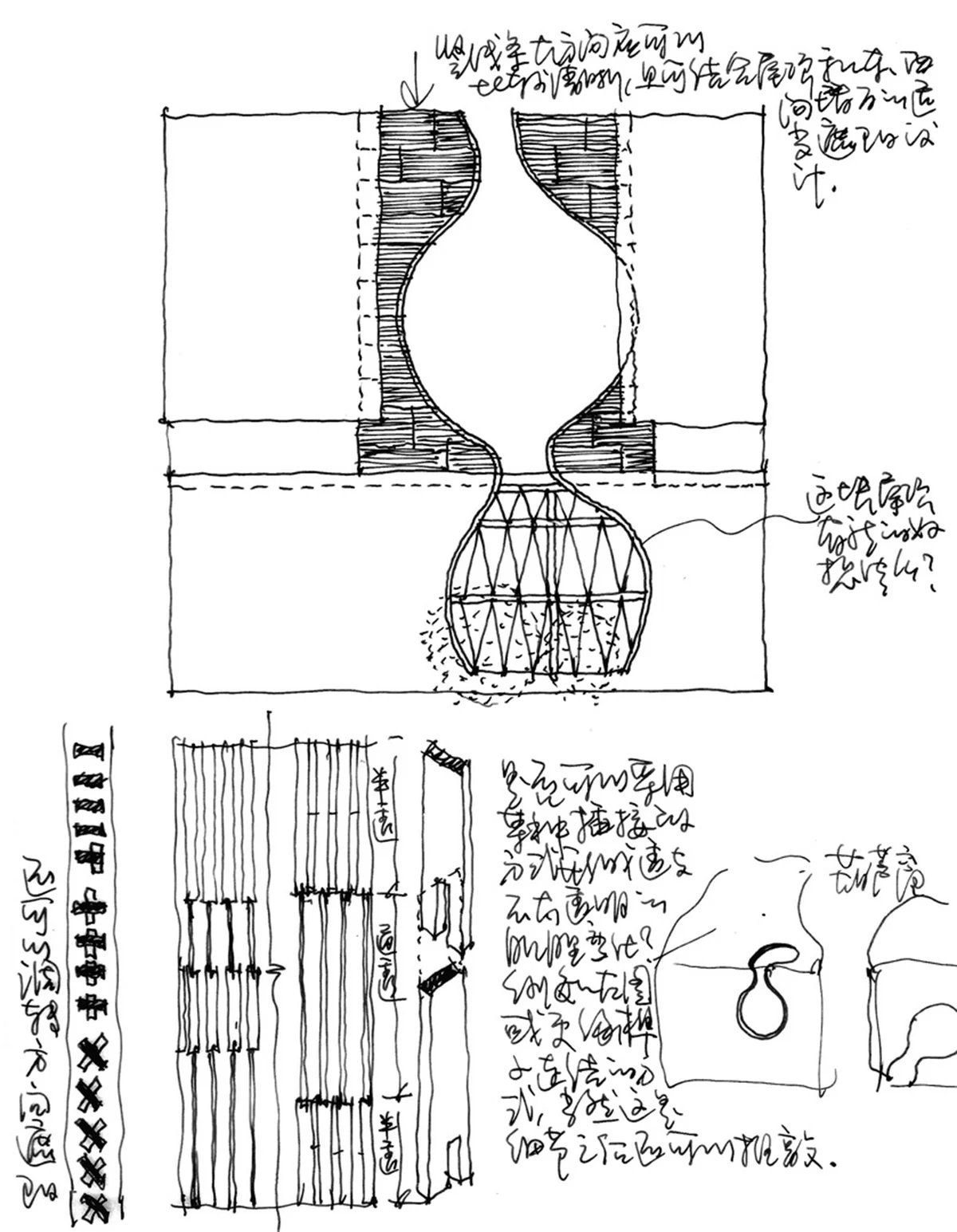
URBANUS designs its gourd-shaped hutong to inflate the courtyard and open up the surrounding dwelling with natural sunlight. the‘gourd garden’is shifted slightly to the east, which enlarges the room in the west wing. the curved wall is expressed with a series of bamboo and steel screen doors and a continuous vertical louvre system which filters the strong sunlight and provides a relatively private interior space within the courtyard. the curving wall snakes through the hutong and interrupts the otherwise rigorous spatial order. the interstitial space between the soft intervention and the original building is negotiated with an undulating surface of glass, suggesting a mirrored lake.
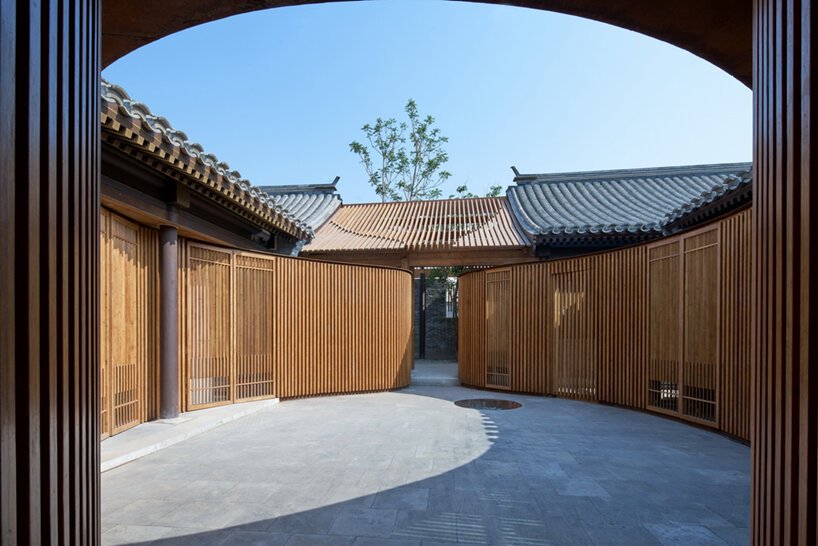
unlike the traditional inward-facing windows, the boundary between of the exterior of URBANUS’s beijing hutong is rendered ambiguous. the walls of the‘gourd garden’are relatively enclosed, as the vertical barrier prevents the direct connection between the interior and exterior space while the visitor might catch a glimpse through. the space between the barrier and the glass is at an oblique angle, allowing sunlight in at different times of the day. this condition also allows occupants a unique spatial experiences from different locations in the courtyard. compared to traditional siheyuans, the gourd garden’s interior is opened to the sky and separated from the courtyard. this spatial contrast strengthens the siheyuan’s endocentric spirit and celebrates the importance of the’empty core’which defines this vernacular architecture.
project info:
project title: number 37 courtyard of luanqing hutong
architecture: URBANUS
location: beijing, china
client: beijing tianjie group
principal architect: meng yan
project general manager: li yali
technical director: yao yongmei
project architect: li jing, li yongcai
schematic design: fang xue, lu jing, liu yu, bernat riera, jin chenjia
construction drawing: li yongcai, wang zhe
MEP: zhang suyuan, cui yi, wang siji
structure: H & J international, PC
LDI: ANET
photography: yang chaoying