

at the 2021 venice architecture biennale, the U.S. pavilion presents an exhibition that explores the ubiquity and aesthetic power of wood-framed construction in american architecture. commissioned by the university of illinois chicago and organized by curators paul andersen and paul preissner, the pavilion showcases the architecture of wood framing — the most common construction system in the united states, and one of the country’s most important contributions to building practice. titled‘american framing’, the exhibit seeks to highlight an architectural element that has been mostly overlooked by historical and contemporary discourse through newly commissioned photographs, models, and site-responsive furniture. in addition, a monumental installation activates the entrance to the neoclassical U.S. pavilion in venice. read more about the exhibition, and the history of wood-framed construction in the united states, below.
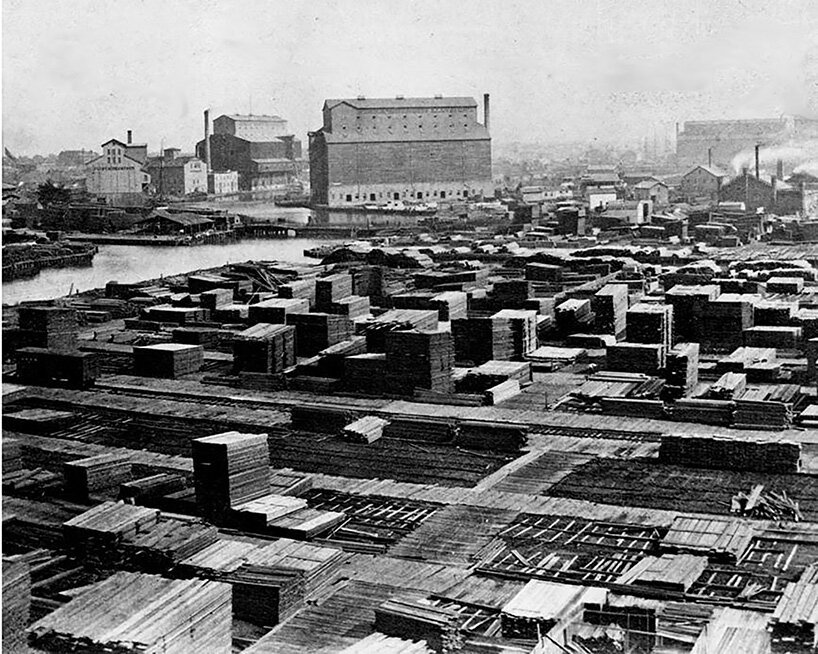
chicago lumberyard, 1870. photographer unknown, courtesy of the chicago history museum
main image courtesy of the U.S. national archives and records administration
although timber framing had been popular with the europeans who settled in america, it was in the early 19th century that it really took off. the industrial revolution had brought about railroads and other transportation options, meaning that an abundance of dimensional lumber and manufactured nails were readily available to the country’s growing towns and populations. citizens with limited wealth and technical skills saw softwood construction as a relatively quick, easy, and accessible way to build.
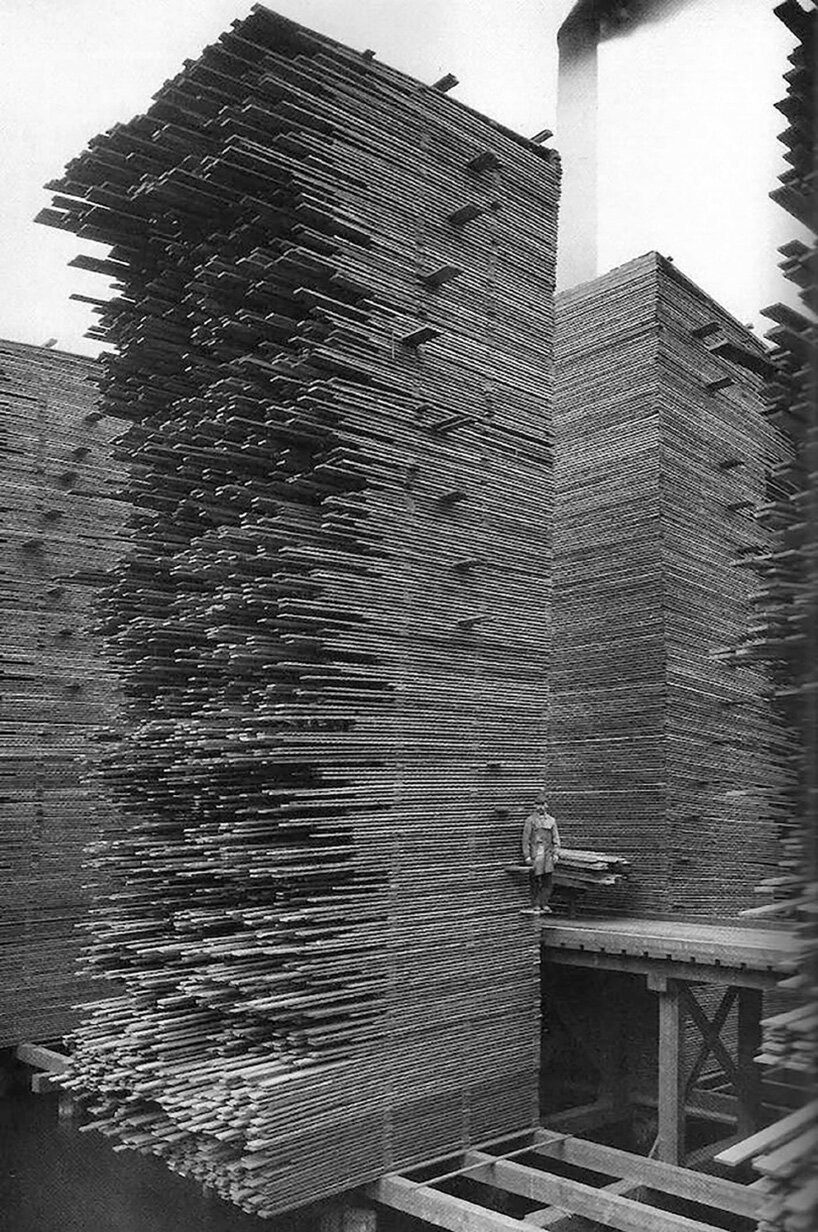
stacks of lumber, seattle cedar manufacturing plant, ballard, 1958, photo by webster & stevens. digital collection: museum of history & industry photograph collection. courtesy of the U.S. pavilion at the 17th international architecture exhibition – la biennale di venezia
in the 1830s, timber framing was superseded by‘balloon’framing — a technique that makes use of many lightweight‘studs’, rather than heavier‘post’supports. in contrast to timber frames, which were built by skilled craftsmen, balloon frames were simply nailed together rather than fitted using joinery. another difference between the two methods is that balloon framing uses longer pieces of lumber, which run from the foundation to the top of the building’s second story.
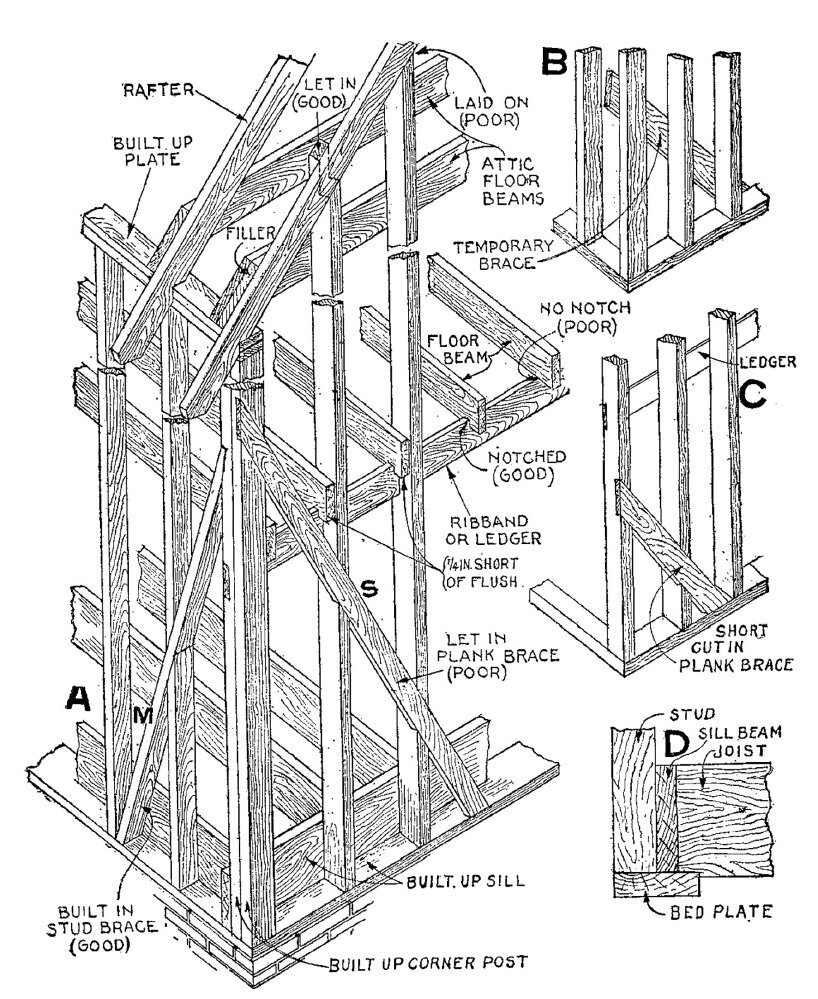
balloon framing shown in audel’s carpenter’s and builder’s guide © 1923. courtesy of the U.S. pavilion at the 17th international architecture exhibition – la biennale di venezia
an early example was george washington snow’s balloon framed warehouse, which paved the way for churches, barns, stores, and the most common wood framed building type — the american house. an abundance of southern pine and douglas fir forests, simplicity and speed of construction, and an ability to be built by low or unskilled workers made wood framing — and balloon framing in particular — a perfect fit for the growing economies and populations of the american midwest.
although it was incredibly popular when long lumber was plentiful, balloon framing was gradually replaced by platform framing in the 1920s. although similar to the balloon frame, platform framing uses shorter lengths of lumber, as each story of the building is built individually and placed on top of the one below without the need for scaffolding. while the balloon wall studs extend from the foundation to the rafter of the second story, platform-framed walls are independent for each floor.
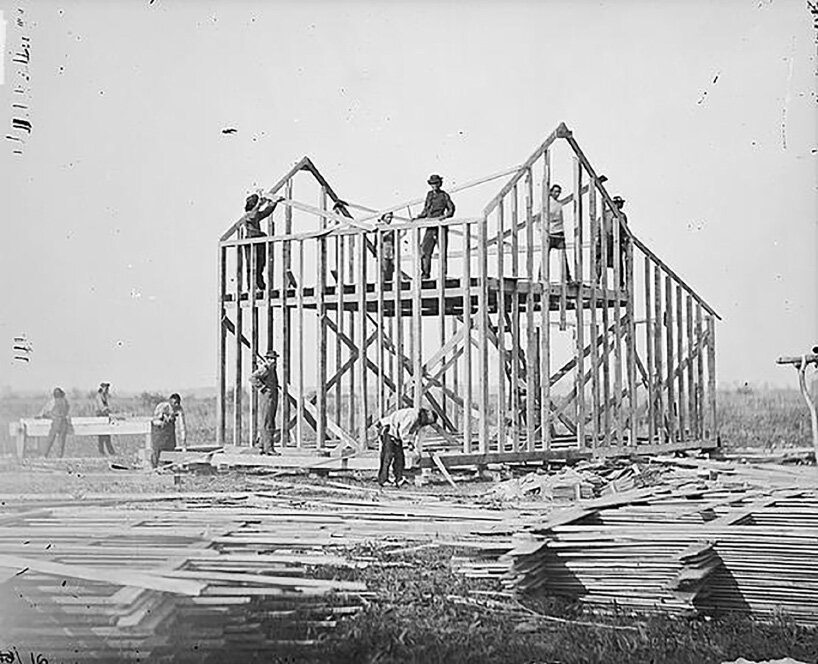
omaha reservation, nebraska, 1877. photo by william h. jackson, courtesy of the U.S. pavilion at the 17th international architecture exhibition – la biennale di venezia
platform framing remains the standard wooden framing method today. in fact, more than 90% of new homes in the united states are wood framed. ‘american framing’, the exhibition at the U.S. pavilion, will explore softwood construction in great detail. the exhibition’s curators, paul andersen and paul preissner, point out that the accessibility that shaped the early development of wood framing continues to influence contemporary life and reflect democratic ideals. for example, although wood framing is used for buildings of every size and style, the 2x4s used in their construction are always the same quality.
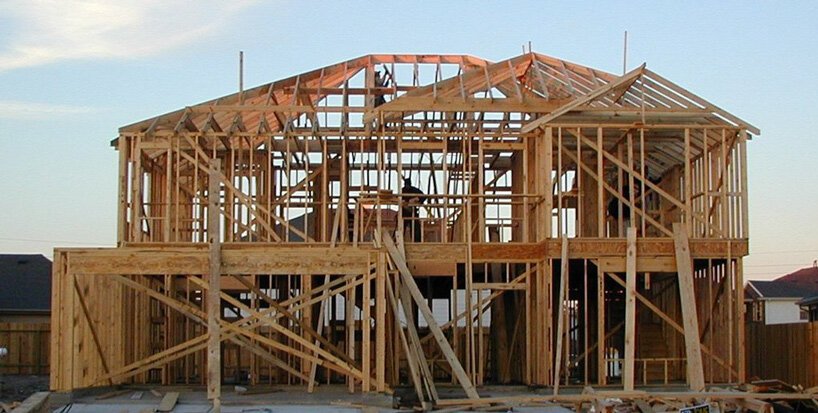
an example of platform framing on a house under construction in katy, texas | image by jaksmata, CC BY-SA 3.0
the curators say that despite, or perhaps because of, its ubiquity, wood framing is one of the country’s most overlooked contributions to architecture. since the early 19th century, the characteristics of softwood have seen the material developed and improvised in a variety of different ways, opening up a range of potential uses and resulting in a truly diverse collection of building typologies. the exhibition explores that history, while considering the potential trajectory of softwood construction going forward.