

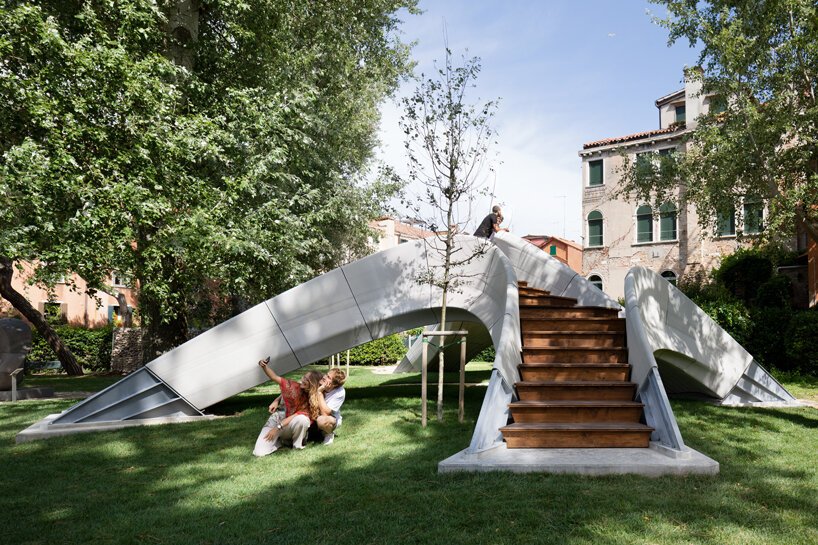
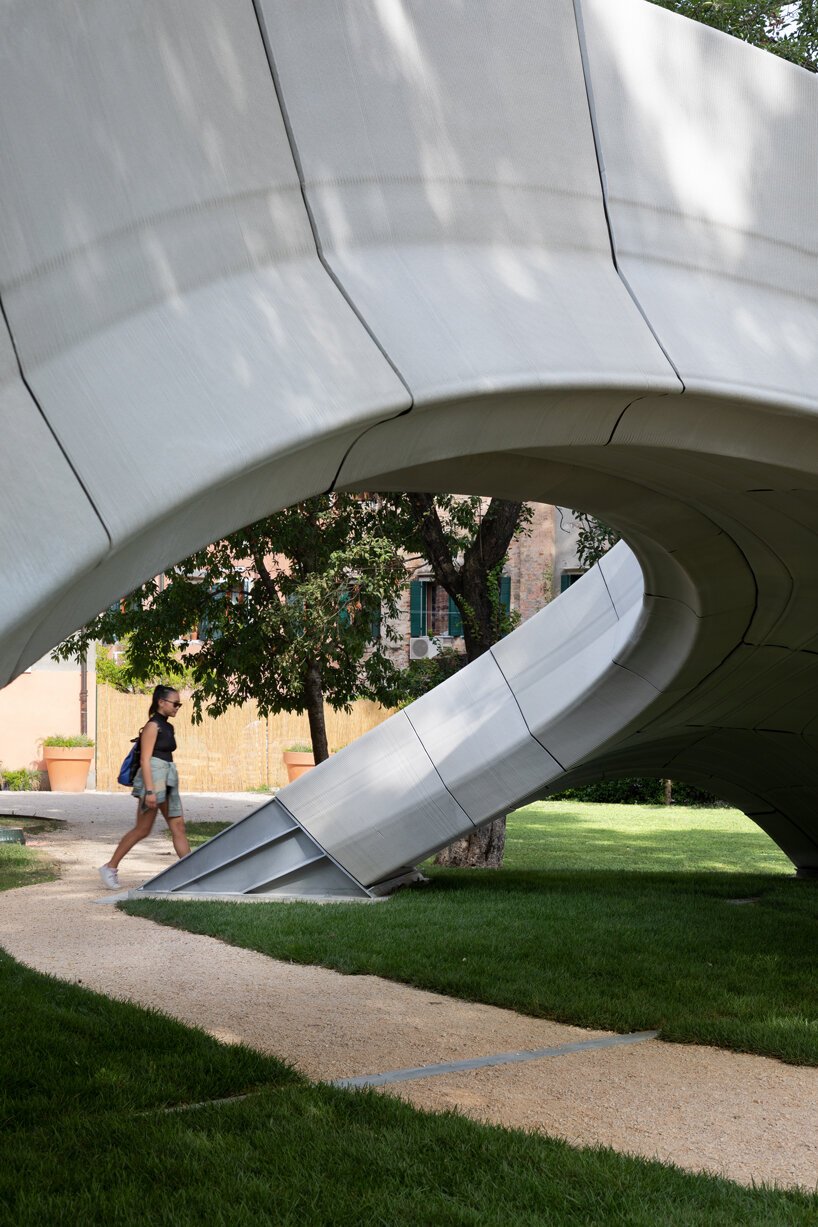
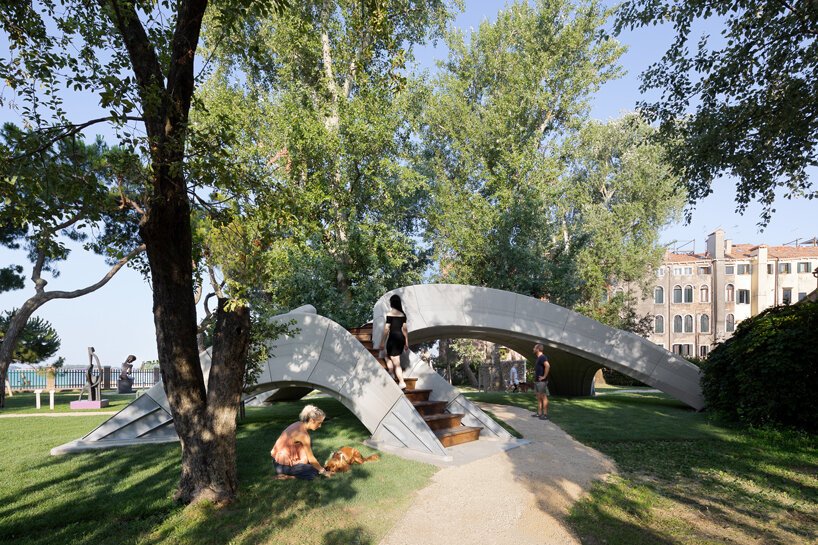
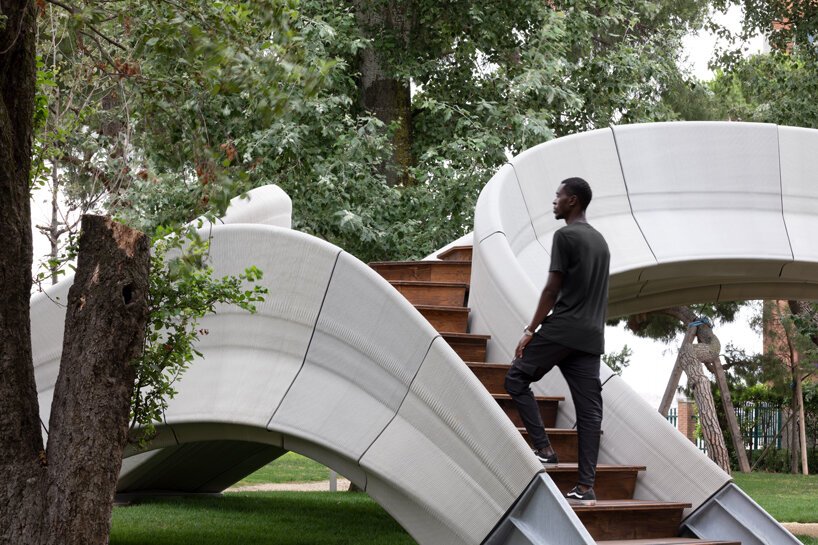
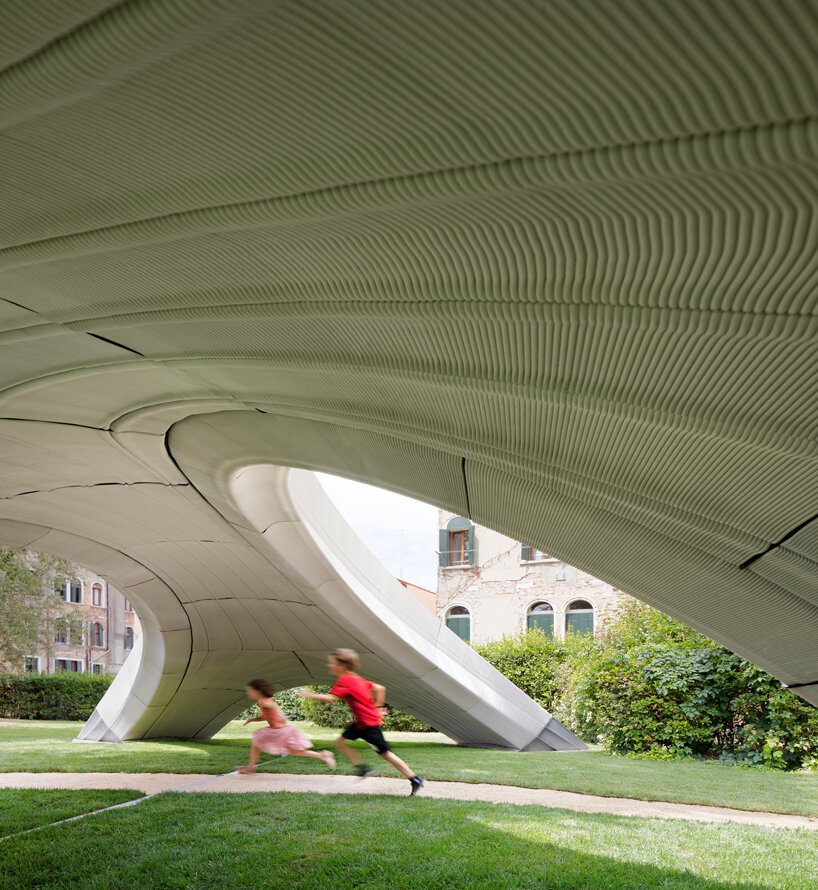
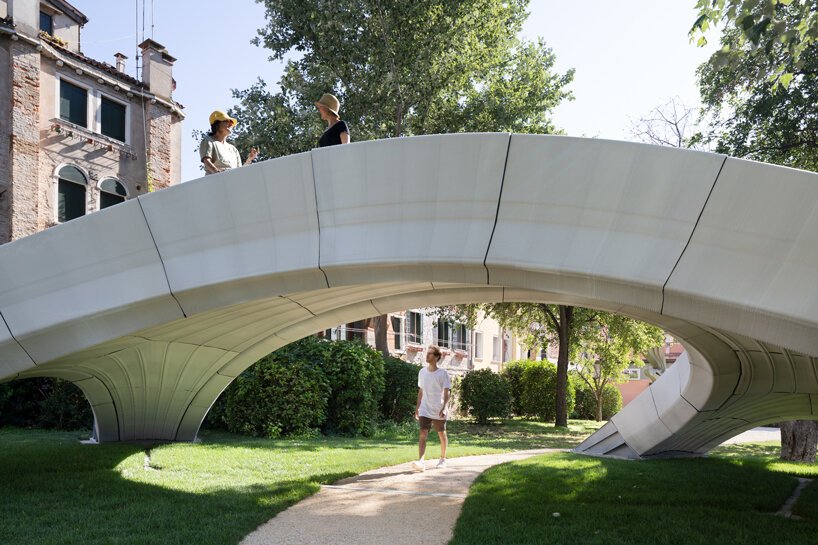
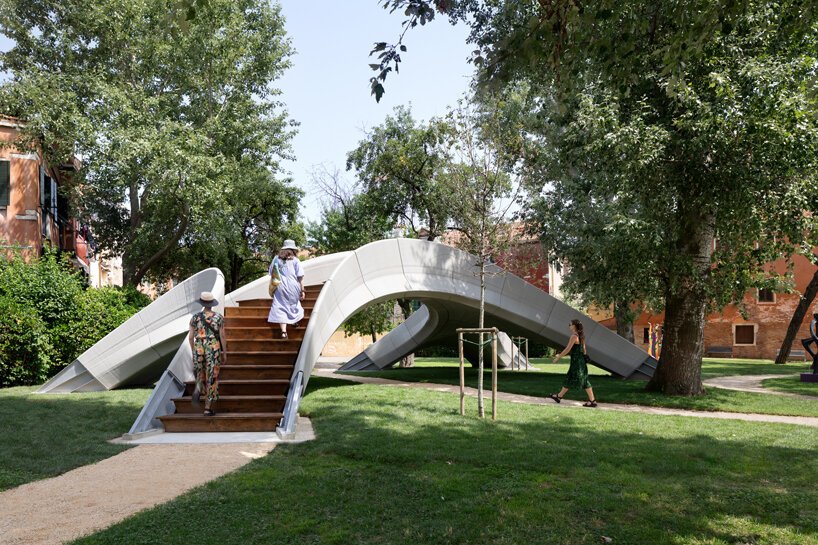
ETH architects and engineers from the block research group (BRG) in collaboration with zaha hadid architects and other partners from industry designed striatus– an arched, unreinforced masonry footbridge composed of 3D-printed concrete blocks assembled without mortar. exhibited at the giardini della marinaressa during the venice architecture biennale until november 2021, the 16×12-meter footbridge is the first of its kind.
all images by naaro
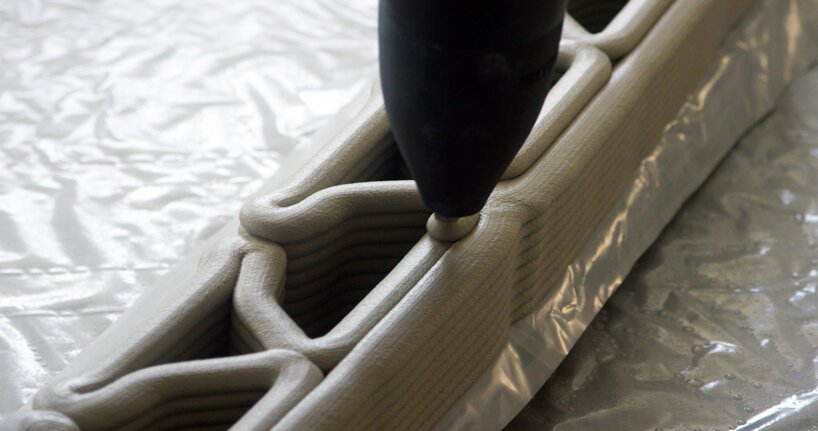
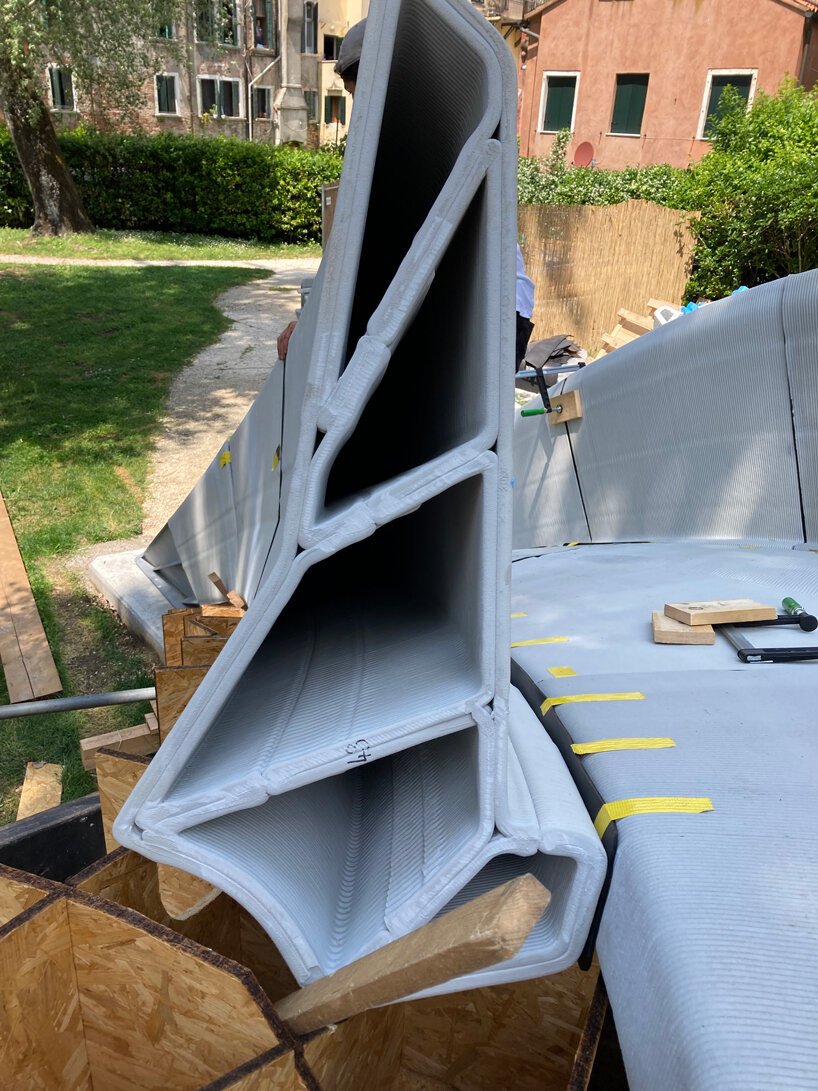
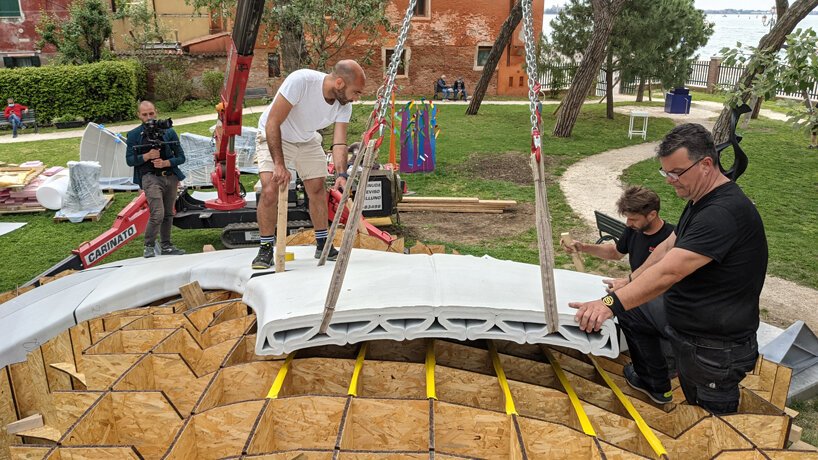
striatus has been developed by the block research group at ETH zurich and zaha hadid architects computation and design group (ZHACODE), in collaboration with incremental3D (in3D) and made possible by holcim. it combines traditional techniques of master builders with advanced computational design, engineering, and robotic manufacturing technologies. 3D printing can be used to build load-bearing concrete structures that require significantly less material and no steel reinforcement or mortar, and this project showed how this works.
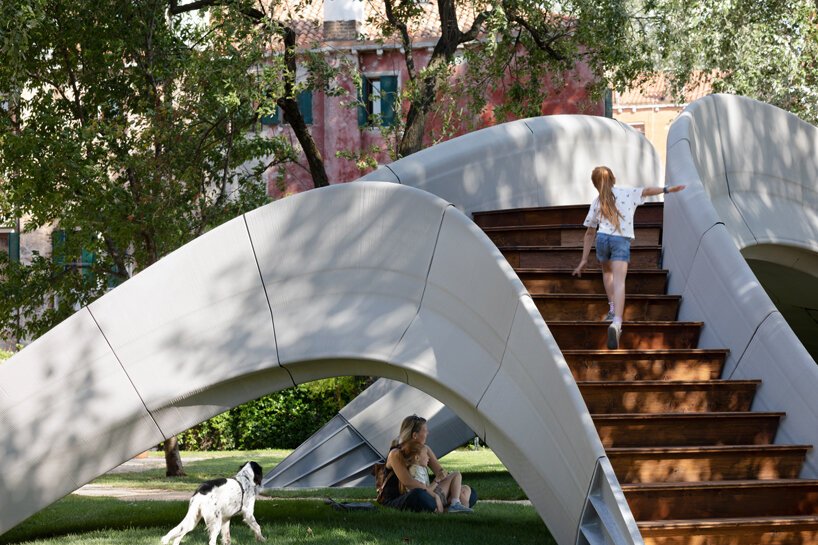
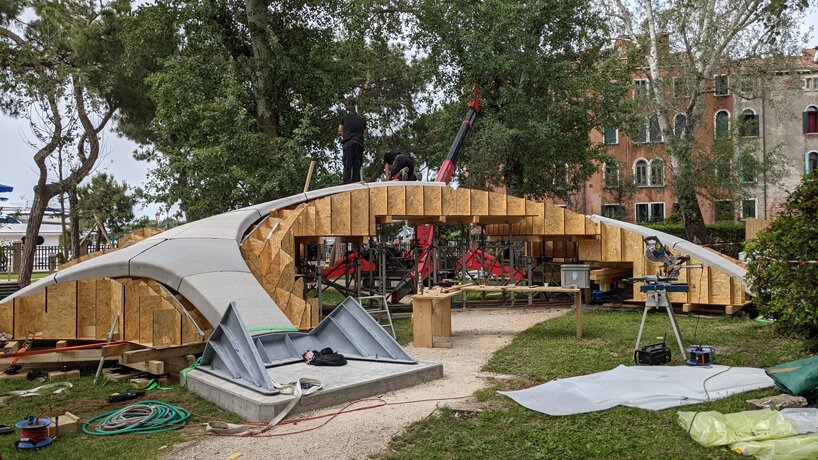
millions of new buildings all over the world are being constructed with reinforced concrete, generating large amounts of CO2 emissions. the steel used for the reinforcement and the cement for the concrete are especially problematic in this regard. ETH researchers have now presented a way to reduce both, in a real project. using an additive process, the construction dubbed striatus was built with concrete blocks that form an arch much like traditional masonry bridges. this compression-only structure allows the forces to travel to the footings, which are tied together on the ground. the dry-assembled construction is stable due to its geometry only.
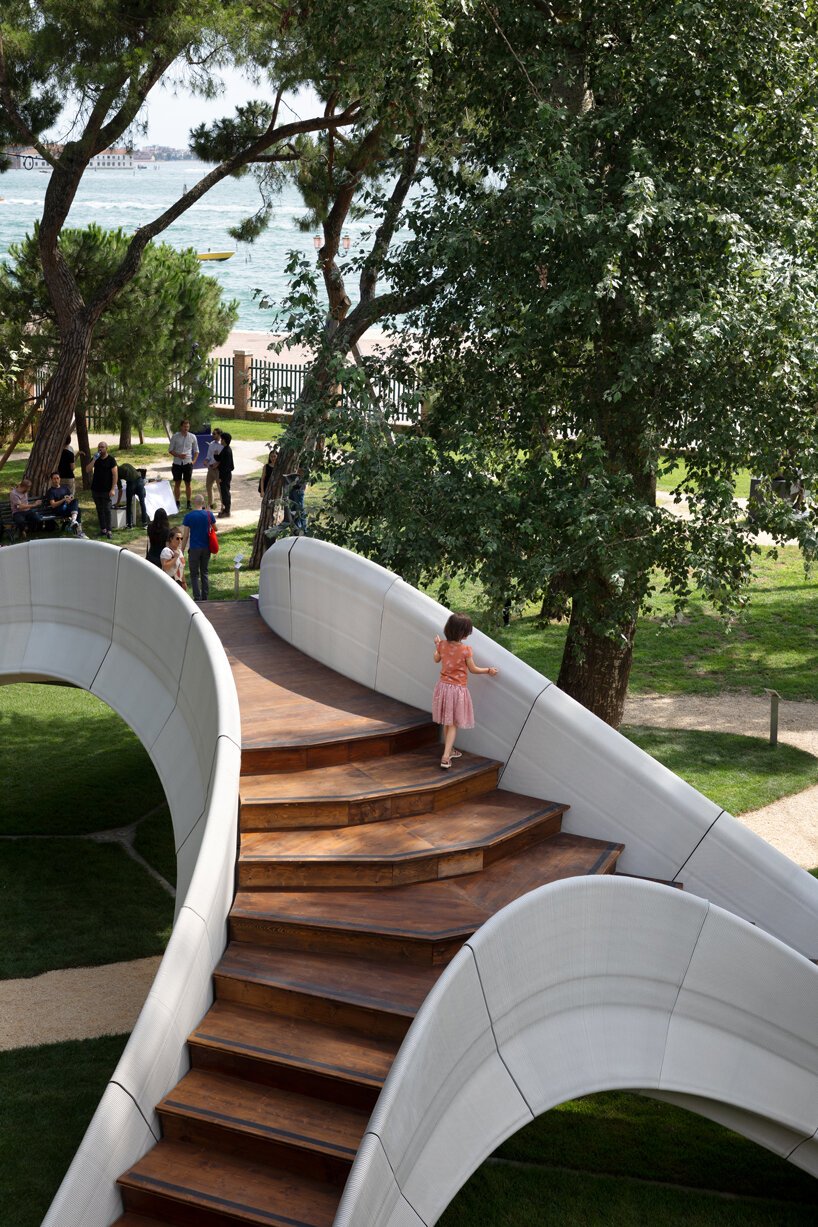
the researchers, together with the company incremental3D, developed a new type of 3D-printed concrete. contrary to the traditional way, the concrete is not applied horizontally but instead at specific angles orthogonal to the flow of compressive forces. this keeps the printed layers in the blocks nicely pressed together, without the need for reinforcement or post-tensioning. the special concrete ink for the 3d printer was developed by the company holcim precisely for this purpose. the name‘striatus’reflects the structural logic and manufacturing process behind the project. concrete is printed in layers orthogonal to the main structural forces to create a‘striated’compression-only funicular structure that requires no reinforcement.
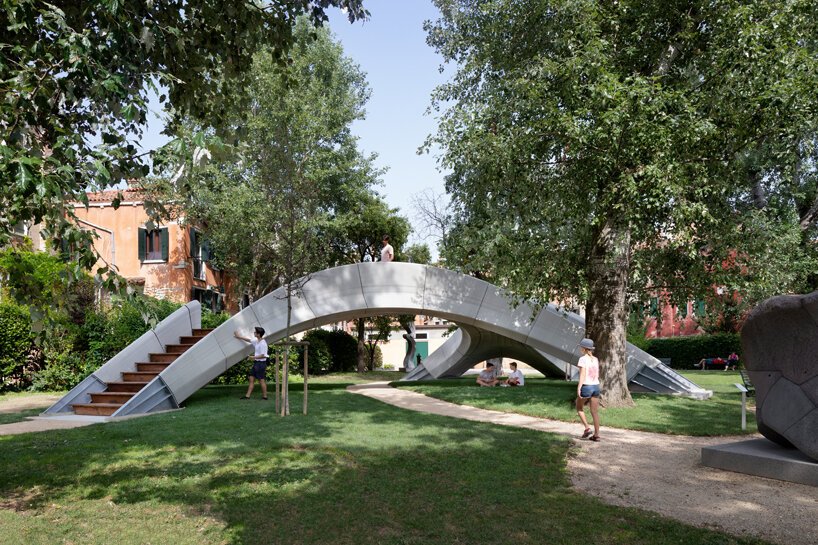
‘this precise method of 3D concrete printing allows us to combine the principles of traditional vaulted construction with digital concrete fabrication to use material only where it is structurally necessary without producing waste.’ says ETH professor philippe block. since the construction does not need mortar, the blocks can be dismantled, and the bridge reassembled again at a different location. if the construction is no longer needed, the materials can simply be separated and recycled making this whole project more sustainable.
project info:
name: striatus
designers: the block research group at ETH zurich,zaha hadid architects computation and design group (ZHACODE), incremental3D (in3D)
team: jianfei chu, vishu bhooshan, henry david louth, shajay bhooshan, patrik schumacher from ZHACODE/ tom van mele, alessandro dell’endice, philippe block from ETH brg
location: giardini della marinaressa, venice biennale, italy
structural engineering: tom van mele, alessandro dell’endice, sam bouten, philippe block from ETH brg
fabrication design: shajay bhooshan, alessandro dell’endice, sam bouten, chaoyu du, tom van mele from ETH brg/ vishu bhooshan, philip singer, tommaso casucci from ZHACODE
3D concrete printing: johannes megens, georg grasser, sandro sanin, nikolas janitsch, janos mohacsi from in3D
concrete material development: christian blachier, marjorie chantin-coquard, helene lombois-burger, francis steiner from holcim/ benito carrion, jose manuel arnau from lafargeholcim spain
assembly & construction: theo bürgin, semir mächler, calvin graf from bürgin creations/ alessandro dell’endice, tom van mele from ETH brg
logistics: alessandro dell’endice, tom van mele from ETH brg/ michele alverdi from holcim switzerland & italy/ ricardo de pablos, josé luis rome from lafargeholcim spain
photography: naaro