

3d scanning and robot manufacturing
when matthias gschwendtner introduces himself, he starts with‘a designer based in berlin and bavaria, working within the intersection of materials and technologies.’drawing from these themes, he interweaves computational design, 3D scanning, and robotic manufacturing with his studies, enabling a sustainable production process. as he dives into the nuances of sustainability, he unveils the computational log chair, the first object of his new case study new sources.
‘new sources is a case study using leftover materials from the wood industry through an interconnection of 3D scanning, computational design, and robotic manufacturing. raw birch branches are 3D-scanned and then virtually precessed by algorithms to constantly recalculate all production data for each individual part of an object. due to the irregularity of the material, every object becomes a unique piece,’writes the product designer.
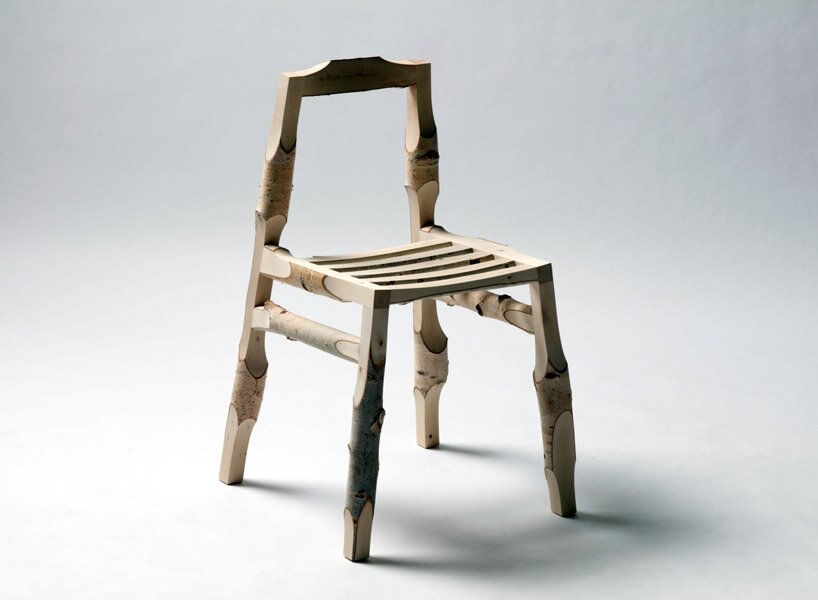
images courtesy of matthias gschwendtner
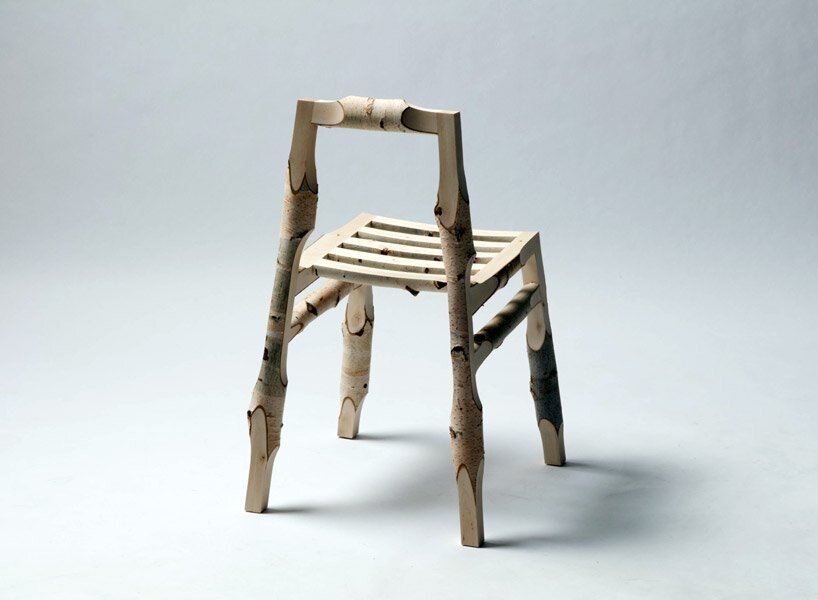
back view of the computational log chair
more than a log chair
the computational log chair helms the series with its precisely milled surfaces and edges appearing all around the object and standing in contrast to the raw branch surface to display the intersection between nature and technology. birchbark partly remains and becomes a natural ornament that keeps the original character of the material. the chair criticizes mass consumption and questions the standardization of naturally grown materials in the domestic environment.
‘six months ago, I bought a broken 22-year-old kuka industrial robot, fixed it, and set up a temporary workshop in my parent’s garage in ränkam, a small village in rural bavaria.’shares gschwendtner. from this stage, he turns to technology and algorithm to transform his wooden materials into a raw-looking seat, the complement to embracing nature as a pillar of one’s home.‘using branches instead of pre-cut wood every object is unique and has a different character, even if it is serially produced. the precisely milled surfaces that appear all around the object communicate the intersection between nature and technology. the birch bark partly remains and works as a natural ornament,’writes gschwendtner.
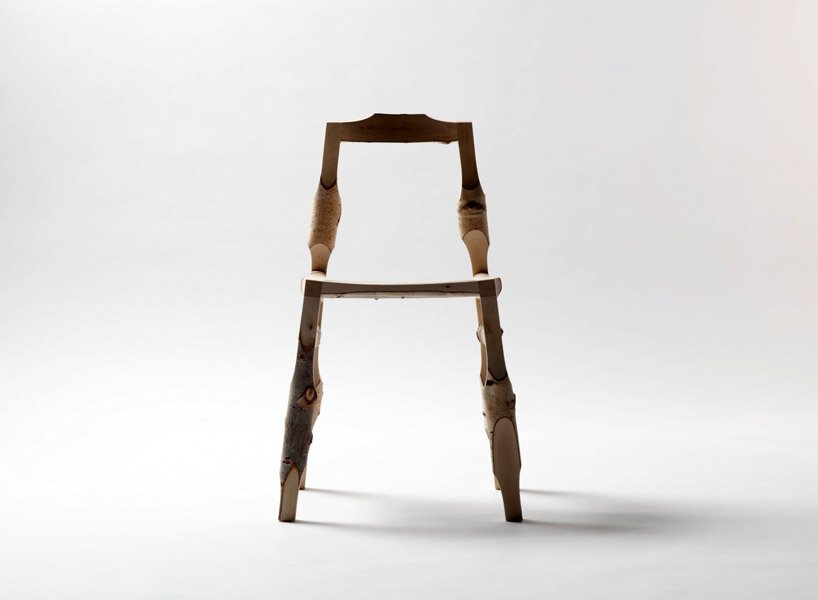
front view of the computational log chair
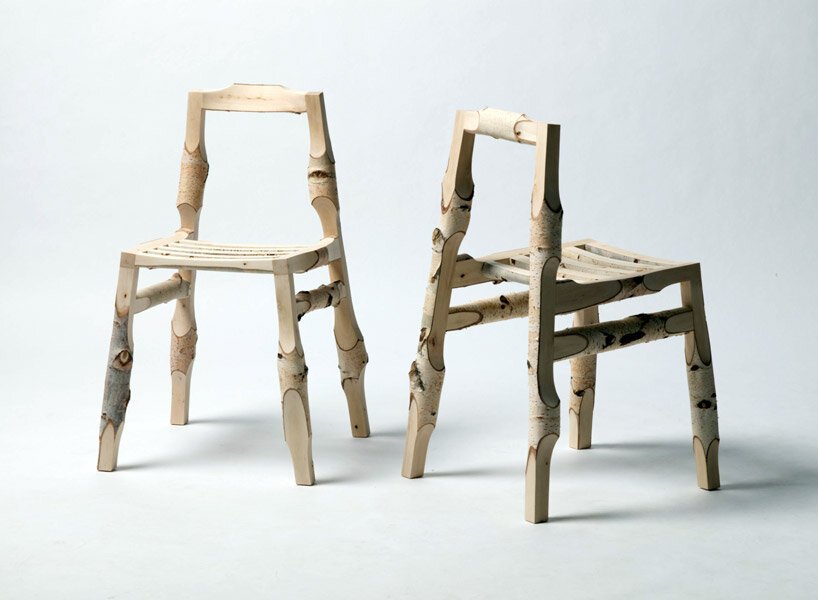
side-by-side view of the computational log chair
organic materials
his research manifested into a seat that resembles the raw bark of a tree, smoothened out in some parts to lend an aura of duality between organic and constructed matters. to narrate more about his project, gschwendtner says that constant recalculation makes it possible to use irregular formed materials for serial production.‘the algorithm specially developed for this project analyzes the geometry of each scanned branch and places them into the right position in virtual space. furthermore, all necessary production data gets calculated by the algorithm and sent to an industrial milling robot. branches will be selected in advance using pattern recognition. different forms fit different parts.’
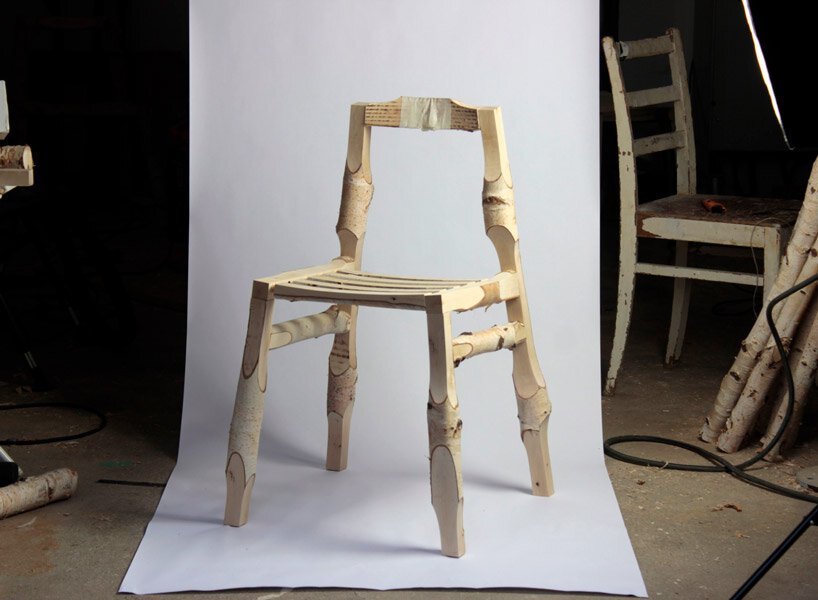
the computational log chair
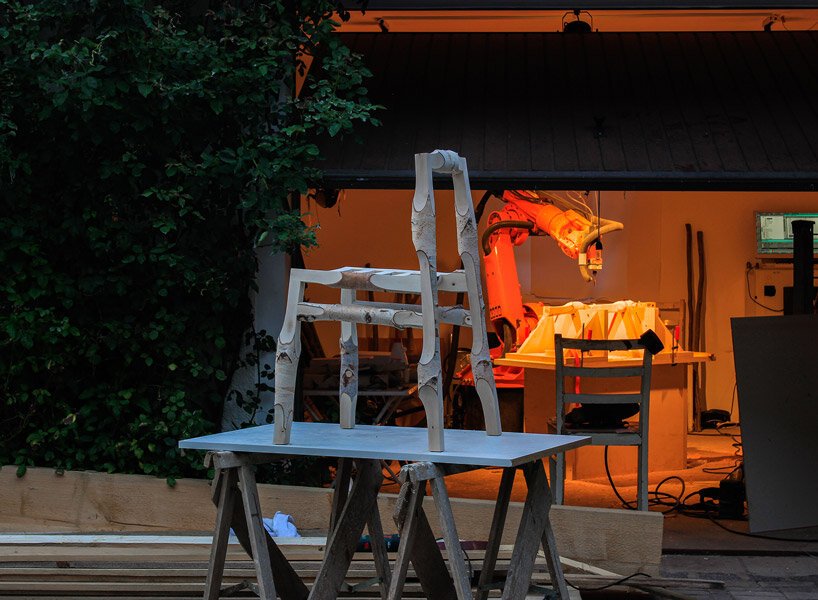
the computational log chair in the garage
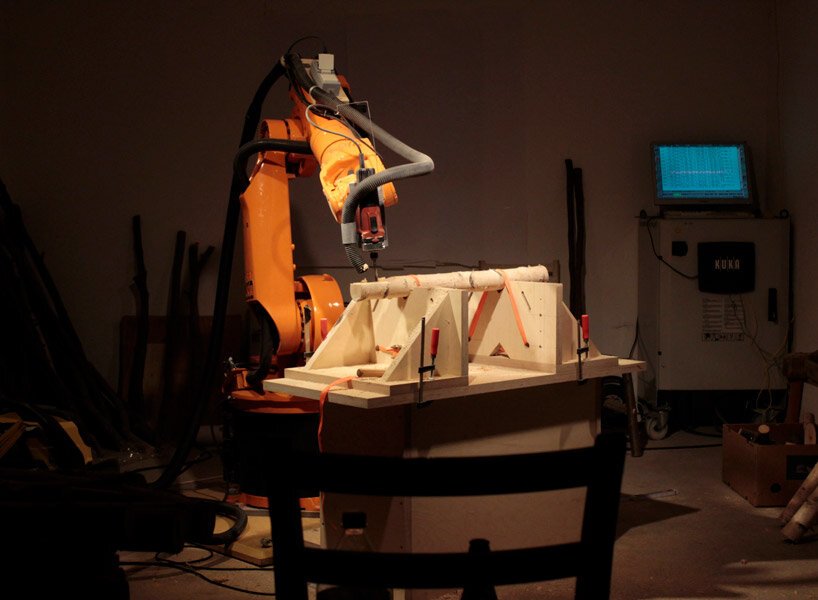
the industrial robot gschwendtner fixed
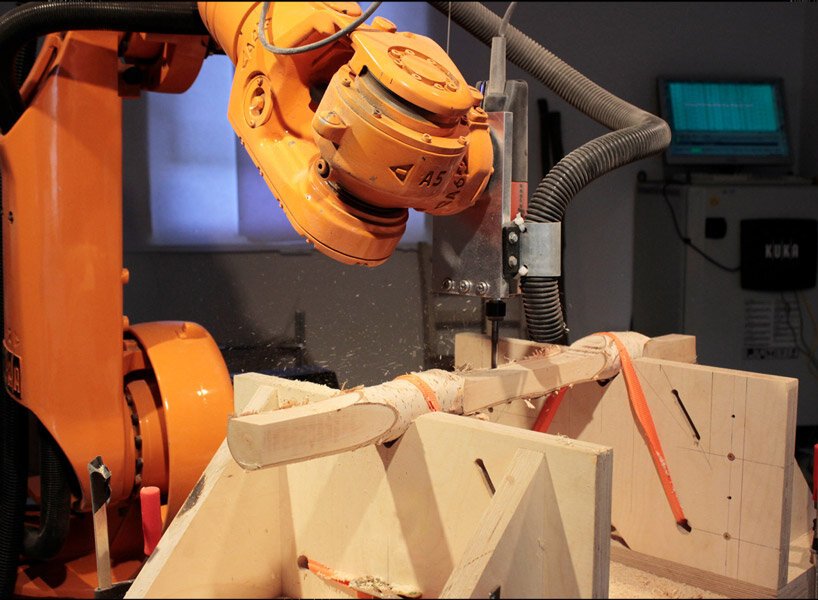
a closed-up view of the robot
project info:
name: computational log chair
series: new sources
designer: matthias gschwendtner