
bringing life to the lost‘ramblas’
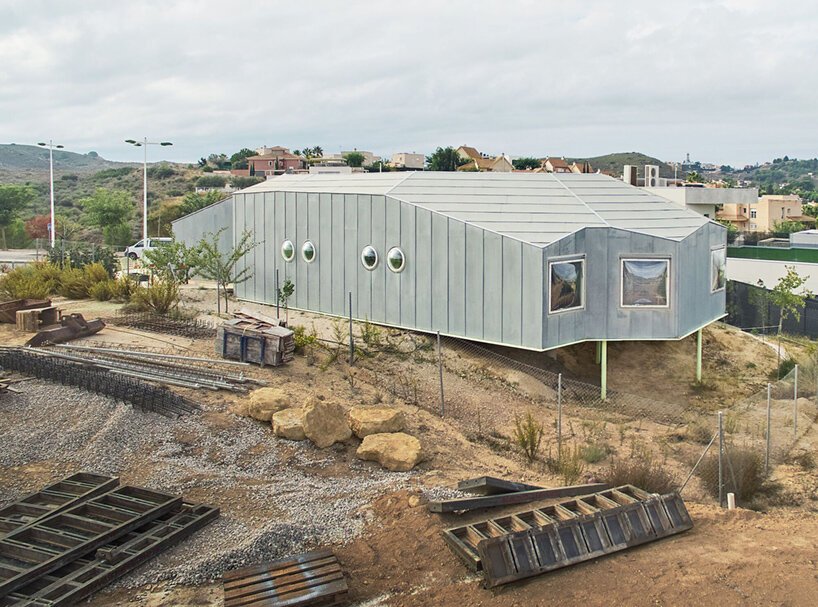
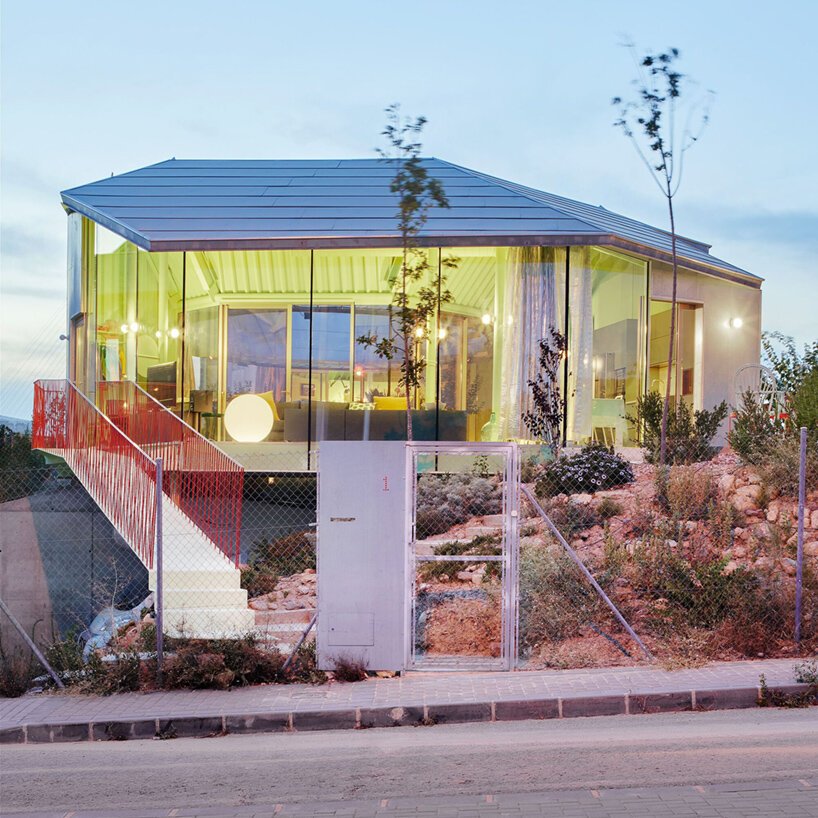
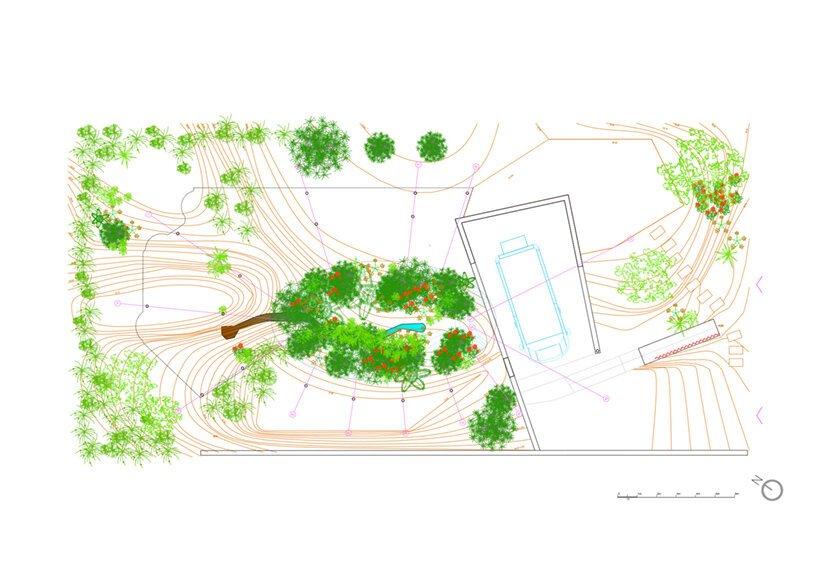
The collaborative team of Andrés Jaque / Office for Political Innovation + Miguel Mesa del Castillo realize their‘Rambla Climate-House’within the dry ecosystems of Spain‘s Molina de Segura. The work functions at once as a residence and as a device for ecological repair. Mass urbanization and flattening of the land in the 1970 had destroyed the landscape’s‘ramblas,’or systems of moist striations in the soil that create corridors of rich biodiversity. Through architecture, the team seeking to reverse these effects and revive the rich ecosystem that had been lost.
images © José Hevia
repurposing the grey water of the rambla climate-house
The‘Rambla Climate-House’uses gray water from the house to create a‘sensor-enhanced climatology’that will repair a section of the dying rambla. This technology has been designed by Andrés Jaque of Office for Political Innovation (see more here) and Miguel Mesa del Castillo (see more here) in collaboration with soil scientists and environmental scientists. It works as a life support device, but also as an artifact that demonstrates the need for humans to tune in with other forms of life. This house stands as a collaborative continuation of other forms of climate activism in Molina, and is part of a larger movement to repair the ecosystems of the area.

an observatory facing to the earth
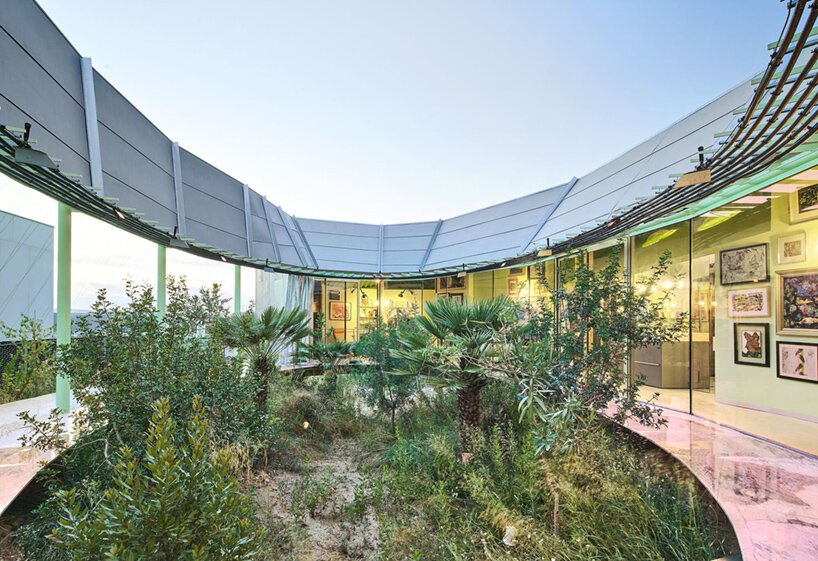
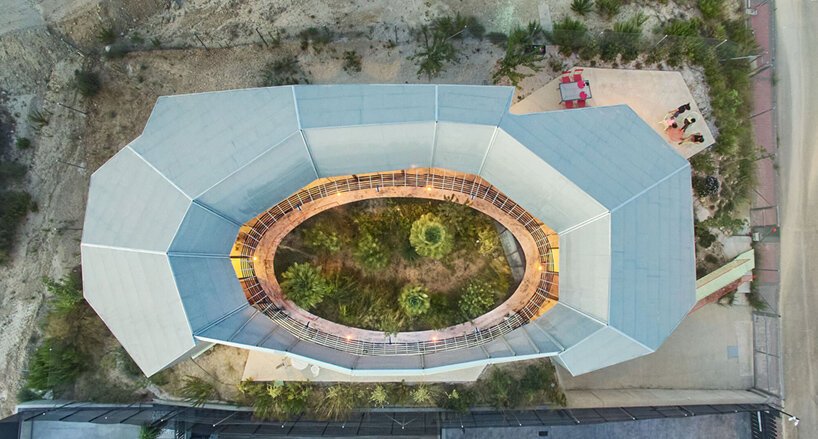
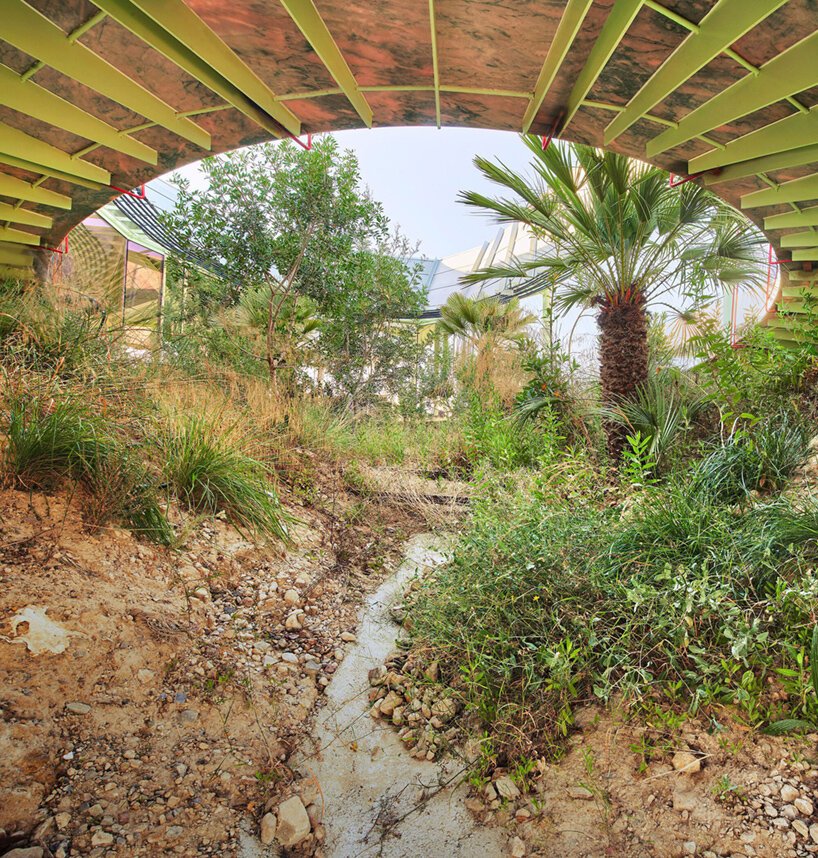
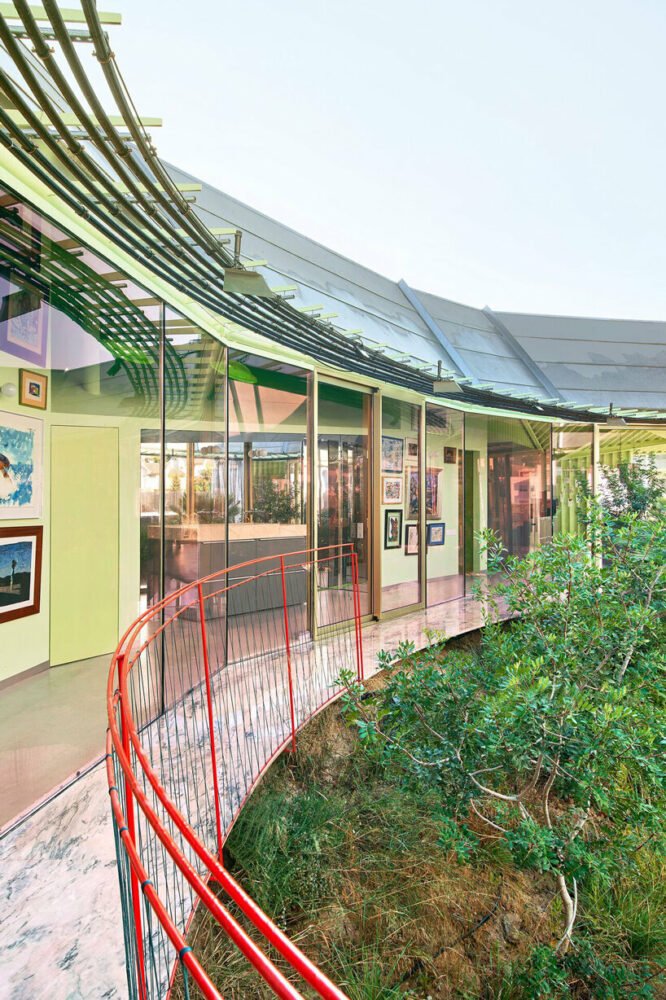
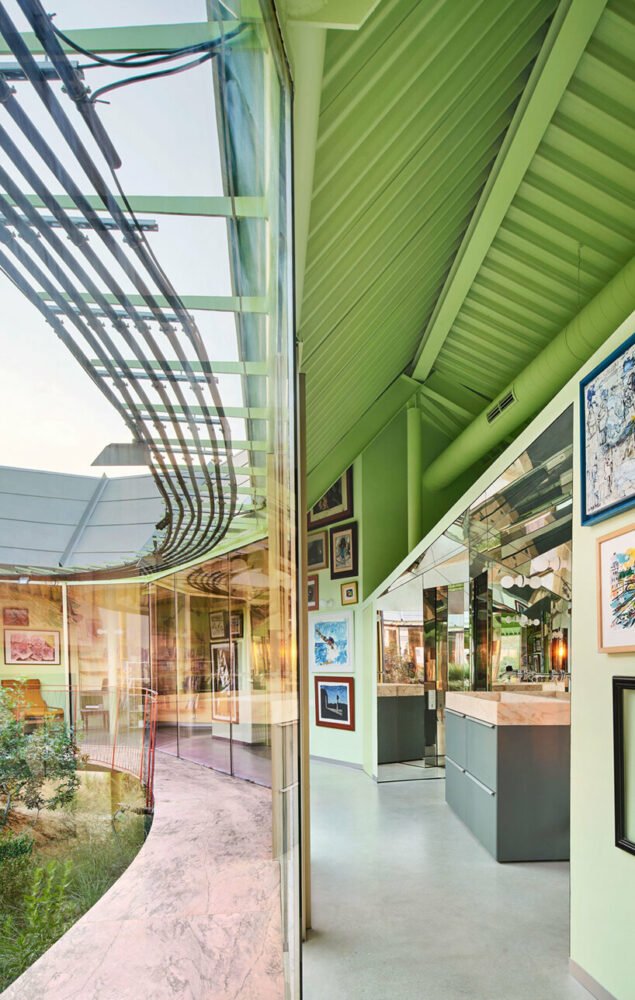
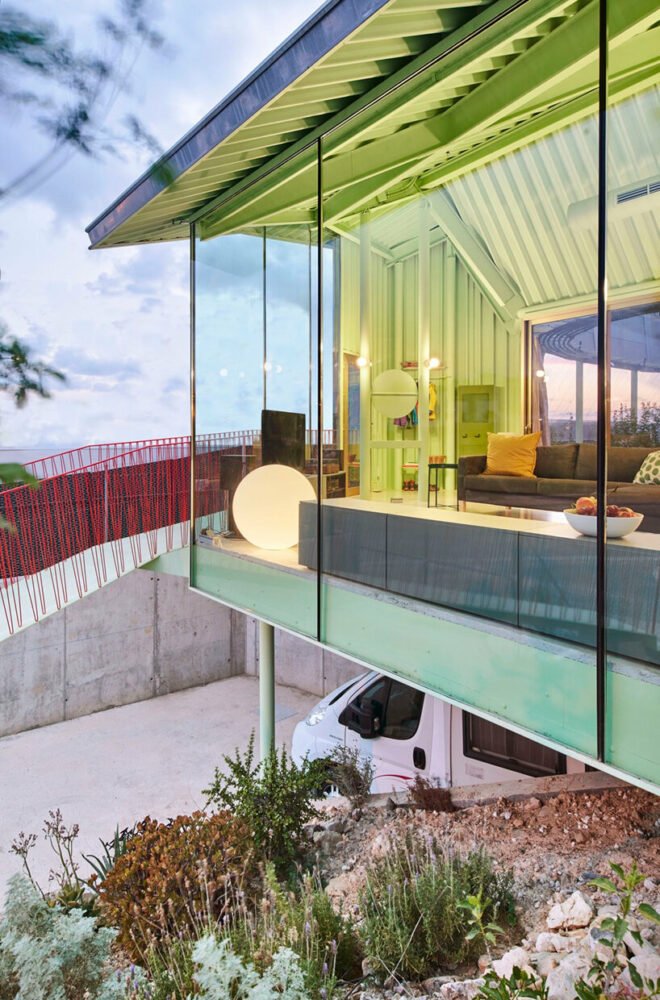
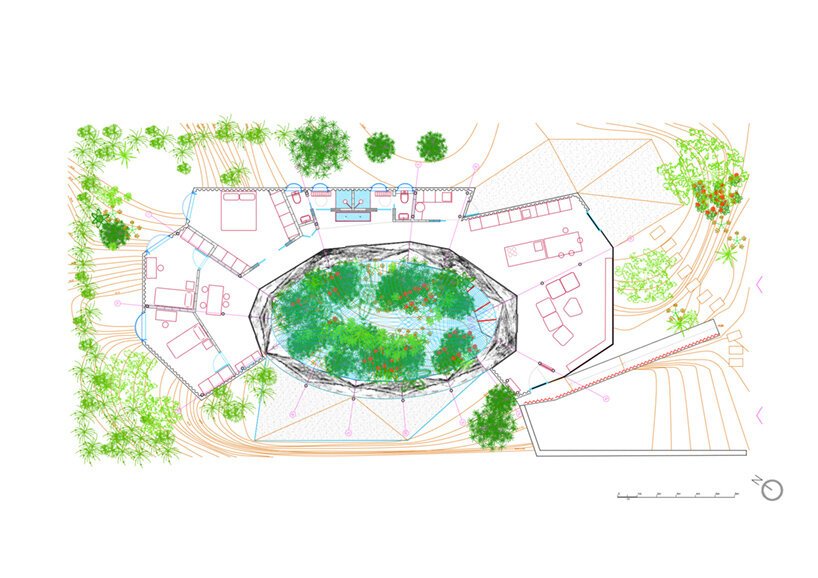
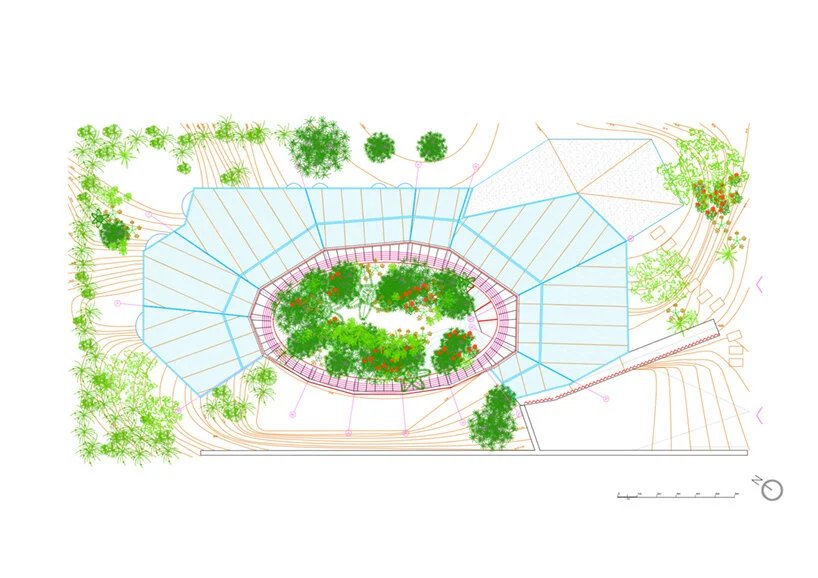
The Rambla Climate-House integrates a system of sensors which measure the atmosphere’s humidity and conductivity levels. These sensors automatically optimize the site’s micro-climate in a way that humans never could to facilitate the process of repair. The architects design the house with an elliptical footprint, surrounding a section of earth as a downward-facing observatory.
The architects explain:‘Following the reparation of the hydrothermal conditions of the rambla, glimpses of its former more-than-human life have rapidly re-emerged after a one-year period. Now, brachypodiums, myrtles, mastic trees, fan palms, oleanders, and fire trees grow in the elliptical section. Insects, birds, and lagomorphs find shelter in it.
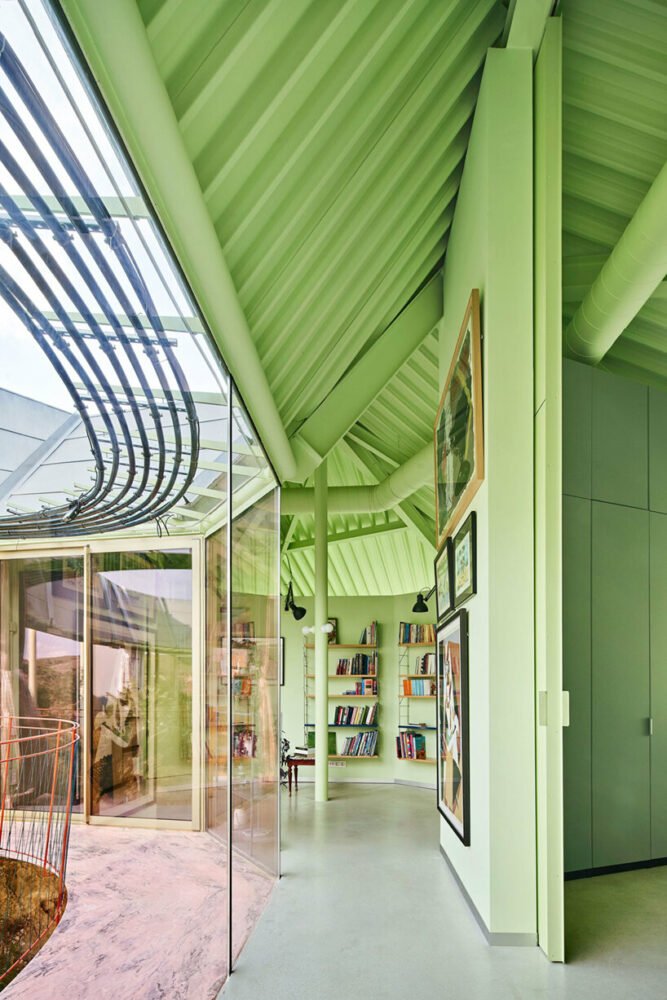
‘Thermally, the construction of the house tests unorthodox ways to maximize energy efficiency. A marble bench around the elliptical section allows residents to cool off by allowing direct contact to the house’s thermal inertia. A coil exposed to the sun, crowning the elliptic section, provides passive hot water during the entire year.’
project info:
project title: Rambla Climate House
architecture: Andrés Jaque / Office for Political Innovation + Miguel Mesa del Castillo
location: Molina de Segura, Spain
lead architects: Andrés Jaque, Miguel Mesa del Castillo
design team: Roberto González García, Nieves Calvo López, Joan Fernández Linares, Ana Fernández Martínez, Marina Fernández Ramos, David Gil Delgado, Marta Jarabo Devesa, Jesús Meseguer Cortés, Laura Mora Vitoria, Paola Pabón, Belverence Tameau
completion: 2021
photography: José Hevia
developers: Victoria Sánchez Muñoz, Antonio Mesa del Castillo Clavel
quantity survey: Francisco de Asís Pérez Martínez
structural engineering: Qube Ingeniería (Iago González Quelle)
edaphology consultant: María Martínez Mena
ecology consultant: Paz Parrondo Celdrán
planting consultant: Viveros Muzalé (Rubén Vives)
topographical survey: Fulgencio Mª Coll Coll
geotechnical report: Forte Ingeniería
quality survey: Ingeolab
drones operator: Juan José Rojo Albadalejo