

a new system for building‘land on water’
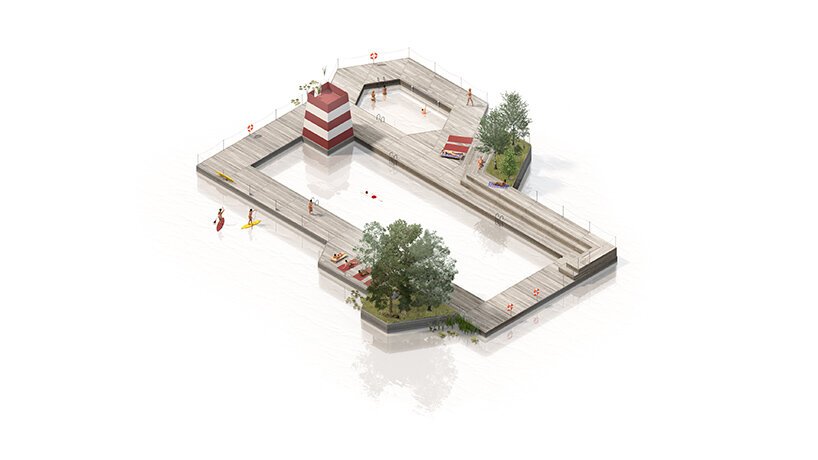
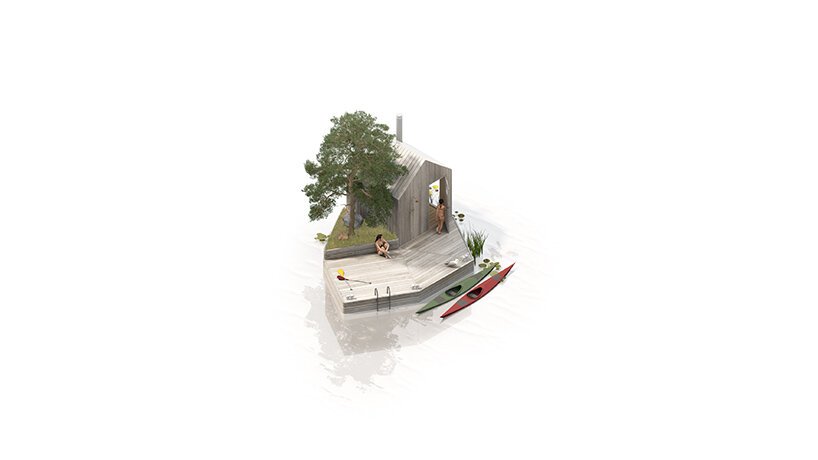
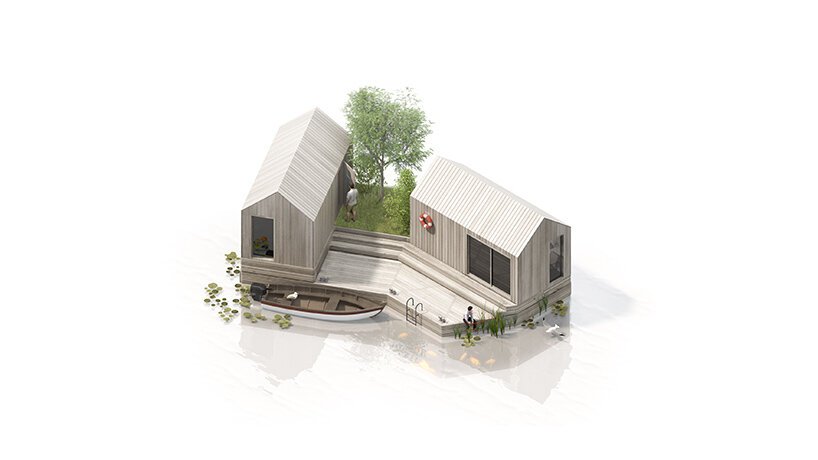
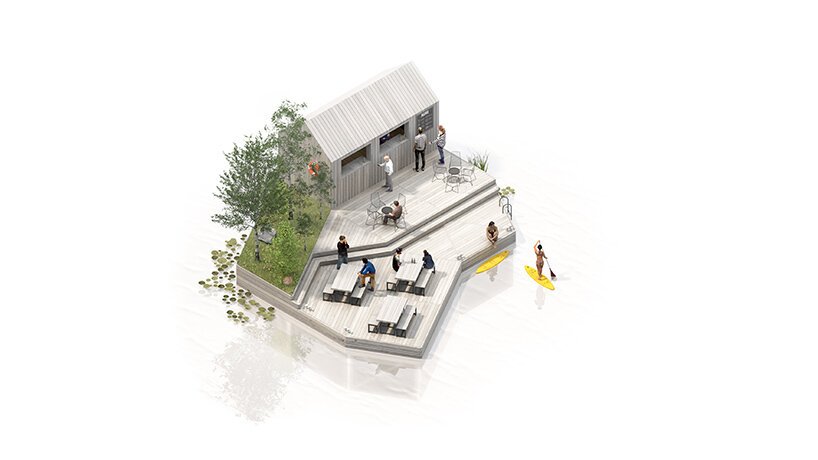
An adaptable, climate-resilient system of floating architecture dubbed Land on Water has been proposed by Danish Maritime Architecture Studio‘MAST.’The design strategy has been developed with the support of Hubert Rhomberg and venture studio FRAGILE, and promises to be more sustainable and flexible than traditional methods of building on water. The team notes that this system, which uses recycled plastic, can be applied to build‘almost anything on water,’from‘floating houses in Seattle, to floating campsites at the centre of Oslo fjord, to saunas on Hobart’s riverfront.’
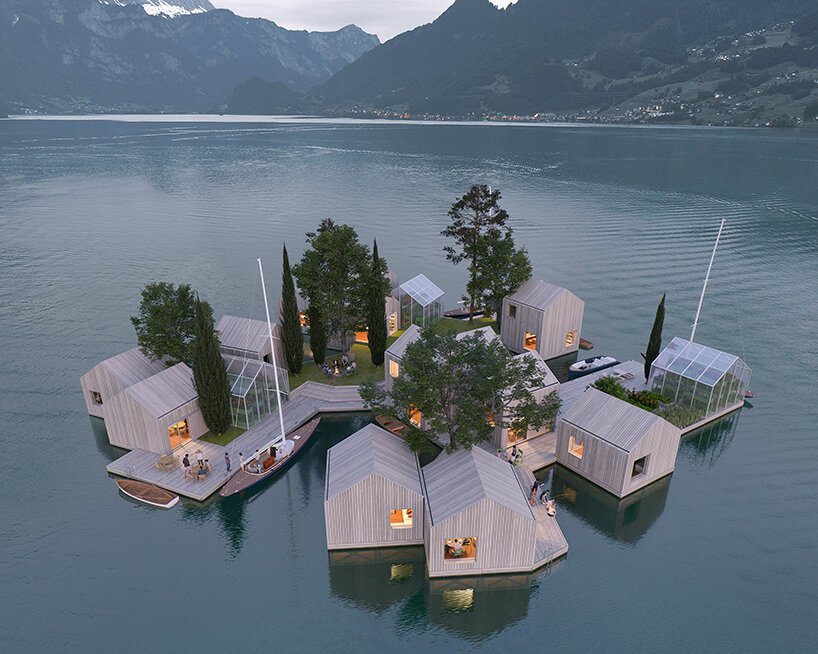
image by KVANT-1 | @kvant.1
a climate-resilient solution
The architects at MAST propose Land on Water in response to the gradually rising sea levels, and the resulting increase of urban flooding — conditions which have led to a new interest in building on water. However, traditional methods of constructing such floating spaces can still be developed to meet this growing demand.
The team explains:‘current solutions, including polystyrene filled concrete foundations and plastic pontoons are inflexible, difficult to transport and highly unsustainable. Land on water promises an entirely new, sustainable and highly flexible solution.’
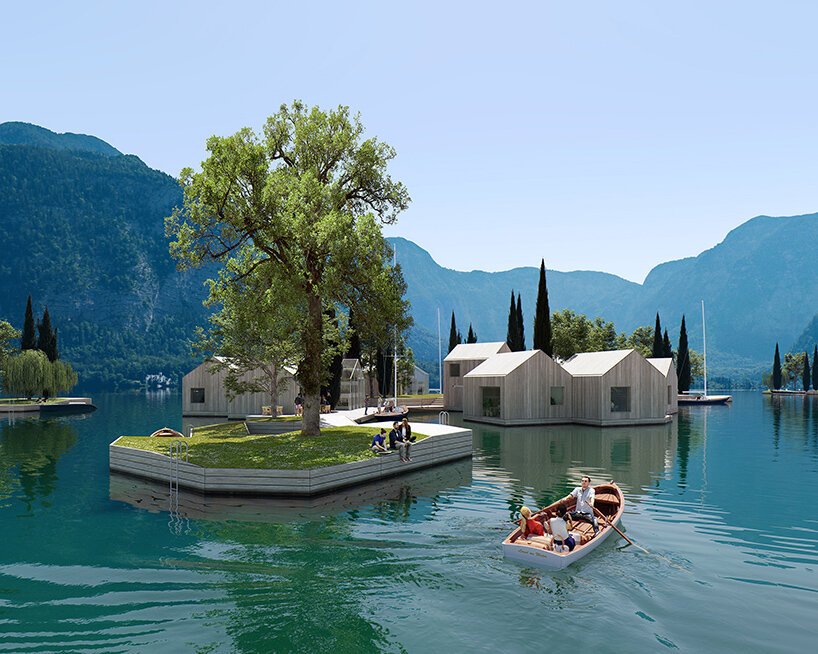
image by KVANT-1
how it works: the floating, flat-pack foundation
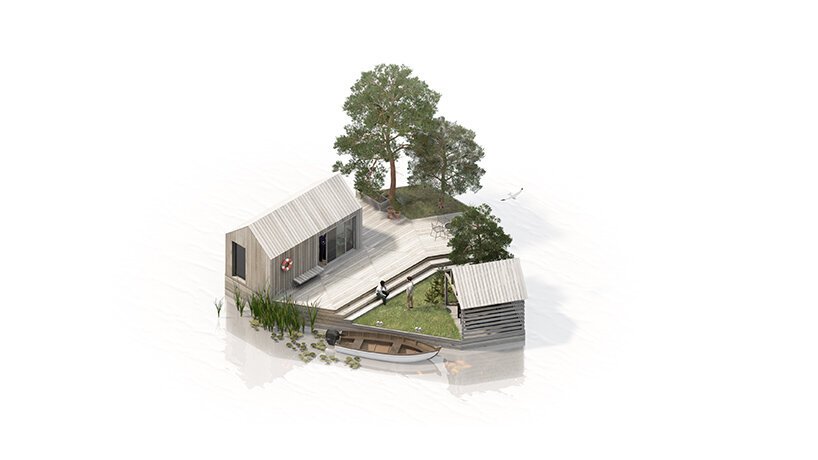
MAST develops Land on Water as a system of simple, flat-pack modules built of reinforced recycled plastic, which will shape a secure, floating foundation for the built space above. These modules are envisioned to be transported around the globe with ease, and assembled into endless configurations.
The team illustrates its design:‘The system was inspired by gabion construction, an ancient technology which utilises mesh cages filled with rubble to create extremely sturdy, low cost foundations.
‘In this case the concept is inverted; and the modular‘cages’are filled with locally sourced, up-cycled floatation supporting the weight of any structure built on top. This has the unique advantage that floatation can be added or adjusted at any time if weight is added above.’

images by MAST
sensitive to underwater environments
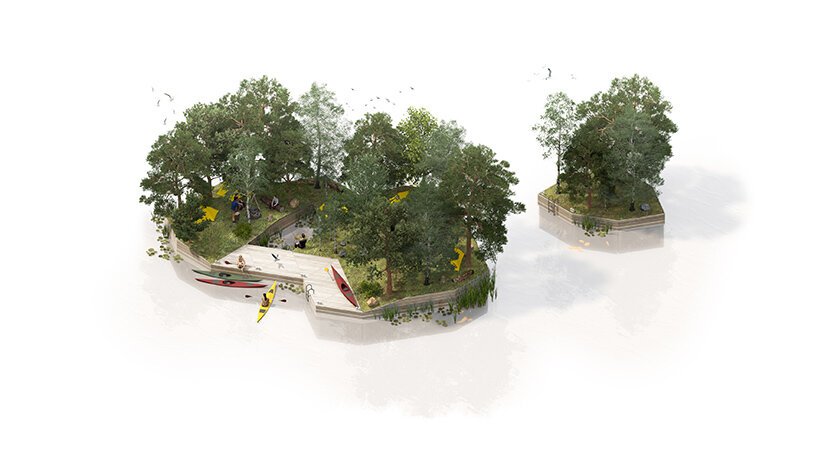
Land on water also promises a far better underwater environment than existing solutions. Notably, steel or concrete foundations are commonly treated with toxic coatings of anti-fouling paints. The group notes that while its recycled plastic modules avoid such toxins, they provide‘an ideal habitat for fish and crustaceans and an anchor point for mollusks and seaweeds.’
The group describes the system’s potential for growing organic, floating communities:‘Land on water promises a climate resilient and adaptable solution for the construction of new floating buildings but could also lead to an entirely new type of dynamic and organic off-grid floating community and an alternative to the large master-planned floating cities currently under development which repeat many of the mistakes made by urban planners in the middle of the 20th century.’
project info:
project title: Land on Water
architecture: MAST | @mast_denmark
photorealistic visualizations: KVANT-1 | @kvant.1