
‘le costil’by anatomies d’architecture
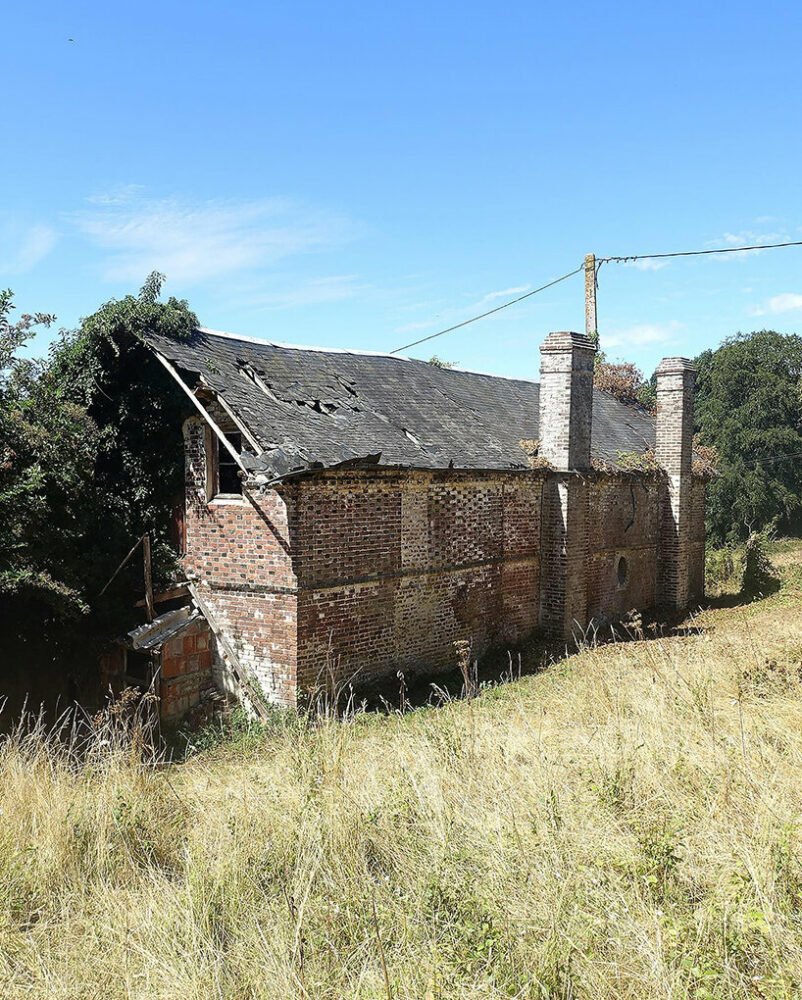
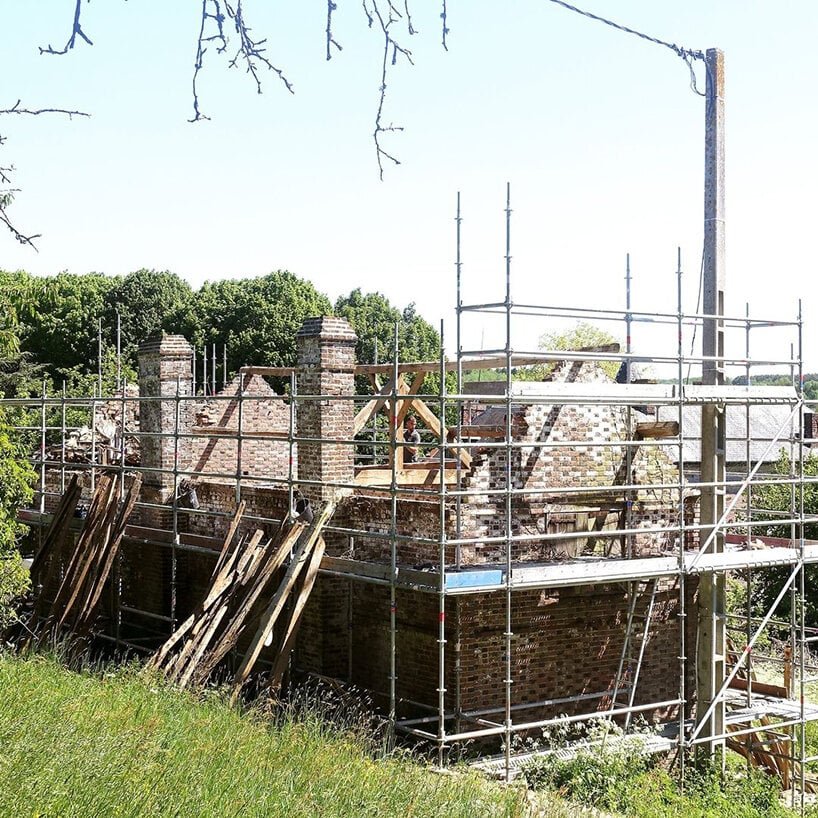
French cooperative Anatomies D’Architecture recently completed the restoration of a traditional 83 sqm brick house in Sap-En-Auge, Normandy. Dubbed‘Le Costil’, the project launched as a fully ecological initiative defined by ambitious construction goals: 0% concrete, 0% plastic, and 100% natural materials sourced on-site within less than 100 km radius.
In the span of two years, the architects brought their vision to life by collaborating with‘people in Normandy that keep fighting every day for the preservation of local and traditional craftsmanship, ancestral practice, regional solidarity, and short circuits.’These include farmers, loggers, sawmills, quarrymen, masons, historians, researchers, apprentices, and volunteers.
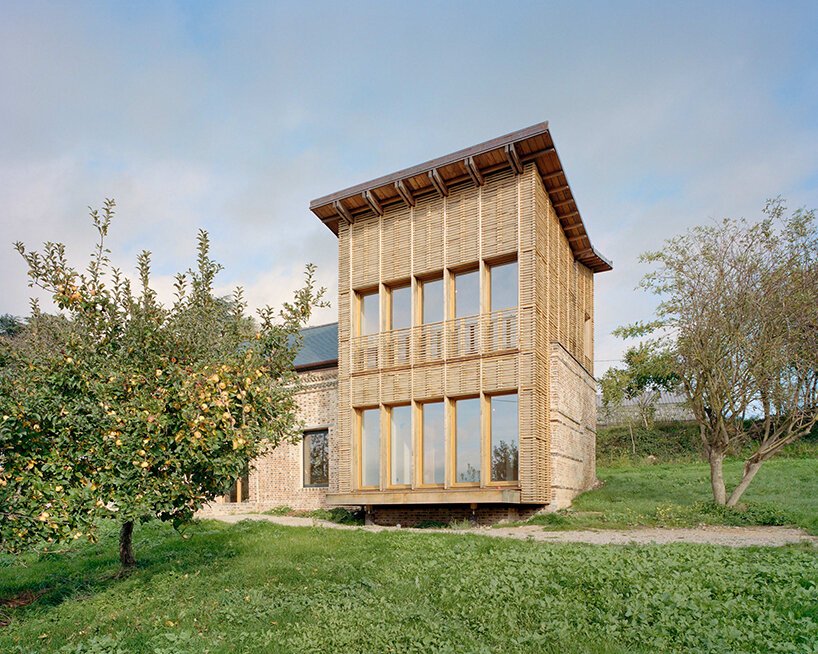
image © Laurent Kronental
reconnecting the house to its territory
Essentially, Anatomies D’Architecture was driven by the idea of recontextualizing‘the way we build our homes. Instead of erecting a‘standalone’structure, the goal was to ‘reconnect [the] habitat to its territory, taking into account its particularities and resources: climate, geography, history, built heritage, local materials, regional building techniques,’ writes the cooperative.
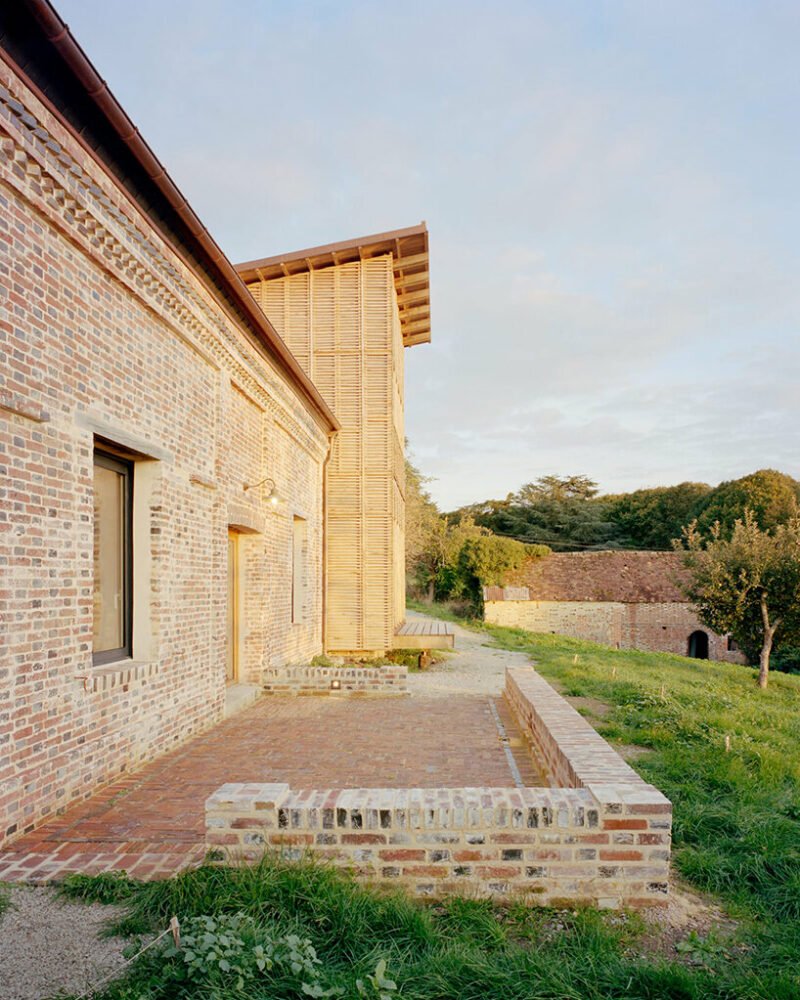
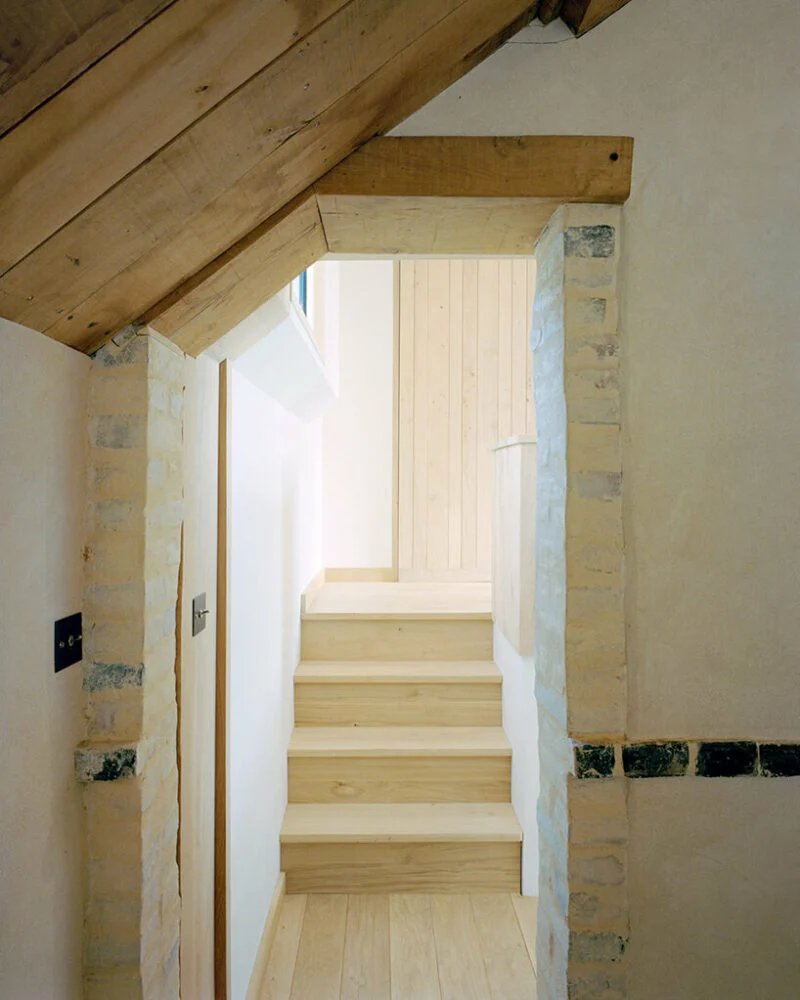
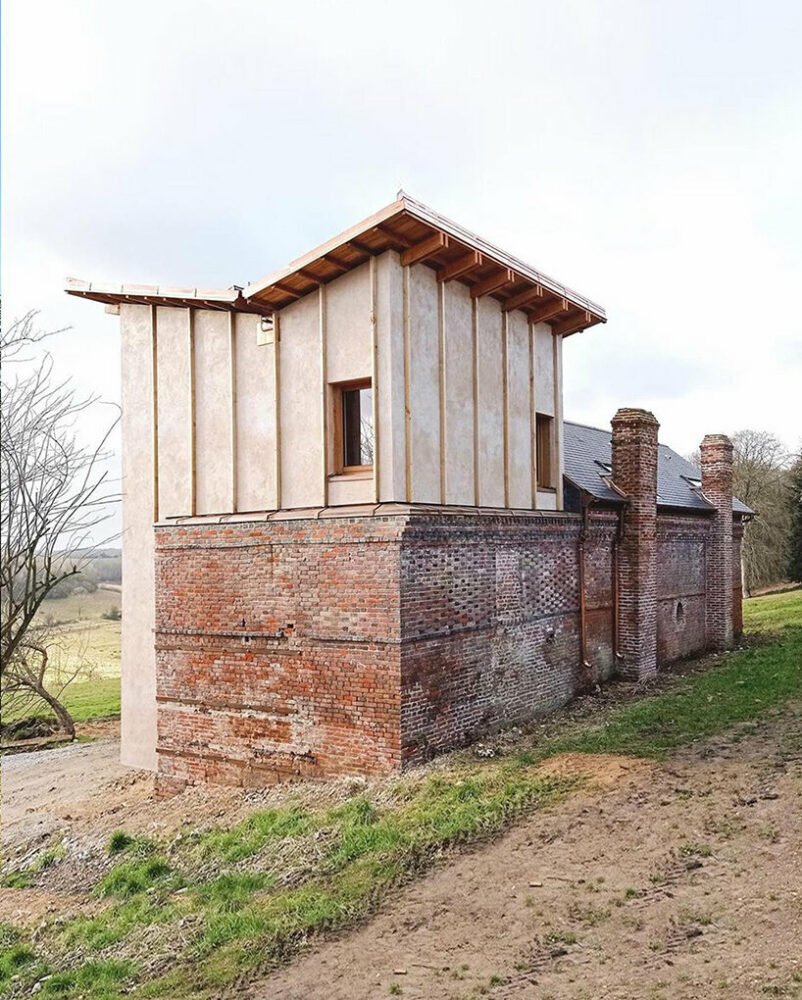
The first step to building‘Le Costil’was collecting materials on-site within approximately a 100 km radius: Robinia logs (30km) for the wood pile foundations, raw Douglas (30km) for the building’s wooden frame, short circuit hemp (45km) for biobased insulation, recycled corks for rot-proof insulation, local raw earth (0km) for filling and coatings, and chestnut‘ganivelles’(120km) for bioclimatic cladding. Additional resources include hay, flint, cow dung, and a hazel tree found on-site.
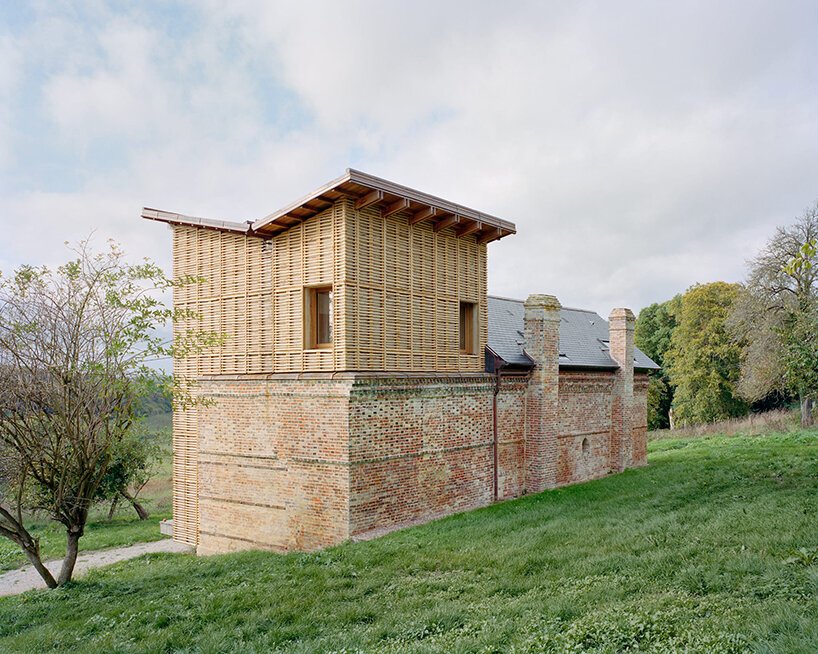
image © Laurent Kronental
In addition to compiling nearby materials, Anatomies D’Architecture repurposed some of the building’s original terracotta bricks to build a terrace using the traditional Calade technique without mortar and glue to avoid waterproofing the floors. After endless months of collaborative effort, the team managed to carry, scrape and wedge 1,100 bricks, 800 floor tiles, and 400 reused tiles. ‘For the past two years, Anatomies d’Architecture carried out the construction while constantly trying to find alternative and local solutions to conventional buildings,’ concludes the cooperative.
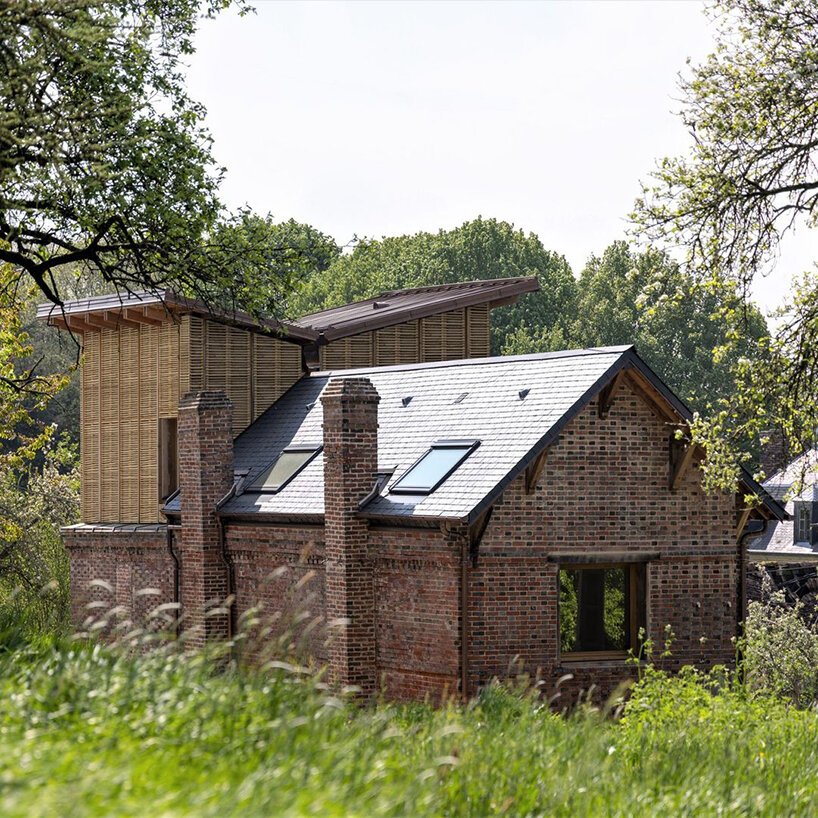
image via Anatomies D’Architecture
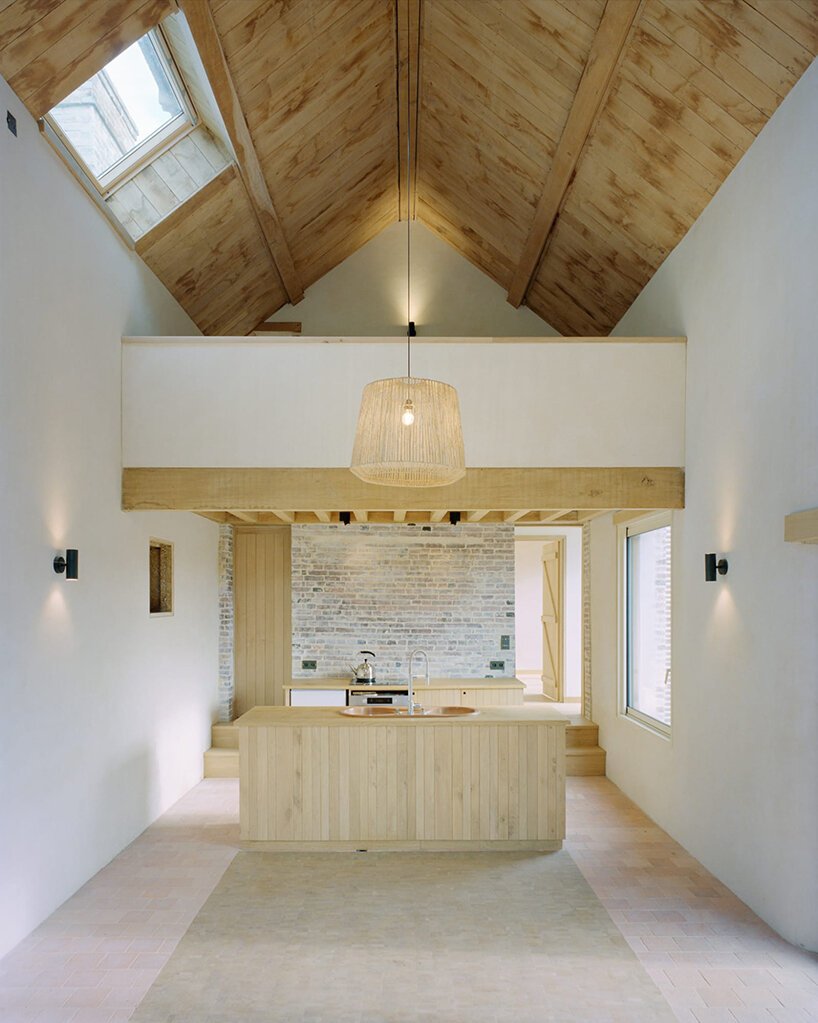
image © Laurent Kronental
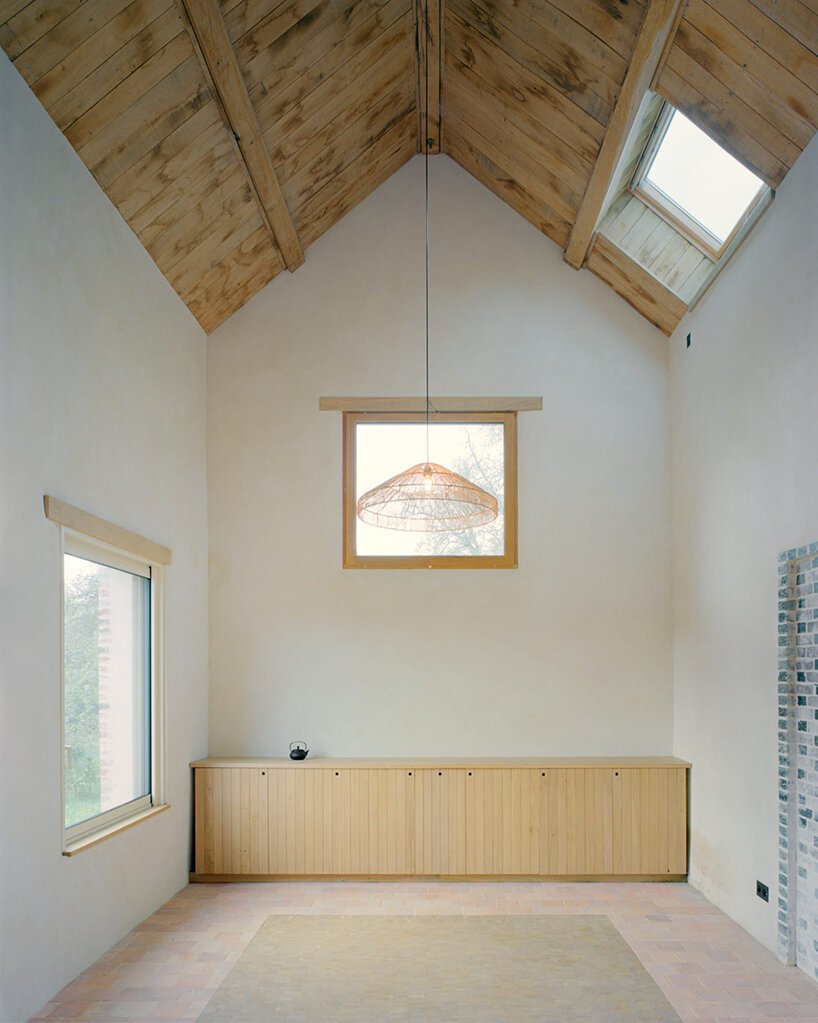
image © Laurent Kronental
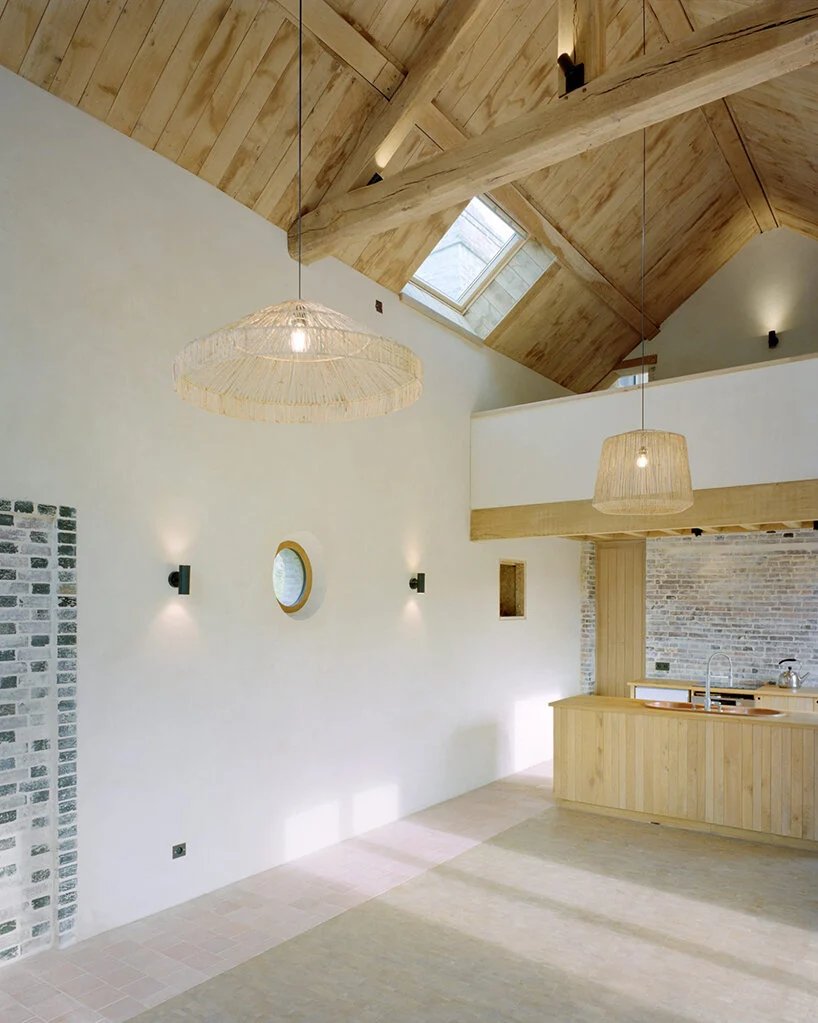
image © Laurent Kronental
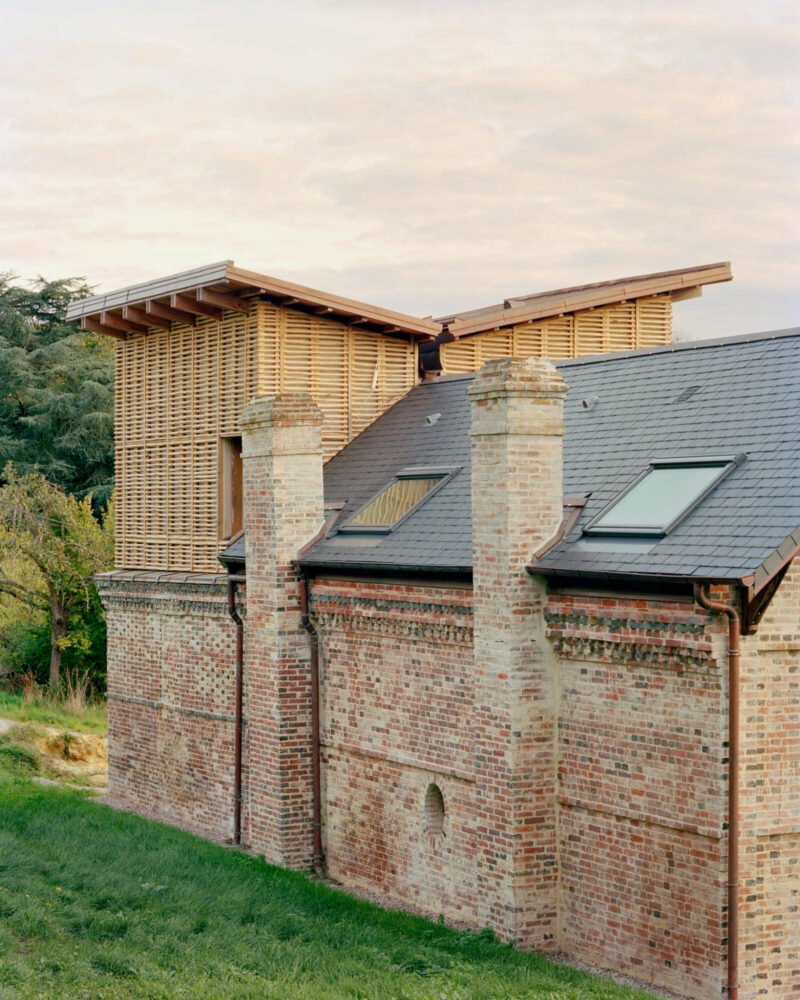
image © Laurent Kronental
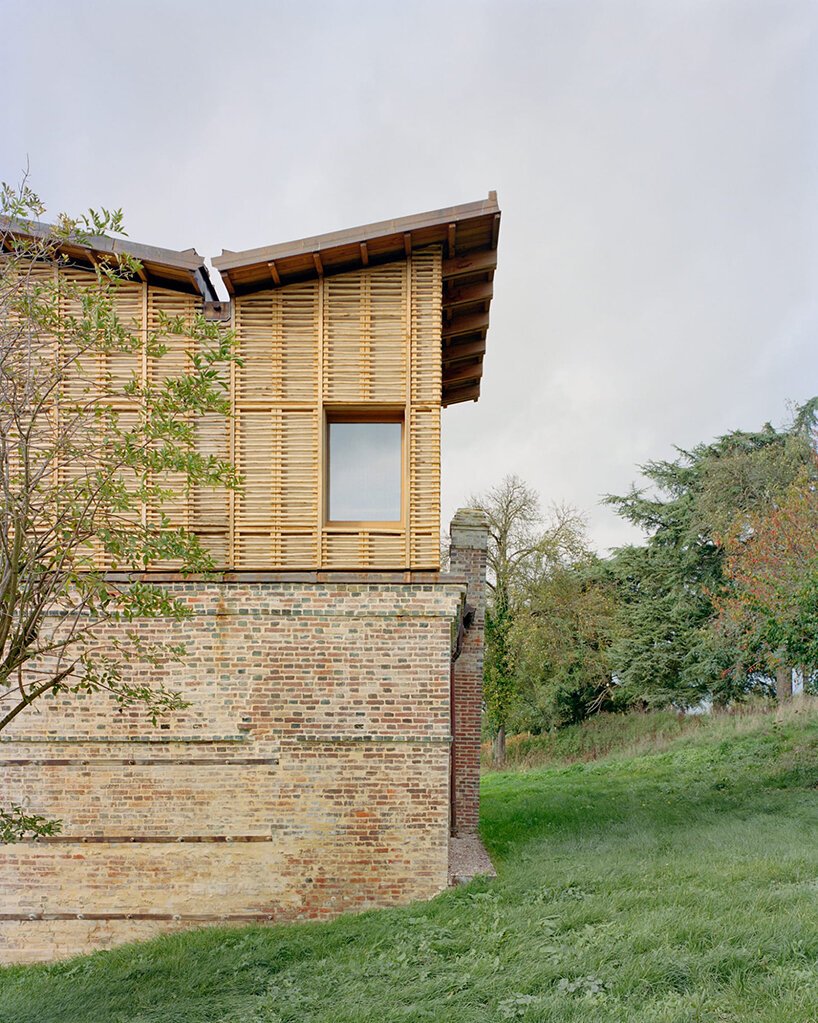
image © Laurent Kronental

project info:
name: Le Costil
location: Sap-En-Auge, Normandy, France
completion year: 2022
building area: 83 sqm
architecture: Anatomies D’Architecture | @ada_2018_fr
lead architect: Raphaël Walther
team: Mathis Rager (site), Emmanuel Stern (study)
construction: Ets Scheck, Couverture Grolleau, Eco-Pertica
woodworking: Depuis 1920
photography: Laurent Kronental | @laurentkronental, Olivier Sabatier | @olivier_sabatier