
vincent Callebaut envisions A Resilient, Green & Breathable Paris
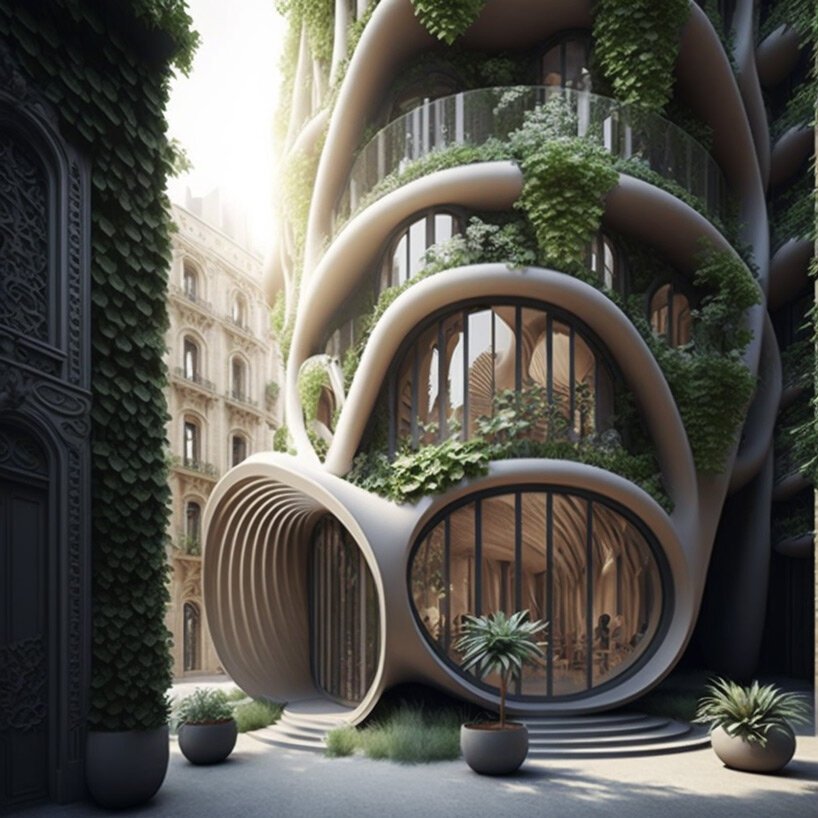
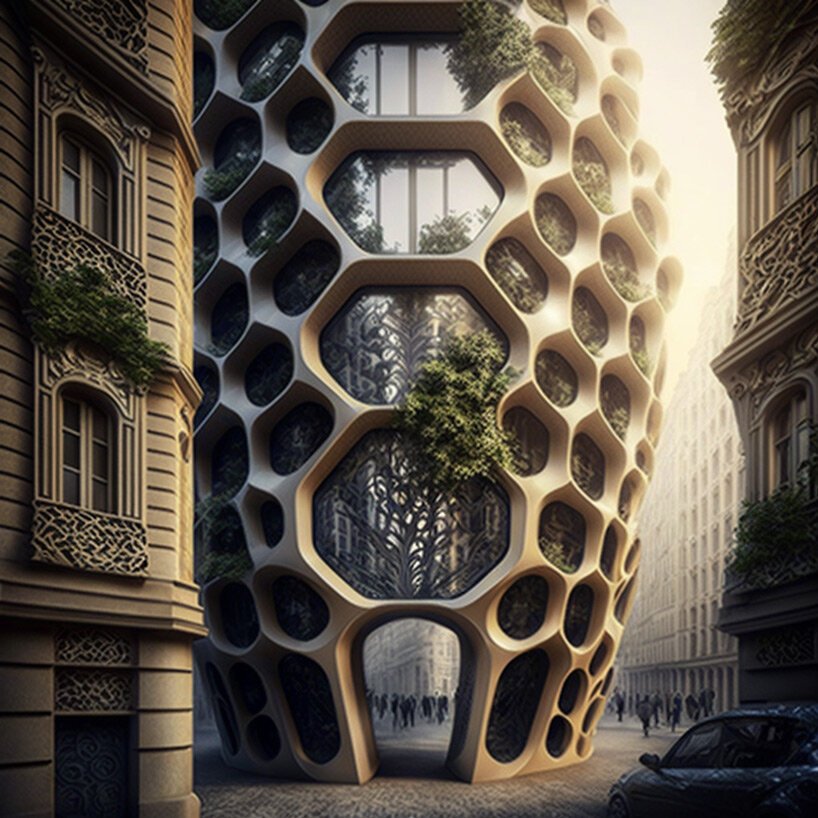
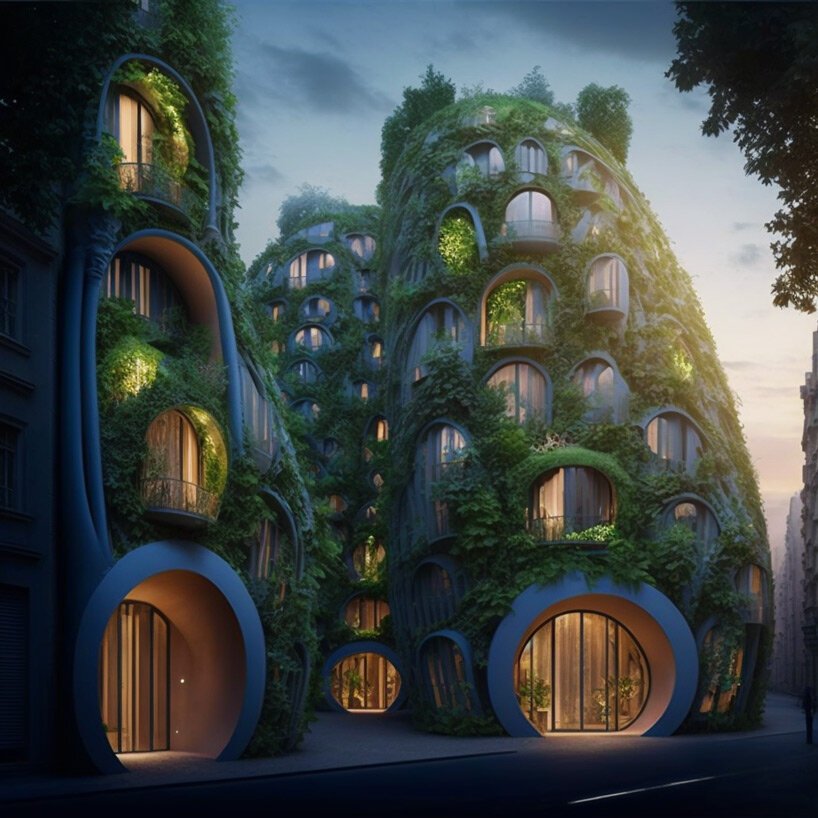
Drawing from the work of Baron Haussmann, who was responsible for the urban transformation of Paris between 1853 and 1870, architectural firm Vincent Callebaut Architectures presents a series of futuristic, biologically inspired architectures for the French capital. The architects harness the power of new artificial intelligence tools to create a collection of green‘Haussmannian’buildings and biomimetic positive-energy structures called‘Archibiotics’. The resulting units are built from biobased materials (such as rammed earth, bamboo, microalgae, mycelium, etc.) and are designed to produce their own energy and convert their own waste into resources in order to achieve the national goal of carbon neutrality in 2050.
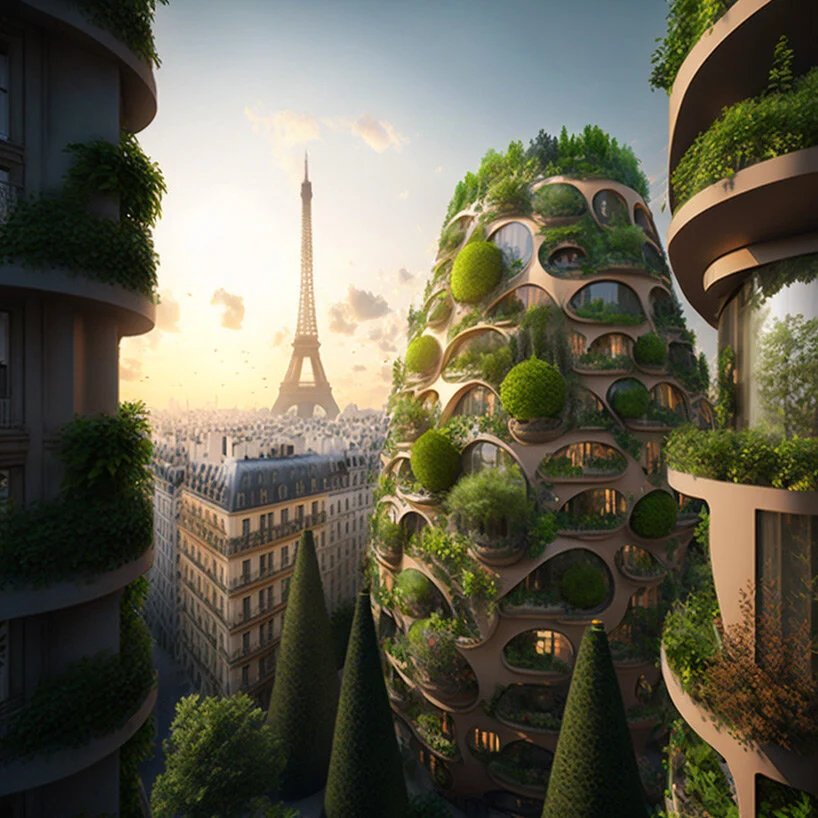
a series of futuristic, bio-inspired architectures for Paris | all images courtesy of Vincent Callebaut Architectures
reimagining Haussmannian buildings through AI
Georges-Eugène Haussmann, also known as Baron Haussmann, was Prefect of the Seine from 1853 to 1870 and led the transformation of Paris during the Second Empire under the aegis of Napoleon III, by deepening the comprehensive renovation plan established by the Simeon Commission. Following the cholera epidemic of 1832, Haussmann’s transformations focused on health and aimed to facilitate the flow of population, goods, air, and water by launching a campaign called‘Paris Embellished, Paris Enlarged, Paris Sanitized’. The‘Haussmannian’buildings erected along the wide avenues of Paris, are what gave the city the old, medieval face we know today.
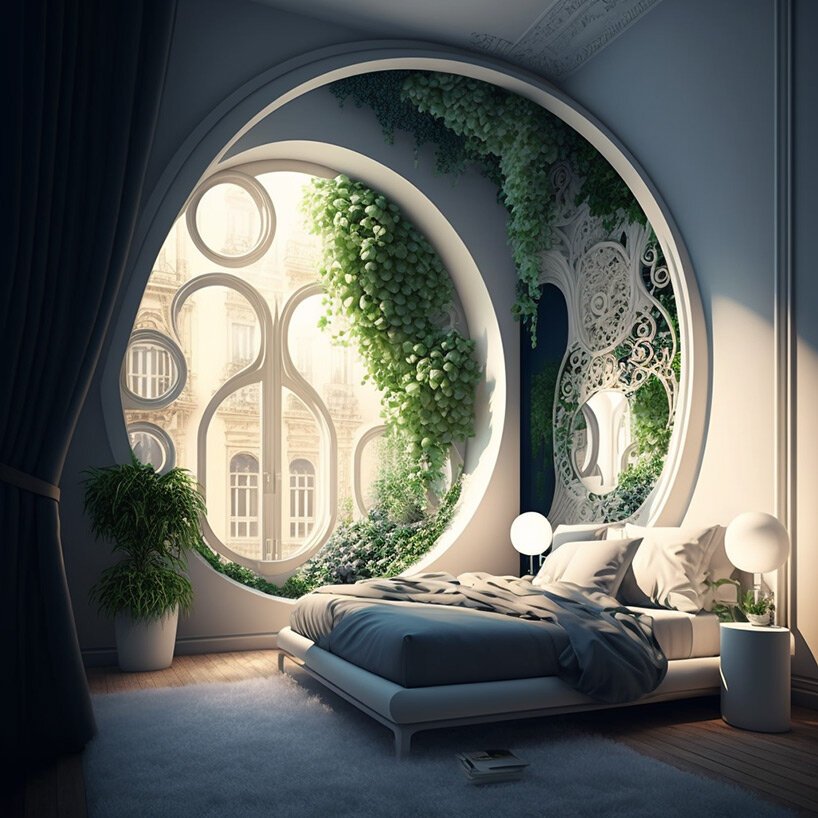
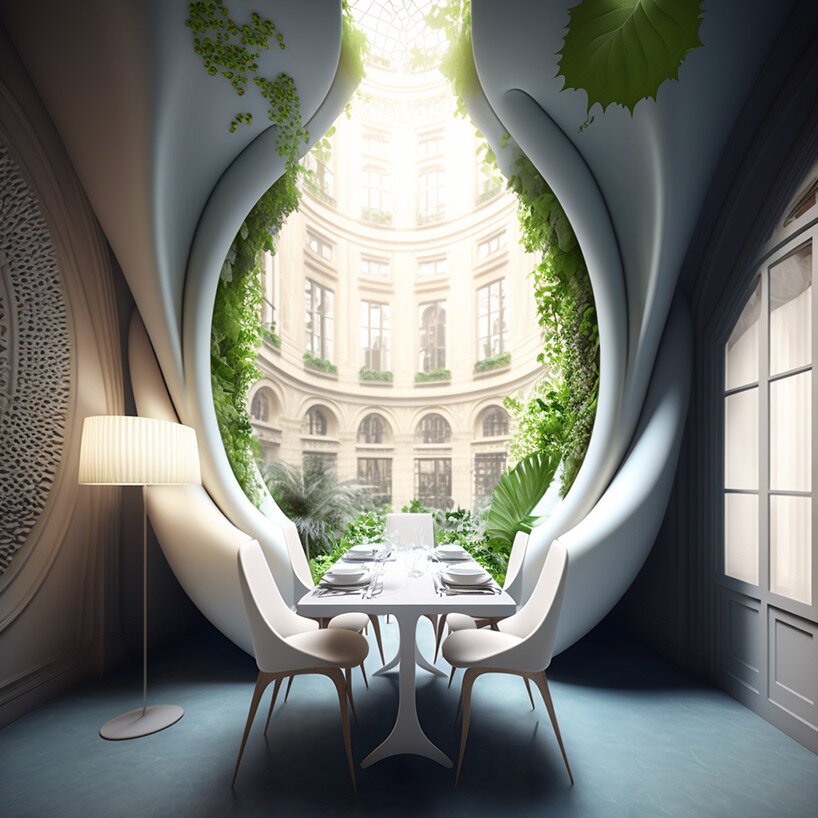
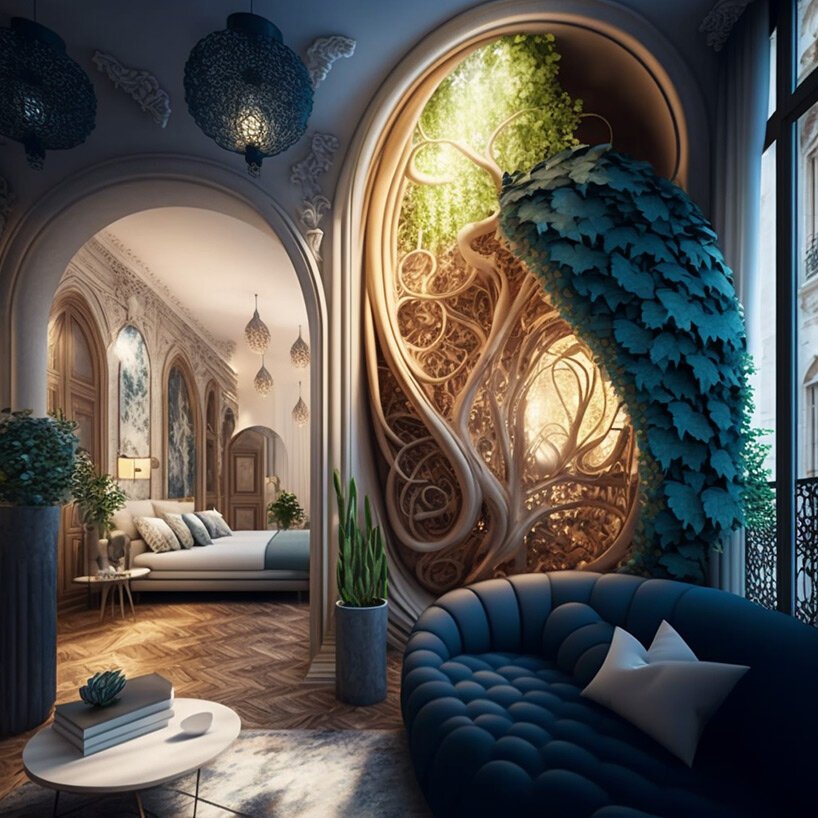
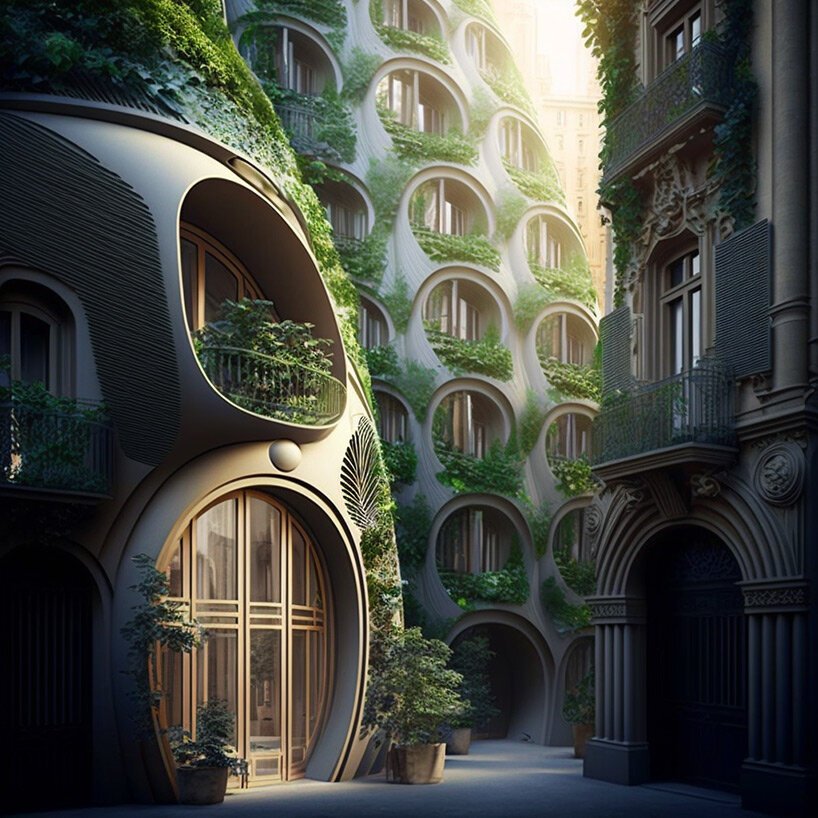
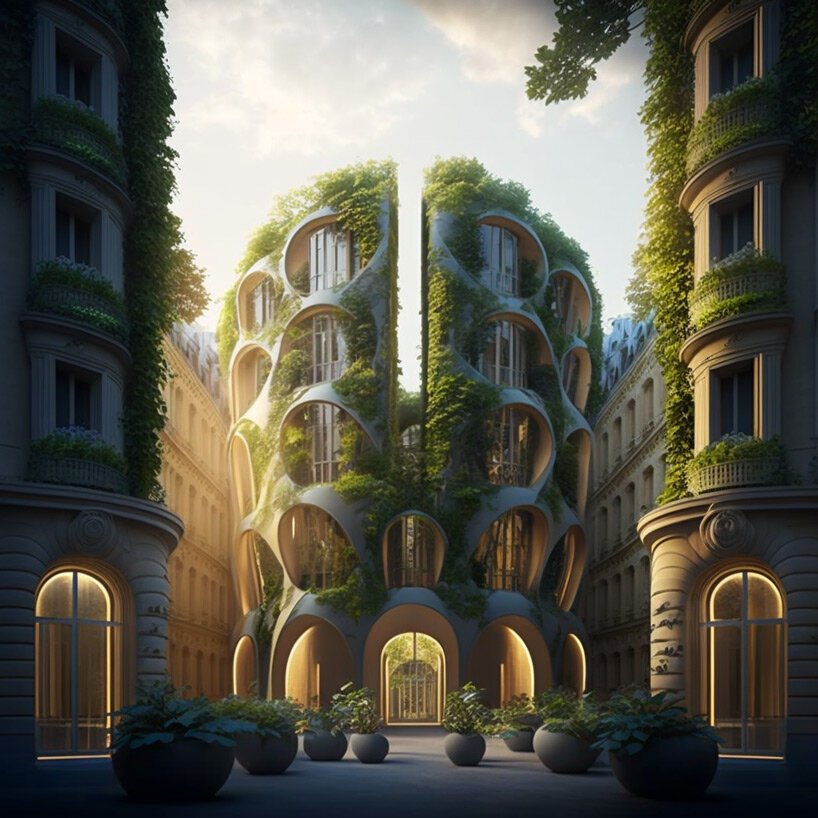
Taking their cues from Haussmann’s work, the architects at Vincent Callebaut Architecture continue to explore the concept of climate and energy solidarity by using new artificial intelligence tools. The French architects draw inspiration from existing buildings, as well as ecosystem feedback loops and biomimetics, to create a series of green, organic structures distributed throughout Paris. Through a sensitive and contemporary dialog that preserves the historical heritage of the French capital, the project creates islands of urban freshness by reviving nature, biodiversity and permaculture urban agriculture in the heart of the city.
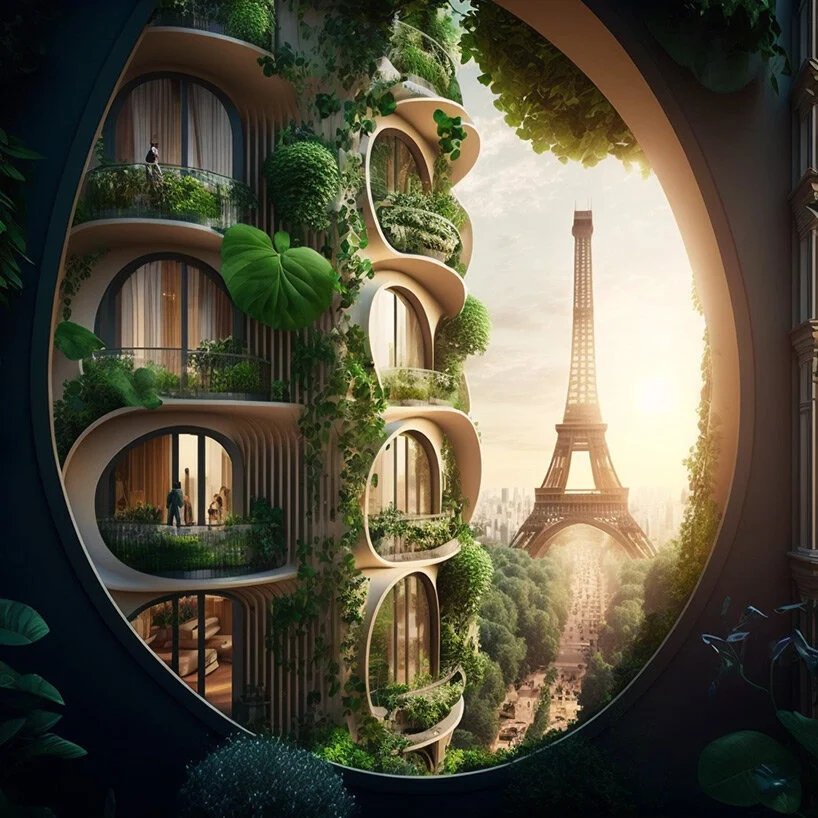
the architects use artificial intelligence tools to create a collection of green‘Haussmannian’buildings
self-sufficient‘archibiotics’and resilient urbanism
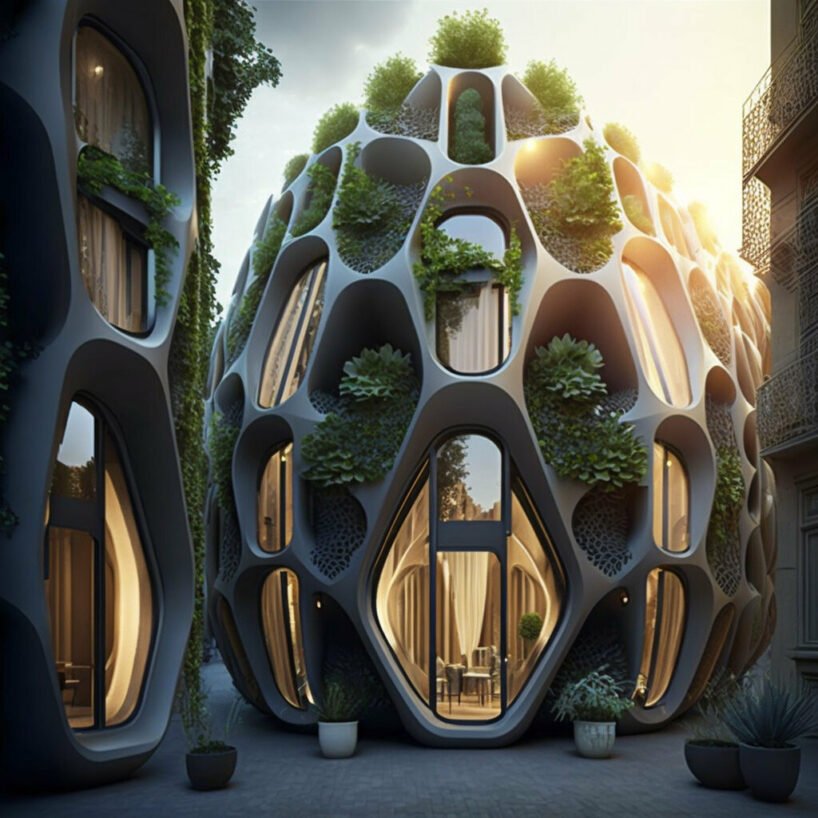
Presented by Vincent Callebaut Architecture, these‘Archibiotics’aim to massively integrate renewable energy into buildings constructed from bio-based materials such as cross-laminated timber, rammed earth, hempcrete, solid structural stone, bamboo, microalgae, mycelium, and straw. As mentioned earlier, these buildings are designed to produce their own energy and convert their own waste into resources.
The result is a successful symbiosis between man and nature, a futuristic, bio-inspired architecture based on the high technical level of French craftsmanship. ‘This desire to invent a resilient urbanism, on a human scale, imagined for and in consultation with Parisians, could be part of a new campaign entitled‘Resilient Paris, Green Paris, Breathable Paris’.’shares the team. The project comes in line with the‘Paris Smart City 2050’ecological transition plan initiated in 2014 by Vincent Callebaut Architectures on the basis of the‘Climate-Air-Energy Plan’for the City of Paris and the Municipal Services of the Urban Ecology.
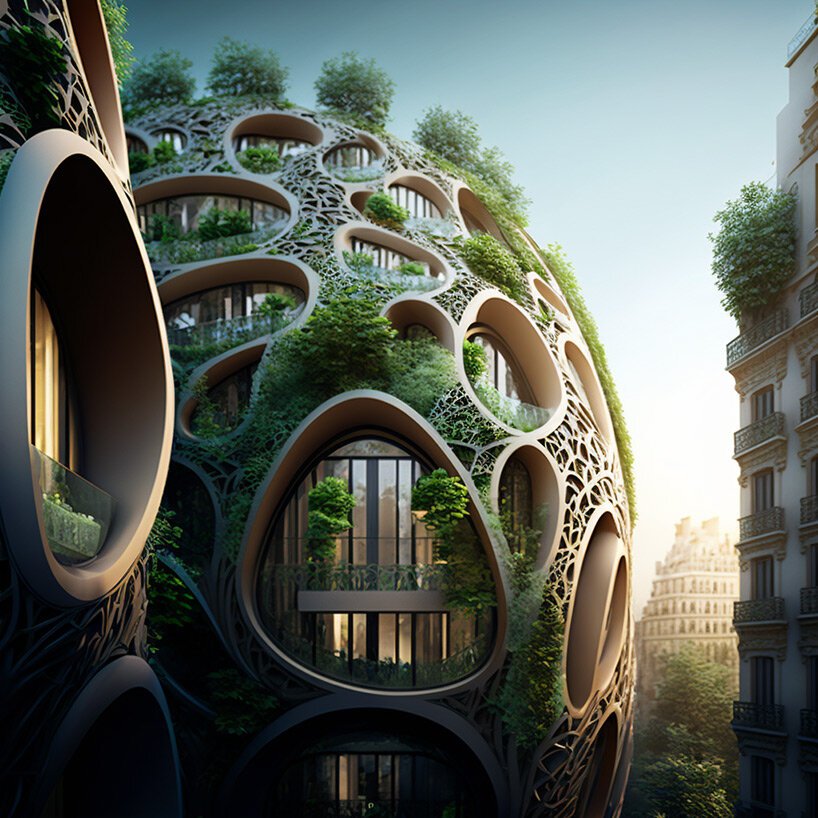
the structures are designed to produce their own energy and convert their own waste into resources
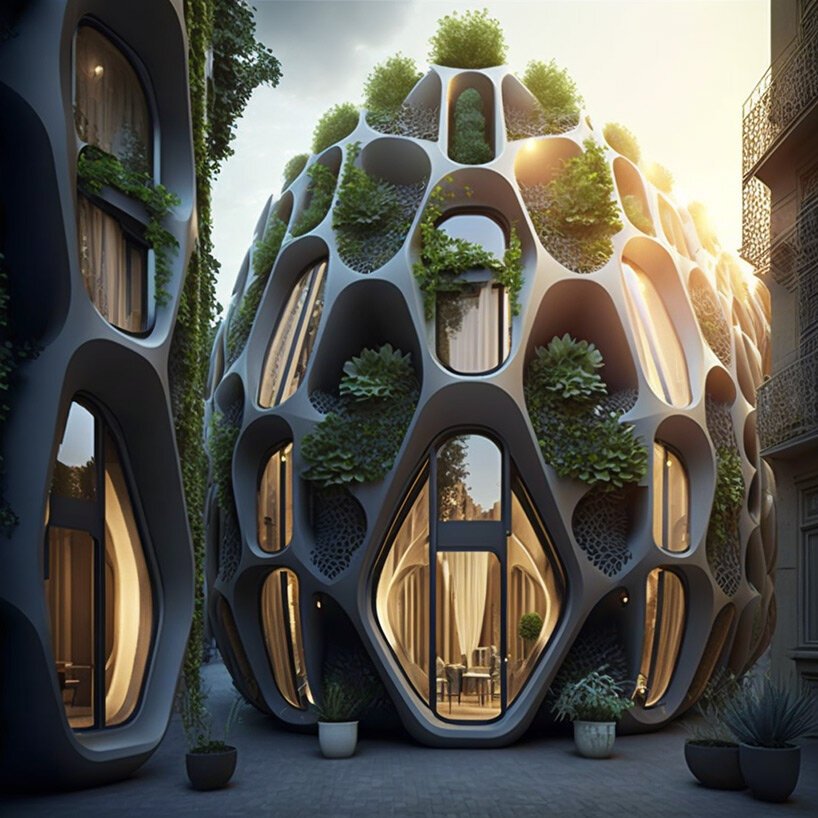
the buildings are constructed from biobased materials such as rammed earth, bamboo, and mycelium
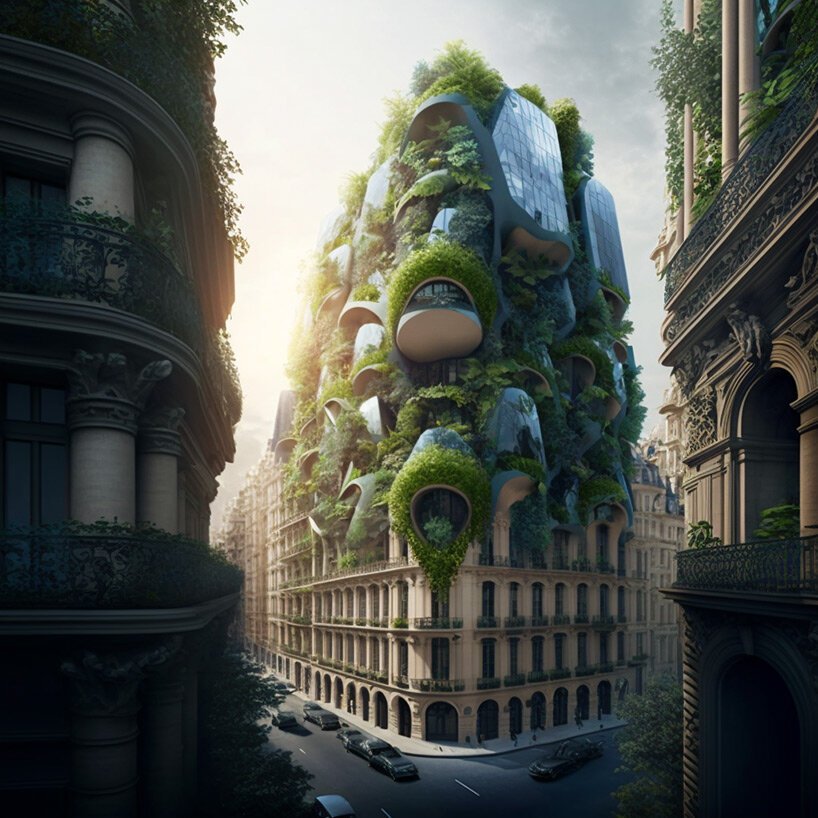
through a contemporary dialog that preserves the historical heritage of Paris, the project creates islands of urban freshness
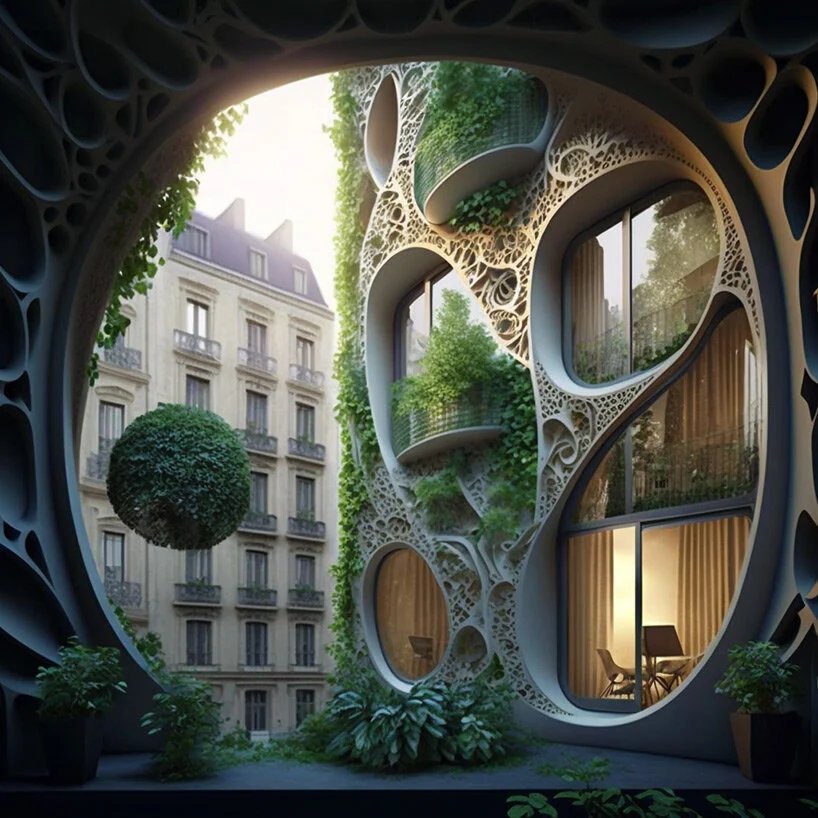
the project introduces a series of biomimetic positive-energy structures called‘Archibiotics’
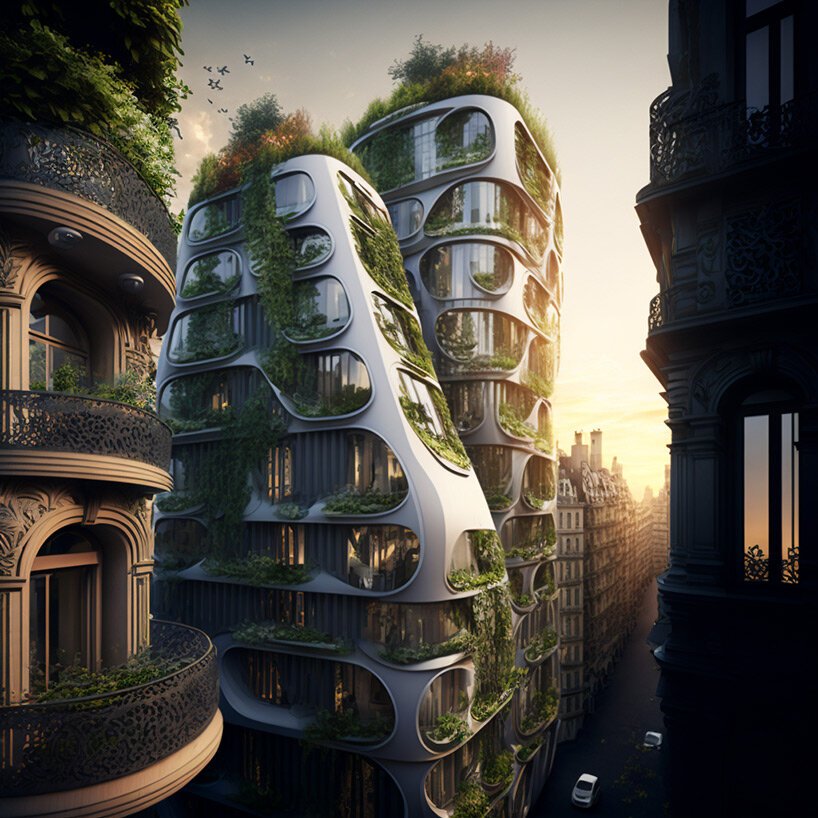
the result sees a successful symbiosis between man and nature
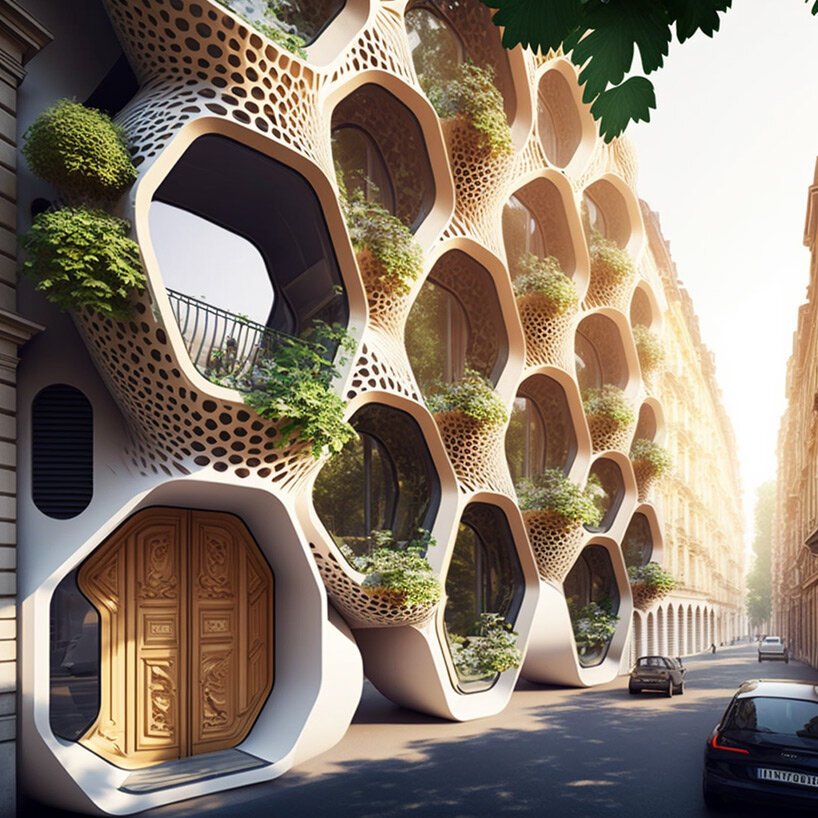
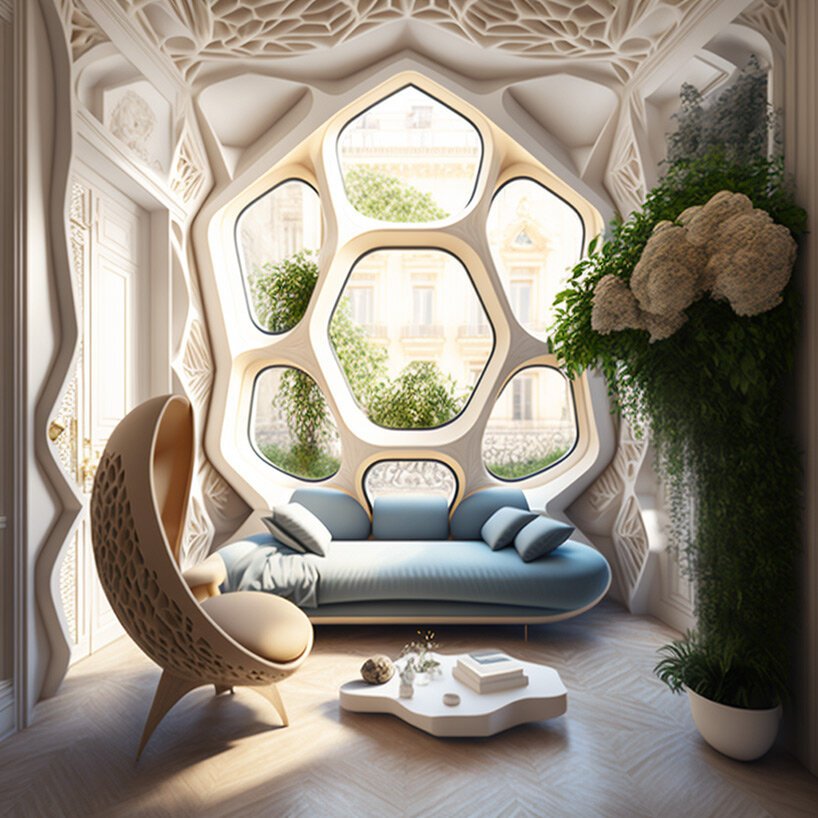
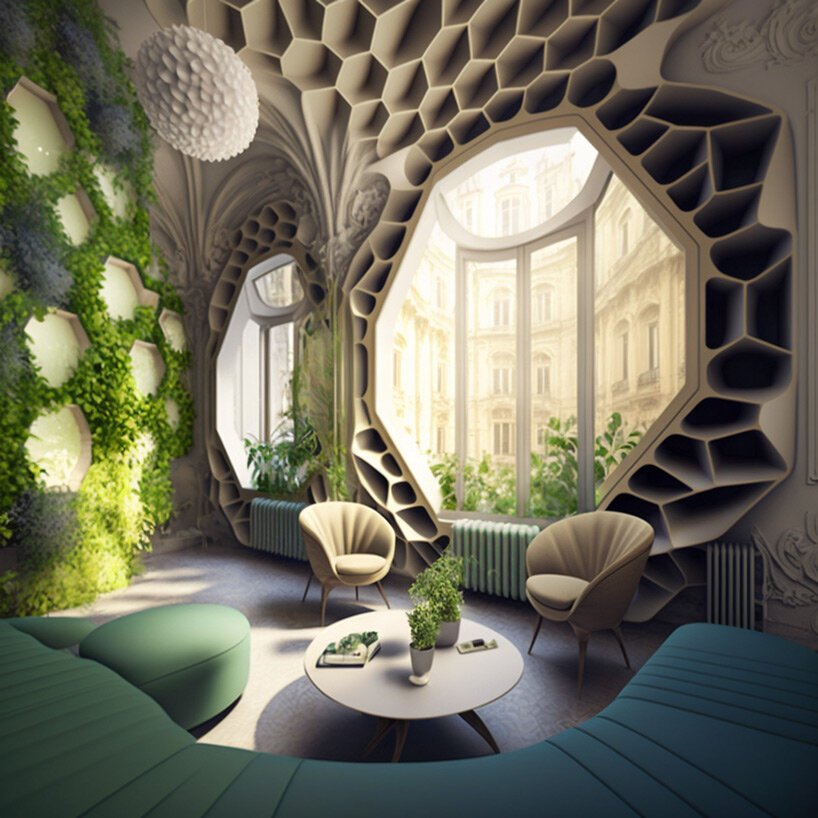
the AI-designed structures present breathable organic facades
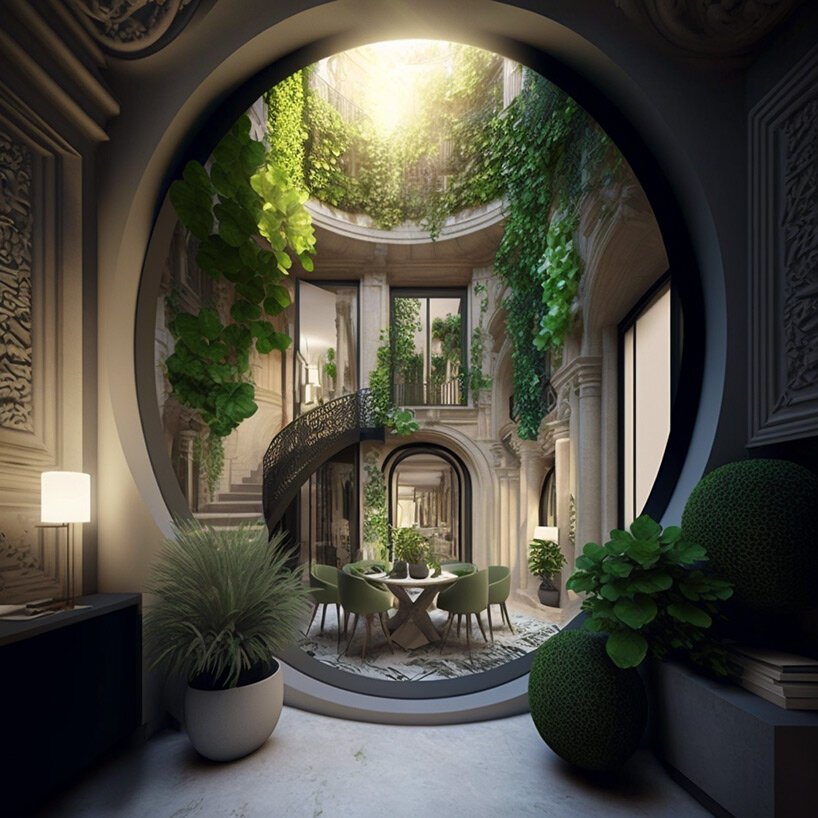
natural elements are integrated throughout the structures
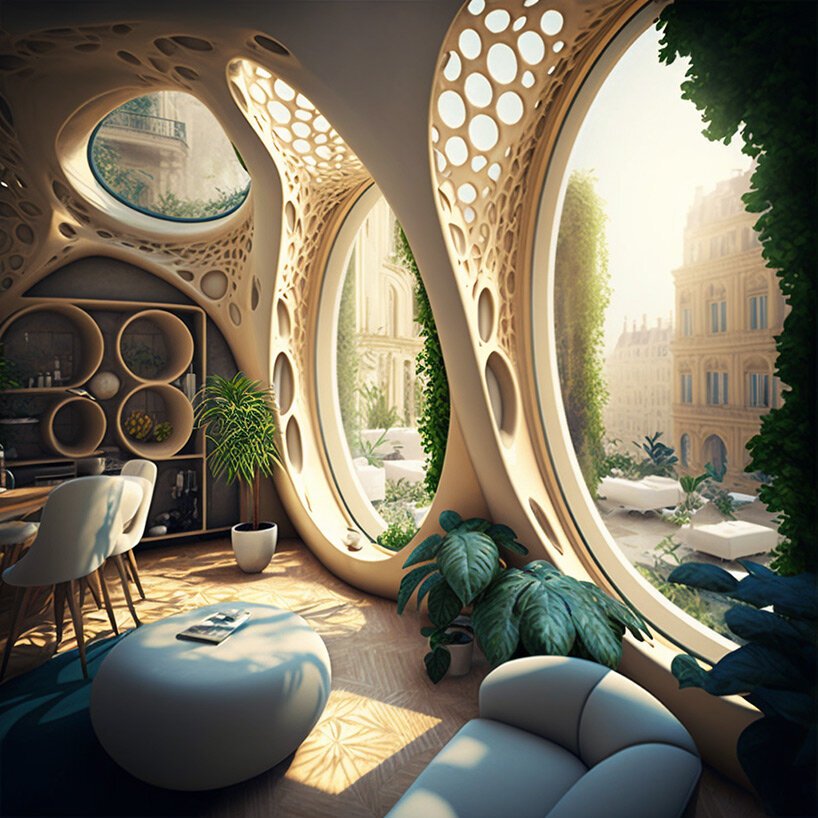
where artificial intelligence meets bio-inspired architecture and French craftsmanship

sinuous volumes and plants emerge within the buildings
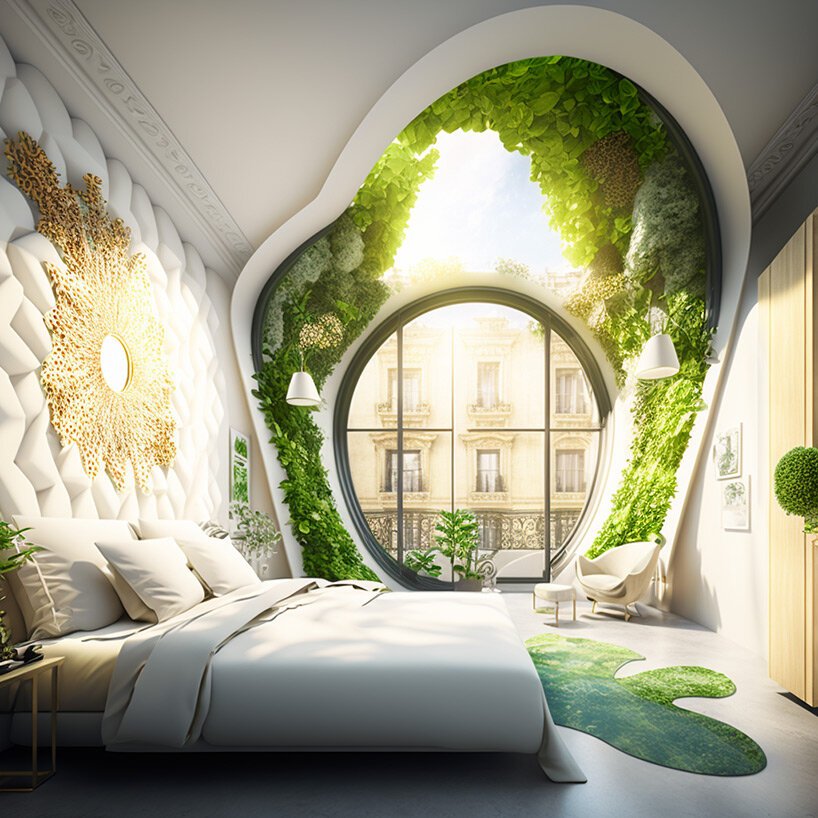
project info:
name: Haussmann 2.0 – a Resilient, Green & Breathable Paris
architects: Vincent Callebaut Architectures
location: Paris, France