
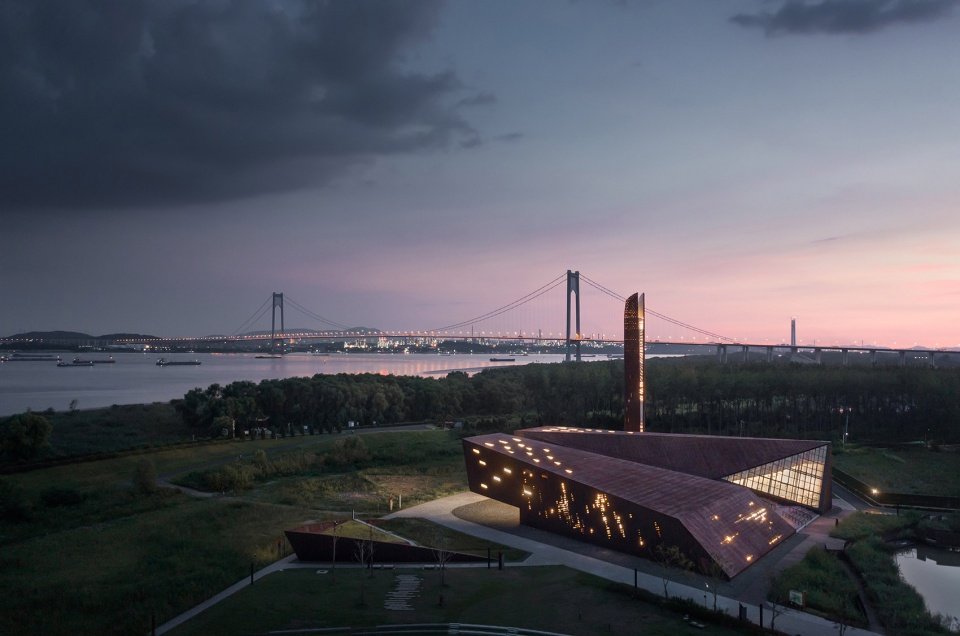
渡江胜利公园位于长江南京段水系下游,栖霞山对岸,划子口河口处,龙袍新城滨江地带。1949年4月21日,渡江战役在此打响,人民解放军34军在划子口等地战斗、渡江并成功登陆栖霞。因此在2020年建党百年之际,为纪念渡江战役同时服务新城市民,龙袍政府启动该项目的建设。
The Yangtze River Crossing Campaign Memorial Park is located in the lower parts of the Yangtze River in Nanjing, on the opposite side of Qixia Mountain, in the estuary of the Hua-Zikou River, on the riverfront of Longpao New City. On April 21, 1949, the Yangtze River Crossing campaign began here. The People’s Liberation Army’s 34th Army fought, crossed the river, and successfully landed in Qixia from the Hua-Zikou River. As a result, on the 100th anniversary of the founding of the Communist Party of China (CPC) in 2020, the Longpao administration began construction of the project to commemorate The Yangtze River Crossing Campaign and serve the inhabitants of the new city.
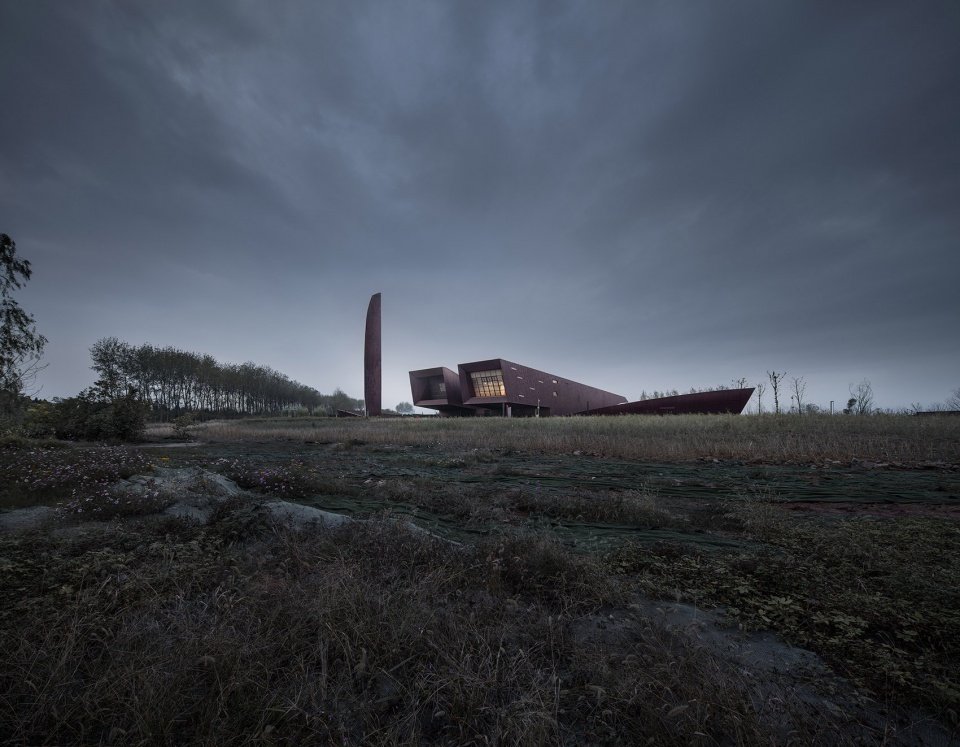
▼项目概览:塔、建筑、雕塑和芦苇,Towers, buildings, sculptures and reeds © 侯博文
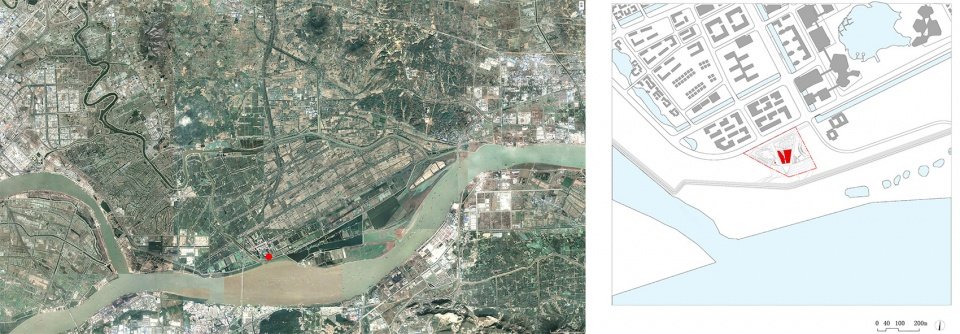
▼长江栖霞山段卫星地图 & 渡江胜利公园区位分析,Satellite map of Qixia Mountain section of Yangtze River & Location analysis of the Memorial Park© 周凌工作室
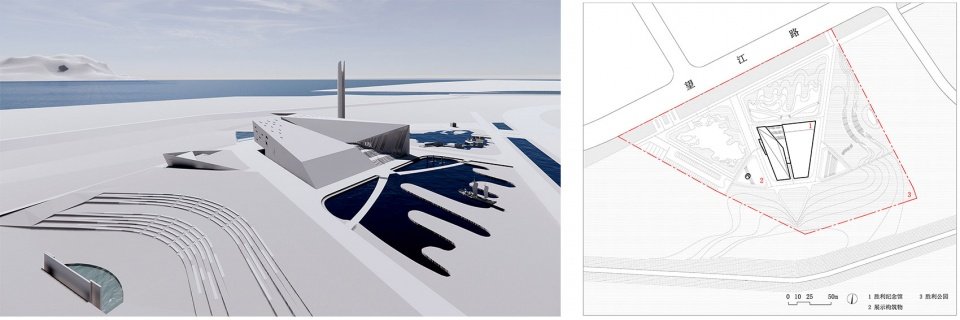
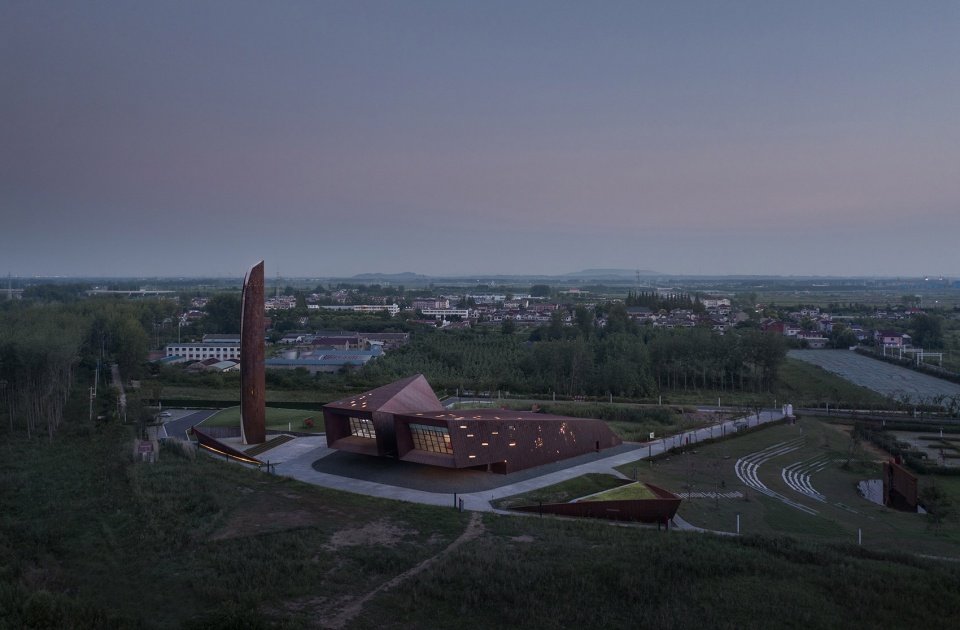
项目规划用地约4.4公顷,包含公园、纪念馆和标志塔。其中纪念馆总建筑面积3690㎡,占地面积2610㎡,包含历史展陈、专题展陈、红色主题教育、互动参与、休闲、办公等功能。建筑高度为14.8米,观览者于二层悬挑空间可以远眺栖霞山和长江。展示构筑物位于纪念馆西侧,面朝长江四桥,高49.421米,为铭记渡江战役胜利的历史时刻。
The 4.4-acre site has a park, a memorial hall, and a tower. The Memorial Hall with a total building area of 3690 m2, covering an area of 2610 m2, and comprising a historical display, thematic exhibition, red theme education, interactive participation, leisure, office, and so forth. Visitors may view Qixia Mountain and the Yangtze River from the second-floor cantilevered area, which is 14.8 meters tall. The iconic tower, which stands 49.421 meters tall and faces the Yangtze River’s Fourth Bridge, is situated on the west side of the memorial hall and serves as a reminder of the historical moment of the Yangtze River Battle’s crossing victory.
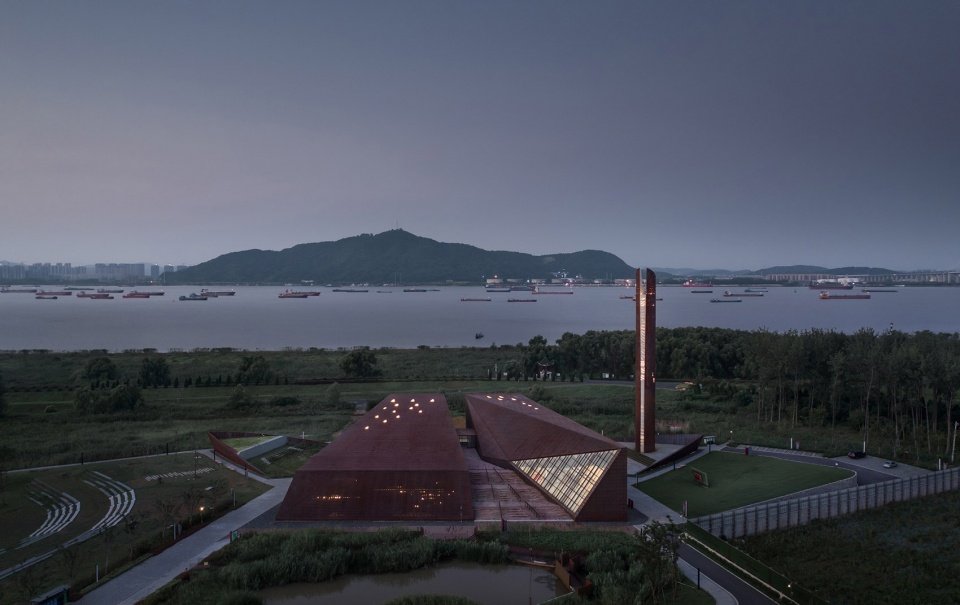
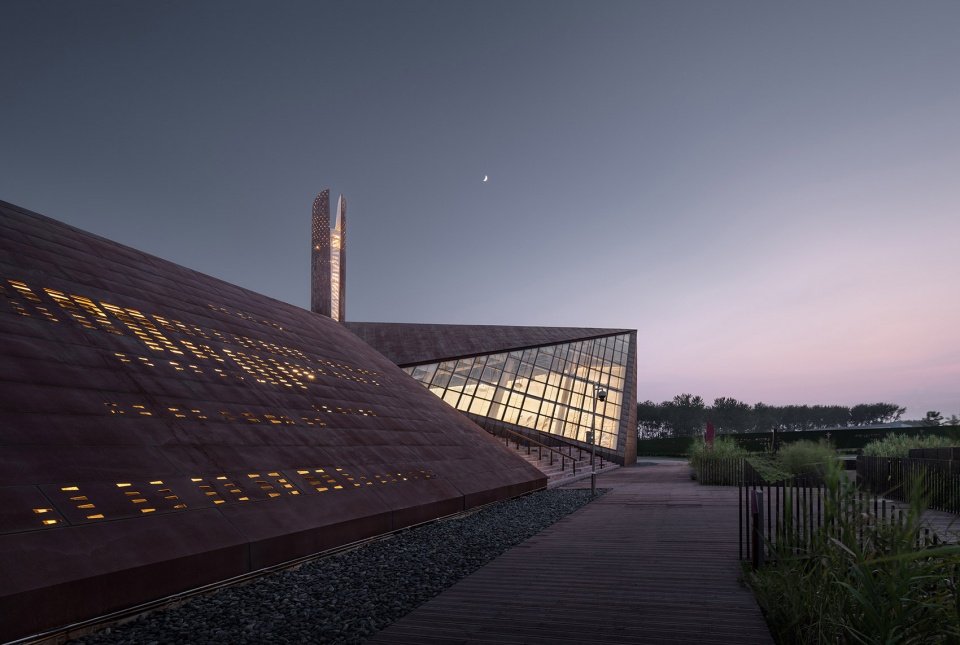
▼夜间远眺栖霞山,Overlooking Qixia Mountain at night© 侯博文
▼纪念公园、胜利纪念馆和展示构筑物 & 总平面图,The park, the memorial hall, and the tower & Masterplan© 周凌工作室
▼剖面视野下的栖霞山、长江、长江四桥、龙袍新城和渡江胜利公园,Qixia Mountain, the Yangtze River, the Fourth Bridge of the Yangtze River, Longpao New City and the Memorial Park in the view of section© 周凌工作室

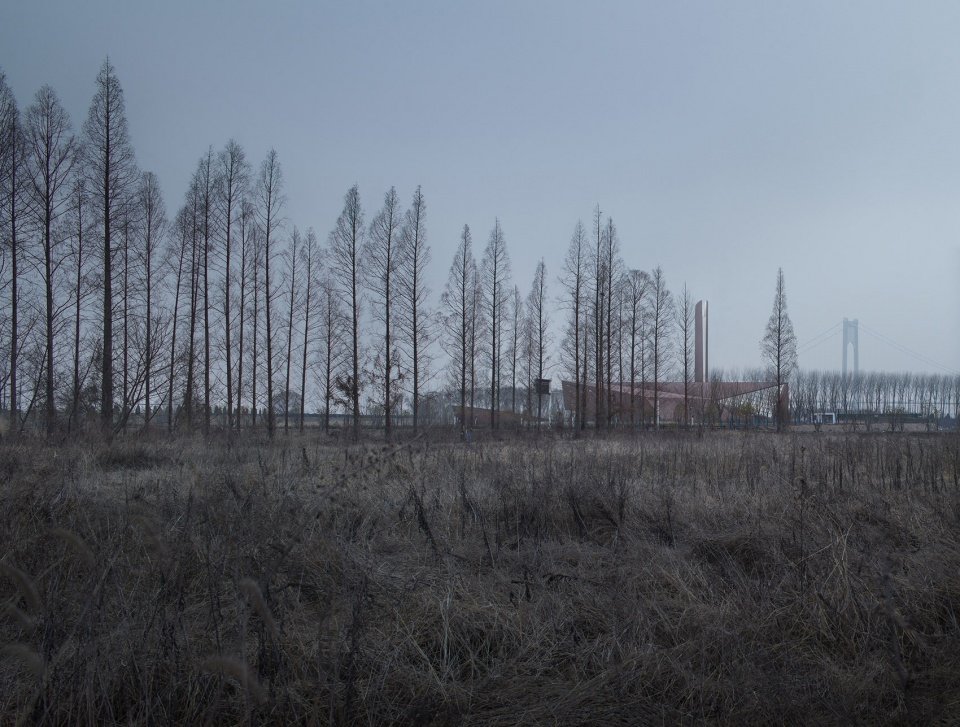
▼从龙袍新城方位看渡江胜利公园,View of the Memorial Park from Longpao New Town© 侯博文
▼从长江方向鸟瞰渡江胜利公园,The perspective seeing from above© 侯博文
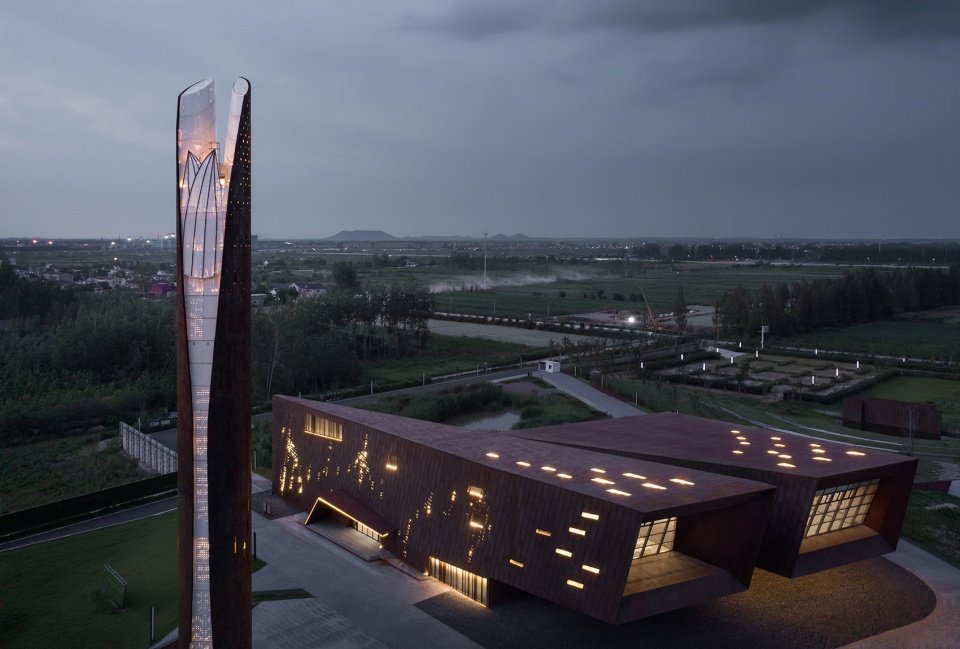
▼夜间亮化设计是“星星之火可以燎原”的隐喻,Night illumination serves as a metaphor for “A single spark can start a huge blaze”© 侯博文
公园设计利用原有场地高差,通过地表高度的变化营造功能性的场所空间,地表的抬高、下沉、掀起、切割自然地描述出芦苇荡、音乐台、雕塑、纪念馆的空间起伏,使各功能体块成为地形重塑的一部分。
The park’s design takes advantage of the elevation difference of the original site to create a functioning area by changing the surface height. Each functional building block becomes a part of the terrain remodeling as a result of the elevation, subsidence, lifting, and cutting of the surface, which organically describes the spatial fluctuation of reeds, a bandstand, a sculpture, and a memorial hall.
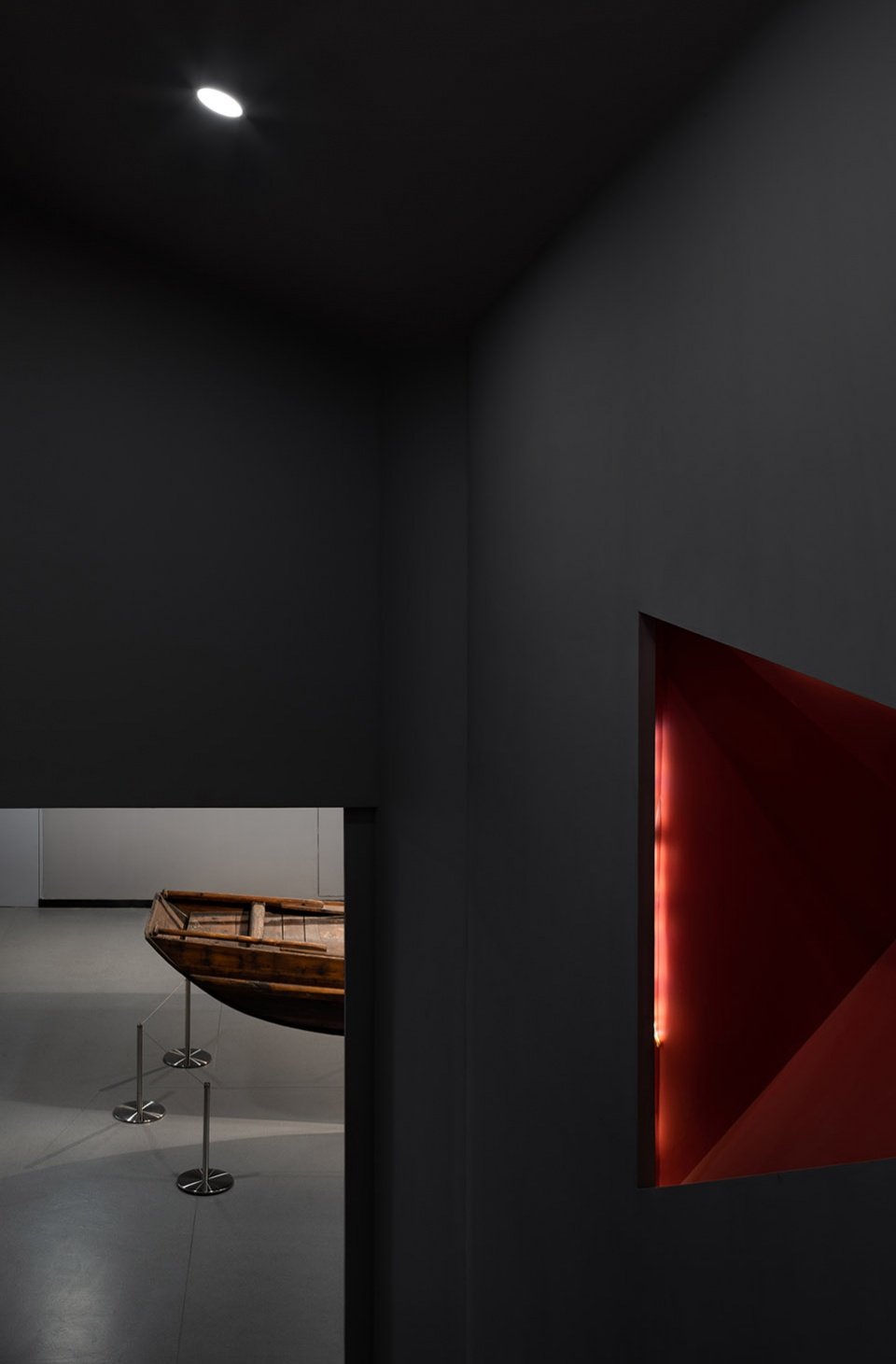
▼木船和船帆的隐喻,The metaphor of the wooden boat and the sail© 侯博文
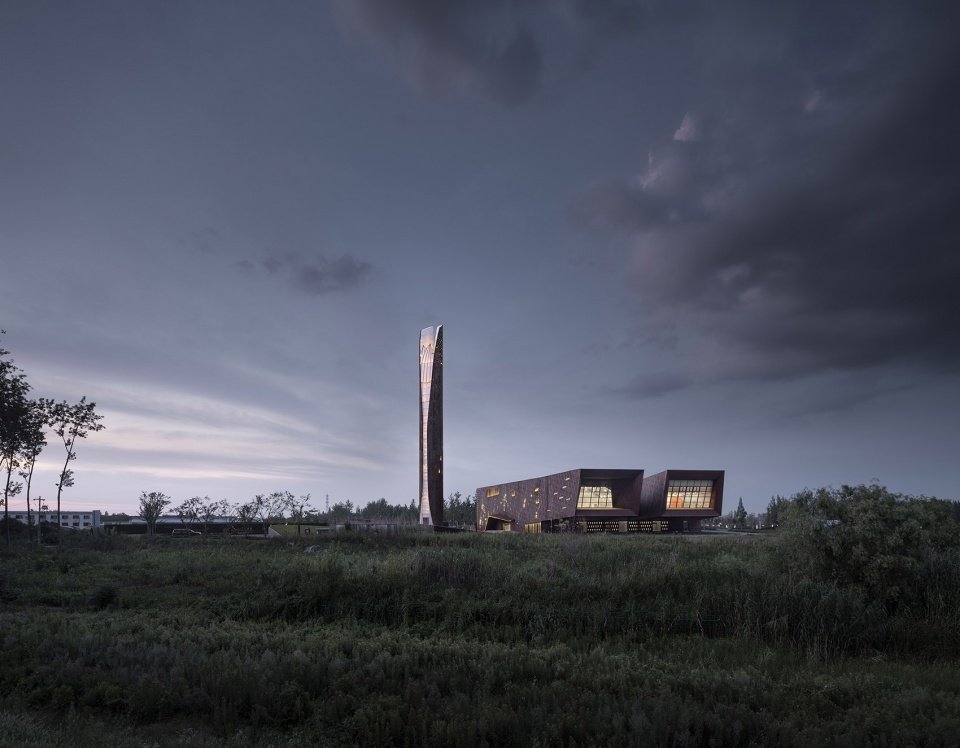
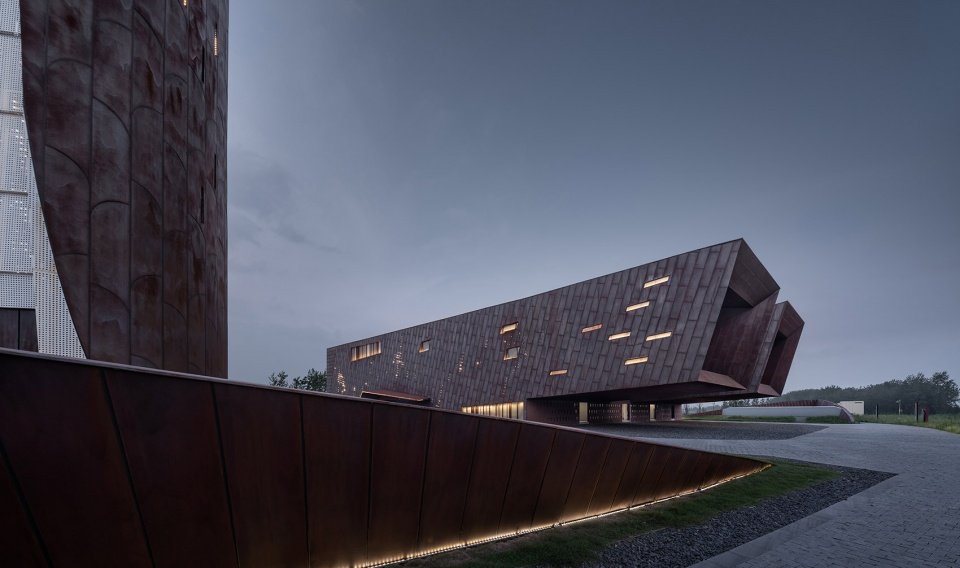
▼从江堤看胜利纪念馆,View of the Memorial Park from the river embankment© 侯博文
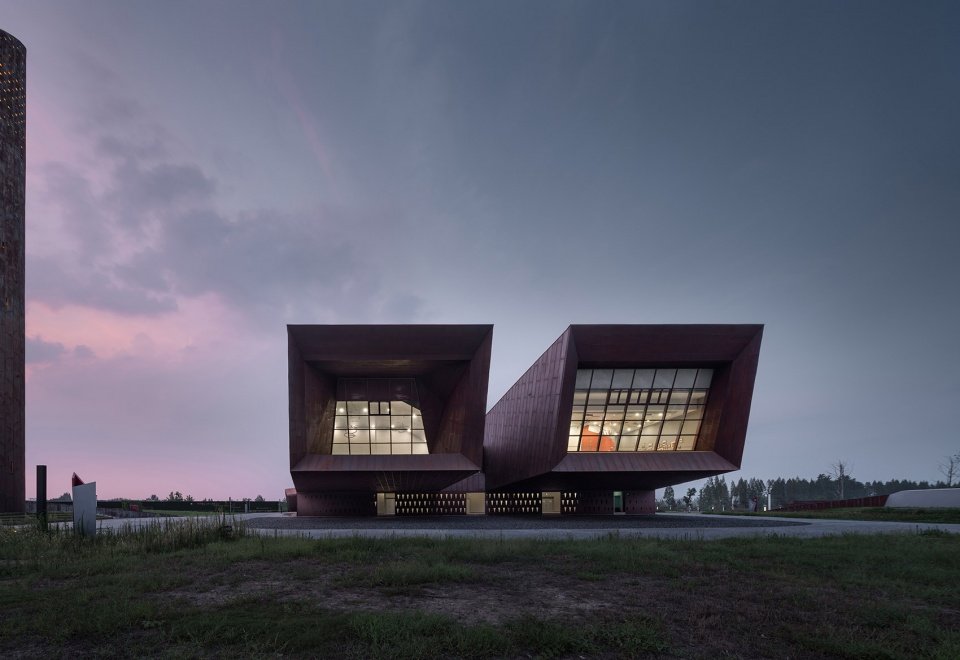
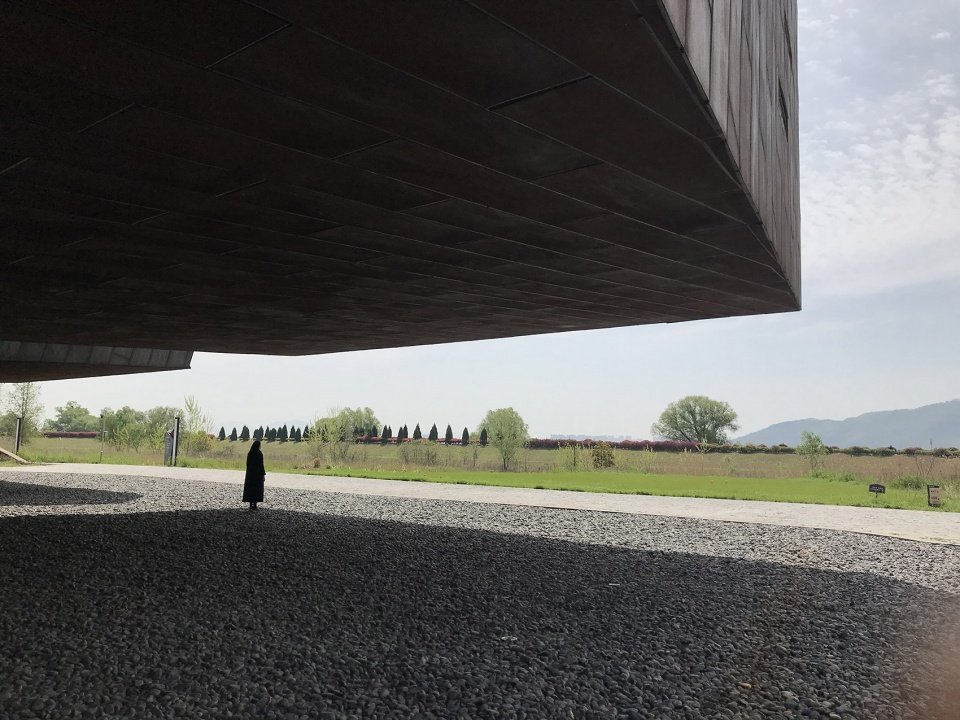
▼悬挑下的对景,Opposite scenery beneath the cantilever space© 侯博文
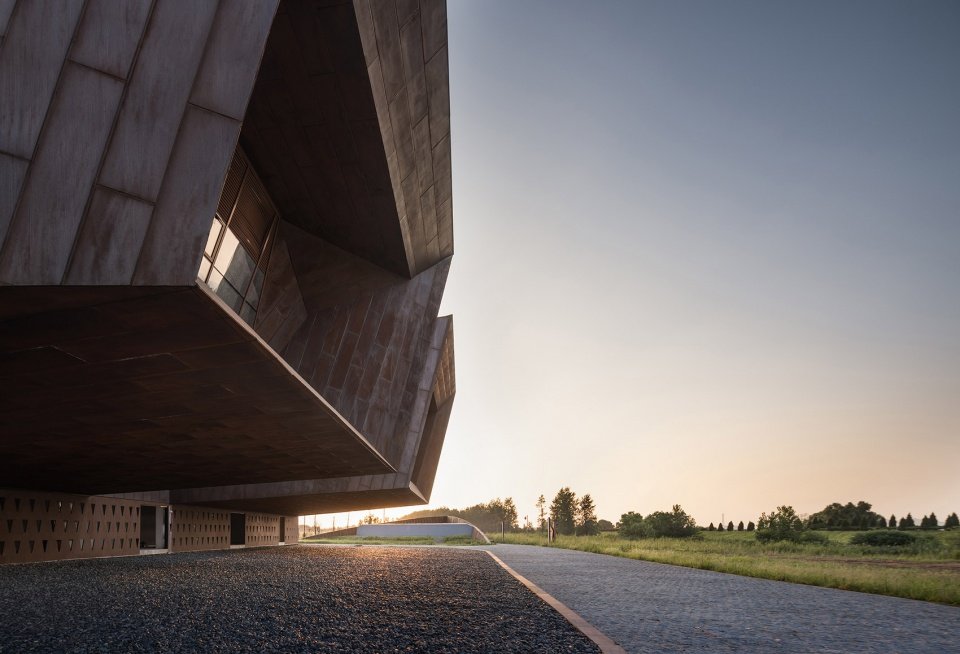
▼悬挑下对栖霞山的框景,Enframed scenery of Qixia Mountain under cantilever space© 侯博文
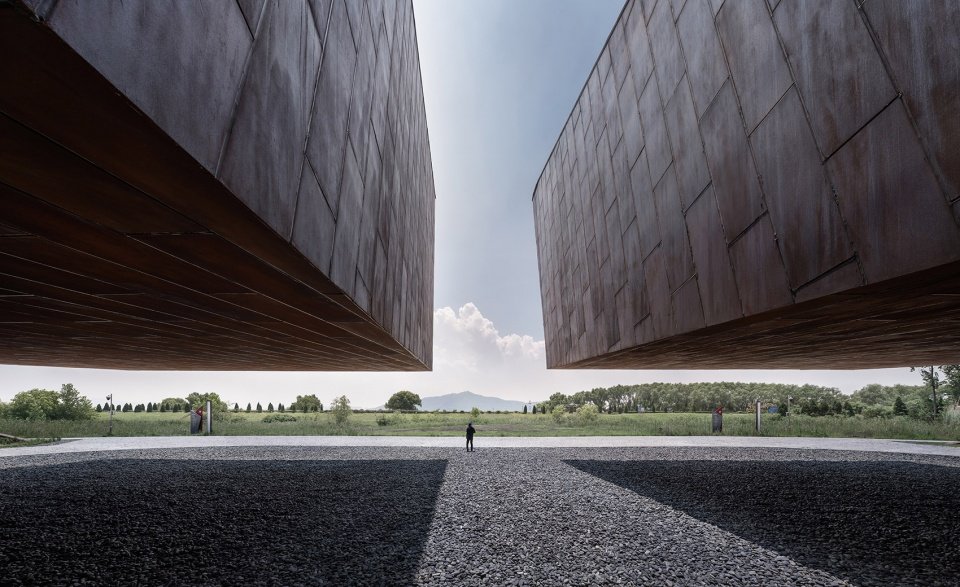
▼建筑悬挑形态,Cantilevered space of the Memorial Hall© 周凌工作室
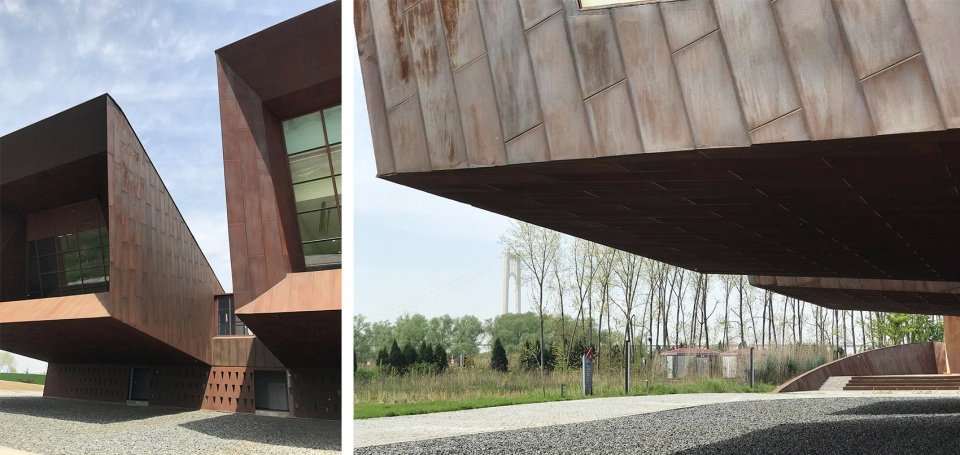
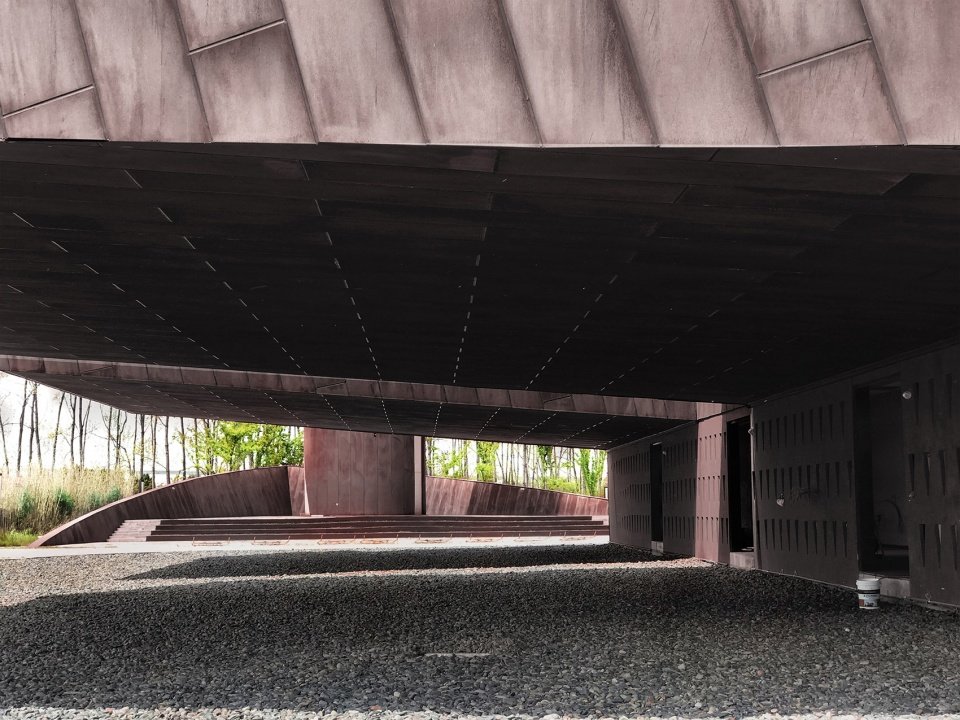
▼悬挑下碎石模糊的轮廓,The blurred outline of rubble beneath the cantilever space©周凌工作室
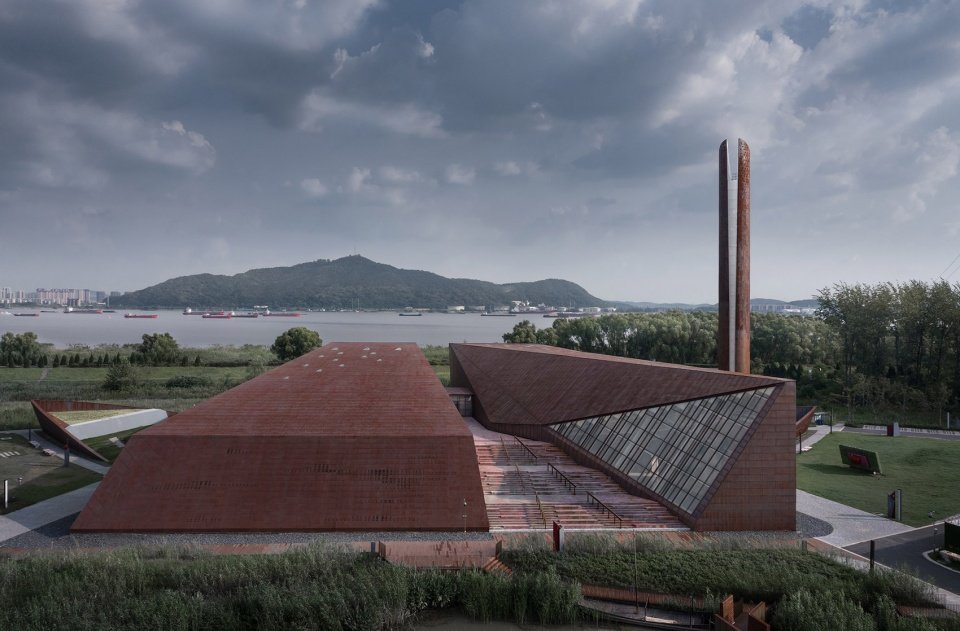
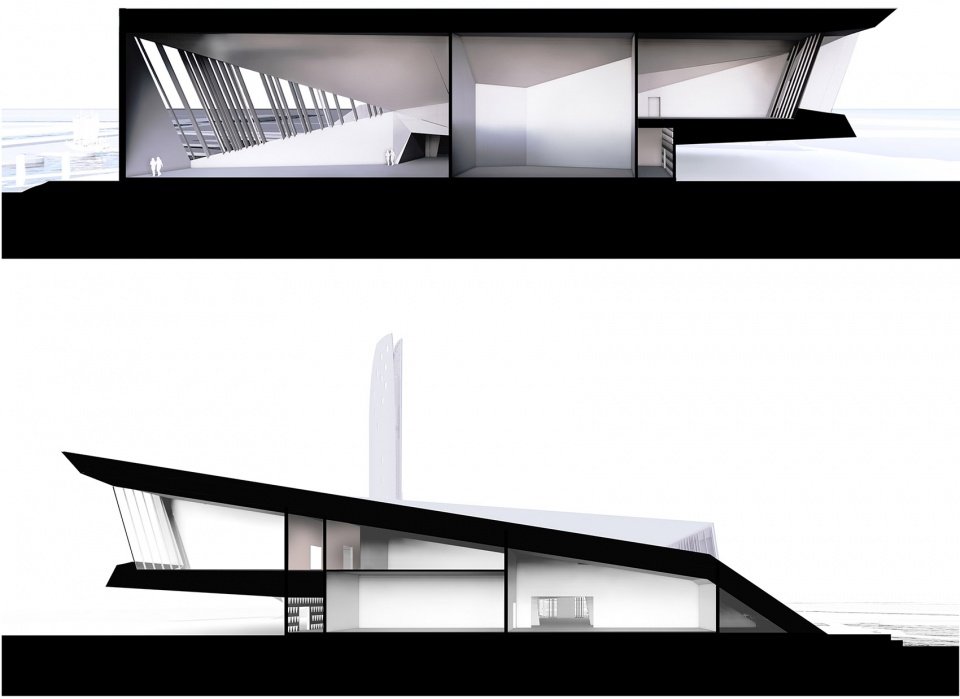
纪念馆采用“大地耕作”[1] 的设计策略,使地表裂开,建筑从地面缓缓升起,呈现北低南高、向前冲锋的趋势,整体犹如一条向栖霞山挺进的木船,直冲江面,象征着胜利之舟、人民之舟、伟大复兴之舟。形体的设计回应了习主席在合肥渡江战役纪念馆考察时强调的:“渡江战役的胜利是靠老百姓用小船划出来的。”
The memorial hall adopts the design strategy of “landscraper”[1], so that the ground is split, and the building rises slowly from the ground, displaying a trend of low in the north and high in the south while moving forward. The entire structure resembles a wooden boat sailing directly into the river and toward Qixia Mountain, representing the boat of victory, the boat of the people, and the boat of vast renewal. The shape was created in response to General Security Xi’s emphasis during his tour of theYangtze crossing Campaign Memorial in Hefei : “The people using small boats were successful in the River Crossing Campaign.”
[1] Aaron Betsky, Landscrapers, New York, Thames&Hudson
▼形体生成,Form generation© 周凌工作室

▼功能流线分析,Function and streamline analysis© 周凌工作室
▼低俯的建筑形态,Architectural form with low altitude© 侯博文
▼纪念馆主入口夜景,Night view of the main entrance of the Memorial Hall© 侯博文
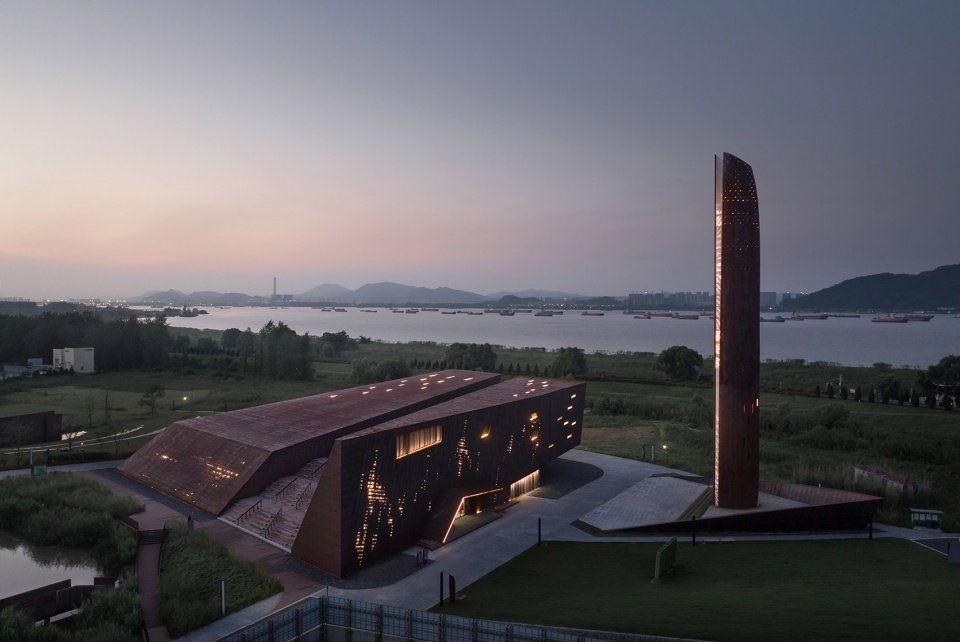
▼建筑体态的折叠,Form folding of the Memorial Hall© 侯博文
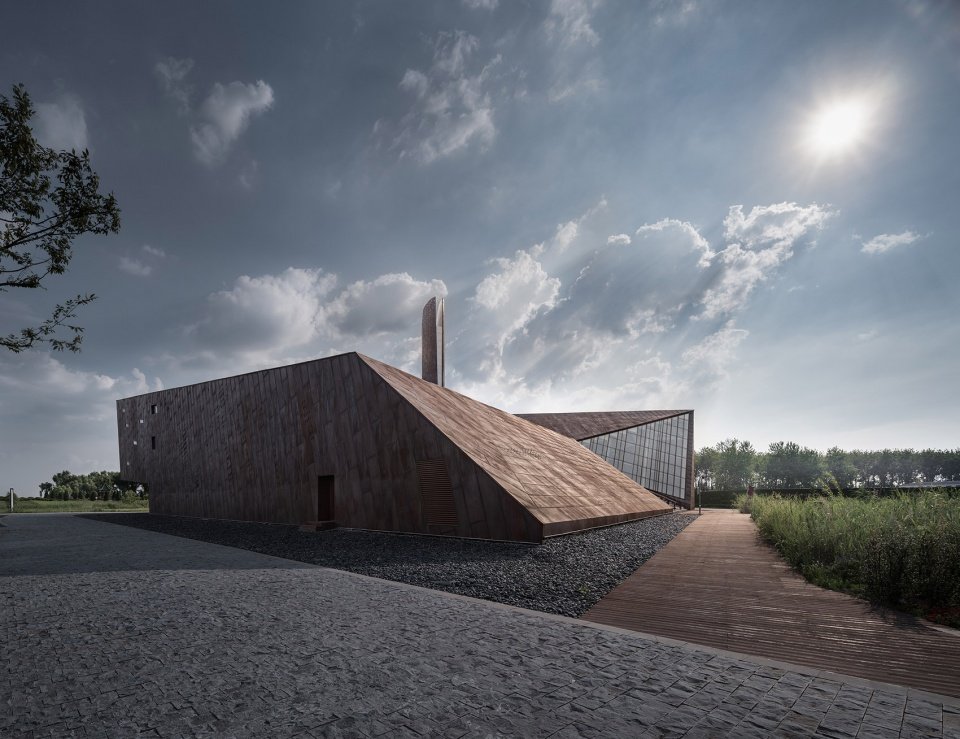
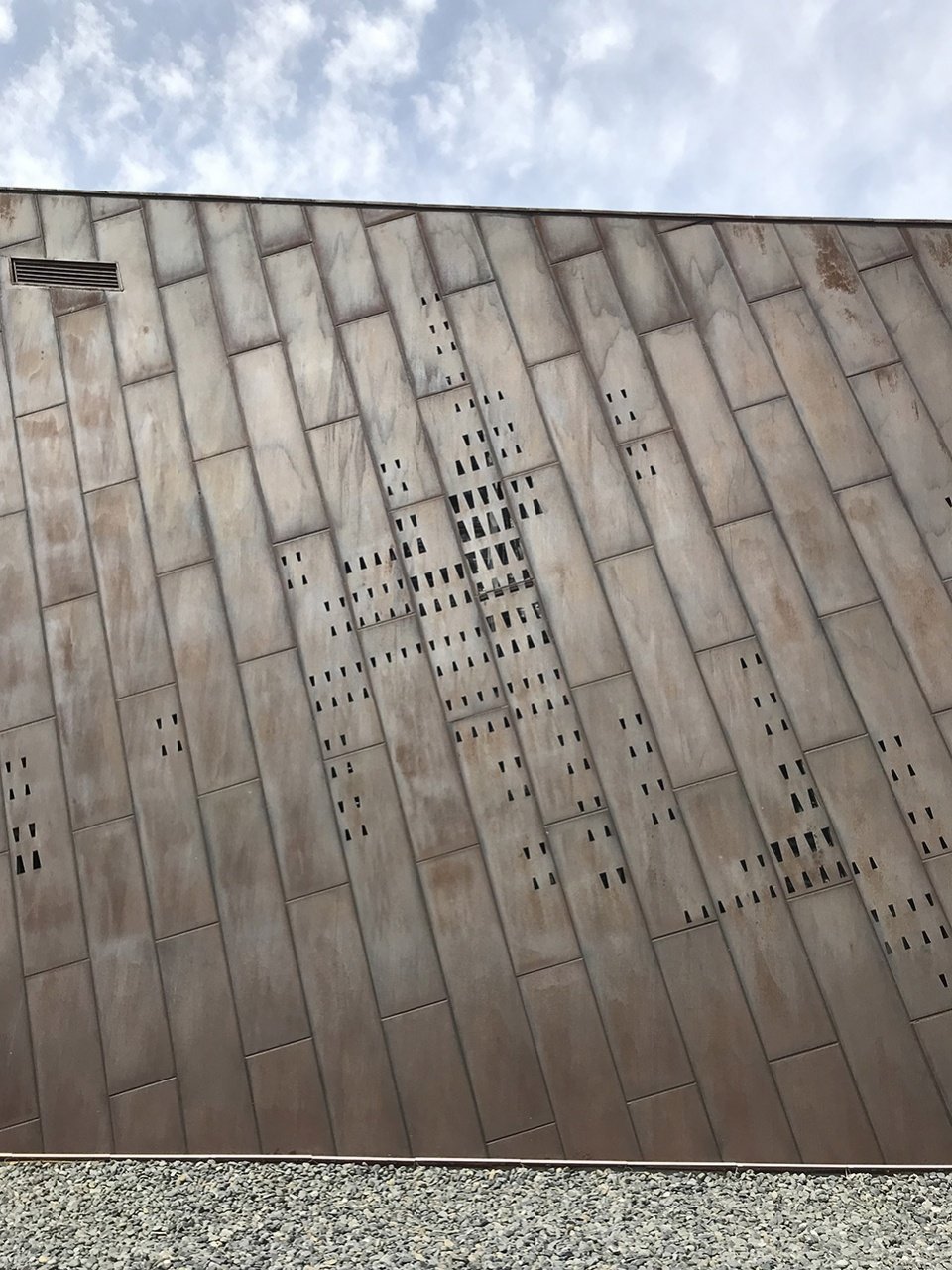
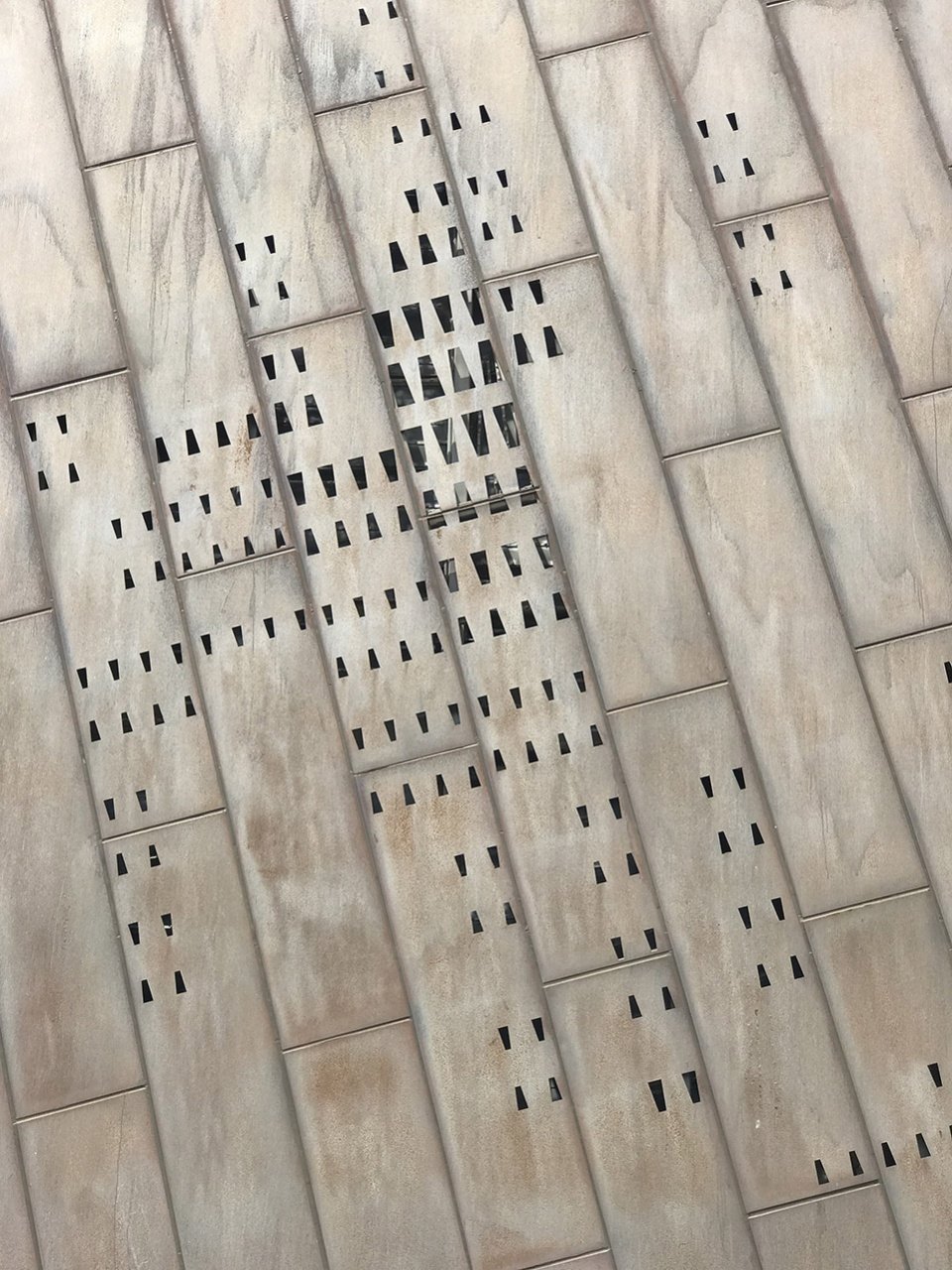
▼锈钢板幕墙立面,Corten Steel facade© 周凌工作室
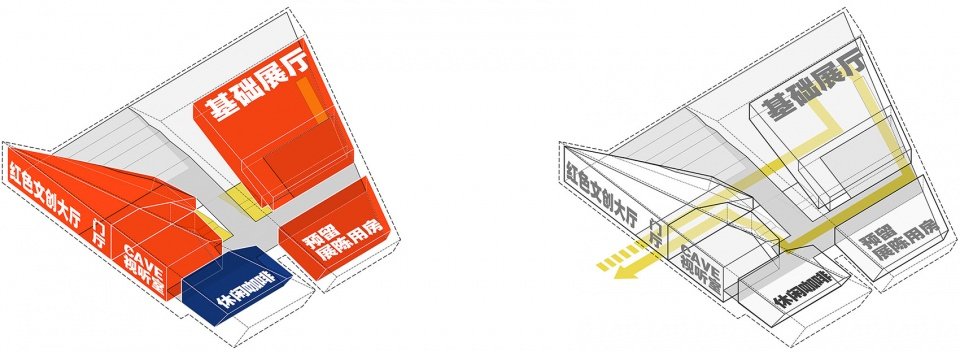
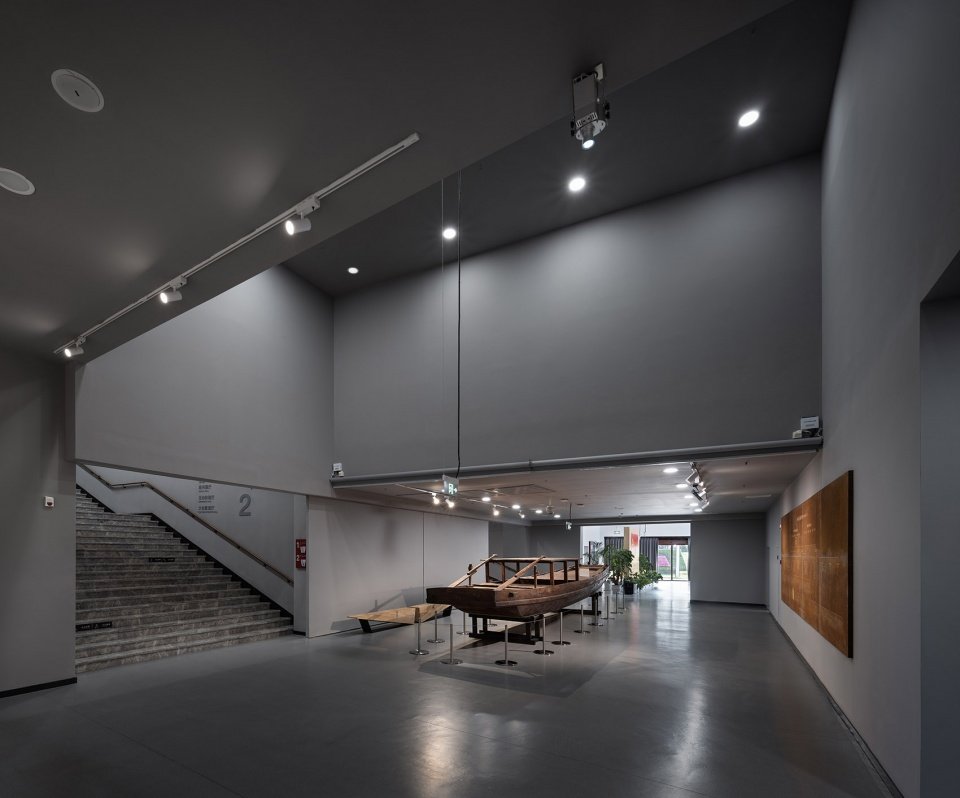
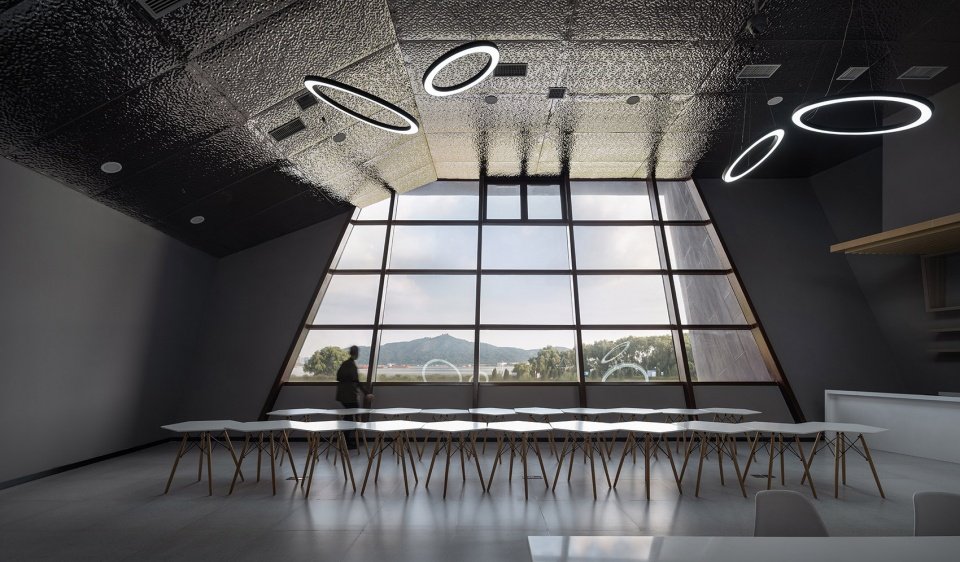
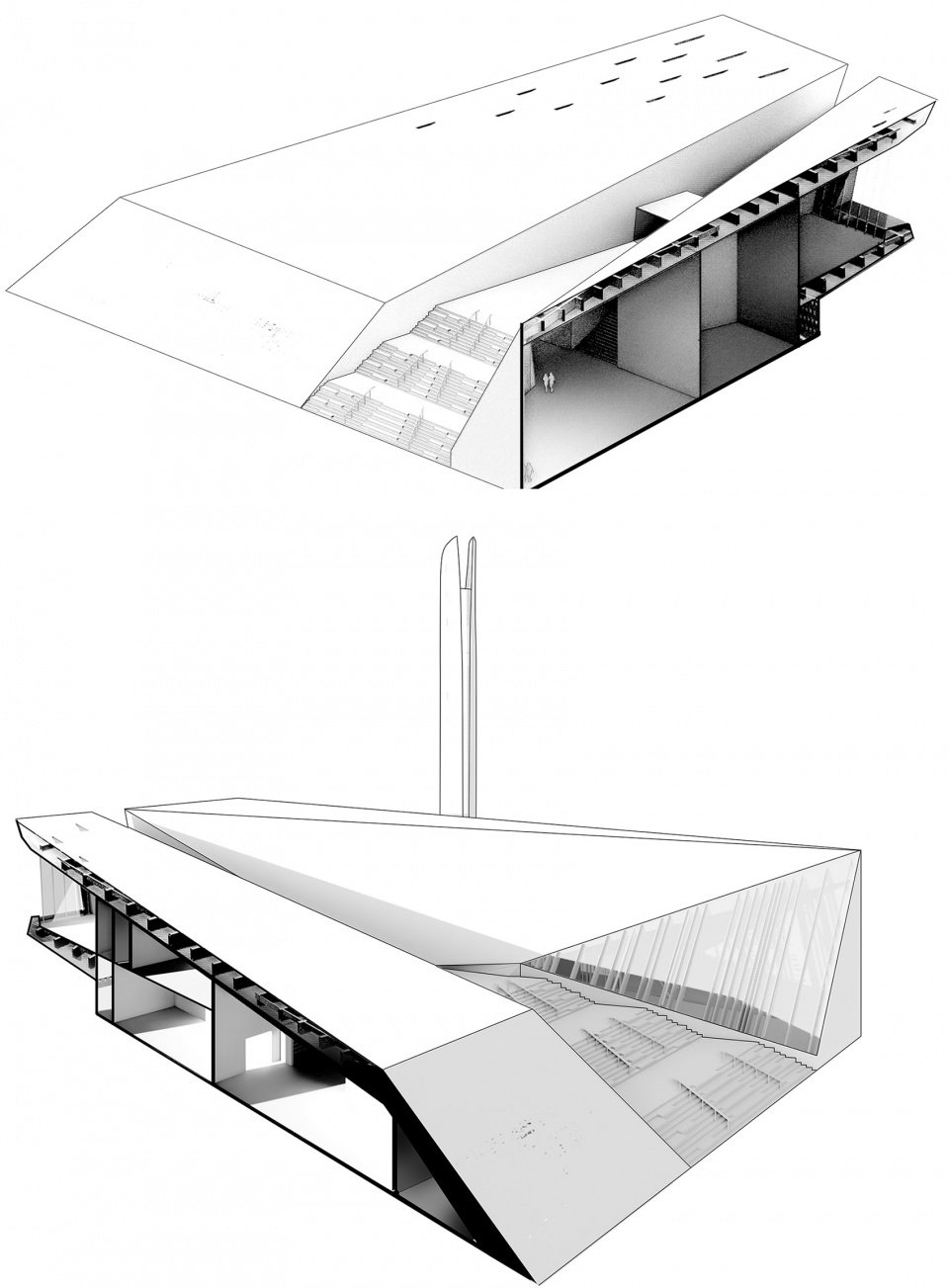
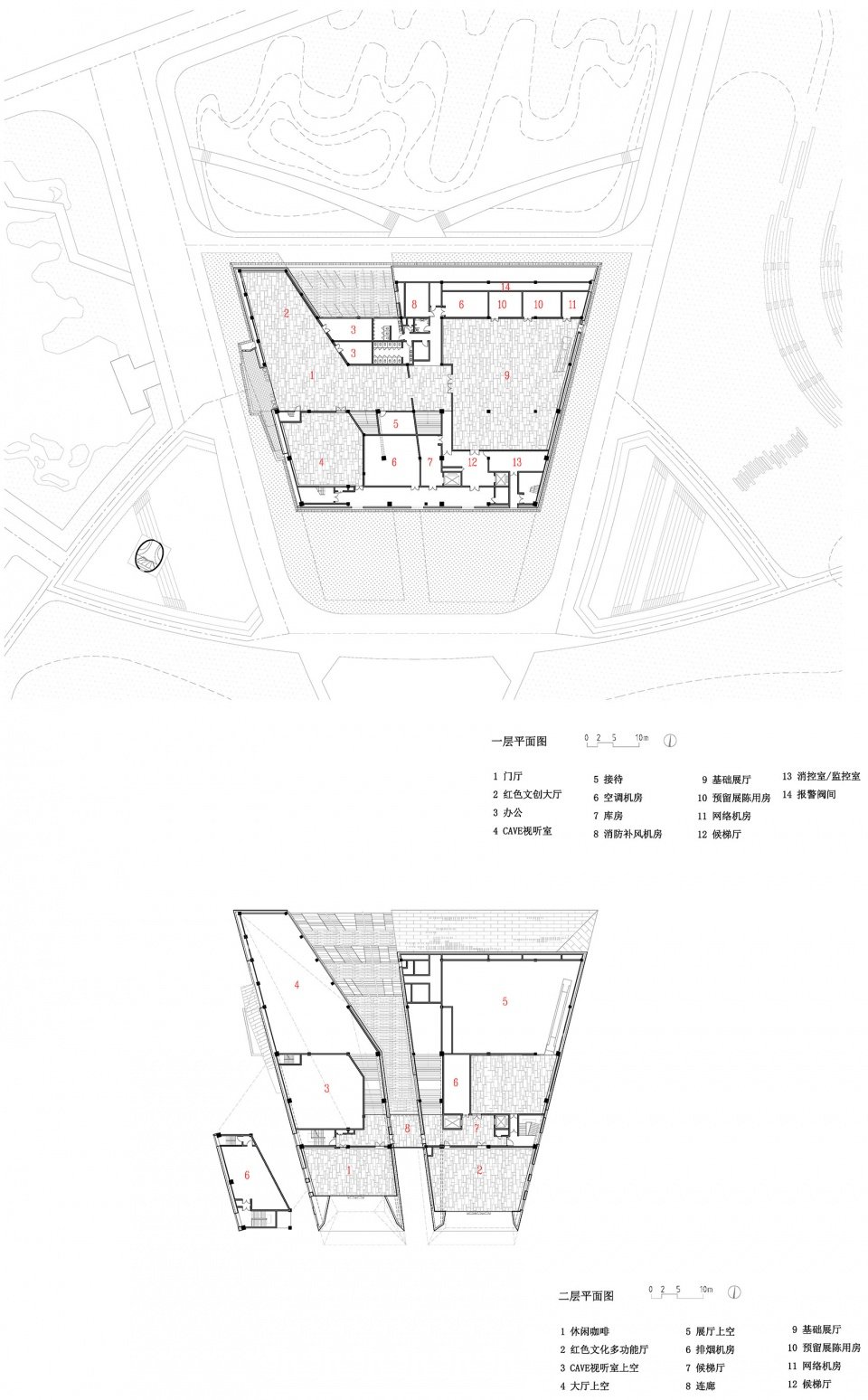
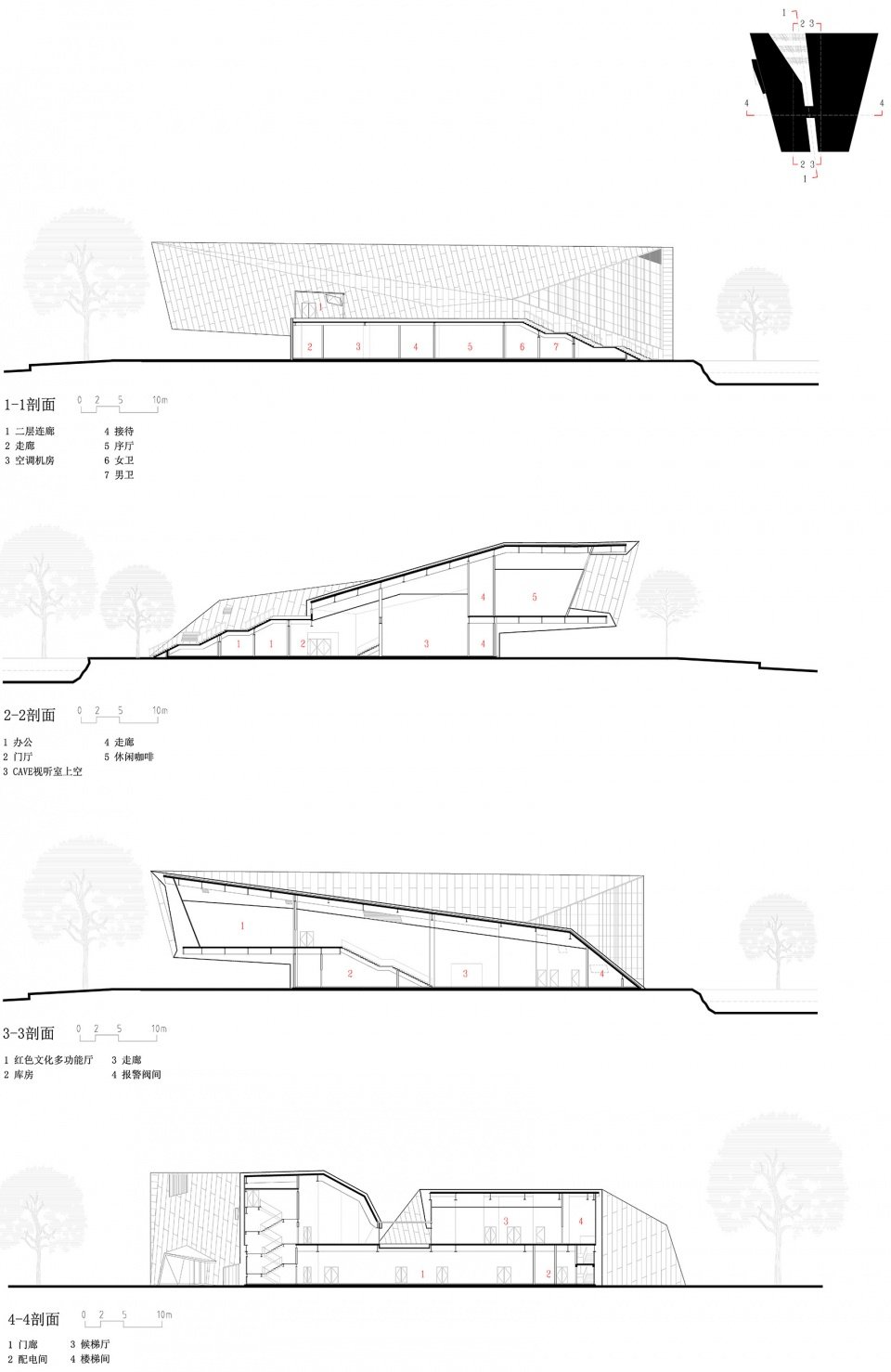
观览者进入纪念馆,首先呈现的是巨型三角天窗下高大的门厅兼序厅;再进入基础展厅体验战争火光下真实历史场景的营造;步入二层悬挑处的红色文化展厅,在这里远眺栖霞山和长江;接着穿过二层沿廊,是虚拟体验互动展厅,也是展览的尾声;从一层门厅出来,绕行至悬挑下,远处栖霞山坐落在薄薄的江面上,日落的光辉穿过悬挑的缝隙映射在地表的碎石上。从光辉、昏暗、曙光到明亮,观览者在此体验了从备战、渡江、胜利、纪念的时间叙事。
When guests first enter the memorial hall, they will discover a tall lobby and prelude hall beneath a huge triangular skylight. then enter the fundamental display space to witness the creation of actual historical settings under fire; Step inside the red culture theme exhibition hall on the second floor’s cantilevered space for a view of the Yangtze River and Qixia Mountain; after that, proceed along the corridor on the second floor to the interactive virtual experience exhibition hall, which also serves as the exhibition’s conclusion; finally, turn around from the first floor’s foyer to the beneath of the cantilevered space. In the distance, The light of the sunset is reflected on the gravel on the ground through the opening in the cantilevered spaceg as it passes by the river where Qixia Mountain is situated in the distance. The audience witnesses the time narration from preparing for war, crossing the river, victory, and commemoration through radiance, darkness, daybreak, and light.
▼从展示构筑物看纪念馆,Seeing the Memorial Hall from the tower© 侯博文
▼三角巨形窗的逐步呈现,The gradual appearance of the triangular giant window© 侯博文
▼从悬挑下看栖霞山,View of Qixia Mountain from the cantilevered space© 周凌工作室
▼展厅和大厅之间的走道,The corridor between the exhibition hall and lobby© 侯博文
▼通向二层悬挑空间的大楼梯© 侯博文
Grand staircase leading to the second floor cantilevered space
▼从二层悬挑处远眺栖霞山,Overlooking Qixia Mountain from the cantilevered space on the second floor© 侯博文
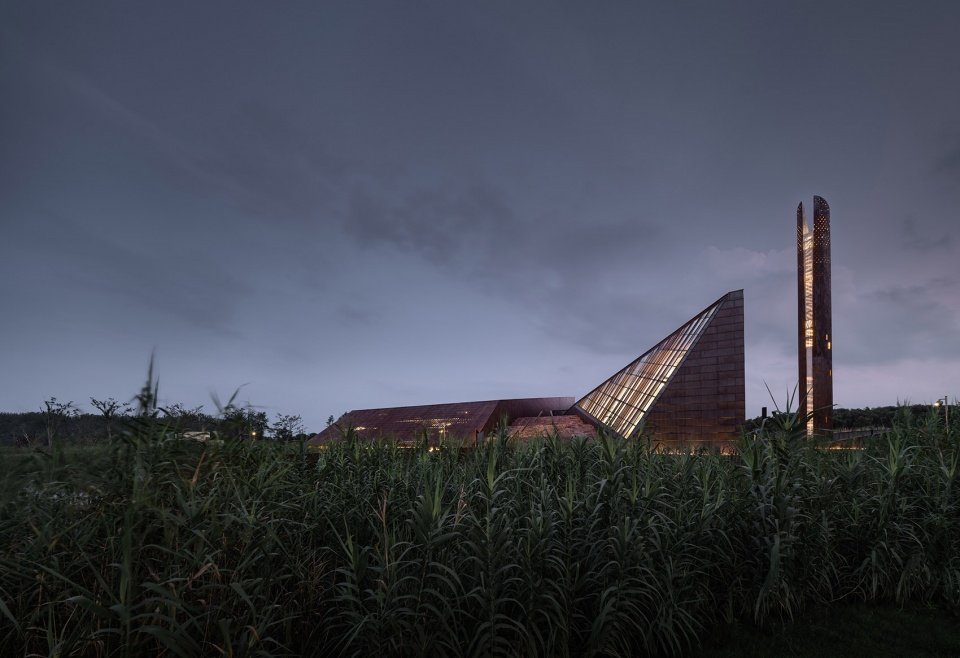
▼芦苇丛中看渡江胜利公园,Seeing the Memorial Park from reeds© 侯博文
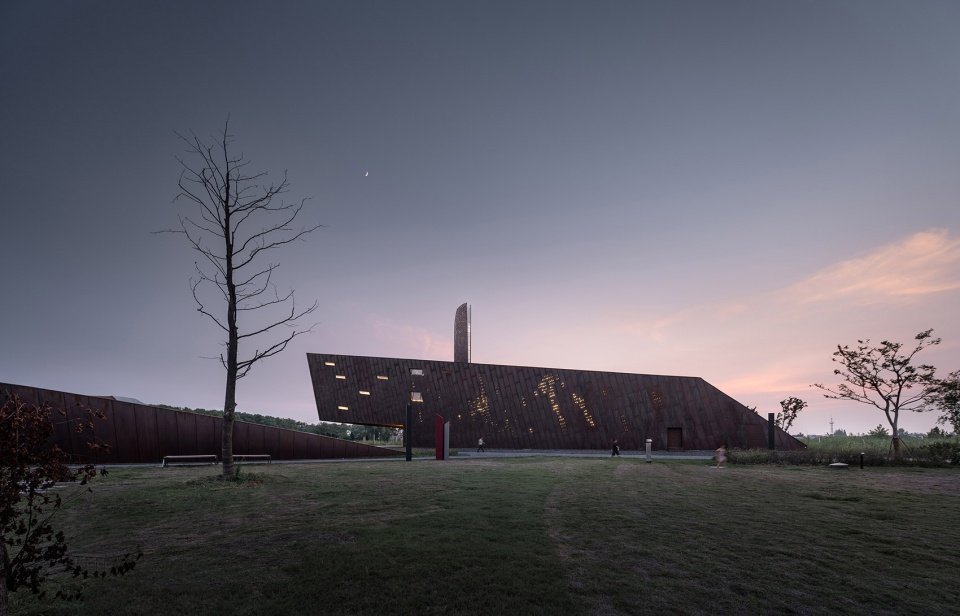
▼从下沉音乐台看纪念馆和展示构筑物,View of Memorial Hall and tower from sunken bandstand© 侯博文
▼长江四桥和渡江胜利公园的对景,The opposing perspective of the Yangtze River’s Fourth Bridge© 侯博文
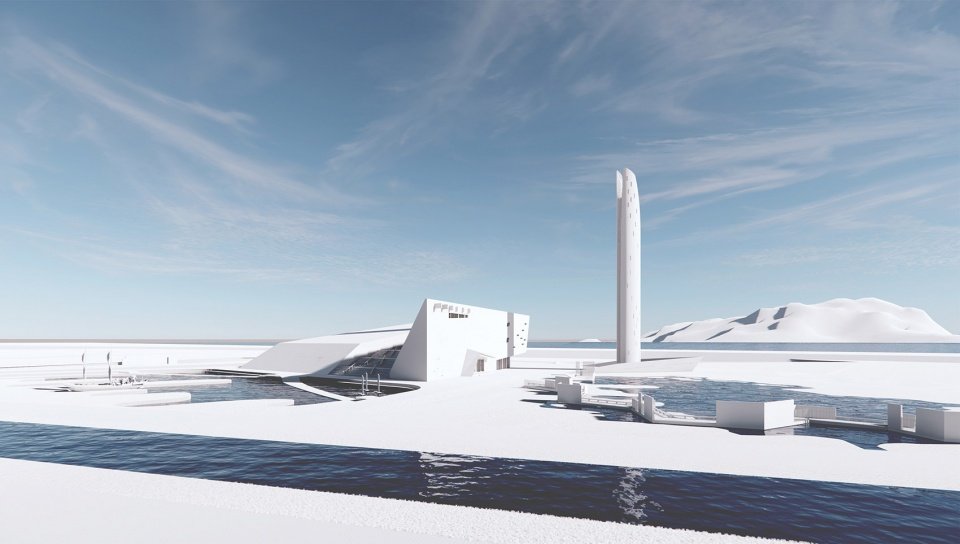
▼山水格局下的渡江胜利公园,The Memorial Park under geomorphic scale© 周凌工作室
▼形体空间分析,Space organization analysis© 周凌工作室
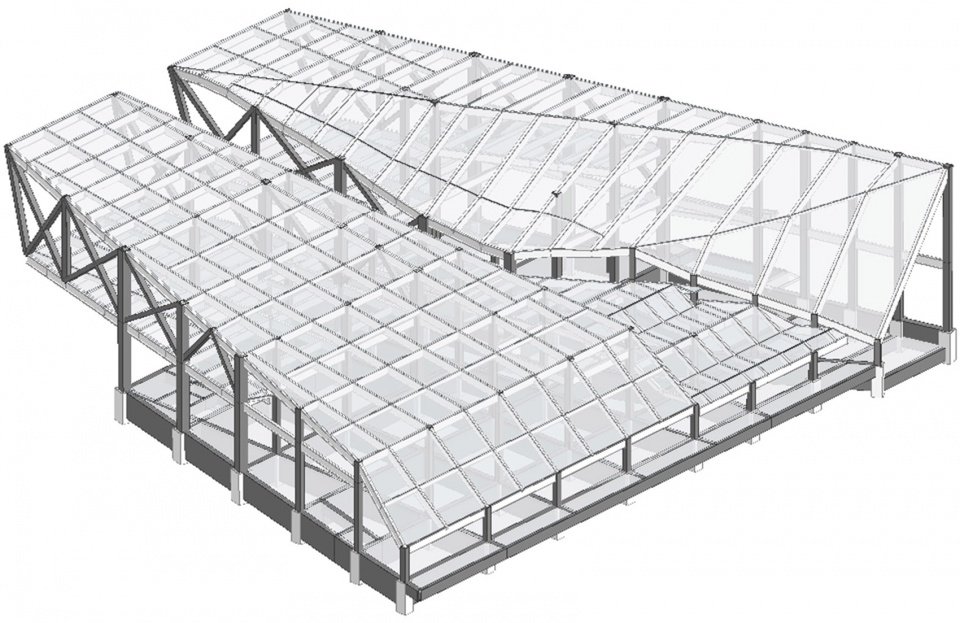
▼结构分析,Structural analysis© 周凌工作室
▼空间体量分析,Spatial volume analysis© 周凌工作室
▼平面图,Plan© 周凌工作室
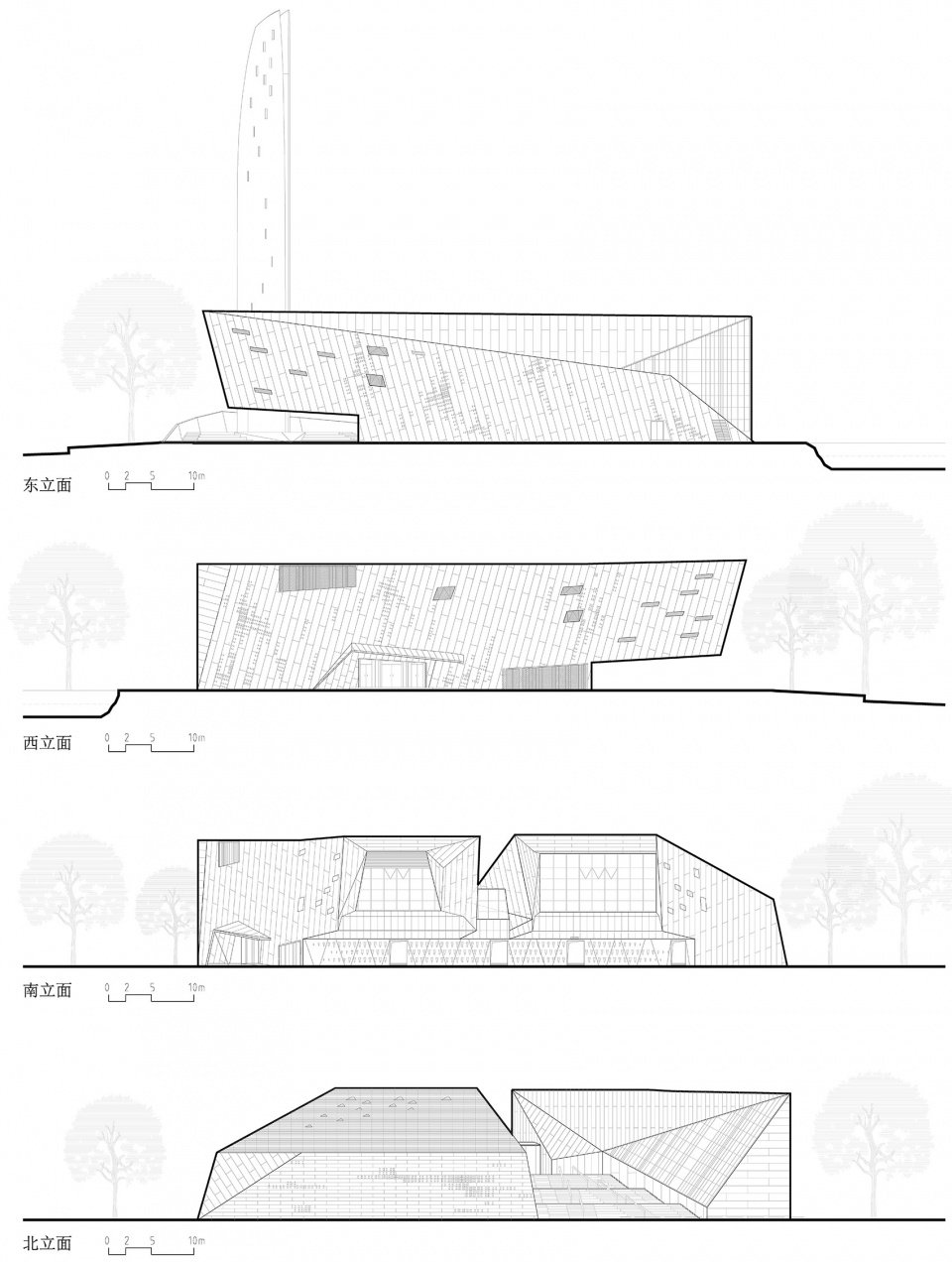
▼立面图,Elevation© 周凌工作室
▼剖面图,Section© 周凌工作室
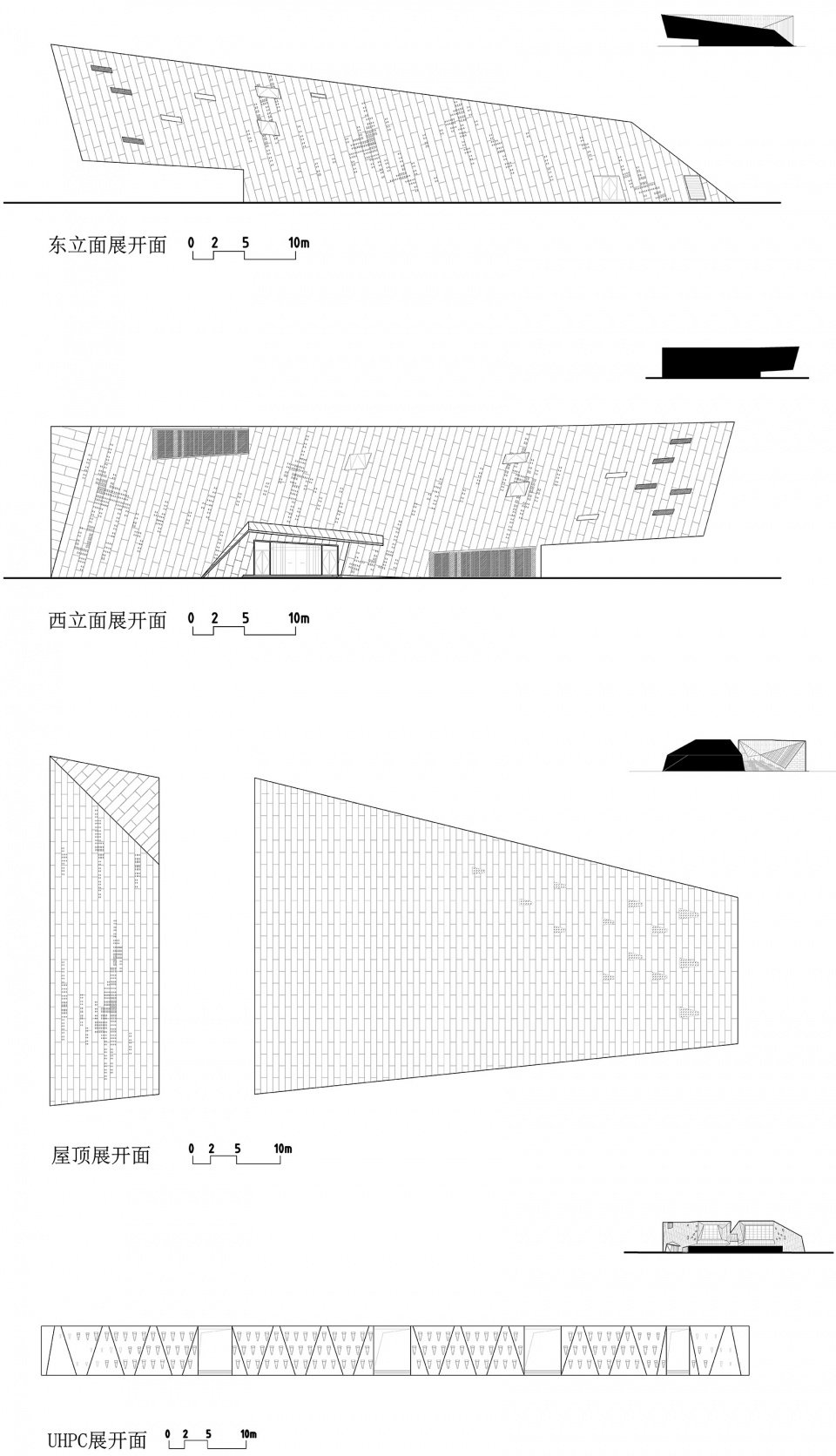
▼立面幕墙展开图,Developed view of facade© 周凌工作室
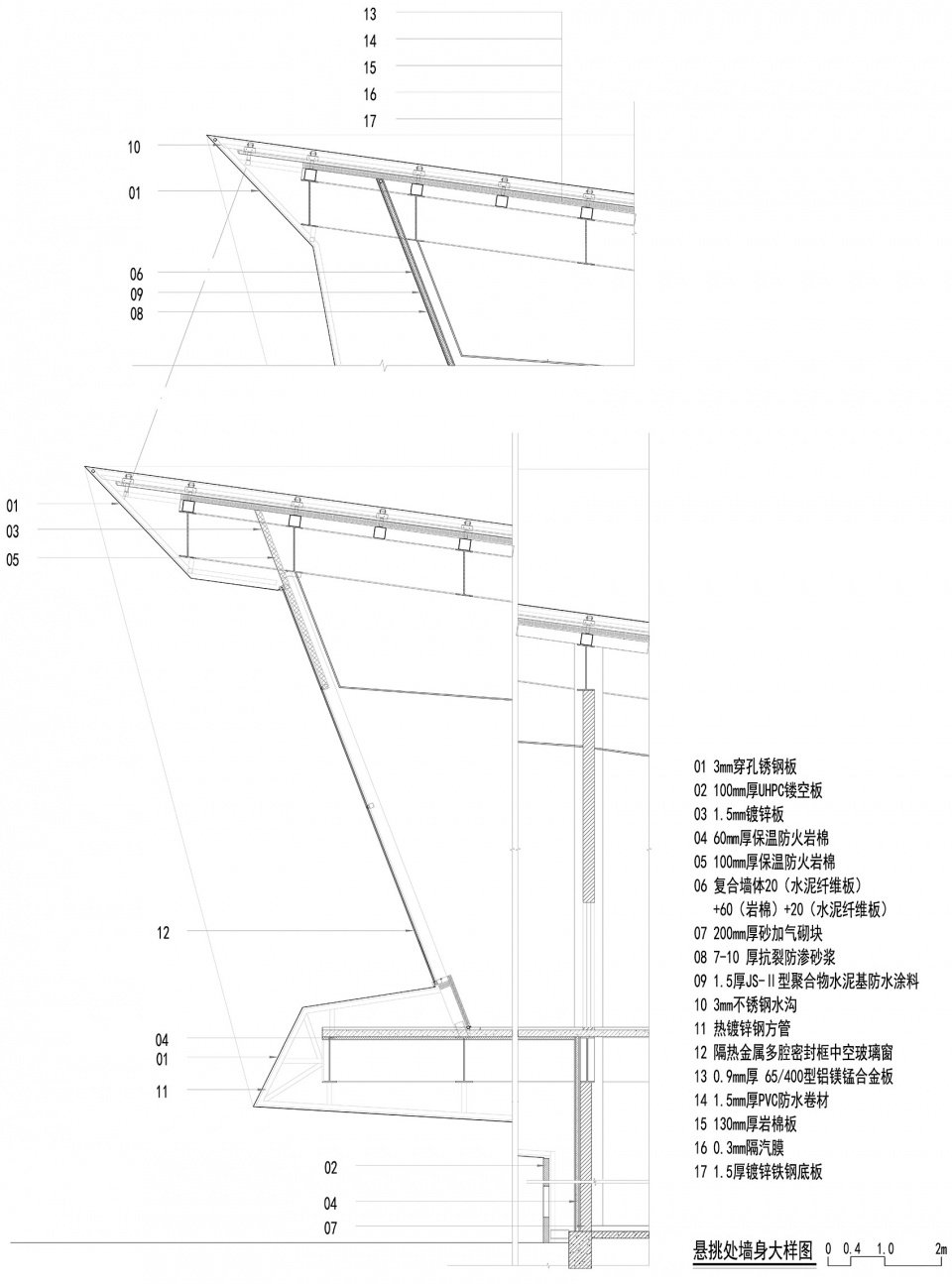
▼悬挑处墙身大样,Architecture detail of overhanging structure© 周凌工作室
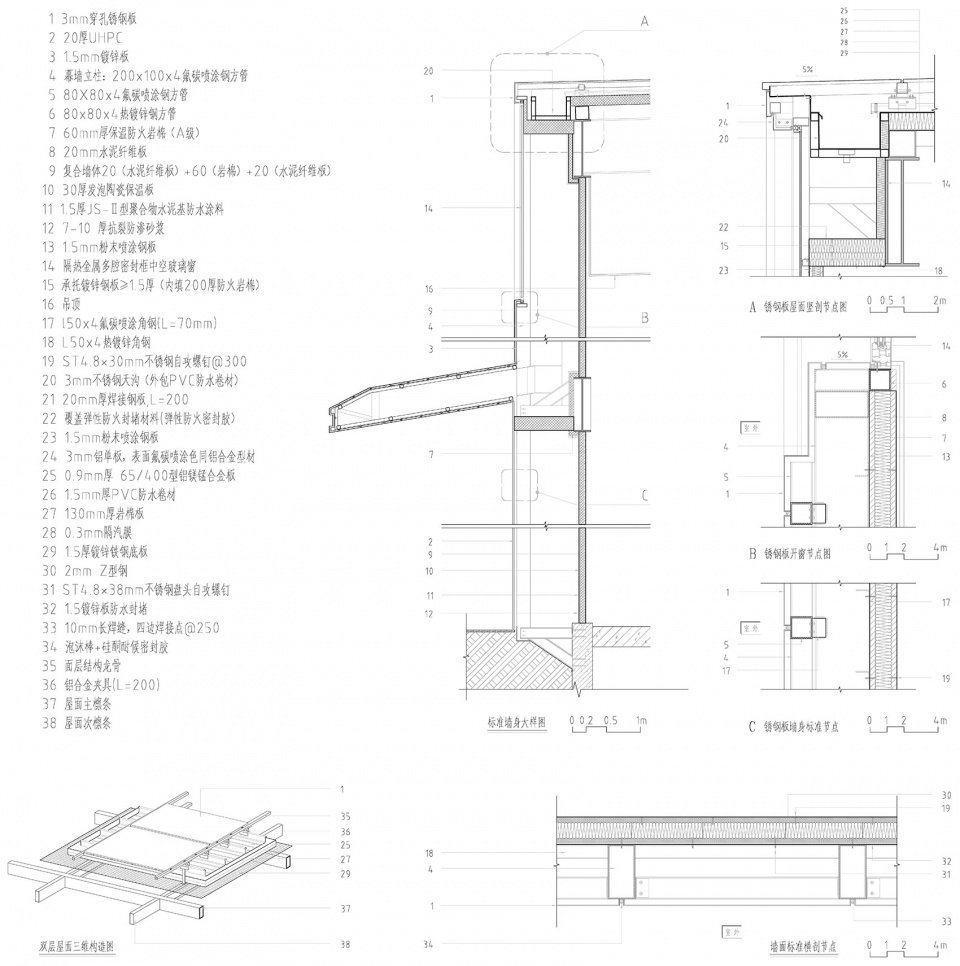
▼标准墙身大样,Typical architectural detail drawing© 周凌工作室
项目名称/渡江胜利公园(Yangtze River Crossing Campaign Memorial Park )
设计单位/南大设计院周凌工作室
建筑师/周凌
地点/江苏南京
设计/2020年/竣工2021年
业主:龙袍新城
设计团队/杨丹,方茗,夏子涵,郝钢,汪丹颖,刘晓黎,王莉
结构设计/董贺勋,丁小峰,杨程
景观设计/周凌,方茗,黄晓寻,于滔,阮颖
亮化设计/周凌,方茗
幕墙设计/周凌,方茗,吴礼超,刘范春
机电水暖/王立明(电),方先节,王凯(暖通),肖玉全,陈冬(水)
智能化设计/巫程
基地面积:44113.3㎡
建筑面积:3801.97㎡
结构形式:钢框架+桁架悬挑结构
摄影:侯博文
More:周凌工作室/南京大学建筑与城市规划学院(联系邮箱:archidot@qq.com) 。更多关于他们请至:Atelier Zhou Ling on gooood